
Alcalalí Climbing Guide
Sun-Soaked Limestone in the Xalon Valley — Perfect for Winter, Brilliant for All Grades
🇪🇸 Xalon Valley, Marina Alta, Alicante | 🪨 Limestone | ☀️ South-Facing Winter Sun Crag
| 📍 Location | Xalon (Jalón) valley, west of Alcalalí village, Marina Alta, Alicante province — Google map here |
| 🅿️ Parking | Large parking area on the CV-750 bend, ~1 km west of Alcalalí village towards Murla/Orba. Park on the left. 200m walk to the crag. here |
| 🧗 Climbing Style | Single-pitch sport climbing — slabs and vertical walls on the left, steeper pockets and tufas towards the centre and right |
| 🪨 Rock Type | Compact limestone — soft. Clean shoes before climbing, brush tick marks on completion |
| 📏 Route Heights | Mostly 25–30m. Routes 50–57: 80m rope required |
| 📊 Grade Range | 4a–7a+ across accessible sectors (40+ routes) |
| 🌤️ Best Season | October–April — south-facing, too hot in summer until evening |
| 🧭 Approach | ~5 min walk from parking |
| 🌧️ Rain | ⚠️ No shelter — crag seeps after heavy rain and offers no dry areas. Do not visit in wet weather. |
| 📶 Mobile Coverage | Reasonable in the valley |
| 🚐 Van Parking | Accessible for vans. See van section for overnight options in the Xalon valley |
| 💰 Daily Budget | €12–22 (vanlife, self-catering near Jalón or Benissa) |
| 🗺️ Digital Topos | theCrag — Alcalalí · 27 Crags — Alcalalí · Rockfax Digital |
Why Alcalalí? The Xalon Valley Classic
Alcalalí (Pontón de la Oliva area of the Xalon valley) is a south-facing limestone sport crag 15 minutes from Benissa with 40+ routes from 4a to 7a+, a five-minute approach, and full winter sun from October through April. Here’s everything you need to climb here from a van.
It’s not the biggest crag in the region — 40+ routes on a single cliff — and it’s not the most dramatic setting. What it is, consistently, is one of the most complete small crags in the Xalon valley: accessible grades on good rock, a five-minute walk from the car, south-facing with full winter sun, and a character that suits climbers from beginners on their first outdoor routes to those looking for a quality 7a warm-up day.
The cliff forms a natural bay of compact grey limestone just west of the village, with wings curving out on either side. To the left it gets slabbier and more technical; to the right the angle steepens and the features get bigger — tufas, pockets, overhang sequences. In the middle you’ll find a mix of everything. It’s busy in peak season for a reason: on a clear January morning with the sun pouring onto the wall and a bag of warm croissants from the Jalón bakery, there are worse places to be.
The Xalon valley context matters too. Alcalalí sits in the middle of an area with over 600 routes across 11 crags — Murla immediately to the left, Lliber and Jalón further west, plus a string of smaller venues along the valley floor. A week based here with the Rockfax guide and some willingness to explore is a very strong Costa Blanca itinerary indeed.
Left Side — Slabs, Pockets & Easy Grades
The left wing of the Alcalalí bay is the gentler, more beginner-friendly side of the crag. Walls here are slabby to vertical on smooth, pocketed limestone — well-worn but still good quality, the kind of rock that rewards precise footwork over brute strength. This is where most teams start the day: the grades run from 4s and 5s through to technical 6s, and the bolting is generous.
The focal point for most climbers at this end of the crag is the Ainee / Ceder No Ceder area — a natural gathering spot that functions as both warm-up territory for harder climbers and an all-day destination for those in the lower grades. Routes here are well travelled, the lower-offs are easy to read, and it’s the best spot on the crag for a nervous outdoor leader to find their feet. The continuation of the cliff to the left leads directly towards the sister crag Murla — if you walk far enough you’ll eventually reach its base.
Central Bay — Something for Everyone
The central section of the bay is increasingly well developed — according to theCrag’s description this area is receiving the most new routing attention at present, with new lines being added each season. The character here bridges the two ends of the crag: some slabby walls, some steeper sequences, grades running through the 5s and 6s. Less polished than the left side because it’s newer and less trafficked.
For a mixed team, the centre of the bay is a good all-day base: someone can be working a 6c project while a second climber seconds on the same lower-off after a 5b. The bay shape means you’re often in shade from mid-afternoon in winter — worth knowing if you’re sensitive to cold and trying to maximise warm-wall time.
Right Side — Tufas, Steeper Climbing & Access Note
Head right from the central bay and the character of the crag changes: the angle increases, the rock gets sharper and more featured, and the routes get steeper. Tufas and large pockets replace the smooth slabs of the left side. This is the section that climbers arriving in the 6c–7a range gravitate towards — Yorkshire Lads is the classic starting point, with the harder lines stretching rightward through to Akram the Terrible and beyond.
The right-hand side of the cliff also stays dry in light rain better than the left — the overhang provides some protection, though this is not a dependable wet-weather venue. Come here in good conditions for the best of it.
Sister Crag Murla — The Natural Next Stop
Alcalalí’s left wing effectively merges into the base of Murla — the two crags share the same limestone band. Murla is the harder, less-visited sibling: a longer approach (20–30 min from the urbanisation parking), no shelter in rain either, but with steeper terrain and harder routes in the 6c–7b+ range that complement Alcalalí’s accessible character perfectly.
To reach Murla from Alcalalí, continue along the CV-750 past the climbing parking, bear right at the crossroads towards Orba, and look for the right turn into the urbanisation a couple of hundred metres further on. Drive to the highest point and park considerately near the electricity substation — do not block the gate, which is used daily for water deposits. The cairned path starts behind the pumping building on the right.
Best Time to Climb — Seasonal Guide
Alcalalí is first and foremost a winter sun crag. It faces due south, sits in a sheltered recessed position, and catches the sun from first light through to late afternoon in the cooler months. That same sheltered position is its summer weakness — the heat builds quickly and by May the crag is uncomfortable before noon. Evening sessions are possible in summer but not ideal given the short rock-cooling window.
| Season | Conditions | Temp (°C) | Recommended? | Notes |
|---|---|---|---|---|
| October–November | Warm, stable, excellent friction | 17–26°C | ● Best | Sweet spot. Full sun on the wall by mid-morning. Good friction on the slabs. October is busy — arrive early for the popular left-side routes. |
| December–February | Cool to cold, sunny | 8–16°C | ● Best | Peak season for Alcalalí. The south-facing wall holds warmth well on clear days. Bring a layer for the shaded bay sections in the morning. Avoid after heavy rain — crag seeps and has no shelter. |
| March–April | Warming, excellent conditions | 13–22°C | ● Best | Spring is superb. Friction still good, temperatures comfortable all day. April is the last reliably comfortable all-day month. |
| May–June | Getting hot | 22–30°C | ● Early starts only | Recessed south-facing position heats up fast. Arrive by 8am, finish by 11am. Right side with overhang stays cooler longer. |
| July–September | Hot — evening sessions only | 28–36°C | ● Not recommended | Too hot during the day. Evening sessions from 6pm onwards are possible but the cooling window is short. Better to visit a shaded crag — nearby Segaria North or L’Ocaive are worth the drive in summer. |
Topos, Guidebooks & Digital Resources
Alcalalí is covered in both major regional guides for the Costa Blanca, and the official local topo PDF is freely available from the Alcalalí tourism website — worth downloading as a backup even if you’re carrying the print guide. Our pick for this area is Costa Blanca Climbs — the second edition has been updated to reflect the current access situation (fenced right side) and has GPS parking data for the Xalon valley crags via QR code.
theCrag: Best source for current access notes and community logbook. The fence/private ground warning for the right side is flagged here. Check before every visit.
27 Crags: Good photo topos for the main sectors. Easy offline download. Description notes the two-sided character of the crag well.
Rockfax Digital: Digital companion to the 2026 Rockfax Costa Blanca print guide — updated March 2026 alongside the new edition. Available via the Rockfax app for subscribers. Useful backup if you already have a Rockfax subscription from a previous Costa Blanca trip. Read our Rockfax Review →
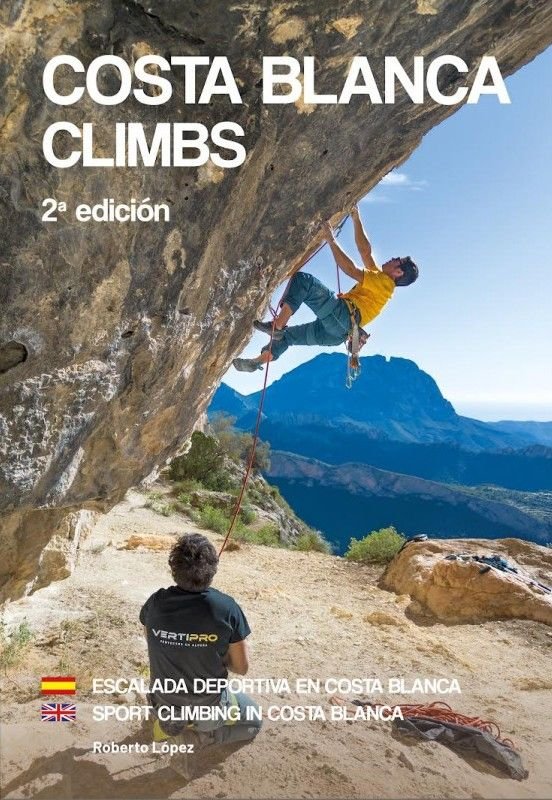
Costa Blanca Climbs — Roberto López
648 pages covering 56 crags from Gandía to Orihuela — including Alcalalí and the full Xalon valley. Second edition December 2025, bilingual Spanish/English. Strong access beta with GPS coordinates via QR codes. Made by local climbers; part of the profit goes back into bolting and re-equipping local crags.
Buy — Climbing-Guide.eu ↗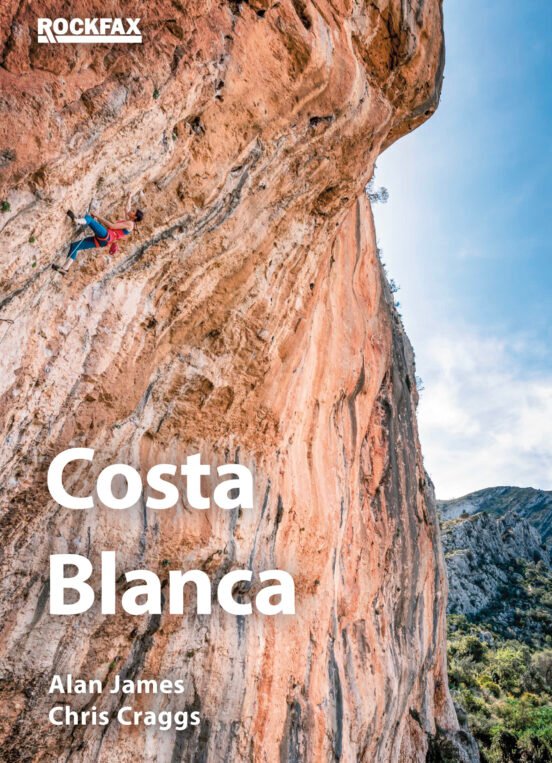
Costa Blanca — Rockfax 2026
Brand new March 2026 edition — 576 pages, 4,800+ routes across 50 crags including the Xalon valley. Fully drone-rephotographed with new aerial topos and sector maps. The stronger choice if you’re planning to cover the wider Costa Blanca region beyond the Xalon valley.
Buy — Rockfax ↗🚐 Van Access, Overnight Parking & Essentials
Access is simple: drive the CV-750 west out of Alcalalí village towards Murla/Orba for approximately 1 km and park on the left at the large roadside parking area on the bend. The “No Entry” signs at either end of this layby are a quirk — this is the established climber parking and has been used as such for years. Vans manage it without difficulty. From here it’s a 200-metre walk along the road to the foot of the crag.
For overnight stays, Alcalalí village is a quiet — the best bases are the towns of the Xalon valley itself. There is Heredad de Elias Ferrer which offers space for a price. Or a free park4night here Check Park4Night for current community-verified spots before committing. There plenty spots and farm stay as well within 15/20mn drive 🙂
🏨 Places to Stay Nearby
Accommodation in Alcalalí & the Jalón Valley
Villas, apartments and hotels on one map — filter by price, dates and type. Xaló, Parcent and Benissa are all within ten minutes.
Booking through this map supports the blog at no extra cost to you.
Practical Vanlife Essentials
💧 Water
Alcalalí village has a public water point. Jalón/Xaló is the most convenient for filling tanks — good services and easy van access in the town.
🛒 Supplies
Jalón/Xaló has a Consum supermarket and several local shops — best base for daily supplies in the valley. Benissa has a larger range if you need a serious restock. The local Coop at Jalón is worth a stop for local wine and produce.
🚽 Facilities
No toilet facilities at the crag. Use village or town facilities before heading out. Soft limestone — please clean shoes before climbing and ideally brush tick marks after each route.
🏥 Medical
Nearest hospital is in Dénia (~25 km northeast) or Benissa (~15 km east). Save the address offline — signal at the crag is reasonable but don’t rely on it in an emergency.
Eat, Refuel & Local Life
Alcalalí village is a small, genuine Valencian village with a bar and local shop — nothing more, nothing less. It’s charming precisely because it hasn’t been developed for tourism. The church square is worth a wander on a rest day, and the surrounding almond and orange orchards make for pleasant walking when the legs need a break from standing at the base of a wall.
Jalón / Xaló, a few kilometres west, is where the valley life actually happens. The town has a weekly market, a well-stocked Consum, several good restaurants serving Valencian cuisine, and — importantly — the local cooperative winery where you can buy the valley’s wine in bulk directly from the bodega, reportedly at very low prices poured straight from the pump. If you’re based in the Xalon valley for a week, Jalón is your daily hub.
The Xalon valley is also known as the Pop Valley in older guidebooks — a reference to its history as an important wine and raisin-producing area. The landscape of terraced hillsides, old stone walls and almond groves gives the whole valley a character that’s genuinely different from the coastal resort strip just 20 km away.
For fuel and a larger shop, Benissa is the most convenient option — 15 minutes east on the N-332 with easy van parking at the edge of town.
Keep the trip going
The Xalon valley is just one corner of the Costa Blanca. We’ve got climbing guides across Spain and a full rundown of the best climbing destinations in Europe if you’re planning a longer van tour. Check how we use The Topo, Rockfax and Park4Night together to navigate crags on the road — and if you’re still kitting out the van, our van life climbing gear list covers everything we actually bring.