Foradà Climbing Guide
Shady North Face Pockets & Sunny Limestone Slabs — Inland Alicante, Spain
🇪🇸 Inland Alicante, Spain | 🪨 Limestone | 🌡️ One of the Few Crags That Works in Summer
| 📍 Location | Maigmó Mountains, near Petrer & Castalla, Alicante province, Spain –GPS: 38°30’04.8″N 0°40’24.1″W |
| 🚗 Distance from Alicante city | ~30 km, ~30 min via A-31 |
| 🧗 Climbing Style | Sport climbing — steep overhanging pockets (North Face) & sunny slabs (South Face) |
| 🪨 Rock Type | Limestone (soft — clean shoes before climbing) |
| 📏 Route Heights | Up to 35m — 70m rope recommended for Sector Super Heroes & Elecciones – some are even more so if you have 80 then even better. |
| 📊 Grade Range | 3c–8b (150+ routes across all sectors) |
| 🌤️ Best Season | October–April (South Face); North Face year-round including summer |
| 📶 Mobile Coverage | Limited at crag — download topos offline before leaving or get the book (See below) |
| 🚐 Van Parking | ⚠️ Roadside only — old GPS / dirt track is CLOSED. See van section below. Aparcamiento Hotel Xorret de Cati where you can walk from(45mn |
| 💰 Daily Budget | €15–25 (vanlife, self-catering in Petrer/Elda) |
| 🗺️ Digital Topos | theCrag — Foradà · The Topo — Foradà · Rockfax |
Why Foradà? The Inland Crag That Beats the Heat
Most Costa Blanca crags seems to have one thing in common: they become genuinely unclimbable in July and August due to the heat. We were exploring the area early in the year, so did not have this problem, though this one is worth saving for future trips. From forums to clubs, from locals to other international climbers, everyone agreed that the sun hammers the limestone, the rock holds heat, and even the shade sectors start to feel like a pizza oven by 11am. Foradà is an exception, hence worth the look!
Sitting at almost 1,000 metres in the Maigmó Mountains, roughly 30 kilometres west of Alicante city, Foradà creates its own microclimate. The north face — a dramatic overhanging wall of soaring pockets and steep limestone — stays in deep shade virtually all day.
But Foradà is not a one-trick pony. Walk around the back of this limestone fin and you find a completely different world: sunny south-facing slabs, wide views across the Alicante hinterland, and routes from 3c upwards that make it one of the most accessible crags in the area for beginner and intermediate climbers — provided you’re visiting outside the summer months.
It is a remote and varied crag, and the approach has changed in recent years (more on that below), but for climbers willing to make the walk-in, Foradà delivers some of the best limestone sport climbing in inland Spain.
North Face — Shade, Pockets & Big Grades
Pride of place at Foradà goes to Sector Super Heroes — a steep, shady wall of soaring overhanging limestone with route after route of long pocket sequences. This is the sector that puts Foradà on the map for visiting climbers operating in the 7s and 8s. If this is your breakfast, then the routes are well bolted, the rock quality is high, and the setting — an imposing overhanging wall framed by pines at nearly 1,000 metres — is hard to beat anywhere in Spain.
A 70m rope is strongly recommended for Sector Super Heroes and the adjacent Sector Elecciones (8 routes). Some are even higher so why not an 80 meters if you can. The overhanging nature of these walls means shorter ropes will leave you short of the lower-offs on the longer lines. Routes top out at up to 35m.
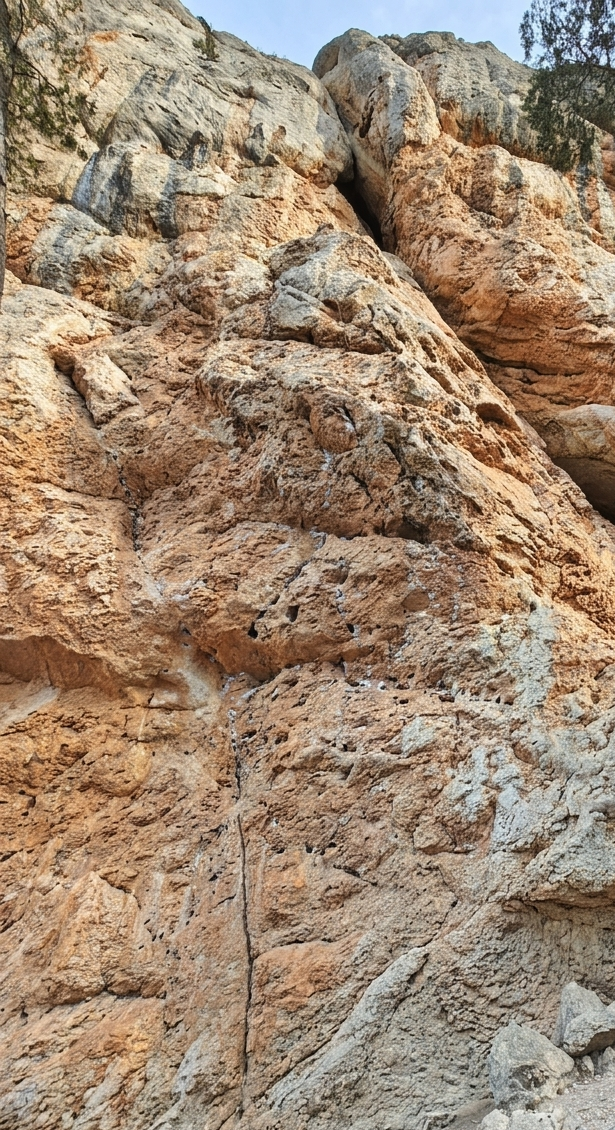
The rest of the north-facing side is less imposing than Super Heroes but still offers solid mid-grade climbing in the shade. Sector Comic & Pajaritos (9 routes) and Sector Descote (11 routes) round out the north face options. The overall north face is also one of the few sectors in the Costa Blanca region that remains climbable in light rain — the overhang keeps the main walls dry.
South Face — Sunny Slabs with a View
Walk around the back of the limestone fin and the character of the crag changes completely. The south face is all sunny slabs, open aspect, and wide views across the inland Alicante landscape — a totally different proposition from the overhanging pockets on the other side.
Sector Petorri (12 routes, 3c–6a) is the accessible heart of the south face, with beginner-friendly lines on good rock and a relaxed atmosphere. It is an ideal spot for less experienced climbers or anyone wanting to warm up on slabby footwork before committing to the steeper north face. The Sectors Parking area (near the base of the approach) also has a handful of easier lines perfect for the first hour of the day.
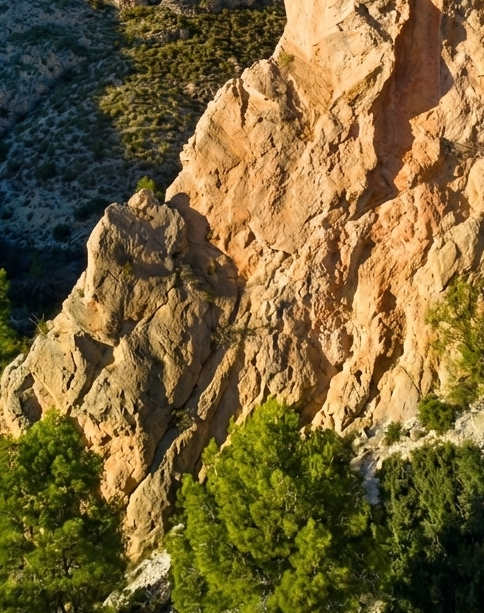
The south face season runs from October through to April. By May the sun angle starts to make afternoon sessions uncomfortable, and from June onwards, the north face is the only choice. In the sweet spot of October to March, however, the south face offers some of the most pleasant winter-sun slab climbing in the Alicante area.
Best Time to Climb — Seasonal Guide
Foradà’s altitude and uniqueness give it one of the best seasonal windows of any crag in the region. In practical terms, the north face is genuinely viable year-round for those willing to dress appropriately in winter; the south face shuts down in summer heat but comes into its own from October onwards.
| Season | Conditions | Temp (°C) | Recommended? | Notes |
|---|---|---|---|---|
| October–November | Warm, stable, low crowds | 16–24°C | ● Best | Ideal all-round. Both faces in perfect condition. South face slabs warm and dry; north face cool and grippy. Best combination climbing of the year. |
| December–January | Cool, occasionally cold at altitude | 6–14°C | ● South Face | South face in winter sun is excellent on clear days. North face can be very cold at 1000m — save it for warmer winter days or bring extra layers. |
| February–April | Warming up, stable | 12–22°C | ● Best | Spring is superb. Both faces coming into their own again. April is particularly good — warm without being hot, excellent friction on the slabs. |
| May–June | Getting warm | 22–30°C | ● North Face only | South face starts to feel hot by midday. Stick to the shady north face and start early. June is the tipping point — evening sessions only on south face. |
| July–September | Hot — but north face is shaded | 28–36°C | ● North Face only | North face stays shaded all day at altitude. Start by 8am, finish by 1pm. |
Topos, Guidebooks & Digital Resources
Foradà is one of the three largest crags in the Alicante area and is well covered across both local and international guidebooks. Our strong recommendation is always to buy the most specific local guide first — it will have the deepest coverage of Foradà’s individual sectors and the most accurate access information for the area. Use the broader regional guides as companions, not replacements.
theCrag: The most up-to-date free digital source for Foradà — includes the critical parking warning about the closed dirt track, community notes, and logbook entries. Check it before every visit for current access notes.
The Topo: Good topo coverage for Foradà, particularly for Sector Super Heroes, Petorri, Comic & Pajaritos, and Elecciones. Free photo topos available without a subscription. Worth downloading offline before heading out.
Rockfax Digital: The digital companion to the new 2026 Rockfax Costa Blanca guide — updated March 2026 alongside the new print edition. Available via the Rockfax app for subscribers.
Alicante Sport Climbing Guidebook
The definitive local guide to the Alicante inland crags. Foradà is one of the three largest crags covered. +25 areas, 3,000+ routes, colour photo topos, QR codes and GPS parking coordinates per crag. Published 2024 (revised 2nd edition), bilingual Spanish/English. This is the one to buy first.
Buy — Climb Europe ↗Costa Blanca — Rockfax
Brand new March 2026 edition — the most comprehensive Rockfax Costa Blanca ever produced. 576 pages, 4,800+ routes across 50 crags including Foradà, fully drone-rephotographed with new aerial topos and maps. A major upgrade on the 2013 edition. Essential if you’re planning a wider Costa Blanca trip.
Buy — Rockfax ↗Escaladas en Alicante — Amat, Hernández & Verdú
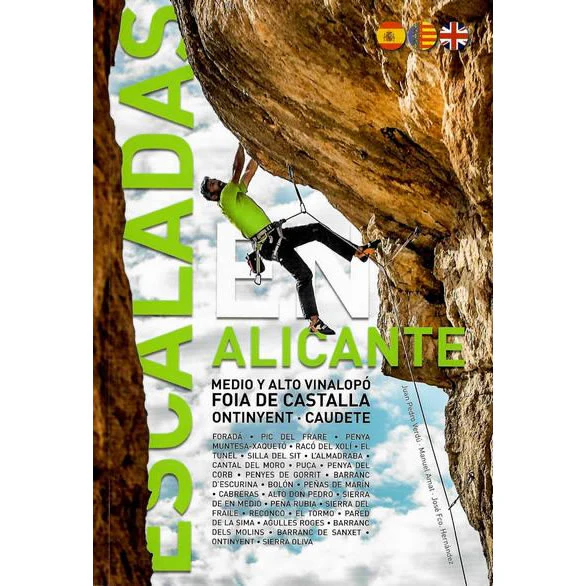
The dedicated local guide to the crags in the Alicante inland area around Petrer and Castalla — including Foradà, Peñas de Marín, El Cid, Barranc de l’Avern and more. 414 pages, over 2,000 routes on photo topos, GPS parking coordinates for every crag. Bilingual Spanish/English. 2024 edition — more detail on this cluster of crags than any regional guide will give you.
Buy — Climbing-Guide.eu ↗🚐 Van Access, Overnight Parking & Essentials
Foradà sits within the Paisaje Protegido de las Sierras del Maigmó y el Cid — a protected landscape covering approximately 16,000 hectares. Camping and overnight stays within the protected area boundaries are prohibited. The recreational area at Xorret de Catí (the closest natural hub near the crag) explicitly bans camping despite having picnic and water facilities.
The most practical overnight bases for van climbers are the free parking spots in Petrer old town (~15 minutes from the crag, quiet residential streets) or the designated camper areas in Elda. Check Park4Night for current community reports before arriving — enforcement and tolerance levels can vary. Nice park4night recommended are here or this one both for the night only, then driving in the day to reach the crag. or another closer one which is our top recommendation with water
🅿️ Parking & Overnight Options
| Location | Type | Distance to Crag | Notes |
|---|---|---|---|
| Foradà — Roadside Gatepost | Day parking only | ~30 min walk | Park roadside at the stone gatepost on the main road. Dirt track beyond is closed to vehicles. No overnight. GPS link to be added after on-site visit. |
| Petrer Old Town | Free overnight | ~15 min drive | Quiet residential streets in old Petrer. Free, no time limit reported. Confirmed on Park4Night. Good base for multi-day stays — all services in town. Check P4N for current spots. |
| Xorret de Catí Recreational Area | Day use / picnic | ~5 min drive | Water, toilets, picnic tables, large parking area. Useful for filling tanks and rest-day facilities. Camping prohibited in the protected landscape. Hotel closed since 2012. |
| Elda Camper Area | Paid overnight | ~20 min drive | Full-service motorhome area in the nearest large town. Services including water, grey/black water disposal. Best option for longer stays needing hook-up. |
Practical Vanlife Essentials
💧 Water
Xorret de Catí recreational area (5 min from crag) has a public water fountain — good for filling tanks between sessions. Petrer and Elda both have full services.Also on park4night google map
🛒 Supplies
Castalla is your best bet for a quick shop; it has a large Mercadona and Hiperber with much easier van parking than the narrow streets of Petrer. If you need a massive “everything” shop, the Carrefour at the A-31 Petrer/Elda junction is directly on your route from the airport.
🚽 Facilities
No toilet facilities at the crag. Use Xorret de Catí or town facilities before heading out. The rock is soft limestone — the local climbing community asks that you clean shoes before climbing and remove all tick marks and chalk on completion.
🏥 Medical
Nearest hospital is in Elda (~20 km from the crag). Save the address offline before heading out — signal at Foradà is not reliable enough to look things up in an emergency.
Eat, Refuel & Local Life
Petrer is the closest town to Foradà and the most convenient base for vanlifers. The old town is charming — a proper Spanish working town rather than a tourist destination, which means honest prices and good local food. The castle overlooking the town is worth the short climb for the views across the valley. There are several bars and restaurants serving traditional Valencian and Alicante cuisine: arròs amb fesols i naps (rice with beans and turnips), gazpacho manchego (nothing like the cold soup — a warm game stew), and the local wines from the Vinalopó valley.
Elda and Petrer offer a wide range of services, but for daily supplies, Castalla is often more convenient for vanlifers. It sits just on the other side of the pass and features modern supermarkets with spacious parking. The local area is known historically for its shoe industry—the Museo del Calzado in Elda is unexpectedly worth a visit on a rest day. For fresh produce, Elda’s central market remains excellent and well-priced if you don’t mind navigating the town traffic.
For fuel and supplies before hitting the crag, the large Carrefour at the A-31 Petrer/Elda junction is the most convenient stop — well-stocked, easy parking for vans, and directly on the route to the crag approach road.
Local Clubs, Community & Access
The climbing community around Petrer and Elda is active and has been responsible for much of the route development in the Alicante inland area. The closest active clubs are:
- Club d’Escalada Petrer — the local club most directly connected to the Foradà and Marín area. Small, volunteer-run, and a useful contact for current access information and any changes to the approach.
- Federació d’Esports de Muntanya i Escalada de la Comunitat Valenciana (FEMECV) — the regional climbing and mountaineering federation for the Valencia region. Their website lists affiliated clubs and has up-to-date information on any access restrictions or protected area regulations affecting crags in the Maigmó area.
For current beta, the most reliable source is the theCrag comments and logbook for Foradà — the community is active and flags access changes, parking updates, and condition reports promptly. The parking warning about the closed dirt track first appeared via theCrag community notes.
Keep the trip going
Alicante is a great entry point — but there’s a lot more to explore. We’ve got climbing guides across Spain and a full rundown of the best climbing destinations in Europe if you’re planning a longer van tour. Before you go, check how we use The Topo, Rockfax and Park4Night together to navigate crags on the road — and if you’re still kitting out the van, our van life climbing gear list covers everything we actually bring.