Muzzerone Climbing Guide — Sea Cliffs, Deep Water Solos and the Golfo dei Poeti
Italy’s white limestone walls above Portovenere, plus our psicobloc day around Lerici
| Where | Headland above Portovenere, Liguria — 15 km from La Spezia – Google map |
| Size | 540 routes, grades 3–8b, most between 5a and 7c |
| Style | Technical vertical limestone — crimps, edges, pockets |
| Multi-pitch | Yes — 2–3 pitches, walls to 220 m |
| Season | Year-round; best autumn and spring |
| Approach | 10–25 min from parking, some exposed paths |
| Also here | Deep water soloing around Lerici — our day out below |
We were parked up in the Golfo dei Poeti in August 2026, and the deep water solo day around Lerici described below is the part we’ve done ourselves. We didn’t tie in on Muzzerone’s routes on that trip — for the sector and grade information we leaned on the topo app and the Versante Sud Muzzerone guidebook rather than our own fingertips. Consider this an introduction to the area — there’s plenty more to come on both the DWS around Lerici and Muzzerone itself over the coming months, so stay tuned.
In This Guide
What Is Muzzerone?
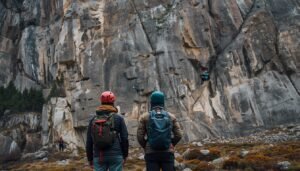
Muzzerone is the headland that rises behind Portovenere, at the southern tip of the peninsula separating the Cinque Terre from the Gulf of La Spezia — the Golfo dei Poeti, named for Byron and Shelley, who both haunted these shores. Its seaward face is a run of white and grey limestone cliffs dropping towards the Tyrrhenian, looking out to Palmaria, the Apuan Alps and — on a clear day — Corsica, and the Muzzerone climbing area has quietly become one of Italy’s best sea-cliff venues, about 15 km from La Spezia and a world away from the Cinque Terre crowds shuffling along the coast path above.
The Muzzerone climbing story starts in the 1970s, when the Italian Navy’s special forces (Comsubin), based in the Varignano Bay at Le Grazie, used these walls for military training. Local climbers began bolting sport routes towards the end of that decade, and in the early 1990s the “Muzzerone” Free Climbing School was founded — reportedly the first school in Italy dedicated entirely to sport climbing. The cliffs have since been substantially re-bolted, and today the area holds around 540 routes spread across the 20 sectors of the current Versante Sud guidebook — which also covers a further eight crags along the Levante Ligure coast.
Muzzerone Climbing — The Rock & Style
Muzzerone climbing is on solid, compact limestone — mostly vertical to gently overhanging walls climbed on crimps, edges and water pockets that reward precise footwork and punish lazy fingers. Reviewers consistently describe the climbing as technical and elegant rather than brutish: this is a crag where good footwork gets you further than big shoulders.
The spread is broad. Most routes sit between 5a and 7c, but the full range runs from grade 3 slabs to 8b testpieces, and alongside the single pitches there are multi-pitch outings of two to three pitches on walls up to roughly 220 m. If you want steep power climbing, the word is Polveriera and Mandrachia; for thin, fingery test pieces it’s the Specchio di Atlantide.
Muzzerone Climbing Sectors & Grades
The Versante Sud guidebook divides Muzzerone into 20 sectors, worked along the cliff from Garimpo to Mandrachia: Garimpo, Specchio di Atlantide, Pilastro dell’Infinito, Atlantide, Solarium, Pilastro di Mezzo, Tibet and Pilastro dei Neri, Thunderdome, Parete Centrale, Cava degli Anelli, Parete delle Meraviglie/Poveriera, Polveriera, Parete Dimenticata, Pilastro del Forte, Pilone di Cajenna, Cajenna, Pilastro del Bunker, Parete Striata, Pilastro della Discordia and Mandrachia. The highlights below are a starting point, not a substitute for the guide.
| Sector | Character | Grades |
|---|---|---|
| Garimpo | Short, technical routes of 15–20 m | 6c–8a+ |
| Parete Centrale | The classic mid-grade wall of the crag | Mid grades, mixed styles |
| Specchio di Atlantide | Steep, fingery testpieces — the hard sector | 7a–8b |
| Atlantide / Atlantide Bassa | Varied routes up to 75 m | 6a+–8a |
| Mandrachia | Long, varied climbs | 5a–8a |
| Parete delle Meraviglie / Poveriera | Big sea views, steep in places | 3–7a |
Plan Your Visit
When to Go
The walls face west to south-west over the sea, which makes Muzzerone climbing a proper year-round proposition by northern European standards. Autumn and spring are the sweet spots — stable weather, friendly temperatures. Winter is very much in play too: mild coastal conditions mean climbable days most weeks, which is exactly why this coast slots so neatly into a winter van route south. Summer is the compromise season — chase morning shade and count on the afternoon sea breeze, or do what we did and get in the water instead.
Getting There & Access
From La Spezia, drive towards Portovenere and turn right before Le Grazie — the turning is signposted “Palestra di Roccia” — following the road uphill for around 4 km to a fork; keep left and descend the hairpins towards the Muzzerone area. From the parking, sector approaches run roughly 10–25 minutes on cliff paths — some of them exposed, so keep an eye on kids and clumsy mates.
Being former military ground with an active naval base nearby, some zones around the headland have restrictions — respect any fencing and signage you meet, and check the local school’s updates for current access notes.
What to Bring
Rope: A 60 m covers most of what’s here. The exceptions are the long ones — single pitches run up to 75 m at Atlantide — so bring a 100 m if those are on your list, or climb on double ropes, which also makes the abseils simpler. Either way, check the topo before committing to a 60 m. Draws: 12–14 handles most single pitches; carry up to 20 for the longest routes. Also: a helmet is sensible on a sea cliff with paths above you, and the walls take full afternoon sun, so water and a hat matter more here than the sea view suggests.
Guidebook & Topo App
Essential: Muzzerone by Versante Sud

Muzzerone — Versante Sud Climbing Guidebook
Author: Davide Battistella · Publisher: Versante Sud, 2017 (Italian, English and German editions)
Coverage: All 20 Muzzerone sectors plus 8 more crags along the Levante Ligure coast, from Rocchetta to Deiva Marina
Price: ~€29
This is the book we used on the ground. Full topos, climbing history, access notes, bolting and gear info, climate and season advice — plus drone footage of every main sector. Versante Sud’s neat trick: buy the paper book and you get the digital edition in their iClimbing app too, so the whole guide lives on your phone at the crag while the paper copy stays dry in the van. It dates from 2017, which is worth knowing — it’s still the printed reference, but pair it with a live app for anything re-bolted since.
They’re also the kind of company worth giving your money to. Through their Books for Bolts project, running since 2006, every guidebook published comes with a donation of stainless steel bolts, hangers and belays for equipping new routes and — above all — re-securing old ones. And their Zero Miles label means the guides are written by local climbers who reinvest the proceeds into new crags and route development. Buying the book quite literally puts steel in the rock.
Buy the English edition →Digital Topos: The Topo App

Alongside the book we ran The Topo — Muzzerone crag page to complement it: handy for quick route-finding and checking what’s around you on the wall. Book first, app as backup is the combination that worked for us — more on that workflow in our climbing apps guide.
Beyond Muzzerone — Climbing Around La Spezia
Muzzerone is the headline act, but the Gulf has a supporting cast worth knowing about if you’re basing here for a week or more:
Monte Marcello sits on the opposite arm of the gulf above Lerici, about 15 km from La Spezia, with sport routes roughly from 5c to 7c and the same sea-view payoff. The Versante Sud guide’s Levante Ligure chapter adds seven more: Rocchetta, Punta Bianca and Castellana towards the Tuscan border, and Sant’Anna, Punta Manara, Moneglia and Deiva Marina strung up the coast towards Genova. For actual rainy days, La Spezia has an indoor wall of over 200 m² inside the G. Mariotti sports hall on Via della Pianta.
And then there’s the option that doesn’t need a rope at all — which is what we chose in the August heat.
Van Life & Rest Days in the Golfo dei Poeti

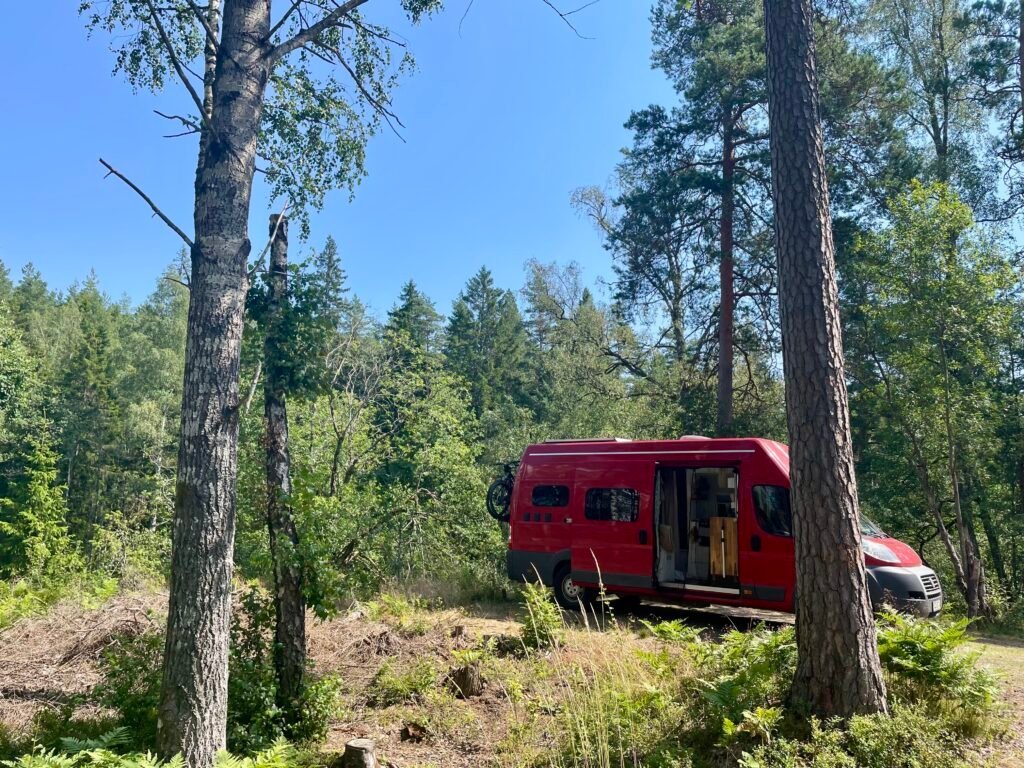
A word of honest warning: this is not the empty Spanish plateau. The Portovenere–Cinque Terre corridor is one of the most visited stretches of coast in Italy, and van logistics reflect that — parking near Portovenere is tight and enforced in season, height barriers are common on the coastal lots, and free overnighting close to the water is largely a thing of the past in August. The practical play is to base slightly inland from the headline villages and look for spots around 30 minutes back from the coast to have a comfortable stay.
Where to Stay — Portovenere, Lerici & La Spezia
Not everyone rolls in with a bed in the back. Hotels and apartments in Portovenere itself are lovely and priced like it — La Spezia and the Lerici side give you far more for your money and an easy drive to the crag. The map below shows live prices for your dates:
Booking through this map supports the blog at no extra cost to you.
The rest-day problem here solves itself. Ferries hop from Portovenere to Palmaria island and along the Cinque Terre; the Golfo dei Poeti villages — Lerici, Tellaro, Le Grazie — are the kind of places you’d visit even without a crag above them; and the swimming is some of the best on the Ligurian coast, Cala Maramozza included if your knees can handle the descent. Shoulder-season visitors get all of it with half the crowds, which is one more argument for pointing the van here in October rather than July.
Our Deep Water Solo Day at Lerici — Cala Maramozza & the Scoglio del Macellaio

The stretch of coast between Lerici and Tellaro is quietly brilliant for deep water soloing — psicobloc, as the locals call it. No ropes, no gear, just climbing above deep water where the only consequence of falling is a swim. In August 2026 we spent a day doing exactly that.
First, the logistics, and let’s be blunt: parking anywhere near this coast in August is horrible. We gave up on getting close, parked here instead, and launched the paddle board from the little beach down by the road. Reaching it is a bit of a mission, but there is a path — follow the locals and you’ll find it. From the beach we paddled along the coast, swung wide around the military base on the headland, and arrived at our deep water solo spot here — the stretch around Cala Maramozza, a small cove hemmed in by walls and Mediterranean scrub, with water shifting between emerald and glass-clear blue. If you’d rather arrive on foot, fair warning: the path down to the cove is steep, unmarked and involves fixed ropes and a bit of nerve.
From the water we worked our way along the rock to the Scoglio del Macellaio — the “Butcher’s Rock”, named, so the local legend goes, after a Lerici butcher who threw himself from it over a broken heart. Cheerier than it sounds: the rock is pierced by a sea cave running right through it with three exits, and the light inside turns a ridiculous shade of blue. The neighbouring Cala Caletta is a protected archaeological zone, thanks to a Roman shipwreck found on the seabed complete with marble columns. Traversing above that kind of scenery, dropping into warm August water when your forearms give out, is about as good as climbing gets.

Practical Notes for DWS Around Lerici
A few things worth knowing before you try it. Access is easiest by water — kayak, SUP or inflatable — and paddling in as we did also solves the parking problem; on foot you’re committed to the Maramozza descent. Check the water depth beneath anything you climb before you climb it, every time — swell and seabed change, and the golden psicobloc rule is never climb higher than you’ve checked. Go in a group, keep a dry bag with you, and remember the caves and coves here are popular with swimmers and snorkellers in summer, so climb where you won’t land on anyone. This is unregulated soloing above the sea: it’s on you to judge conditions.

Old rock shoes you don’t mind drowning are the way — salt water is brutal on rand glue, so retire a pair to sea duty rather than sacrificing your best ones. Liquid chalk beats trying to keep a chalk bag dry on a paddle board, and a dry bag for phone and keys is non-negotiable.
See our full climbing kit list →Planning a European Climbing Trip?
Muzzerone is exactly the kind of place that never makes the top-ten lists but should. We collected more of them — crags across Europe that deliver far more than their reputation suggests.
10 Underrated Climbing Destinations in Europe →Verdict — Should Muzzerone Climbing Be on Your List?
Yes — especially if you’re van-touring the Mediterranean in the shoulder seasons or winter. You get around 540 routes on quality limestone from grade 3 to 8b, sea views on every pitch, a genuine year-round season, and the Cinque Terre, Portovenere and the Golfo dei Poeti on your rest days. Add the Lerici coast for deep water soloing in the warm months — plus more psicobloc around the Isola del Tino, which features in the guidebook and is firmly on our list even though we haven’t paddled out there yet — and this corner of Liguria makes a serious case as a complete climbing destination. We came for a swim and some psicobloc; we left with Muzzerone climbing at the top of our tick-list for the autumn. And if you’re heading south after, it pairs perfectly with our winter climbing circuit through Spain and Portugal.
Muzzerone Climbing FAQ
Where is the Muzzerone climbing area?
The Muzzerone climbing area is the headland above Portovenere in Liguria, Italy, about 15 km from La Spezia at the edge of the Cinque Terre area. The cliffs are reached by road via Le Grazie or on foot from Portovenere in about 30 minutes.
How hard is the climbing at Muzzerone?
There’s a genuine full spread: around 540 routes from grade 3 to 8b, with most routes between 5a and 7c. Beginner-friendly sectors like Cava degli Anelli sit alongside hard sectors like the Specchio di Atlantide.
When is the best time to climb at Muzzerone?
Autumn and spring are ideal, and the mild coastal winter is very climbable thanks to the west/south-west aspect. In summer, climb in morning shade and use the sea breeze — or switch to deep water soloing.
Is there multi-pitch climbing at Muzzerone?
Yes — alongside the single pitches there are multi-pitch routes of typically two to three pitches on walls up to roughly 220 m.
Can you go deep water soloing near La Spezia?
Yes. The coast between Lerici and Tellaro, including Cala Maramozza and the Scoglio del Macellaio, offers deep water soloing (psicobloc) in the warm months, and the guidebook also covers psicobloc around the Isola del Tino. Access is easiest by water — kayak, SUP or boat — and you should always check water depth before climbing. Local guides also run organised DWS days.
Do I need a guidebook for Muzzerone?
The Versante Sud Muzzerone guidebook is the current printed reference, and the local Scuola di Arrampicata Muzzerone publishes updates. Online, theCrag and Planetmountain cover the main sectors.
Keep Reading

📚 Helpful Climbing Resources
Essential guides, tips, and advice for your climbing adventures
🔧 Gear Lab
View all →
DMM Renegade Review: Four Years on My Trad Harness
Read more →
Black Diamond Solution Review — The All-Rounder, Updated for 2026
Read more →🚐 Road Trip Essentials
View all →
10 Underrated European Sport Climbing Destinations (That We Actually Drove To)
Read more →
Van Life Electrical Setup 2026 — Our Exact Power System
Read more →📖 Climber's Handbook
View all →
Beginner Climbing Gear List 2026 – Everything You Need to Start Climbing Outdoors
Read more →