Sella Climbing Guide
The Costa Blanca’s Most Complete Valley — Wild Side, Hidden Valley & The Divino
🇪🇸 Near Benidorm, Alicante, Spain | 🪨 Compact Limestone | ☀️ Costa Blanca’s Most Popular Climbing Valley
| 📍 Location | Sella Valley , ~25 km north of Benidorm, ~20 km inland from Villajoyosa, Alicante province, Spain |
| 🅿️ Parking GPS | 38.6194, -0.2312 — Pas del Goleró parking. |
| 🧗 Climbing Style | Sport climbing — fingery slabs, vertical walls, tufas and overhangs. Multi-pitch on Pared de Rosalía and The Divino |
| 🪨 Rock Type | Compact grey limestone |
| 📏 Route Heights | Mostly ~30m single pitch. Some 40m. Multi-pitch on Pared de Rosalía and The Divino |
| 📊 Grade Range | 4a–8b+ (nearly 500 routes across all sectors) |
| 🌤️ Best Season | September–April for main valley; Pared de Rosalía and Cabeza de Rino viable in summer |
| 🧭 Approach | 5–20 min from car parks depending on sector |
| 📶 Mobile Coverage | Limited in the valley — download topos offline before leaving or get a nice climbing guidebook ! |
| 🚐 Van Parking | Campervans can access the car park. See van section below for access notes and overnight options |
| 💰 Daily Budget | €15–25 (vanlife, self-catering near Sella village or Benidorm outskirts) |
| 🗺️ Digital Topos | theCrag — Sella · 27 Crags — Sella · Rockfax Digital |
Why Sella? The Costa Blanca’s Complete Venue
If you’re planning a Costa Blanca climbing trip and you only visit one area, most climbers will point you here. Sella is one of the most popular climbing valleys in the Costa Blanca — not because it’s convenient (it isn’t particularly) but because of what’s inside it. On all sides, grey limestone walls rise out of pine scrub. You could spend a full week here without repeating yourself, and many climbers do exactly that (We think).
The character of the place shifts completely depending on where you point yourself. The main valley is fingery and technical — slabby sport routes on compact grey limestone, mostly around 30 metres, well bolted and well worn by the thousands of climbers who visit each season. Go further up the valley and the angle steepens: you’re into the Hidden Valley territory of tufas, pockets and overhangs at Wild Side, the sector with the highest concentration of hard routes in the entire province. Above everything sits The Divino, a diamond-shaped wall that dominates the skyline and demands a different level of commitment altogether.
It is rarely a quiet crag by Costa Blanca standards, but the valley is large enough that you can usually find solitude if you’re willing to walk. In the busy October–March season you’ll share the main sectors with climbers from across Northern Europe — it remains, as UKC puts it, the most popular area in the Costa Blanca.
Main Valley — Slabs, Verticals & Overhangs
The central spine of the Sella valley is where most visiting climbers spend most of their time. A superb series of south-facing walls and buttresses line the main ridge — sunny in winter, hot by May. The climbing here is primarily fingery and technical: grey limestone slabs, low-angled walls with pockets and crimps, routes mostly in the 5s, 6s and low 7s. Everything is well bolted.
Cabeza de Rino is the first crag you encounter on entering the valley, sitting right next to Pas del Goleró parking. Short, powerful, mainly overhanging routes. On the far right a section of easier slabs provides some accessible warm-up lines. Crucially, it faces north — which makes it the only main valley sector that works well in summer heat. One to remember for hot afternoons.
Culo de Rino follows the road to the second parking area: slabs and vertical walls on good quality limestone. Some routes here are polished from heavy traffic — check community notes on theCrag before committing to a project. This is a perfect winter sector, catching sun all day. El Cajón de Cuartos sits just off to the side — a great beginner crag, mainly slabs, accessible grades, and a good place to put a nervous leader at ease.
Sector Competición is one of the highlights of the main valley. Long, sustained, steep and technical routes — fingery climbing at its best. If the slabs aren’t doing it for you, start here. It’s consistently rated one of the best sectors at Sella. Techo del Rhino nearby offers a distinctive big roof feature with technical climbing underneath — if you want your heart rate up, the roof itself is the line to try.
Marion is a sunnier wall with classic multi-pitch options and views across the valley — a good rest-day choice when you want height without maximum commitment. The sector complex from Ojo de Odra/Final through to Bear/Doggy Guantanamo/Sunrise adds another 90+ routes to the right side of the main valley, including some beginner-friendly lines and steeper fingery climbing further along.
El Elefante is worth a mention for its history — one of the oldest crags in the valley, with a distinctive blank grey limestone face. The climbing is mainly steep slabs, technical and demanding. Routes run up to 40 metres, so bring an 80 m rope. It sits off its own short dirt road from the main valley road, with parking and a brief walk in.
Pared de Rosalía — North Face & Hot Days
When the main valley south-facing walls start to cook in late spring and summer, Pared de Rosalía becomes the answer. This north-facing wall catches shade through most of the day and offers some of the best mid-to-hard grade climbing at Sella in the warmer months — long routes with sustained sequences, some bolted, some requiring a rack for the crack lines. UKC notes it’s worth bringing trad gear, though fully bolted multi-pitch lines exist here too.
Treat Pared de Rosalía and The Divino as mountain crags — they’re more exposed than the sheltered main valley sectors. In winter, the tall surrounding walls that keep the main valley warm work against you here: the low sun doesn’t reach the north face until late morning. Come in spring and autumn for the best combination of conditions.
Hidden Valley — Wild Side & Sector VIPS
Follow the valley road past the main climbing area, take the right fork over a shallow col, and you drop into a second, quieter valley. This is the Hidden Valley — the destination for climbers who’ve been pushing grades in the main area and want more. The walls here are steeper, the features are bigger, and the ambience is more serious.
Wild Side is the headline act — according to local sources, it has the highest concentration of 8th grade sport routes in the entire province of Alicante. Around 80 routes, magnificent overhanging terrain loaded with tufas and pockets. If you’re climbing 7b+ and above, this is where Sella really comes into its own. Conditions are generally excellent even in light rain — the overhang keeps the main walls dry.
Sector VIPS sits on the opposite side of the Hidden Valley to Wild Side — shorter, more powerful overhang routes that complement the sustained lines of Wild Side perfectly. Together these two sectors make the Hidden Valley one of the strongest hard-climbing venues in the Costa Blanca.
The Divino — The Crown Jewel
You can’t miss it. Standing above the whole Sella valley, the diamond-shaped wall of The Divino dominates the skyline from the moment you enter. It’s the most visually striking feature in the valley — a massive, steep face that demands attention from any climber looking up from the car park.
The Divino is primarily a multi-pitch with sport venue, with long traditional routes making up most of the climbing. The lower sections contain some bolted sport lines, though predominantly in the harder grades. It should be treated as a mountain crag in terms of preparation — take a full rack, check conditions carefully, and be aware that the Divino and Pared de Rosalía are genuinely exposed to the weather in a way the sheltered main valley sectors are not. For climbers who want more from their sport climbing than clipping bolts in a valley, The Divino is the reward at the end of the Sella experience.
Best Time to Climb — Seasonal Guide
Sella’s main valley is primarily a winter-sun destination — the south-facing walls are at their best from September through to April. That said, the north-facing sectors (Cabeza de Rino, Pared de Rosalía) and the overhanging Wild Side give the valley a year-round dimension that most Costa Blanca crags can’t match.
| Season | Conditions | Temp (°C) | Recommended? | Notes |
|---|---|---|---|---|
| September–November | Warm, stable, getting busy | 17–26°C | ● Best | Autumn sweet spot. Main valley south face in perfect condition. Wild Side excellent. Peak season starts October — expect company at the popular sectors. |
| December–January | Cool, good friction | 8–15°C | ● Very Good | Main valley crags get sun from mid-morning. The tall surrounding walls keep the low winter sun off until later than you’d expect — worth noting for cold mornings. Pared de Rosalía cold; stick to south face. |
| February–April | Warming, excellent friction | 12–22°C | ● Best | Spring is superb across all sectors. April brings warmer temps but friction stays good. Wild Side and Hidden Valley in peak condition. |
| May–June | Warm — south face gets hot | 22–30°C | ● North/Shade only | Main valley south face uncomfortable from midday. Switch to Cabeza de Rino (north-facing), Pared de Rosalía, or Wild Side. Start early. |
| July–August | Hot — shade sectors only | 28–36°C | ● Limited | Most south-facing main valley sectors off-limits by mid-morning. Cabeza de Rino (north-facing, shaded) and Wild Side (overhanging, dry in rain) are your options. Early starts essential. |
Topos, Guidebooks & Digital Resources
Sella is one of the best-documented climbing areas in Spain — it’s been in the Rockfax Costa Blanca guide since the first edition, and the community topo coverage on 27 Crags and theCrag is extensive. Our recommendation is always to buy the print guidebook first — and our pick is Costa Blanca Climbs by Roberto López. It’s produced by local climbers, and part of the profit goes straight back into bolting and re-equipping the crags you’ll be climbing on. The Rockfax 2026 is the more polished production and superb for wider Costa Blanca context, but if you’re buying one book, we’d put your money where it does the most good locally.
theCrag: Detailed sector and route information, community access notes, and logbook entries. The access warning for Wild Side (landowner parking request) is kept current here. Check it before every visit.
27 Crags: Good photo topo coverage for most main valley sectors and Wild Side. A note on the page flags that topos are being updated and improved by local climbers — some may still be in progress. Download offline before heading out.
Rockfax Digital or their guidebook.: Digital companion to the 2026 print guide, available via the Rockfax app. Updated March 2026 alongside the new print edition.
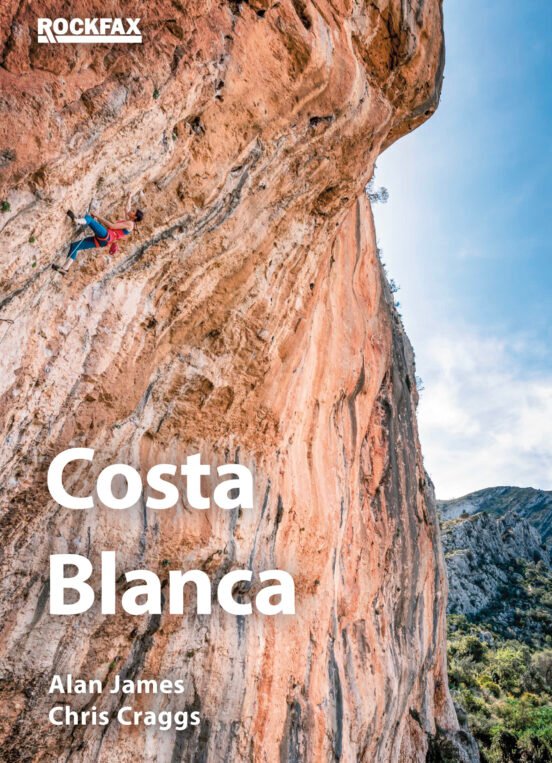
Costa Blanca — Rockfax 2026
Brand new March 2026 edition — the most comprehensive Rockfax Costa Blanca ever produced. 576 pages, 4,800+ routes across 50 crags including Sella in full. Fully drone-rephotographed with new aerial topos and sector maps. The definitive guide for a Sella trip that also takes in the wider Costa Blanca.
Buy — Rockfax ↗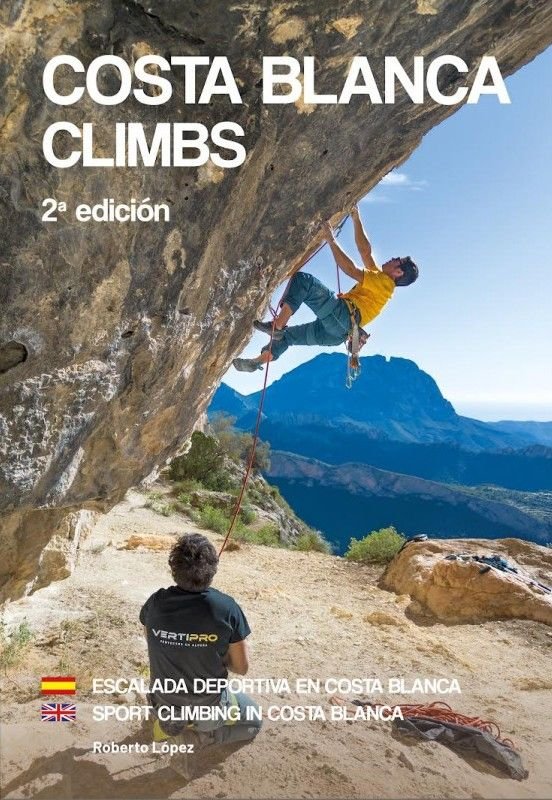
Costa Blanca Climbs — Roberto López
648 pages covering 56 crags across nine areas from Gandía in the north to Orihuela in the south — including Sella. Second edition, published December 2025, bilingual Spanish/English. Very clearly structured with sector introductions, detailed access descriptions, parking options with GPS coordinates via QR codes, and pictogram-format info for each wall. A strong alternative to Rockfax with excellent access beta.
Buy — Climbing-Guide.eu ↗🚐 Van Access, Overnight Parking & Essentials
Sella’s access road is surfaced for the roughly 4 km from the turn-off near the village up to Pas del Goleró parking, and campervans manage it without difficulty — just take it steadily, as it’s narrow and winding in places with the odd passing spot. The car park is where you leave the van: the sectors further up the valley are reached on foot, and the track beyond is dirt. Most approaches are a short walk from here anyway.
Overnight camping within the valley itself has never been officially sanctioned. The Refugio Font de l’Arc is a private climbers’ refuge that opens on weekends and bank holidays — it’s not a commercial campsite and cannot be booked like one. The most reliable overnight base for vanlifers is Sella village itself or the wider Benidorm area. Check Park4Night for current community-verified spots before arriving. Away but more hidden and worth a detour is an incredible spot here.
🅿️ Parking & Overnight Options
| Location | Type | Distance to Crag | Notes |
|---|---|---|---|
| Pas del Goleró Parking | Day parking | 5–20 min walk | End of the 4 km road. GPS: 38.6194, -0.2312. Handles campervans. Main access point for most sectors. No official overnight. Refugio opens weekends/holidays only. |
| Sella Village | Free overnight / campsite | ~15 min drive | Quiet village with street parking. Municipal campsite (book via town hall, open from March) for longer stays with basic facilities. Several climber accommodation options in village including casas rurales. |
| Zona de acampada de Relleu | Free overnight / campsite | ~20/30 min drive | Quiet village areas for campers just lovely and convenient. Several visitors including climbers as place has amenities. |
Practical Vanlife Essentials
💧 Water
Sella village has public water points. The Zona de acampada de Relleu is the closest and best.
🛒 Supplies
Sella village has a small shop for basics. For a full shop, Villajoyosa (~20 km) or Benidorm have supermarkets with better van parking. Stock up before heading into the valley for multi-day sessions.
🚽 Facilities
No toilet facilities at the crag. Use village or town facilities before heading out. Limestone is soft — please clean shoes before climbing and remove tick marks and excess chalk after each route.
🏥 Medical
Nearest hospital is in Benidorm (~25 km). Save the address offline before heading out — signal in the Sella valley is unreliable and not good enough for emergency lookups.
Eat, Refuel & Local Life
Sella village itself is a small, attractive mountain village perched above the valley — genuinely Valencian in character, with a small bar and local restaurant. Rest days are well spent walking around the village and up to the church for views across the valley. The village has avoided the tourist overdevelopment of the coast entirely, which makes it a pleasant change from the Benidorm corridor.
Villajoyosa (~20 km towards the coast) is the most practical town for vanlifers — large enough for a proper supermarket run, market days for fresh produce, and a reasonable range of bars and restaurants. It’s also a genuinely interesting town in its own right, with colourful painted houses on the seafront and a good chocolate museum. For a rest-day beach option, Villajoyosa’s beach is far quieter than Benidorm and well worth an afternoon.
For fuel and a major shop, Benidorm is the obvious choice — every service you need, though van parking in the main town centre is not easy. Use the larger supermarkets on the outskirts rather than trying to navigate the old town streets.
Keep the trip going
Sella is a brilliant base but there’s more to the Costa Blanca than one valley. We’ve got climbing guides across Spain and a full rundown of the best climbing destinations in Europe if you’re planning a longer van tour. Check how we use The Topo, Rockfax and Park4Night together to navigate crags on the road — and if you’re still kitting out the van, our van life climbing gear list covers everything we actually bring.
🧗 More RockVanLife Spain & Costa Blanca Guides
❓ Frequently Asked Questions — Sella Climbing, Costa Blanca
📌 Related Topics
📚 Helpful Climbing Resources
Essential guides, tips, and advice for your climbing adventures
🔧 Gear Lab
View all →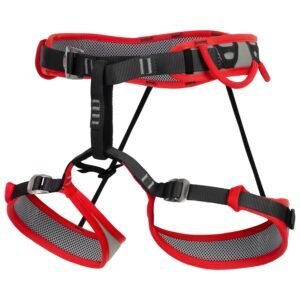
DMM Renegade Review: Four Years on My Trad Harness
Read more →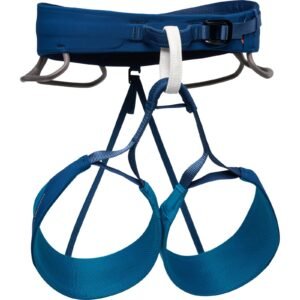
Black Diamond Solution Review — The All-Rounder, Updated for 2026
Read more →🚐 Road Trip Essentials
View all →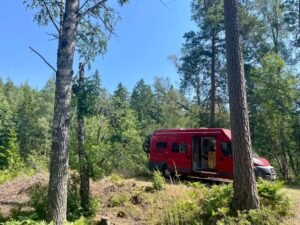
10 Underrated European Sport Climbing Destinations (That We Actually Drove To)
Read more →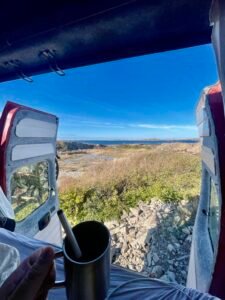
Van Life Electrical Setup 2026 — Our Exact Power System
Read more →📖 Climber's Handbook
View all →
Beginner Climbing Gear List 2026 – Everything You Need to Start Climbing Outdoors
Read more →