Gorges du Tarn Climbing Guide — Pocketed Dolomite, Massif Central 🇫🇷
A 500m-deep limestone canyon with hundreds of routes from 5a to 9a — Europe’s pocket-climbing legend in the Massif Central.
🪨 Dolomite Limestone | 🧗 Sport + Multi-Pitch | ⛰️ Up to 70m pitches · F5–9a | 🌅 All-aspect play
| 📍 Location | Gorges du Tarn, between Causse de Sauveterre & Causse Méjean, Lozère / Aveyron, France. Main sectors strung along the D907 bis between Les Vignes and Pas de Soucy. Official carpark |
|---|---|
| 🚗 Distance from Millau | Around 30–40 min north by road via Aguessac / Le Rozier depending on where you go. |
| 🧗 Climbing Style | Sport, bolted multi-pitch and single-pitch. |
| 🪨 Rock Type | Dolomite limestone — ocher, heavily pocketed; compared to Frankenjura and Margalef for pocket climbing |
| 📏 Route Heights | Single-pitch up to ~70m. (Rope of 100m needed for this one) Some short power problems too (Güllich-style) |
| 📊 Grade Range | 5a to 9a — initiation routes for kids and beginners through to international hard-end testpieces |
| 🌤️ Best Season | March–November. Year-round possible with aspect play; winter is cold and windy; summer is hot & tourist-busy |
| 📶 Mobile Coverage | Patchy deep in the gorge — download topos offline before driving in |
| 🚐 Van Parking | Few overnight spot can be found on park4night, several campsites around as well. |
| 🗺️ Digital Topos | theCrag · Rockfax (regional) |
📋 Table of Contents
Why the Gorges du Tarn? Europe’s Pocket-Climbing Legend
If you’ve climbed limestone anywhere in Europe and have a soft spot for two-finger pockets, the Gorges du Tarn is on your list — or it should be. Cut into the heart of the Massif Central between the Causse de Sauveterre and the Causse Méjean, the canyon runs roughly 500 metres deep with cliffs hundreds of metres wide, and the rock is the thing: dolomite, ocher-coloured, riddled with flared pockets, holes and incut edges. The closest comparison most climbers reach for is the Frankenjura, or Margalef in Catalonia — but the Tarn has its own character entirely.
The grade range is enormous. There are genuine initiation routes in the 4–5 range suitable for kids and complete beginners, all the way through the 6s and 7s for the bulk of the visiting crowd, and a hard end that tops out at 9a. Famous local routes like Les Nouvelles Plantations du Christ (8a) and the mega-pitch testpieces in sectors like Tennessee draw climbers from across Europe. Pitch lengths are part of the story too — many routes are 25–40m by default, and a handful reach 60–70m of sustained climbing on a single line.
What makes the Tarn work for a van trip is its position. The gorge is the northern member of a four-area cluster — Tarn, Jonte, Boffi and Cantobre — that share the same limestone plateau between Millau and the Causse Méjean. Within the Tarn itself the main climbing sits along a short stretch of the D907 bis between Les Vignes and Pas de Soucy. Step out of the gorge and you’ve got three more major areas within easy reach 30mnish. Base near Millau and you’ve got a full climbing region, not a one-crag trip.
The Climbing — Rock, Style & Character
The Tarn’s dolomite is unusual. It’s pocketed everywhere, often with flared, slopey pocket lips that demand you trust two or three fingers and commit. Many lines are vertical to gently overhanging on a base of compact rock; the hard sectors get properly steep with full-on tufa-and-pocket overhangs. Footwork rewards precision — small dishes and pockets for feet are normal, and the rock takes edges well. It’s a venue that rewards finger strength and a willingness to read sequences carefully, and it punishes the “pull on everything” approach.
The style runs the full spectrum: short, sharp power problems at sectors like Güllich; sustained 30–40m endurance pitches across the mid-grades; and the genuine mega-pitch routes (up to 70m) at sectors like Tennessee, where the pump becomes the crux. There’s also bolted multi-pitch on the bigger walls, and a smaller selection of trad lines for anyone wanting to break out of the sport-climbing default.
Key Sectors Inside the Tarn
The Tarn holds around 26 named sectors strung along the D907 bis. Listing them one by one would be unreadable — and unnecessary, since that’s exactly what the topo does. Instead, here’s how the climbing groups together by character, so you can plan a session around the style you’re after. Sectors below are drawn from both the Rockfax selection and the wider theCrag database. Route counts shown are from theCrag —
Mid-Grade Classics — 5s & 6s
The heart of any Tarn trip. Sectors with strong mid-grade reputations — well-bolted, plenty of choice, the place to start a session.
- Trésor du Zèbre — classics Jeux de Plage (6a), Tarn is Business (6c), Trésor du Zèbre (7a). One of the most-recommended sectors in the gorge.
- Dé Qué fas Aqui? — 23 routes including En piste les ninis (6a).
- Moulin à Huile — 10 routes including Mets de l’huile (6b).
- Figues au Cul — 14 routes with initiation 4c–5c lines alongside harder pitches; popular family/beginner sector.
Hard 7s — Technical & Overhanging
Where the hard-end sport climbing happens. Technical walls and overhanging caves with the bulk of the Tarn’s 7th-grade testpieces.
- Planète Causse — classics Planète Causse (7a+) and Mon Dide (7b). Short approach.
- Le Navire — overhanging 7s including L’Équipeur Désagrégé (7a+) and El Diablo Perverso (7b).
- L’Amphi (a.k.a. L’Amphithéâtre) — La Veuve Noire (7a+), Mosaïk Man (7b).
- Noir Désir — 12 routes, suspended sector with technical 6th–7th-grade lines.
- L’Oasif — 28 routes, big sector with Butinage Aliénique (7a).
- Cancer — home of Motoneuronnes (7a+).
Mega-Pitches & Big Endurance Walls
The Tarn’s signature: long, sustained pitches where the pump is the crux. Bring an 80m rope.
- Tennessee — 25 routes including 60–70m mega-routes. Classic Souvenir de Bleau (6c) and the headline 8b Tennessee.
- Calmez-Vous — the largest sector by route count (29 routes).
Power Problems, Short Walls & Smaller Sectors
Shorter, sharper climbing and the satellite sectors. Useful add-ons when you’ve worked the bigger walls — or when you want to crank for a few moves rather than commit to 40m.
- Güllich — short, sharp power problems. The place for bouldery sport.
- Club House — 3 routes, short wall.
- Shadocks — 8 routes, vertical to slightly overhanging mid-grades.
- Arc-en-Ciel — 12 routes.
- Hollandais (a.k.a. Hollandaise) — 5 routes.
- Dromadaire — 4 routes.
- Foetus — 15 routes.
- La Muse — 13 routes.
- L’Usine — 6 routes.
- Le Grand Toit — 3 routes.
- Canyon, C.E.S Beach — single-route satellites.
The Four Climbing Areas Around the Tarn
The Tarn doesn’t sit alone — it’s the northern member of a tight cluster of four major climbing areas that share the same limestone plateau between Millau and the Causse Méjean. Any serious trip here ends up touching at least two of them, and they’re close enough that you can base in one spot for the whole week. Here’s how they fit together.
| Area | Position | Style | Character |
|---|---|---|---|
| Gorges du Tarn (this guide) | Northern gorge | Sport + multi-pitch | The headline venue. Pocketed dolomite, 5a–9a, single-pitches up to ~70m. Europe’s pocket-climbing legend. |
| Gorges de la Jonte | Joins the Tarn at Le Rozier | Sport + trad multi-pitch | The Tarn’s sister gorge. ~300 routes, 5b–8b+, mostly multi-pitch on limestone. Famous for the vultures circling above the cliffs. |
| Le Boffi (Millau) | Dourbie valley | Sport | The Dourbie-side hub above Millau. See our dedicated Boffi / Millau guide for the full breakdown. |
| Cantobre | Dourbie valley | Sport | Listed alongside Boffi in the 2023 CAF Gorges de la Dourbie topo. |
Best Time to Climb — Seasonal Guide
The Tarn is climbable year-round in theory thanks to the mix of aspects, but in practice the sweet spots are the shoulder seasons. Summer is hot and the gorge is on the canoe-and-tourist circuit; winter is cold, windy and often miserable; the heart of spring and autumn is when conditions are best and the area genuinely empties out.
| Season | Conditions | Temp (approx.) | Recommended? | Notes |
|---|---|---|---|---|
| March–May | Cool, stable, dry | 10–22°C | ● Best | Prime spring window. Friction is superb on the dolomite, area is quiet, and full sectors are climbable. |
| June | Warm, building heat | 18–28°C | ● Good | Still very climbable in shaded sectors. Crowds building toward summer holidays. |
| July–August | Hot & tourist-busy | 22–34°C | ● Mornings & shade only | Climbable with sector-hopping for shade and early starts. The river is the saving grace — swim between sessions. Tourists clog the gorge road. |
| September–November | Cool, stable, beautiful | 8–22°C | ● Best | Arguably the finest window. Crowds gone, friction excellent, autumn light on the dolomite is unbeatable. |
| December–February | Cold & windy | 0–10°C | ● Avoid | The canyon funnels strong cold winds in winter — usually not worth it. Head to Boffi, Spain or Portugal. |
Topos, Guidebooks & Digital Resources
The Tarn is well-documented. The definitive print topo is the CAF Causses et Cévennes guidebook for the gorge, available in five languages. If you’re climbing the whole four-area cluster, the same publisher’s Dourbie / Boffi topo covers the southern hub, and the Rockfax Languedoc-Roussillon book is a useful English-language overview of the broader region. Our recommendation is the local CAF book first: the proceeds fund the volunteers who bolt and maintain the cliffs.
theCrag: The most reliable English-friendly digital source for sector lists, route data, logbooks and access notes. Download offline (Premium) or screenshot the sectors you’ll be on before driving in — signal is patchy along the D907 bis.
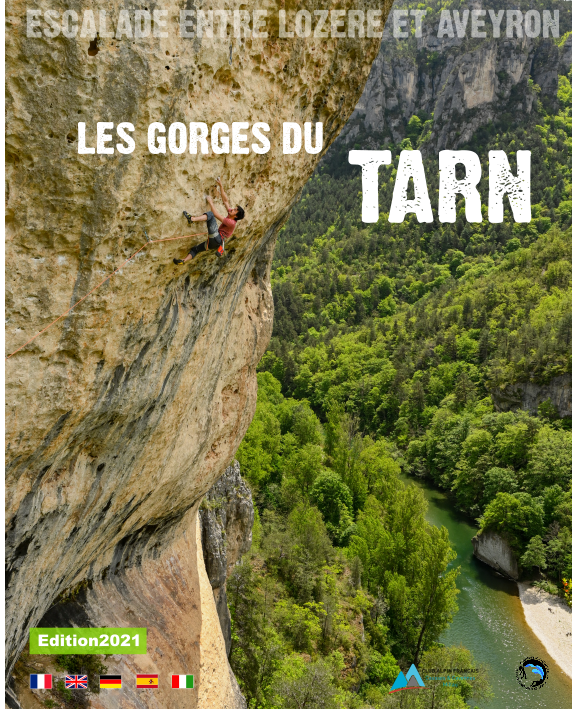
Les Gorges du Tarn — CAF Causses et Cévennes
The definitive topo for the gorge. 224 pages, five languages (French, English, German, Spanish, Italian), photo topos on every sector with colour site plans and approach pictograms. Published by the CAF Causses et Cévennes — the proceeds fund the volunteer rebolting and maintenance that keeps the gorge climbable. Current edition: 2025. €25-€31.80.
Buy — Climbing-Guide.eu ↗ or at boutique.cevennes ↗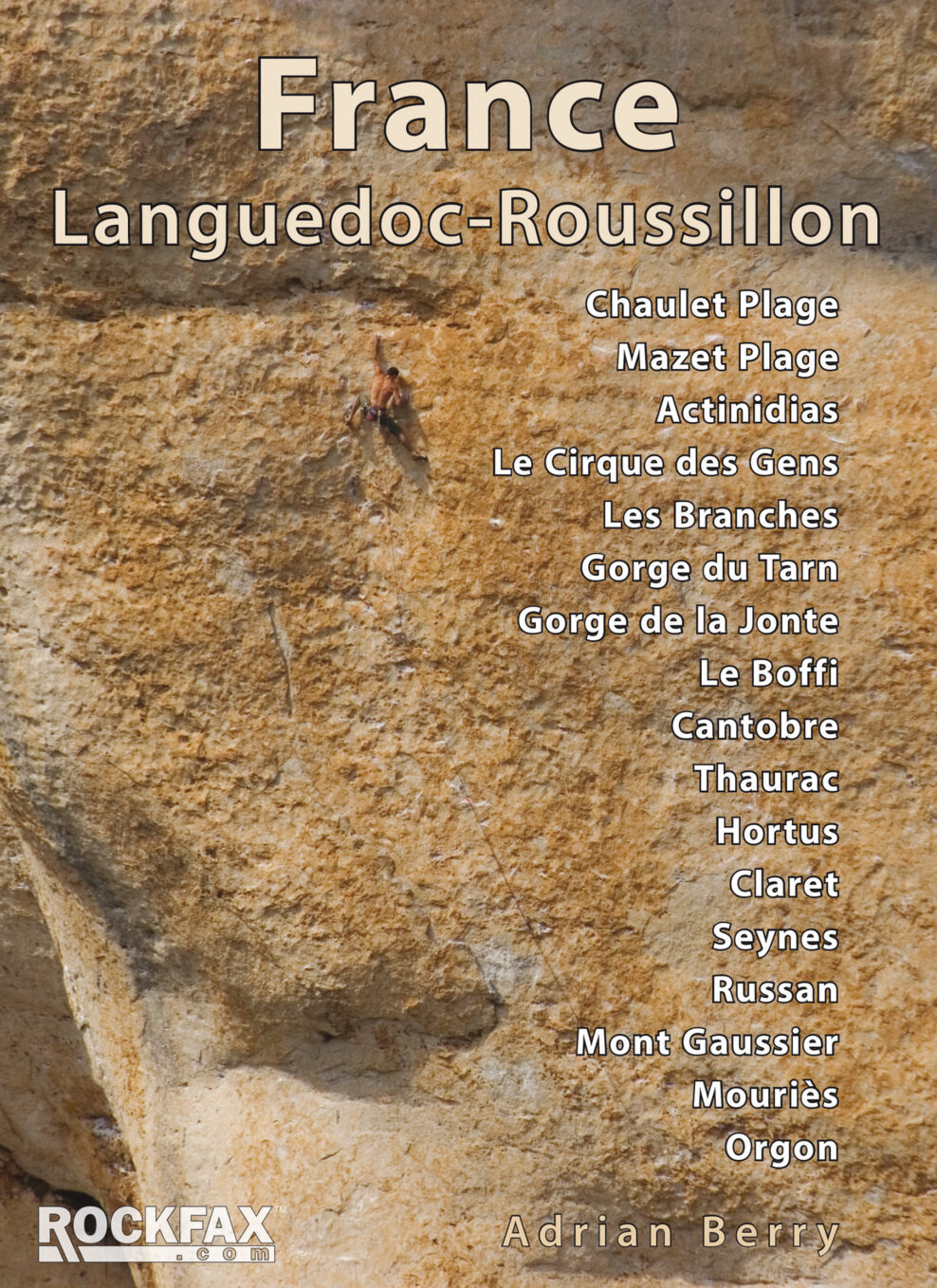
France: Languedoc-Roussillon — Rockfax
The Rockfax selective guide to the wider region — 17 areas including the Gorge du Tarn, with over 3,000 routes. Useful as an English-language overview if you’re climbing the wider Languedoc-Roussillon on the same trip, but less comprehensive on the Tarn itself than the local CAF book. Heads up: it’s the 2011 1st edition, so lean on the digital version on Rockfax Digital for any current beta. ⚠️ £24.95 unless you have the digital subscription with discount 🙂
Buy on Rockfax Digital ↗🚐 Van Access, Overnight Parking & Essentials
The Tarn is a busy tourist gorge in summer — canoes on the river, motorhomes on the road, campsites everywhere — and a much quieter place in spring and autumn. For climbers, the practical setup is simple: park at the sector you’re climbing on the D907 bis, then use one of the dozens of campsites in the gorge or the villages around it as your overnight base. Some spots are possible to stay on along the road, nights are pretty quiet but not the same comfort. park4night area perfect for campers ⚠️ Wild-camping tolerance varies along the gorge and by season — VERIFY current local rules before relying on Park4Night spots inside the protected sections.
The villages along the gorge — Les Vignes, Le Rozier, Sainte-Énimie, Castelbouc — sit close to the climbing. For a longer stay or a bigger shop, Millau is the natural hub south of the gorge, with full services, supermarkets and the climbing-shop access to buy the local topo.
Practical Vanlife Essentials
💧 Water
Refill at the campsites and village fountains along the D907 bis. — Water fountain here
🛒 Supplies
Small shops in Les Vignes, Le Rozier and Sainte-Énimie cover the basics. For a proper supermarket run head to Millau (~30–40 min).
🚽 Facilities
No toilets at the crag — use facilities in the villages or at your campsite before driving up to the gorge. Pack everything out: this is a Grand Site and dolomite is fragile.
🏥 Medical
Pharmacy and doctor in Sainte-Énimie / Le Rozier . Nearest hospital is in Millau (~30–40 min). Emergency: 112 from any EU mobile.
Eat, Refuel & Local Life
The Gorges du Tarn isn’t only about climbing — it’s also one of the most spectacular driving and walking landscapes in France, with the river running between sheer limestone walls and medieval villages along its banks. Sainte-Énimie is the obvious rest-day stop. Le Rozier sits at the junction with the Jonte.
The classic Tarn rest-day activity is the canoe descent of the gorge — one of the great river trips in France, with multiple operators in Les Vignes, La Malène and Sainte-Énimie. A half-day descent is enough to see the most dramatic sections. If you want to get above the rock, the hiking on the Causse Méjean and Causse de Sauveterre is exceptional — open limestone plateau, big skies, and dramatic viewpoints down into the canyon.
On the food front, the Causses region has a strong local identity — Roquefort cheese is produced in the area, alongside Causses lamb and Aveyron charcuterie. Millau holds two weekly markets: Wednesday at the Halles and Place Foch, and Friday morning in the same spots plus the surrounding streets — the easiest way to put together a crag-day picnic. For fuel and a major shop, Millau is the obvious hub south of the gorge — every service you need and the outdoor shops that stock the CAF topo.
Climbing the Wider Massif Central & Ardèche
If you’ve got more than a week, the Tarn pairs naturally with the Ardèche gorges further east — same broader limestone region, but a different style of climbing and an entirely separate set of crags. It’s a long enough drive (~2.5 hours) that you’d treat it as a second base rather than a day trip, but together they make one of the strongest van-life climbing tours in France.
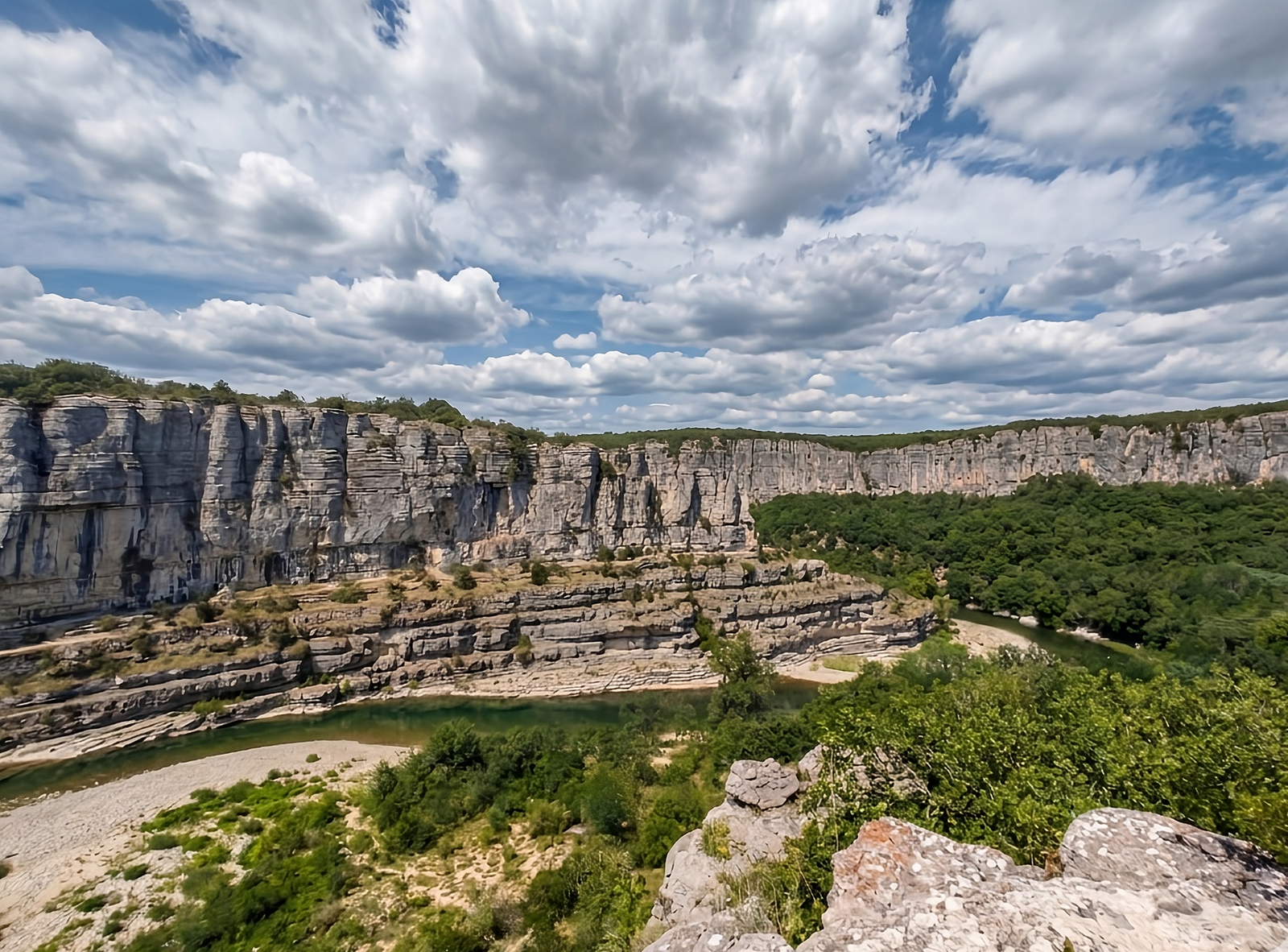
Cirque de Gens — Chauzon
The big full-day venue of the Ardèche gorges — a dramatic limestone amphitheatre with 300+ routes from 5a to 8b, strongest in the 6c–7b range.
Read the guide ↗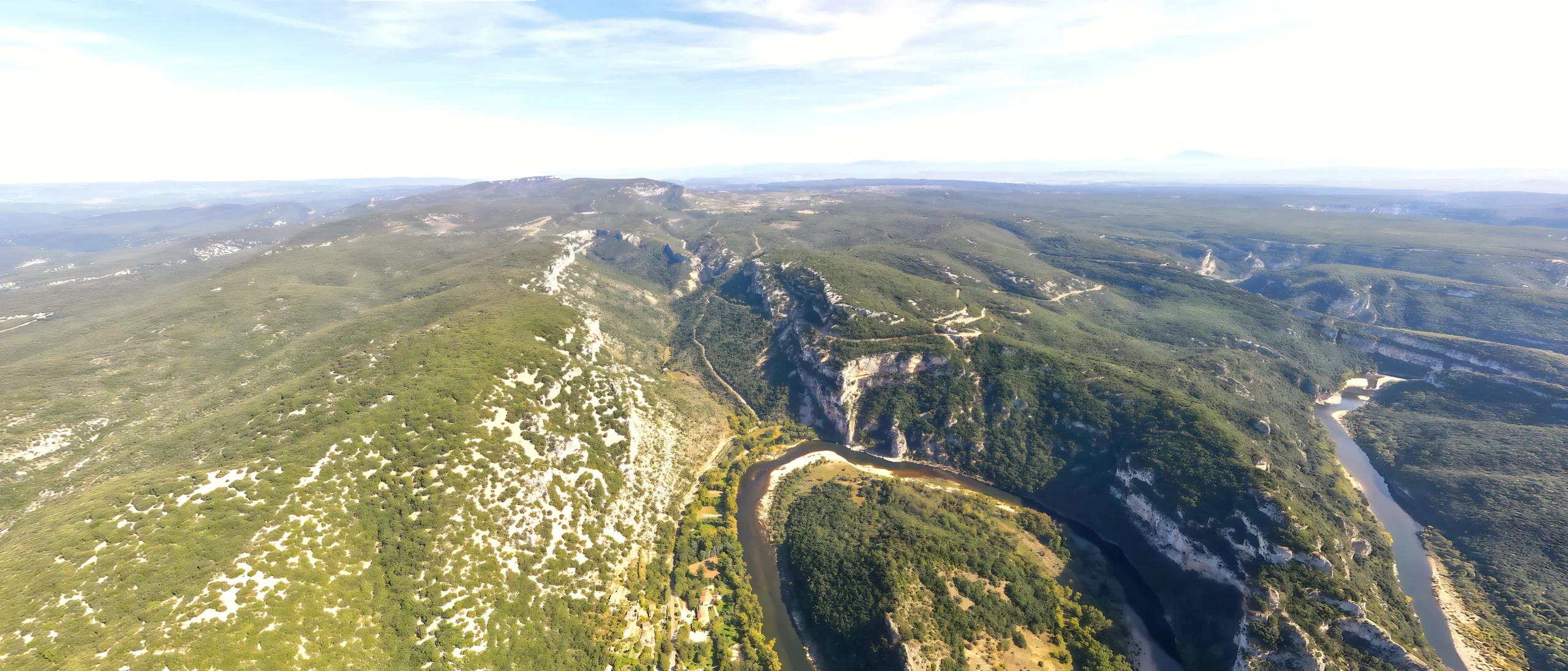
Grand Charmasson — Vallon-Pont-d’Arc
The hub crag of the Vallon-Pont-d’Arc climbing area. West-facing limestone, ~92 routes from 3c to 8a, with morning shade in summer.
Read the guide ↗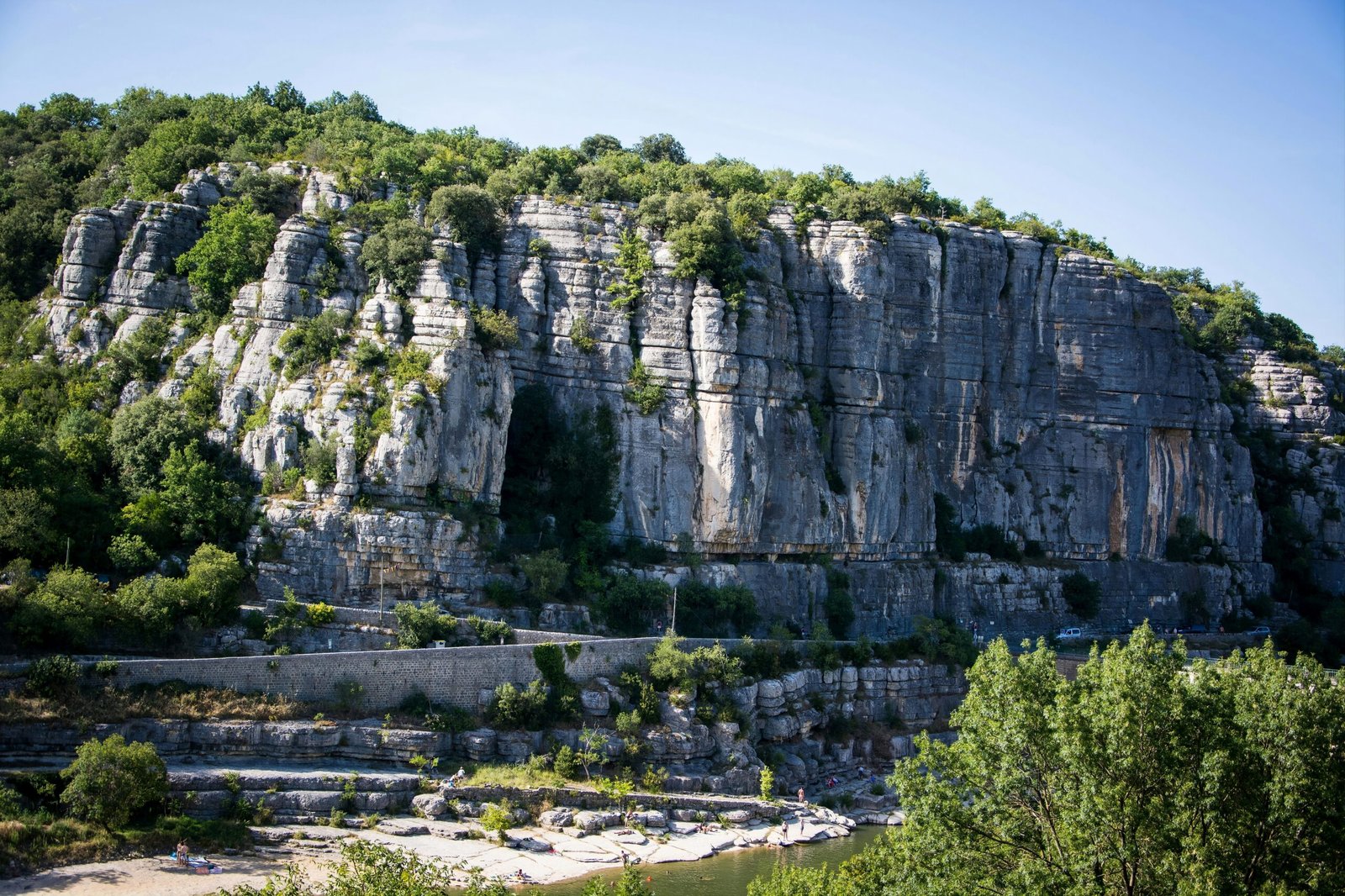
Balazuc — Les Barrasses
Compact south-facing limestone crag below one of France’s most beautiful villages, with the river running right beneath. The easiest approach on the Ardèche circuit.
Read the guide ↗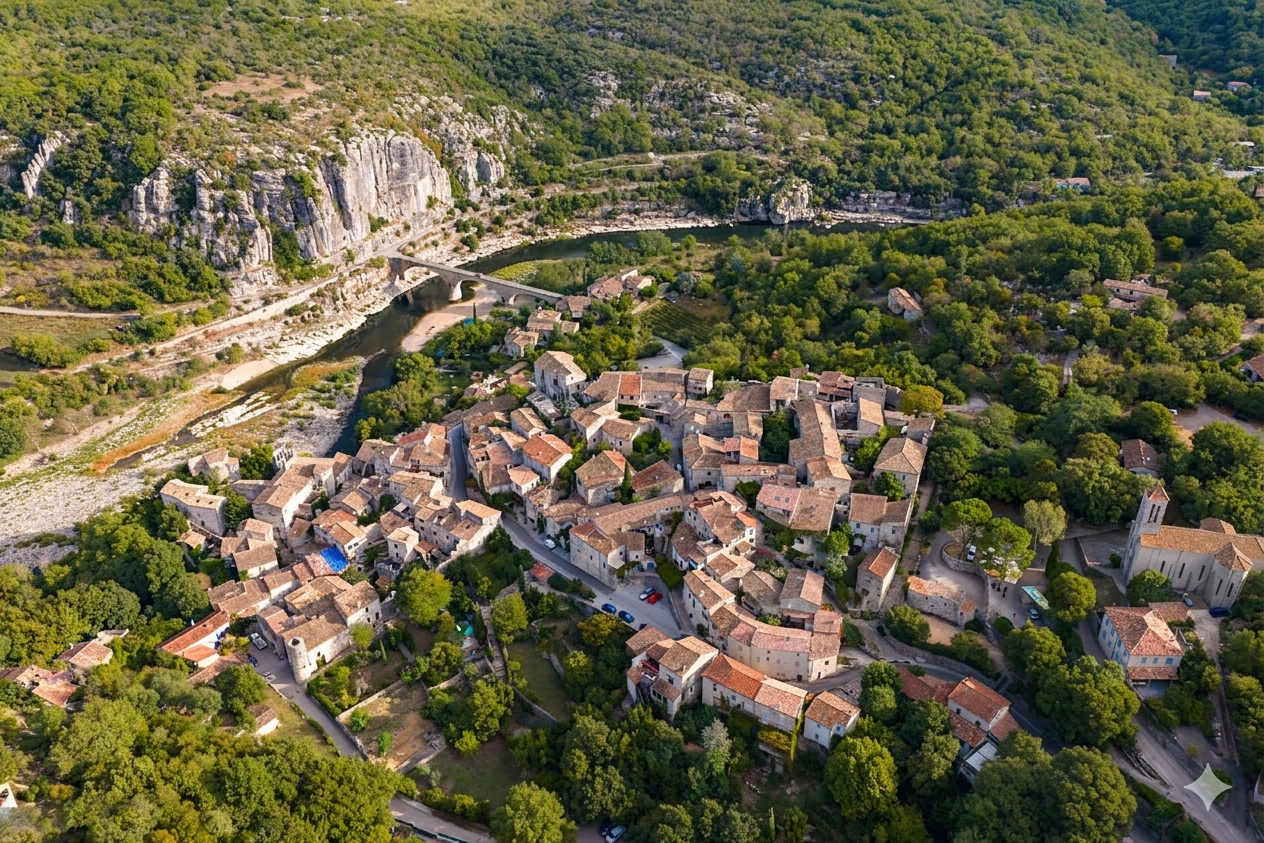
Labeaume
Shaded limestone gorge with roadside parking — the cool, van-friendly option when the sunnier Ardèche crags bake. ~100 routes from 4a to 8a.
Read the guide ↗Keep the trip going
The Gorges du Tarn is one piece of a much bigger climbing region. Our full Millau / Boffi guide covers the southern hub on the Dourbie side — the natural complement to a Tarn trip. Further afield we’ve got guides to Cirque de Gens, Balazuc and Labeaume in the Ardèche, plus the wider best climbing destinations in Europe if you’re planning a longer tour. Before you go, see how we use The Topo, Rockfax & Park4Night together, and if you’re still kitting out the van, our van life climbing gear list covers what we actually bring.
❓ Frequently Asked Questions — Gorges du Tarn Climbing
Is the Gorges du Tarn good for beginners?
What rope and rack do I need?
When is the best time to visit?
Where do I park, and is there van overnight?
How does the Tarn compare to the Jonte?
How does it compare to Millau / Boffi?
Is there water at the crag?
📚 Helpful Climbing Resources
Essential guides, tips, and advice for your climbing adventures
🔧 Gear Lab
View all →
Black Diamond RockLock Review — Our Biggest, Toughest Locker
Read more →
Petzl Attache Review — The Most Versatile First Locker
Read more →🚐 Road Trip Essentials
View all →
10 Underrated European Sport Climbing Destinations (That We Actually Drove To)
Read more →
Van Life Electrical Setup 2026 — Our Exact Power System
Read more →📖 Climber's Handbook
View all →
Beginner Climbing Gear List 2026 – Everything You Need to Start Climbing Outdoors
Read more →