Gorges de la Jonte Climbing Guide — South-Facing Dolomite & the Vulture Gorge 🇫🇷
A 500m-deep limestone canyon of multi-pitch towers up to 150m, sustained pocket climbing from 4c to 8c — and the home of France’s griffon vulture reintroduction.
🪨 Dolomite Limestone | 🧗 Multi-Pitch + Sport | ⛰️ Grandes voies up to 150m · 4c–8c | ☀️ South-Facing Sun-Trap
| 📍 Location | Gorges de la Jonte, between the Causse Méjean (north) and the Causse Noir (south), on the Lozère / Aveyron border, France. The river joins the Tarn at Le Rozier. Main climbing strung along the D996 between Le Rozier and Meyrueis. Official carpark |
|---|---|
| 🚗 Distance from Millau | Around 25–35 min by road via Aguessac and Le Rozier (the gorge mouth). |
| 🧗 Climbing Style | Predominantly bolted multi-pitch (grandes voies), plus single-pitch sport couennes. Some lines left as committing “terrain d’aventure”. |
| 🪨 Rock Type | South-facing dolomite limestone — pocketed (the local “trous” signature), with the area’s distinctive freestanding towers and corner (dièdre) lines. |
| 📏 Route Heights | Multi-pitch grandes voies up to ~150m; single-pitch couennes too. Many descents are by abseil — the 2024 topo lists rappel lengths. |
| 📊 Grade Range | 4c to 8c — initiation lines through to hard-end testpieces. Bulk of routes sit 6a–7c+. (theCrag: 339 routes) |
| ☀️ Best Season | February–May and September–November are ideal. The south aspect makes it the warmer of the two gorges — a genuine winter-sun option on calm days, but hot in summer (start early / use shade). |
| 🦅 Access Note | The La Licorne (Arcadie) sector is closed 1 January – 30 June for nesting raptors. Respect all signed restrictions — this is an active vulture-breeding canyon inside a national park. |
| 📶 Mobile Coverage | Patchy deep in the gorge — download topos offline before driving in. |
| 🚐 Van Parking | Roadside lay-bys along the D996 serve the sectors; campsites in Le Rozier and Peyreleau. |
| 🗺️ Topos | theCrag · CAF Jonte topo · The Topo · Rockfax (regional) |
📋 Table of Contents
Why the Gorges de la Jonte? The Tarn’s Wilder Sister Gorge
If you’re looking for a Jonte climbing guide, France has few better-kept secrets than this. If the Gorges du Tarn is the famous one, the Jonte is the one climbers fall for. The two canyons meet at Le Rozier, cut from the same dolomite plateau, but the Jonte has its own personality: it’s deeper-feeling, quieter, more committing, and — crucially — it faces south. Where the Tarn is a single-pitch sport venue with the odd long line, the Jonte is fundamentally a multi-pitch canyon: freestanding towers and big walls where the headline routes climb 100, 120, even 150 metres off the deck.
The rock carries the same regional signature — ocher dolomite riddled with pockets, the local “trous” — but the Jonte serves it up on a bigger canvas. The climbing runs from slabby lower-grade pitches to vertical pocket walls and steep, overhanging testpieces, with the area’s distinctive corner (dièdre) lines threading up between the towers. The grade spread on theCrag runs 4c to 8c across 339 catalogued routes, with the bulk sitting in the 6a–7c+ band that most visiting climbers come for.
The Climbing — Rock, Style & Character
The Jonte’s pocketed dolomite is identical to the Tarn’s, but the south-facing aspect and sheer scale change everything. Lower sectors demand precise footwork through pockets and edges; the towers get three-dimensional with corners and overhangs — sustained climbing where endurance matters as much as power. The defining difference is height: many best lines are genuine grandes voies topping out 100–150m, requiring multi-pitch skills, efficient belays, route-finding and abseil descents. A deliberate mix of equipping styles exists here — popular routes are re-bolted; others are left original as “terrain d’aventure”, meaning wider spacing and a more committing head. Read the topo before committing to a line.
Key Sectors Inside the Jonte
The Jonte’s main climbing is concentrated on the south-facing cliffs below the Causse Méjean, strung along the D996 between Le Rozier and the Maison des Vautours, with a second pole of climbing up at Meyrueis at the eastern end. Rather than list every sector, here’s how the climbing groups by character. Sector names and route counts below are drawn from theCrag’s current database; the 2024 CAF topo is the place to go for the full per-route detail.
The Grandes Voies — Multi-Pitch Towers
The Jonte’s signature. Big walls and freestanding towers where the headline routes climb well over 100m. This is what most people come for.
- La Fusée — 26 routes, walls up to ~110m. Home of the three-star classic La Fusée (6c).
- Le Cirque des Vases — 69 routes, the most-climbed sector in the gorge. Includes the historic Le Vase de Sèvre (6c+ A1).
- Le Ravin des Échos — 29 routes, walls to ~70m.
- La Licorne (Arcadie) — 36 routes, walls to ~68m. Closed 1 Jan – 30 June for nesting raptors.
Mid-Grade & Roadside Single-Pitch
The approachable end — shorter walls, busier sectors and the roadside couennes that work well for warm-ups or a relaxed day.
- Le Révérend — 115 routes, mostly single-pitch sport around ~35m.
- Le Bitard / La Diagonale du Gogol — 39 routes, home of the much-loved multi-pitch Le Bitard (5c, ~105m over several pitches).
- Parkings — 24 short couennes right by the road (~13m). Handy warm-ups.
- Camaloterie — a small trad satellite.
The Hard End — 7s & 8s
The harder testpieces are spread across the steeper, more overhanging walls. theCrag catalogues a deep band of 7th-grade lines and a handful of 8s.
- Roughly 140 routes in the 7a–7c+ range across the gorge.
- A scattering of 8a–8b+ lines, topping out at a single 8c — the hardest catalogued route in the gorge.
- Expect technical pocket-pulling and sustained walls rather than short cruxes.
Additional Sectors (Rockfax Index)
The Rockfax regional guide catalogues additional sectors across the gorge; names may predate the 2024 CAF restructuring. Consult the latest topo for current sector boundaries and route updates.
Carole Caline · L’Arête · La Cathédrale · Pégase · La Roche Décolle · Vase de Chine · Fond du Cirque · Air de Temps · Joyeux Merdier
Climbing Among the Vultures
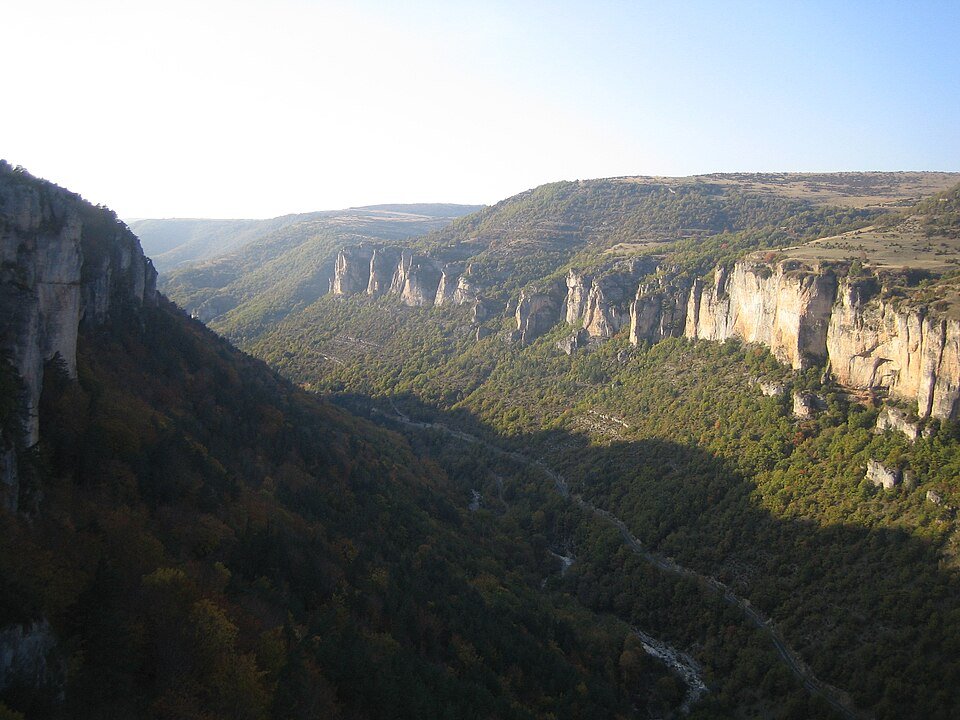
The Jonte is famous well beyond climbing for its vultures, and it’s worth understanding why — because you’ll be sharing the cliffs with them. Vultures vanished from the Causses in the 19th century (the last Jonte breeding was recorded around 1930). From 1981 the Parc National des Cévennes and the LPO began reintroducing the griffon vulture (vautour fauve) on the Jonte cliffs around the Cassagnes ravine, after acclimatising birds in aviaries. It worked spectacularly: today the Grands Causses hold hundreds of breeding pairs, and four vulture species are present — griffon, the rarer black (cinereous), Egyptian, and the recently reintroduced bearded vulture (gypaète barbu).
For climbers, two things follow. First, the spectacle — belaying while a two-and-a-half-metre-wingspan griffon banks past the wall is one of the genuine experiences of climbing here. Second, the responsibility: seasonal sector closures protect nesting birds, most notably La Licorne (Arcadie), closed 1 January – 30 June. Always respect signed restrictions and give nesting cliffs a wide berth. On a rest day, the Maison des Vautours (the former Belvédère des Vautours) at Le Truel, near Saint-Pierre-des-Tripiers on the D996, has an observation terrace with telescopes and live nest footage (entry around €8, open roughly late March to early November).
The Four Climbing Areas Around the Jonte
The Jonte doesn’t sit alone — it’s one member of a tight cluster of four major climbing areas sharing the same limestone plateau between Millau and the Causse Méjean. Any serious trip here ends up touching at least two of them, and they’re close enough to base in one spot for the whole week. Here’s how they fit together.
| Area | Position | Style | Character |
|---|---|---|---|
| Gorges de la Jonte (this guide) | Southern gorge, off the D996 | Multi-pitch + sport | South-facing dolomite, 4c–8c, grandes voies up to ~150m. The Tarn’s wilder, more committing sister — and the vulture gorge. |
| Gorges du Tarn | Joins the Jonte at Le Rozier | Sport + multi-pitch | The headline single-pitch venue. Pocketed dolomite, 5a–9a, pitches up to ~70m. See our dedicated Tarn guide. |
| Le Boffi (Millau) | Dourbie valley | Sport | The Dourbie-side hub above Millau. Shorter, concentrated sport — the summer-shade complement. See our Boffi / Millau guide. |
| Cantobre | Dourbie valley | Sport | Listed alongside Boffi (and Laumet) in the CAF Gorges de la Dourbie topo. |
Best Time to Climb — Seasonal Guide
Because the Jonte faces south, its seasonal profile is the mirror image of the shaded crags: it’s the warm option. Spring and autumn are the sweet spots; the gorge is genuinely climbable in winter sun on calm days when the Tarn is too cold and windy; and summer is hot enough that locals tell you to come in the shoulder seasons instead.
| Season | Conditions | Temp (approx.) | Recommended? | Notes |
|---|---|---|---|---|
| March–May | Cool, stable, sunny | 10–22°C | ● Best | Prime window. Sun on the walls, good friction, quiet. Note La Licorne stays closed until 1 July. |
| June | Warm, building heat | 16–28°C | ● Good | Still good early in the day; the south face warms quickly. Crowds building toward summer. |
| July–August | Hot & busy | 22–34°C | ● Early starts only | The south face bakes — climb at dawn, chase shade, swim in the Jonte between sessions. Tourist traffic in the gorge. |
| September–November | Cool, stable, beautiful | 8–22°C | ● Best | Arguably the finest window. Warm sun, excellent friction, crowds gone, autumn light on the dolomite. |
| December–February | Cold but sunny | 2–12°C | ● Sun days only | The sun-trap aspect makes calm, bright winter days genuinely climbable — the warmer alternative when the Tarn is wind-blasted. Short days, cold in shade, La Licorne closed. |
Topos, Guidebooks & Digital Resources
The Jonte is well-documented, and the local print topo had a major update in 2024 — the first new edition since 2003. The definitive book is the CAF Causses et Cévennes / Couleur Caillou guide to the gorge. If you’re climbing the whole four-area cluster, the same publisher’s Dourbie topo covers Boffi, Cantobre and Laumet, and the Rockfax Languedoc-Roussillon book is a useful English-language overview of the broader region. Our recommendation is the local CAF book first: the proceeds fund the volunteers who bolt and maintain these cliffs.
theCrag: The most reliable English-friendly digital source for sector lists, route data, logbooks and access notes. Download offline (Premium) or screenshot the sectors you’ll be on before driving in — signal is patchy along the D996.
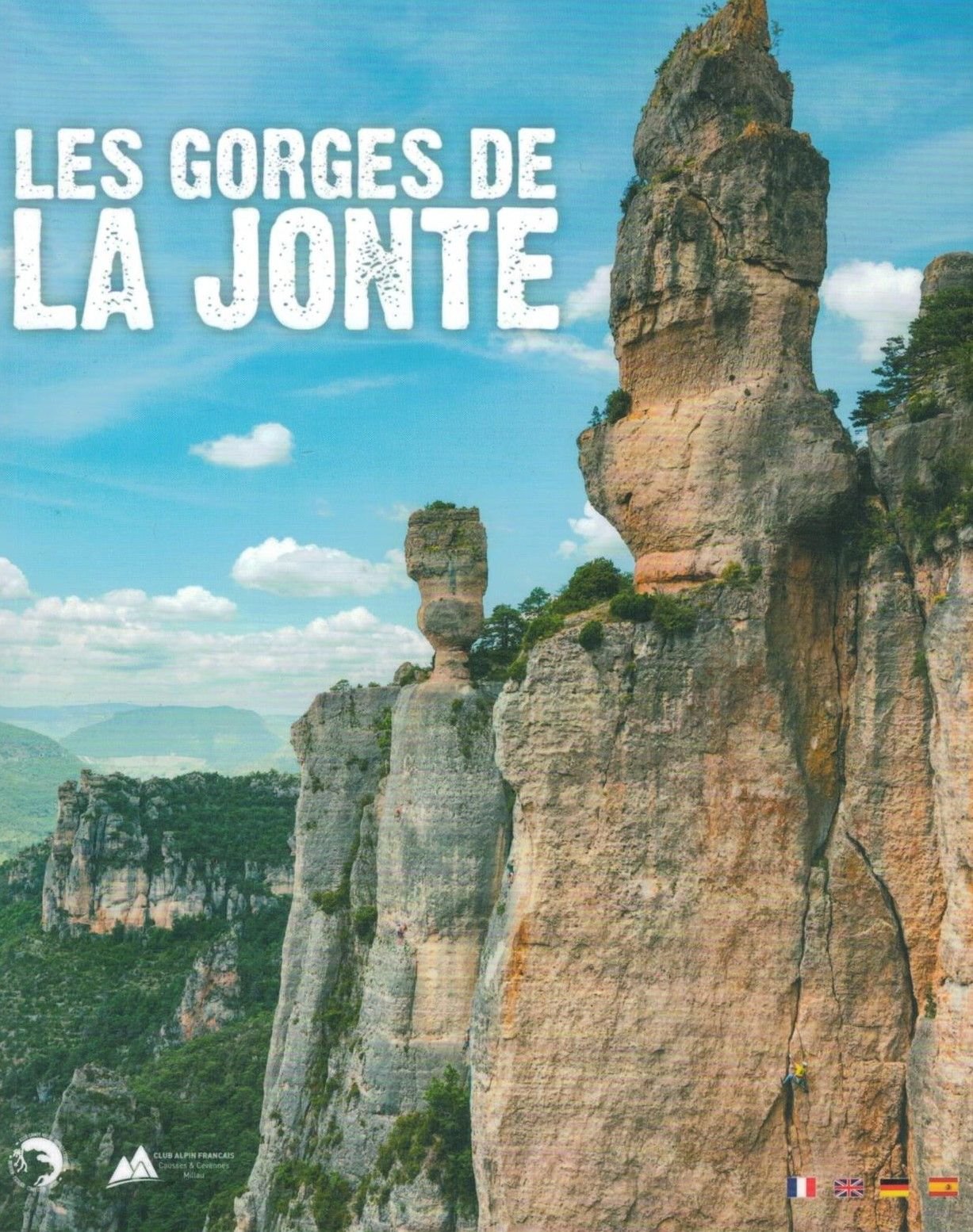
Les Gorges de la Jonte — CAF Causses et Cévennes
The definitive topo for the gorge, fully updated in July 2024 (the previous edition dated back to 2003). 200 pages, four languages (French, English, German, Spanish), photo topos on full-page colour photos, with newly added abseil lengths and per-route gear lists. Published by the Club Alpin Français and Couleur Caillou — proceeds fund the volunteer rebolting and maintenance that keeps the gorge climbable. €26 at the Parc National shop.
Buy — Climbing-Guide.eu ↗ or at boutique.cevennes ↗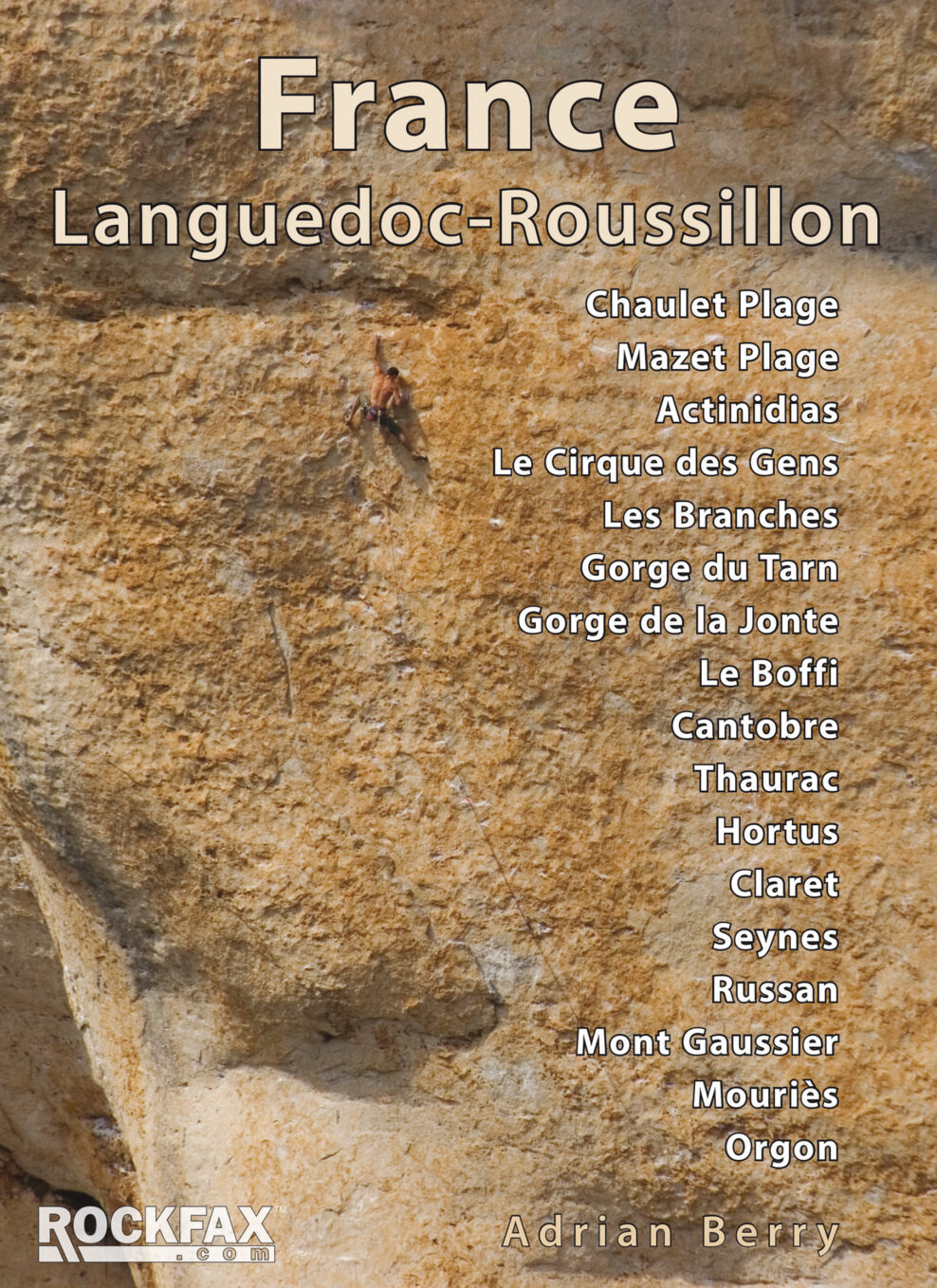
France: Languedoc-Roussillon — Rockfax
The Rockfax selective guide to the wider region — 17 areas including both the Jonte and the Tarn, with over 3,000 routes. Useful as an English-language overview if you’re climbing the wider Languedoc-Roussillon on the same trip, but far less comprehensive on the Jonte itself than the local CAF book. Heads up: it’s the 2011 1st edition, so lean on the digital version on Rockfax Digital for any current beta. ⚠️ £24.95 unless you have the digital subscription with discount 🙂
Buy on Rockfax Digital ↗🚐 Van Access, Overnight Parking & Essentials
The Jonte is quieter than the Tarn but still a national-park gorge with real constraints. For climbers, the practical setup is simple: park at the lay-by serving your sector on the D996, then use one of the many campsites in Le Rozier as your overnight base. Le Rozier has plenty of campsite options — the main hub for van and camper overnight stays. Some roadside spots are tolerated for a quiet night, but they’re not the same comfort as a campsite. Park4night spot at Le Rozier — popular with climbers staying 1–2 nights as long as you keep kit contained and don’t sprawl. ⚠️ Wild-camping tolerance varies along the gorge and by season —
The villages on and around the gorge — Le Rozier, Peyreleau, Le Truel, and Meyrueis at the eastern end — sit close to the climbing. For a longer stay or a bigger shop, Millau is the natural hub south-west of the gorge, with full services, supermarkets and the climbing-shop access to buy the local topo. A handful of additional Park4night spots sit within a 20-minute drive of the main sectors — check the app for current reviews and pinned locations.
🏨 Places to Stay Nearby
Accommodation Near Le Rozier & the Jonte
Hotels, gîtes and campsites on one map — filter by price, dates and type. Meyrueis and Millau are the fallbacks if the gorge is booked out.
Booking through this map supports the blog at no extra cost to you.
Practical Vanlife Essentials
💧 Water
Refill at the campsites and village fountains in Le Rozier, Peyreleau and Meyrueis. No direct water point found…;/
🛒 Supplies
Small shops in Le Rozier, Peyreleau and Meyrueis cover the basics. For a proper supermarket run head to Millau (~25–35 min).
🚽 Facilities
No toilets at the crag — use facilities in the villages or at your campsite before driving up to the gorge. Pack everything out: this is a national park and dolomite is fragile.
🏥 Medical
Basic services in Le Rozier / Meyrueis. Nearest hospital is in Millau (~25–35 min). Emergency: 112 from any EU mobile.
Eat, Refuel & Local Life
The Gorges de la Jonte is one of the most dramatic landscapes in the Massif Central — the river running between sheer limestone walls, medieval villages tucked along its banks, and vultures wheeling overhead. Le Rozier, at the junction with the Tarn, is the obvious base; Peyreleau sits just across on the Aveyron side; Meyrueis anchors the eastern end. The standout rest-day outing is the Maison des Vautours at Le Truel, and the hiking up onto the Causse Méjean rim — the ledge paths above the gorge give genuinely aerial views straight down the canyon.
On the food front, the Causses region has a strong local identity — Roquefort cheese is produced nearby, alongside Causses lamb and Aveyron charcuterie. Millau holds two weekly markets: Wednesday at the Halles and Place Foch, and Friday morning in the same spots plus the surrounding streets — the easiest way to put together a crag-day picnic. For fuel and a major shop, Millau is the obvious hub, with every service you need and the outdoor shops that stock the CAF topo.
Climbing the Wider Massif Central & Ardèche
If you’ve got more than a week, the Jonte and Tarn pair naturally with the Ardèche gorges further east — same broader limestone region, but a different style of climbing and an entirely separate set of crags. It’s a long enough drive (~2.5 hours) that you’d treat it as a second base rather than a day trip, but together they make one of the strongest van-life climbing tours in France.
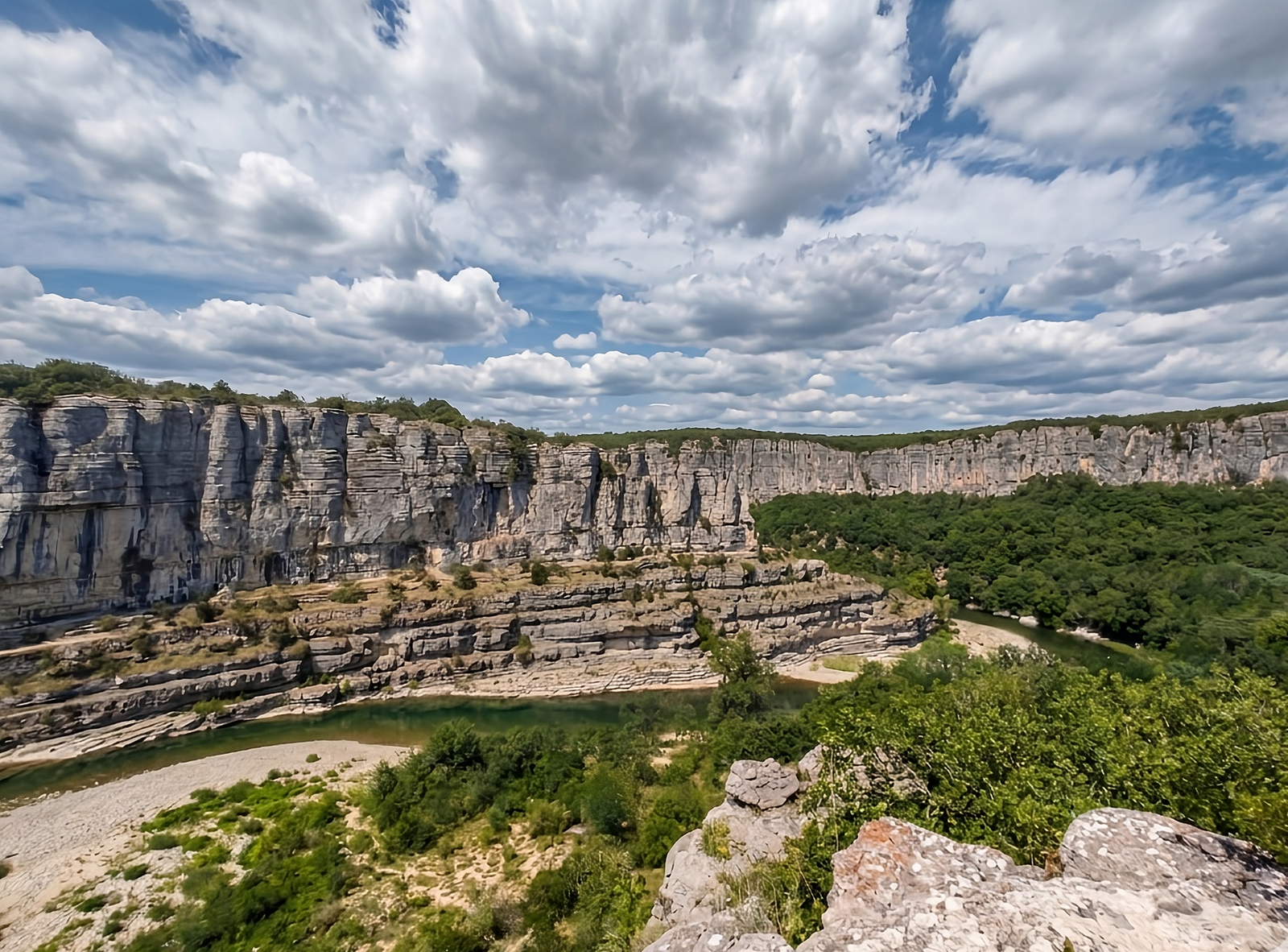
Cirque de Gens — Chauzon
The big full-day venue of the Ardèche gorges — a dramatic limestone amphitheatre with 300+ routes from 5a to 8b, strongest in the 6c–7b range.
Read the guide ↗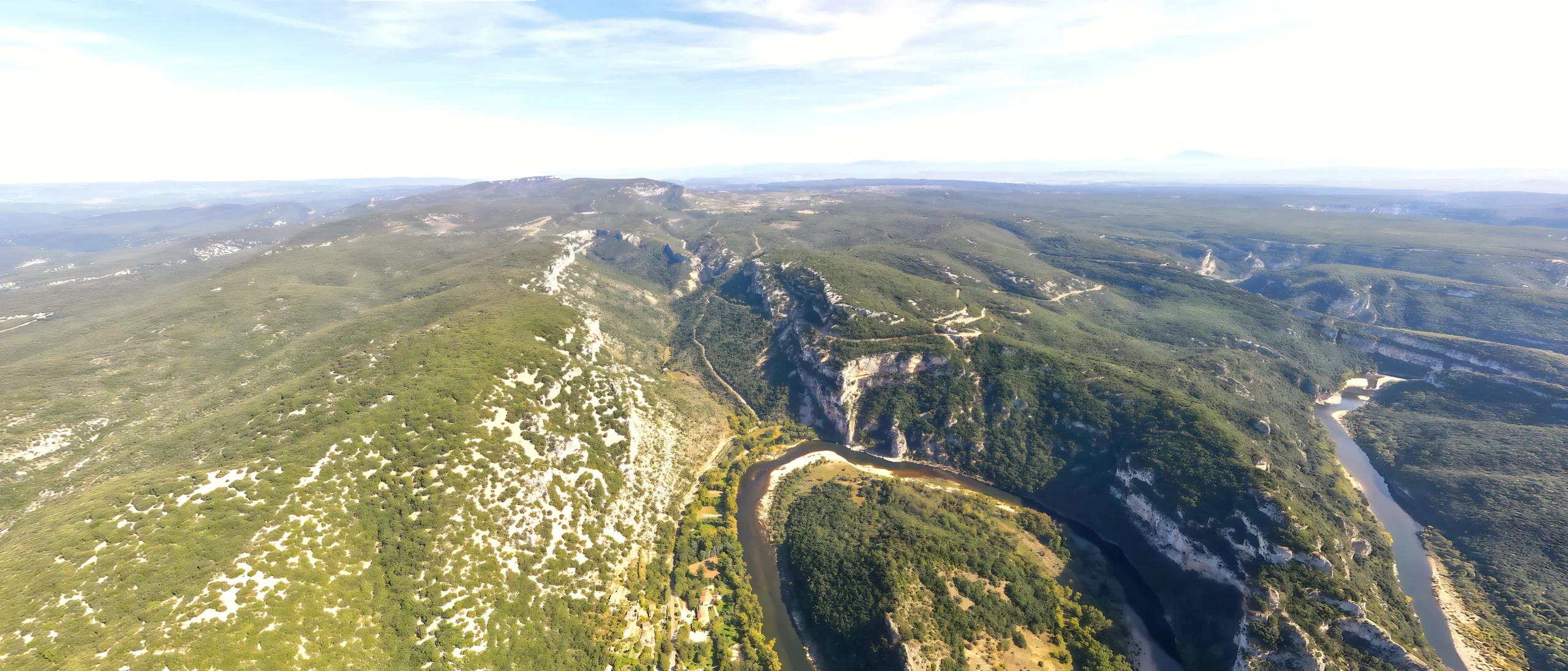
Grand Charmasson — Vallon-Pont-d’Arc
The hub crag of the Vallon-Pont-d’Arc climbing area. West-facing limestone, ~92 routes from 3c to 8a, with morning shade in summer.
Read the guide ↗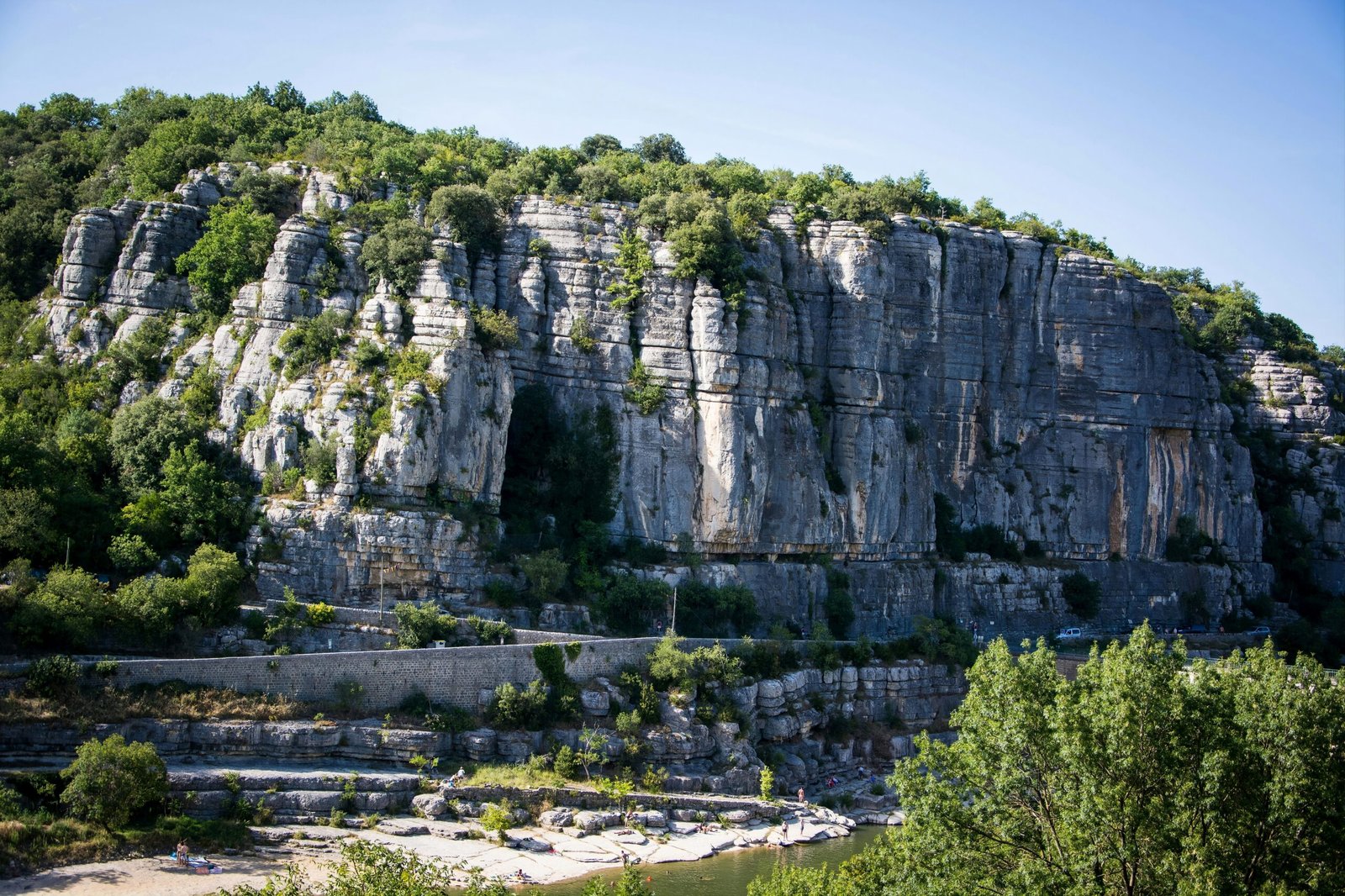
Balazuc — Les Barrasses
Compact south-facing limestone crag below one of France’s most beautiful villages, with the river running right beneath. The easiest approach on the Ardèche circuit.
Read the guide ↗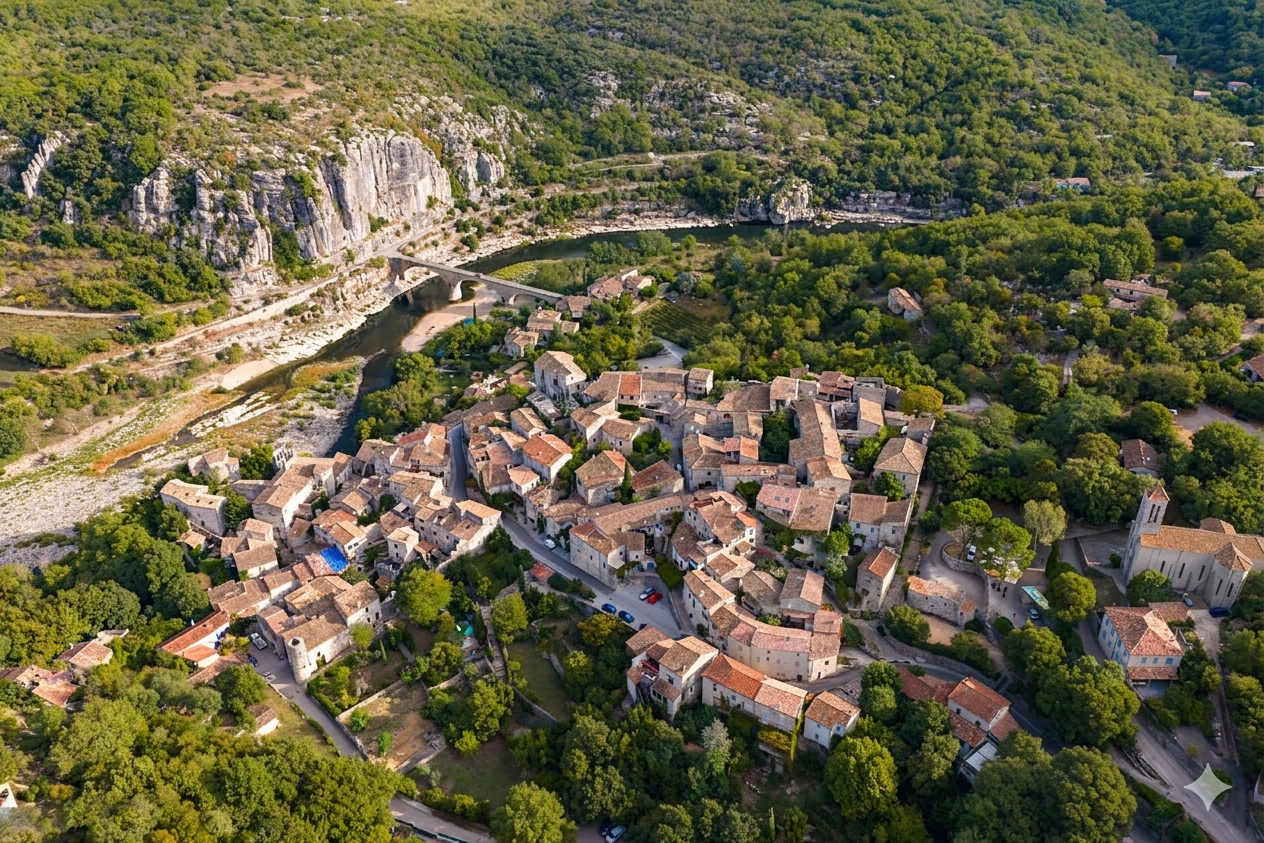
Labeaume
Shaded limestone gorge with roadside parking — the cool, van-friendly option when the sunnier Ardèche crags bake. ~100 routes from 4a to 8a.
Read the guide ↗Keep the trip going
The Gorges de la Jonte is one piece of a much bigger climbing region. Our full Gorges du Tarn guide covers the sister gorge just around the corner, and the Millau / Boffi guide covers the southern hub on the Dourbie side. Further afield we’ve got guides to Cirque de Gens, Balazuc and Labeaume in the Ardèche, plus the wider best climbing destinations in Europe if you’re planning a longer tour. Before you go, see how we use The Topo, Rockfax & Park4night together, and if you’re still kitting out the van, our van life climbing gear list covers what we actually bring.
❓ Frequently Asked Questions — Gorges de la Jonte Climbing
Is the Gorges de la Jonte good for beginners?
What rope and rack do I need?
Why is the La Licorne sector closed part of the year?
When is the best time to visit?
How does the Jonte compare to the Tarn?
Can I really see vultures while climbing?
Where do I park, and is there van overnight?
📚 Helpful Climbing Resources
Essential guides, tips, and advice for your climbing adventures
🔧 Gear Lab
View all →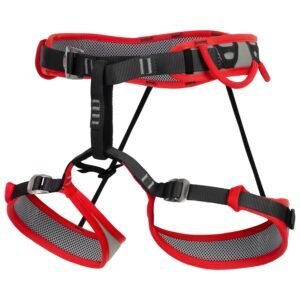
DMM Renegade Review: Four Years on My Trad Harness
Read more →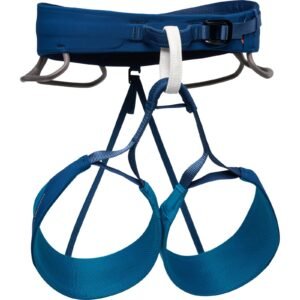
Black Diamond Solution Review — The All-Rounder, Updated for 2026
Read more →🚐 Road Trip Essentials
View all →
10 Underrated European Sport Climbing Destinations (That We Actually Drove To)
Read more →
Van Life Electrical Setup 2026 — Our Exact Power System
Read more →📖 Climber's Handbook
View all →
Beginner Climbing Gear List 2026 – Everything You Need to Start Climbing Outdoors
Read more →