Balazuc — Les Barrasses Climbing Guide 🇫🇷
Above One of France’s Most Beautiful Villages — Limestone Sport Climbing on the Ardèche River
🪨 Limestone | 🌊 River Swimming | 🏰 Plus Beau Village | 🚐 Easy Roadside Access
| ⚡ BALAZUC — QUICK FACTS | |
| 📍 Location | Balazuc, Ardèche, Auvergne-Rhône-Alpes, France Crag Location |
| 🚐 Van Overnight | Check Park4Night for current best options↗ Our Option here |
| 🅿️ Van Parking | Parking at base of Balazuc (free) |
| 🧗 Climbing Style | Sport (single pitch, fully bolted) |
| 🪨 Rock Type | Compact limestone — pockets, edges, some slab |
| 📏 Number of Routes | 60+ routes across multiple sectors |
| 📊 Grade Range | 5a to 7b (majority 5c–6c) |
| 🌤️ Best Season | March–June & September–November |
| 🏊 River | Ardèche river directly below — excellent post-climb swimming |
| 📶 Mobile Coverage | Good in village; variable at cliff base |
| ⚠️ Access Body | FFME (Fédération Française de la Montagne et de l’Escalade) |
Why Balazuc? Setting, Character & What Makes It Different
Most climbers passing through the southern Ardèche will head straight for Labeaume or the Cirque de Gens. Far fewer make the short detour to Balazuc — and that’s their loss. The village sits on a rocky outcrop above a wide bend in the Ardèche river, classified as one of the Plus Beaux Villages de France, and the crag — Les Barrasses — sits directly below it on a south-facing limestone wall that drops almost to the river’s edge. It’s the kind of setting that makes you stop mid-route to look at the view.
The approach is one of the easiest of any quality crag in the Ardèche. From the village car park you follow a flat path along the river bank for five minutes, and then the cliff is simply there in front of you — pale limestone rising above the water, with canoes occasionally drifting below on the Ardèche. No scrambling, no loose descent, no route-finding. That alone makes Balazuc unusual: a crag of genuine quality that requires virtually no effort to reach.
The routes are compact, well-bolted, and concentrated in the 5a–7b range that suits a broad spectrum of climbers. The lower-grade sectors give genuine 5th-grade sport routes with real exposure and character, while the steeper right-hand walls offer sustained 6c and 7a climbing on pocketed limestone. Post-climbing, the Ardèche is immediately accessible below — clear, relatively calm, and in summer warm enough for a proper swim. Combine that with the medieval village above (a restaurant, a terrace, a view that justifies the drive from anywhere in Europe) and Balazuc becomes one of those rare venues where the whole day is worth planning around.
🏨 Places to Stay Nearby
Accommodation in Balazuc & the Lower Ardèche
Gîtes, campsites and hotels on one map — filter by price, dates and type. Ruoms and Vogüé are minutes away if Balazuc itself is full.
Booking through this map supports the blog at no extra cost to you.
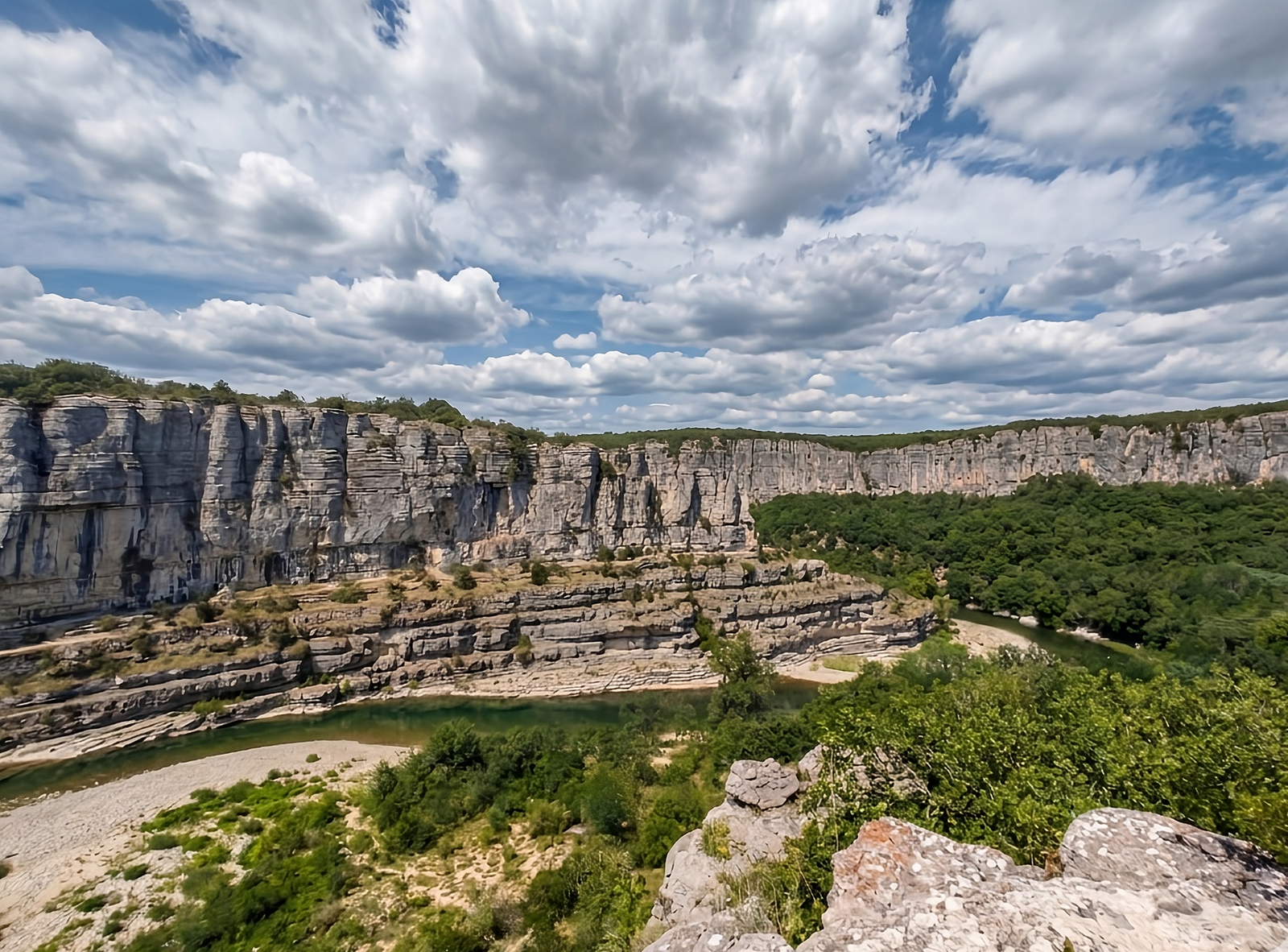
Cirque de Gens — Chauzon
300+ routes in a spectacular limestone amphitheatre above the Ardèche. 7 km from Balazuc.
Full Guide →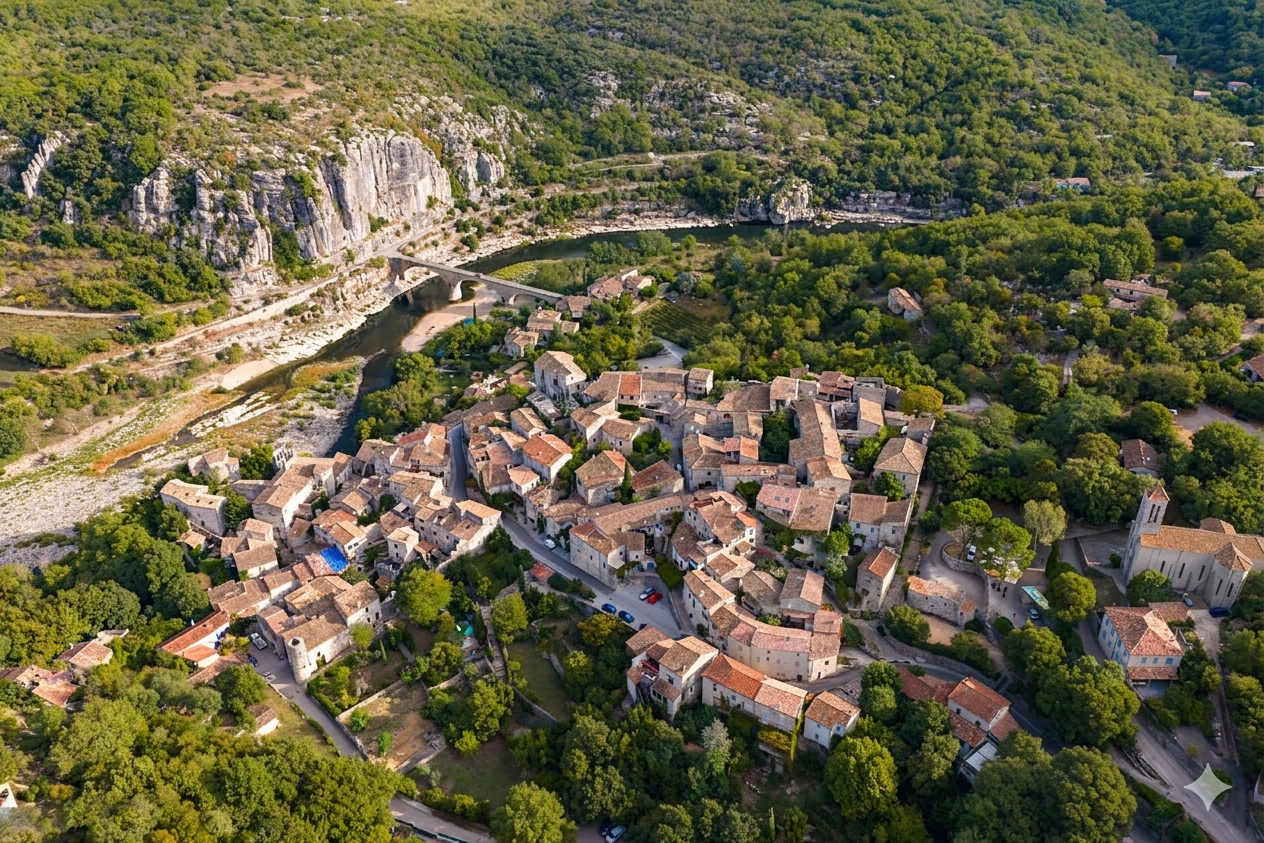
Labeaume — The Vanlifer’s Favourite
100+ routes in a shaded limestone gorge with roadside parking and a medieval village above.
Full Guide →The Crag — Rock Quality, Setting & Sector Overview
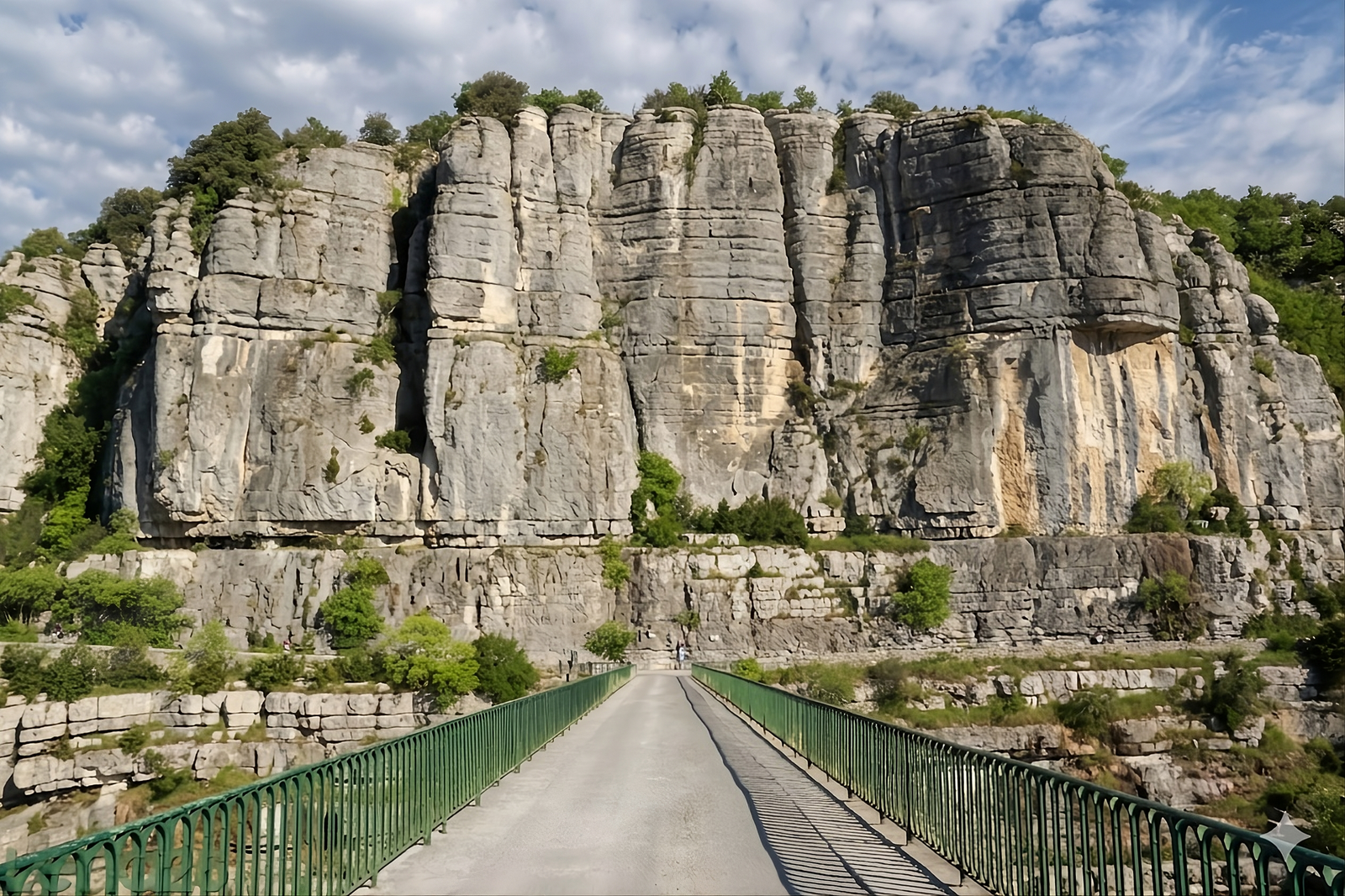
The rock quality is generally very good. This is compact, textured limestone with natural pockets and edges — the same calcaire character found throughout the southern Ardèche, but with the added visual drama of climbing directly above a large river. Friction is excellent in spring and autumn. On the moderate sectors, some of the most popular routes show the polish that comes from decades of traffic, but the majority of routes above 6a are clean and well-featured. The bolting throughout is solid sport climbing standard with chain anchors; a recent rebolting programme by local FFME volunteers has brought the hardware on most sectors up to current standard.
Sectors at a Glance
Secteur Gauche (Left Wall)
The most accessible part of the crag and the natural starting point for mixed-ability teams. Lower-angled walls with generous pockets and a solid selection of routes in the 5a–5c range. Good for warming up, for transitioning from indoor climbing, or for pairing with a more experienced leader. Catches sun from mid-morning onwards.
5a–6a ~15 routes 12–20mSecteur Central
The heart of the crag and the greatest concentration of quality routes. Vertical walls with a mixture of pocket sequences and face climbing on positive edges. The 6a–6c range is particularly strong here — varied, sustained, well-protected. The views from mid-height, with the Ardèche below and Balazuc village above, are outstanding.
6a–7a ~25 routes 15–28mSecteur Droite (Right Wall)
The steepest part of the wall, with a pronounced overhang on the upper section. Routes here reward dynamic movement and commitment — the pocket holds are deep but the sequences are sustained. Afternoon shade arrives earlier on this side, making it a reliable option for late summer sessions when the central sector is baking.
6b–7b ~15 routes 15–25mRiverside Wall
A lower section of cliff running closest to the river, with shorter routes ideal for warming up or for a second rope. The setting is remarkable — you are climbing directly above the water. Manageable grades mean beginners can enjoy the exposure without feeling overwhelmed. A natural finale to a day at Balazuc.
5a–6b ~10 routes 10–18mRoutes by Grade — Best For Beginners, Intermediates & Strong Climbers
Les Barrasses sits squarely in beginner-to-intermediate territory, with the bulk of the route count concentrated between 5b and 7a. The harder routes are sustained rather than bouldery — they reward technique and endurance over raw power, making the crag a good choice for climbers who have solid movement skills but are still building finger strength.
🟢 Best for Beginners (5a–5c)
The Secteur Gauche is the natural starting point for anyone new to outdoor sport climbing. The angles are forgiving, the holds are generous, and the routes are long enough to feel like a real outdoor lead without being intimidating. Routes in the 5a–5c range provide the ideal first outdoor experience — real rock, real exposure, and a view that no indoor wall can replicate. Parents introducing children to climbing will find the lower-grade sectors child-appropriate, with quick descents and easy belaying positions on flat ground.
🟡 Best for Intermediate Climbers (6a–7a)
This is where Balazuc genuinely shines. The central sector has a remarkable concentration of quality in the 6a–7a bracket — varied, well-protected, sustained routes on compact limestone with enough length to feel committing without becoming overwhelming. The classic moderate lines at 6b and 6c are among the finest mid-grade sport pitches in the southern Ardèche. If your team climbs around this range, a full day here barely scratches the surface of what’s available.
🔴 Best for Strong Climbers (7b)
The steeper right-hand sector provides the hardest lines at Balazuc. The 7b routes here are sustained, pumpy, and require precise footwork on the overhung sections — classic French limestone at its most athletic. The volume is limited at the top end of the grade range, so strong climbers will want to supplement a Balazuc day with a session at the Cirque de Gens nearby, which has significantly more at 7b and above.
Seasonal Climbing Conditions
Les Barrasses faces due south, which makes it one of the warmest crags in the southern Ardèche in spring and autumn — and one of the hottest in summer. That south-facing orientation is a genuine advantage in the shoulder seasons: the wall dries fast after rain, stays warm on cool days, and holds good light from mid-morning through to late afternoon between October and May. In July and August, the same aspect means the rock can be painfully hot by 10am; midsummer climbing is best reserved for an early start.
| Season | Conditions | Temp (°C) | Rating | Notes |
|---|---|---|---|---|
| March–May | Warm, stable, quiet | 12–22°C | ● Excellent | The prime spring window. South-facing aspect dries quickly after rain. River cool but accessible from late April. Crag quiet on weekdays. Best overall conditions for all grades. |
| June | Warm, increasing tourism | 22–28°C | ● Good | Excellent with early starts. River warm enough for post-session swimming. Village café reliably open. Crag quieter than peak summer. Afternoon heat manageable on the right-hand sector. |
| July–August | Hot, busy, peak tourism | 28–36°C | ● Manageable | Very hot by 10am on a south-facing wall. Dawn sessions only for serious climbing. River below is superb for afternoon swimming — arguably the best post-climb swim situation in the Ardèche. Village and car park very busy at weekends. |
| September–October | Perfect autumn conditions | 16–26°C | ● Excellent | Arguably the finest season. Crowds gone, temperatures ideal all day, friction superb. October is the standout month. River still swimmable into September. Autumn light on the cliff and village above is extraordinary. |
| November | Mild, quiet, some rain | 8–16°C | ● OK | South-facing aspect holds warmth well into November. Possible rain and short days. Quietest time of year — almost exclusively local climbers. Good for hard grade attempts on dry days. |
| December–February | Cool, occasional frost | 2–11°C | ● Possible | Viable on warm, dry winter days — the low altitude (130m) and south-facing aspect mean the wall dries faster than many crags. Check forecasts carefully; post-rain seepage can linger on the lower wall. |
Getting There & Access
The approach to Les Barrasses is one of the simplest of any quality crag in the Ardèche. From the village car park you follow a flat riverside path for five minutes — no scrambling, no route-finding, no technical terrain. The cliff is visible from the car park itself on clear days.
From Ruoms (primary approach)
Drive to Balazuc village via the D579 from Ruoms (8 km) or from Vallon-Pont-d’Arc to the south-east. In Balazuc, follow signs to the village car park — a flat parking area at the base of the village before the road narrows into the medieval centre. Parking GPS: 44.5070, 4.3495. From the car park, take the riverside path heading south along the left bank of the Ardèche for approximately five minutes. The cliff face is in front of you.
Access & Restrictions
Les Barrasses does not currently have formal sector-level access restrictions. The crag falls within the broader Ardèche valley, which carries Natura 2000 designations, and raptor nesting (peregrine, eagle) is a possibility across southern Ardèche limestone generally. Always check ffme.fr before visiting between February and July for any current-season notices — situations can change.
Nearby Crags — The Full Ardèche Circuit
Balazuc is at its best as part of a broader Ardèche climbing trip. Within a 25-minute drive there are more than 400 additional routes across five distinct crags, each with its own character and grade profile. A week based here with a van gives you a genuinely different day every day without moving more than 25 km.
| Crag | Distance | Routes | Grades | Character | Best For |
|---|---|---|---|---|---|
| Cirque de Gens — Chauzon | 7 km · 12 min | 300+ | 5a–8b | Dramatic limestone horseshoe amphitheatre above the Ardèche. Where Balazuc is compact, the Cirque is a full-day venue. Best for the 6c–7b range. | All levels, dramatic setting, spring/autumn |
| Labeaume | 14 km · 18 min | 100+ | 4a–8a | Shaded limestone gorge above the Beaume river. Where Balazuc faces south and bakes, Labeaume is cool and shaded — the ideal pairing for a multi-day trip. | All levels, summer shade, van-friendly |
| Vogüé — Le Tunnel | 14 km · 20 min | ~32 | 3b–7a | North-facing, shaded all day alongside the old railway line. Invaluable backup for hot summer afternoons. Good slab climbing with positive holds. | Summer shade, beginners, hot days |
| Mazet-Plage | 20 km · 25 min | Large | All grades | Sunny limestone above the Chassezac river with a river beach directly below. Family-friendly. Good for mixed-ability groups or a relaxed day between harder sessions. | Families, mixed groups, river days |
| Rocher de Sampzon | 11 km · 16 min | Various | Mid–high | Prominent dome crag above the Ardèche. Exposed, full sun, multi-pitch options available. Completely different character to the valley floor crags. | Spring/autumn, strong intermediates |
Topos, Guidebooks & Digital Resources
Les Barrasses appears in several Ardèche-wide guides rather than having a dedicated single-crag publication. The following are the most useful references for planning a visit and navigating the sectors on the day.
theCrag — Balazuc: The most reliable digital source for current route information, logbook beta, and access notes. Download the area offline before leaving camp — signal at the gorge can be variable. Community notes are regularly updated by local climbers and worth checking in the week before your visit.
TheTopo — Balazuc: A clean, straightforward topo resource for Balazuc with sector maps and route listings. Worth bookmarking as a quick reference alongside theCrag — particularly useful for a visual overview of the cliff layout before your first visit.
yadugaz07.com: The free French-language volunteer site covering every climbing venue in the Ardèche department. Balazuc is included alongside all the other regional crags. Invaluable for cross-referencing sector information and identifying approach variations. Screenshot relevant pages before heading out.
Escalade en Ardèche — FFME CD07: The definitive French-language topo covering the entire Ardèche department. Covers Balazuc, Labeaume, Vogüé, Chauzon, Mazet and all major crags. Available from climbing shops in Aubenas (20 km). Purchasing locally funds the rebolting programme directly.
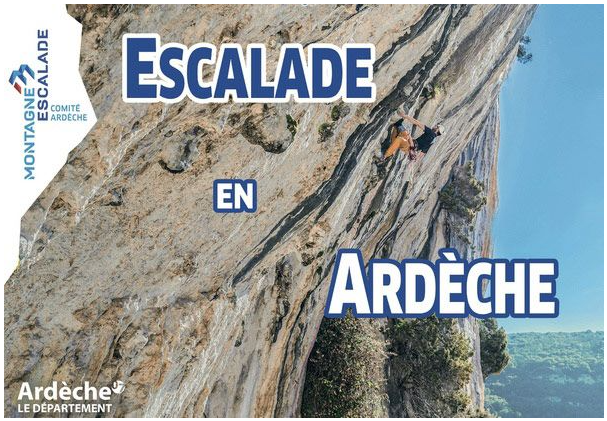
Escalade en Ardèche — FFME CD07
The definitive regional topo for the Ardèche department — 2024 edition. Covers Balazuc, Labeaume, Vogüé, Chauzon, Mazet and all the major crags. Instructions for use in English.
Check availability ↗theCrag — Balazuc / Les Barrasses
Best digital resource for Balazuc. Community logbooks, access notes, photos and route descriptions. Download offline before heading out — the app works without signal once data is cached.
View on theCrag ↗yadugaz07.com — Ardèche Topo Archive
Free volunteer-run site covering every crag in the Ardèche with approach notes, grades and sector descriptions in French. Invaluable for planning the wider circuit and cross-referencing sector information.
View yadugaz07 ↗🚐 Van Access, Overnight Parking & Essentials
Balazuc is one of the most accessible crags in the southern Ardèche for vanlifers. The village car park is free, well-signed, and positioned at the entrance to the village just above the gorge — it handles motorhomes and long-wheelbase vans without difficulty. Note: overnight parking in the village car park is generally tolerated off-season but can be managed in July and August when the mairie controls summer parking capacity. Use the campsite options listed below from late June onwards.
The standard vanlifer advice applies: be self-sufficient, arrive late, leave early, and always check Park4Night for the most current community reports before staying.
🅿️ Parking and Overnight Options
| Location | Type | Cost | Distance to Crag | Notes |
|---|---|---|---|---|
| Balazuc Village Car Park | Day parking (free) | Free | 5 min walk | Large, flat car park at village entrance. Best daytime option. Overnight tolerated off-season; can be enforced in peak summer. Toilet facilities nearby in season. |
| Camping de la Falaise — Balazuc | Campsite ⭐⭐⭐ | ~€12–18/night | 5 min drive / 15 min walk | Quiet campsite close to the Balazuc cliff — one of the most beautifully situated in the region. Pitches for vans and motorhomes. Bar service in season. Ideal base for combining Balazuc with the wider Ardèche circuit. |
| Ruoms Motorhome Aire | Motorhome aire | ~€10–12/night | 8 min drive | Dedicated motorhome area in Ruoms town. Water, electricity and waste disposal. Open year-round. Good budget overnight option; better suited to shorter stays than a week-long base. |
| Camping Les Ranchisses — near Labeaume | Campsite ⭐⭐⭐⭐ | ~€15–25/night | 15 min drive | Popular with climbers doing the wider Ardèche circuit. Full services for campervans. Well-positioned between Balazuc, Labeaume and the Cirque de Gens — a good central base for the full circuit. |
Practical Vanlife Essentials
💧 Water
Public fountains in Balazuc village centre. But this is not a proper refill, seems like campsite around the are are the only real options.
🛒 Supplies
Ruoms (8 km) has a supermarket, boulangerie, pharmacie and weekly market. Aubenas (25 km north) has all major supermarkets and outdoor gear shops. Balazuc village has a small seasonal café and snack point in summer.
🌊 Swimming
The Ardèche river directly below the crag is one of the finest post-climbing swims in the region — immediately accessible via the riverside path. Clear water, calm section, good shingle beach. Swimmable from May to October. Busy in August but quiet at dawn and dusk.
🔌 Power & WiFi
Village café has WiFi and charging in season. Campsites at Ruoms and Balazuc provide electricity hook-ups. Motorhome aire in Ruoms has electric. Ruoms tourist office has free WiFi — useful for downloading topos and checking conditions.
🚽 Facilities
No toilet facilities at the cliff base. Village car park area has toilets in season. Plan accordingly before the walk down. Full Leave No Trace essential at the riverside — the beach below the crag is a shared community space.
🏥 Medical
Nearest hospital: Centre Hospitalier d’Aubenas (~25 km, 25 min). Ruoms (8 km) has a pharmacy and doctor’s surgery. Save addresses offline — signal at the crag is unreliable. Emergency: Samu 15, or 112 from any EU mobile network.
Eat, Swim, Rest & Local Life
Balazuc is classified as one of the Plus Beaux Villages de France — a designation that actually means something here. The medieval village on the promontory above the crag has a handful of seasonal restaurants and a terrace with views over the Ardèche that justify lingering well past climbing-hours. In high season a restaurant or two will be open for lunch and dinner; outside July–August, options are more limited and it’s worth checking in advance.
The swimming is immediate and excellent. The Ardèche below the crag is accessible within two minutes of the cliff base — a wide, shallow-to-deep section of clear green river with a natural shingle and gravel beach. From June to September it is warm enough for a proper swim, not just a paddle. Canoeists pass through during the day (the Ardèche is one of France’s premier canoe rivers), but the early morning and evening are quiet. A dry bag for phone and wallet is useful — the path to the best swimming spots crosses some uneven ground.
For supplies, Ruoms (8 km) is the practical hub — supermarket, boulangerie, pharmacie, fuel and a Friday market that’s worth visiting for local produce. Aubenas (25 km north) covers anything specialist including outdoor gear and any equipment needs.
🧗 More RockVanLife Ardèche & France Guides
❓ Frequently Asked Questions — Balazuc Climbing, Ardèche
📌 Related Topics
📚 Helpful Climbing Resources
Essential guides, tips, and advice for your climbing adventures
🔧 Gear Lab
View all →
Black Diamond RockLock Review — Our Biggest, Toughest Locker
Read more →
Petzl Attache Review — The Most Versatile First Locker
Read more →🚐 Road Trip Essentials
View all →
10 Underrated European Sport Climbing Destinations (That We Actually Drove To)
Read more →
Van Life Electrical Setup 2026 — Our Exact Power System
Read more →📖 Climber's Handbook
View all →
Beginner Climbing Gear List 2026 – Everything You Need to Start Climbing Outdoors
Read more →