Best Climbing Helmets 2026: Reviews & Buying Guide
Five helmets compared for sport, trad, and all-day wear — reviewed by van-life climbers across European crags.
A climbing helmet is the one piece of kit you hope never to truly need — and the one you should never leave without. Whether you are sport climbing on a busy limestone crag where gear from the party above can fall at any moment, or leading a trad route on British gritstone where a fall could swing you sideways into the rock, your helmet is protecting something that cannot be replaced. The only bad helmet is the one you left in the van.
In this guide, we review five of the best climbing helmets available to European climbers in 2026 — from the hardwearing beginner-friendly classic to the ultralight foam helmet built for hard sport days in the heat. We have also included a full explainer on helmet construction types, because understanding the difference between a hardshell, foam, and hybrid helmet genuinely changes which choice is right for you.
Every retailer link on this page ships within Europe — no US import duties, no 3-week waits from an American warehouse. Safety-critical gear should come from specialists who understand the products and honour warranties without transatlantic shipping headaches. We link to Alpinetrek UK, Bergfreunde DE and Trek-Expert UK where each helmet is stocked.
View the 2026 Starter Pack →
Helmet fit is the most personal decision in climbing gear — a helmet that sits perfectly on one head shape may be uncomfortable on another even in the same size. Always try a helmet on in person before buying. These retailer links are for reference. Your local climbing shop deserves your business first.
📊 Quick Comparison Table — Best Climbing Helmets 2026
| Helmet | Price | Weight | Construction | Best For | Score |
|---|---|---|---|---|---|
| Black Diamond Half Dome | £47.11 −11% | 345g | Hardshell | Best Value | 8.9/10 |
| Petzl Meteor/Meteora | ~€95 | 240g | Hybrid | Best All-Round | 9.3/10 |
| Petzl Sirocco | ~€120 | 160g | Foam (in-mould) | Best Ultralight | 9.1/10 |
| Mammut Wall Rider MIPS | ~€100 | 225g | Hybrid + MIPS | Best Safety | 9.4/10 |
| Edelrid Salathe | ~€95 | 215g | Hybrid | Best for Trad | 9.0/10 |
A helmet that does not fit correctly does not protect you correctly. The helmet should sit level on your head, two fingers above your eyebrows. The chin strap should be snug — you should be able to fit one finger between the strap and your chin. If the helmet rocks forward, backward, or side-to-side, it does not fit. Try a different size or model.
1. Black Diamond Half Dome
🔥 11% Off at AT & B
💰 Best Value • The Go-To First Helmet for European Climbers
⚡ Best price: Trek-Expert UK £47.11 · Alpinetrek UK and £48.91 (was £54.95) · Bergfreunde DE €48.91 (was €54.95).
Our Testing Score
Detailed Review
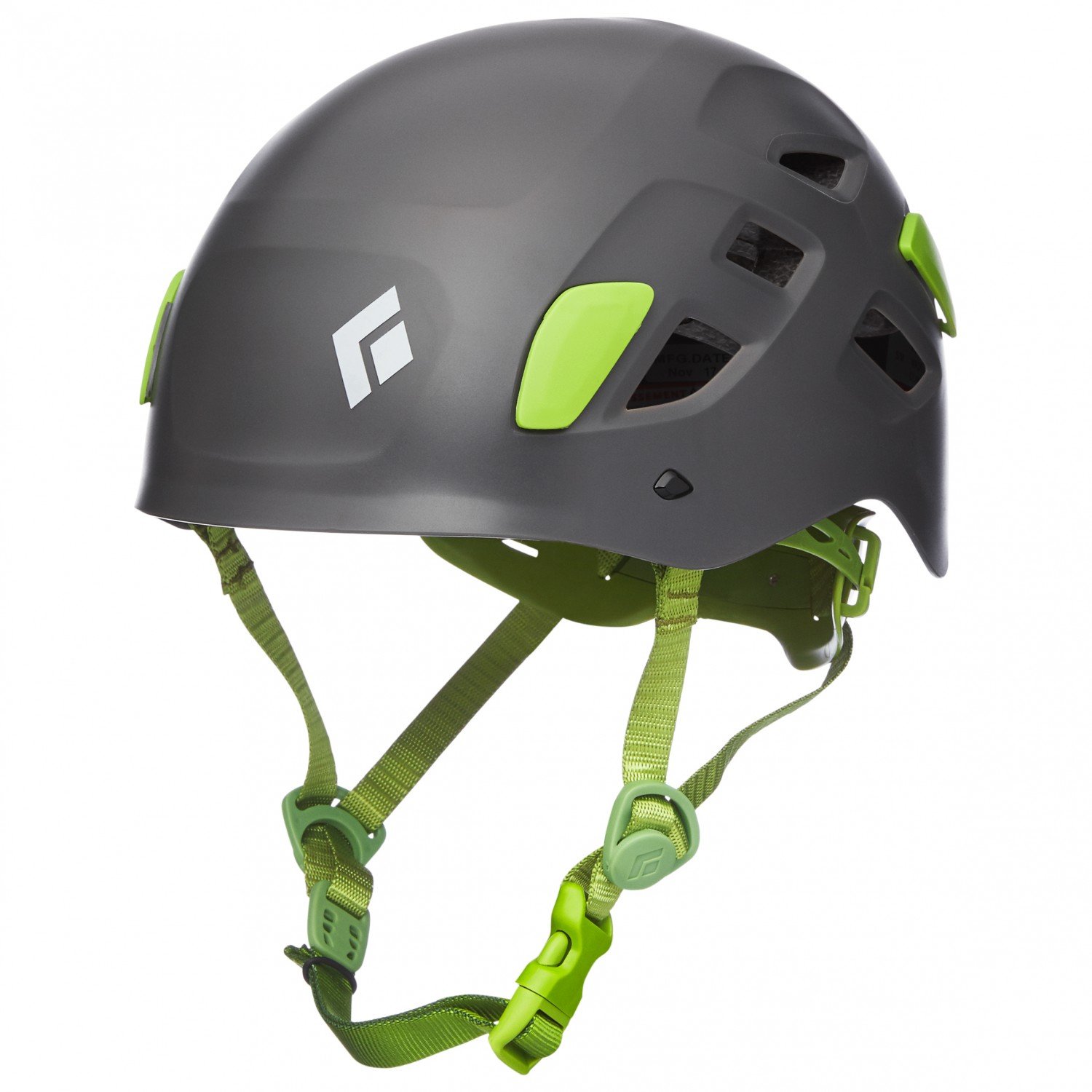
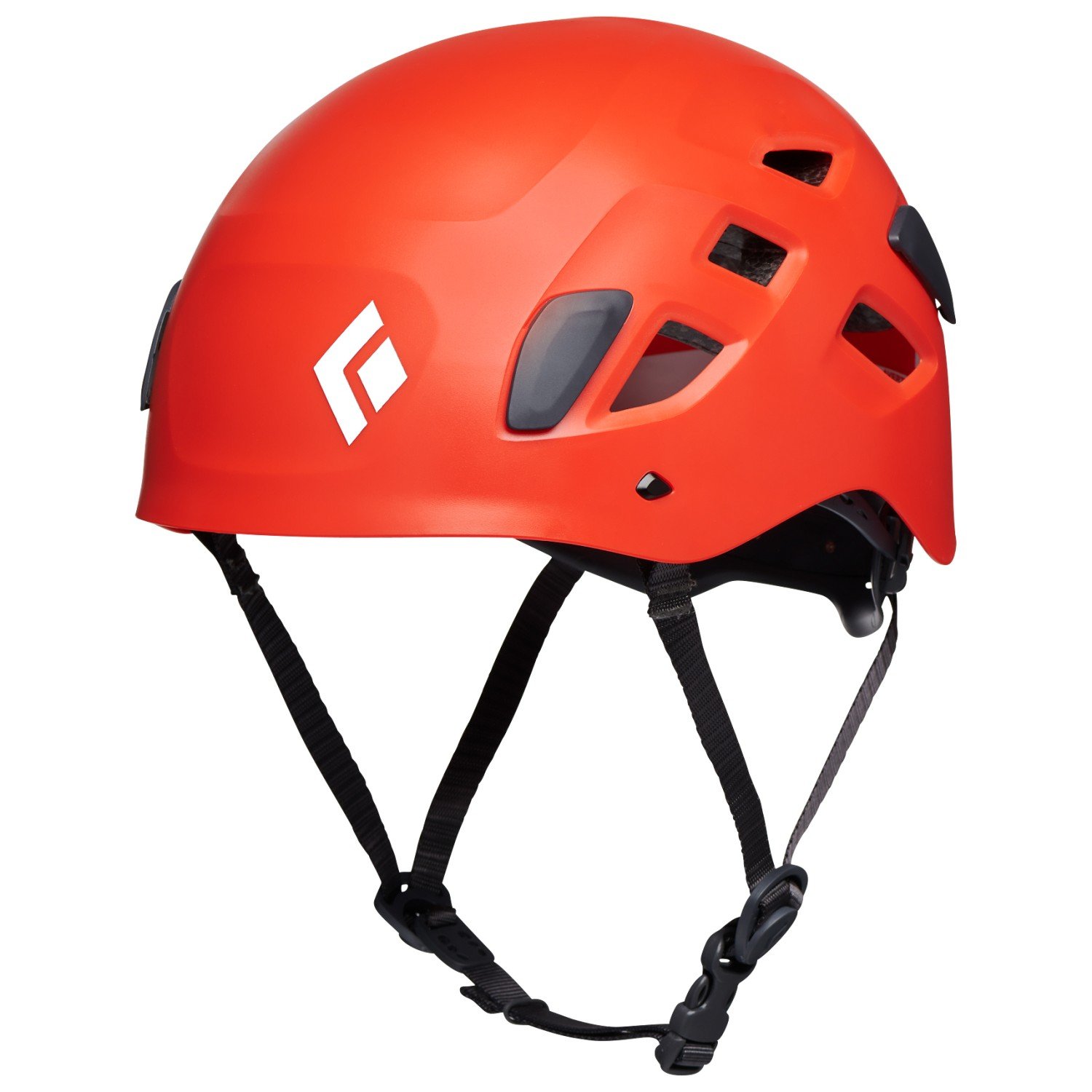
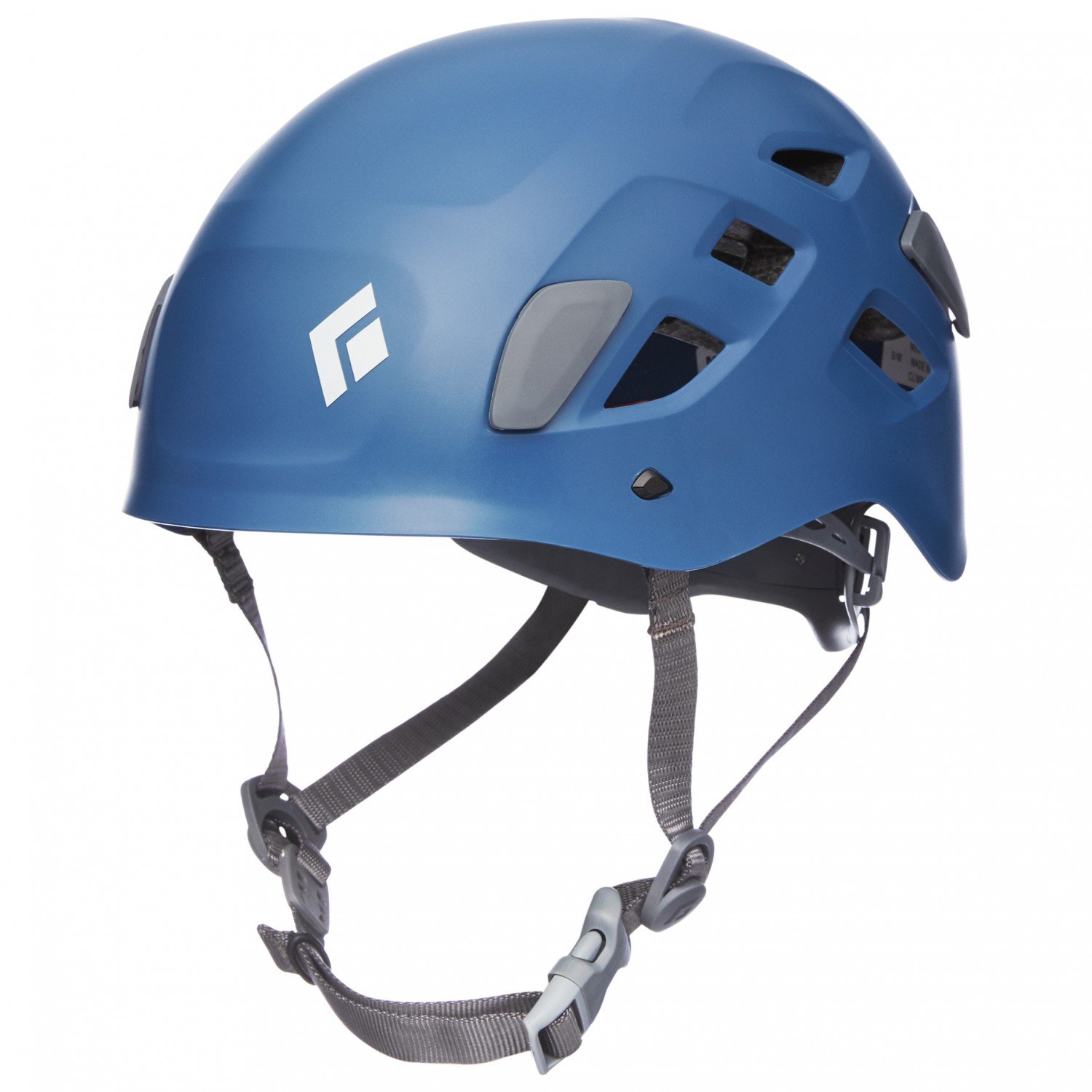
The Black Diamond Half Dome has been the entry point for climbers buying their first helmet for over a decade — and it earns that position honestly. The hardshell ABS construction is bombproof for the price: it handles the scrapes, drops, and abuses that a beginner or intermediate climber puts a helmet through without showing meaningful wear. For anyone starting out, or anyone who wants a dedicated workhorse helmet for trad climbing on rough rock, the Half Dome’s durability argument is compelling.
The one-handed dial fit system is a genuine quality-of-life feature. You can adjust the fit wearing gloves at a cold belay, without taking the helmet off. The honest limitations: at 345g it is the heaviest helmet in this comparison, and the ventilation does not match foam or hybrid helmets on hot summer crag days. For the price, nothing comes close in terms of outright durability and protection.
The Half Dome is a rugged workhorse, but the Vapor is the ultralight performance model. However, it is significantly less durable than the Half Dome: the internal rod-reinforced EPP construction resists minor scrapes poorly. It is a sport climbing specialist, not an all-rounder. If you need a helmet for mixed use including trad and mountain routes, the Half Dome is the more sensible choice.
Best for: Beginners buying their first helmet, trad climbers who want maximum durability, and anyone who wants serious protection at a fair price.
Pros
- Exceptional durability — hardshell handles real abuse
- Best value helmet in this comparison
- One-handed dial — adjustable with gloves on
- Stable and well-fitted on the head
- Good side and rear impact protection
Cons
- Heaviest helmet here at 345g
- Ventilation limited compared to foam alternatives
- Noticeably hot on summer sport climbing days
- Bulkier for packing into a climbing bag
2. Petzl Meteor/Meteora
⭐ Best All-Round • Hybrid Construction, Exceptional Ventilation
Available at Alpinetrek UK and Vertical Extreme DE
Our Testing Score
Detailed Review
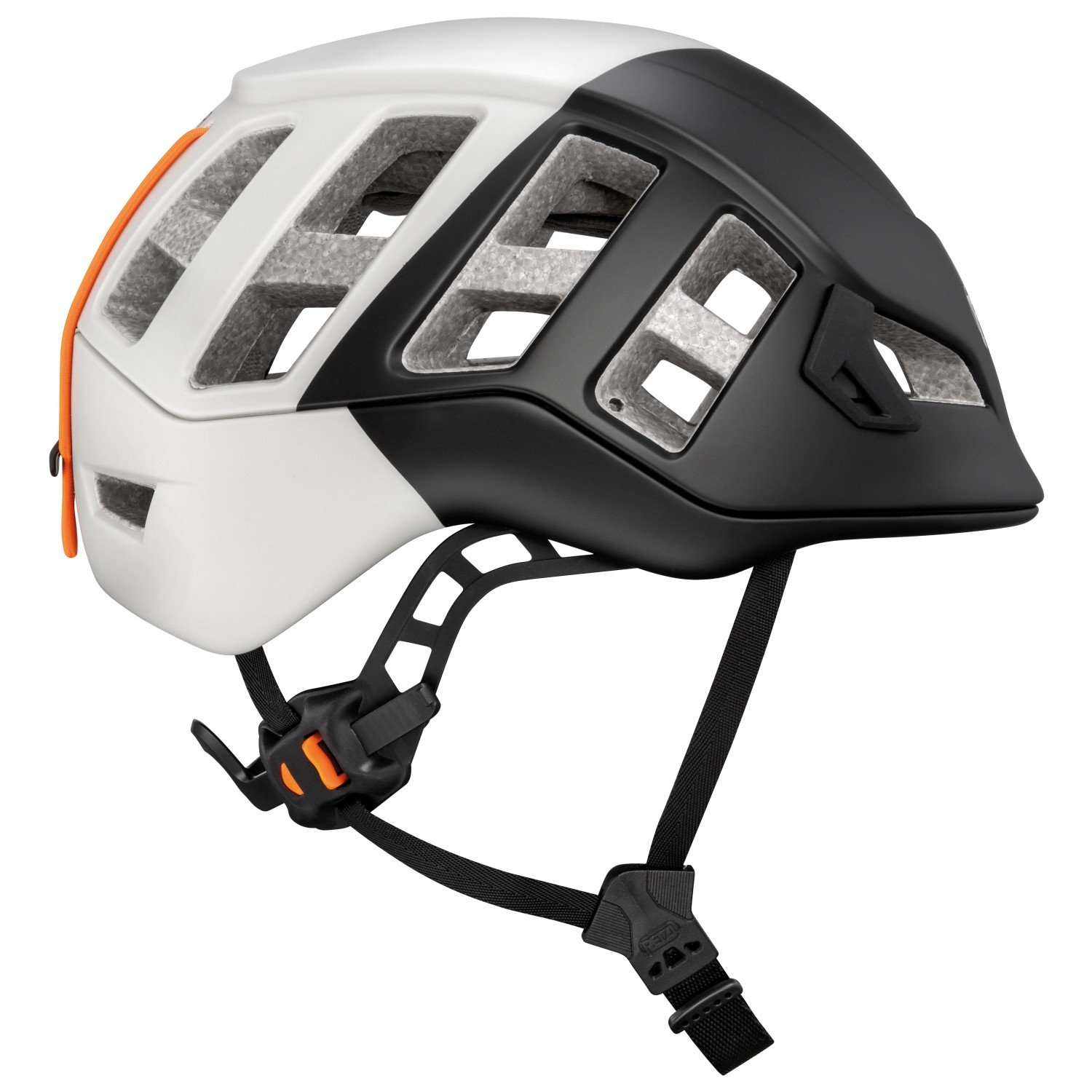
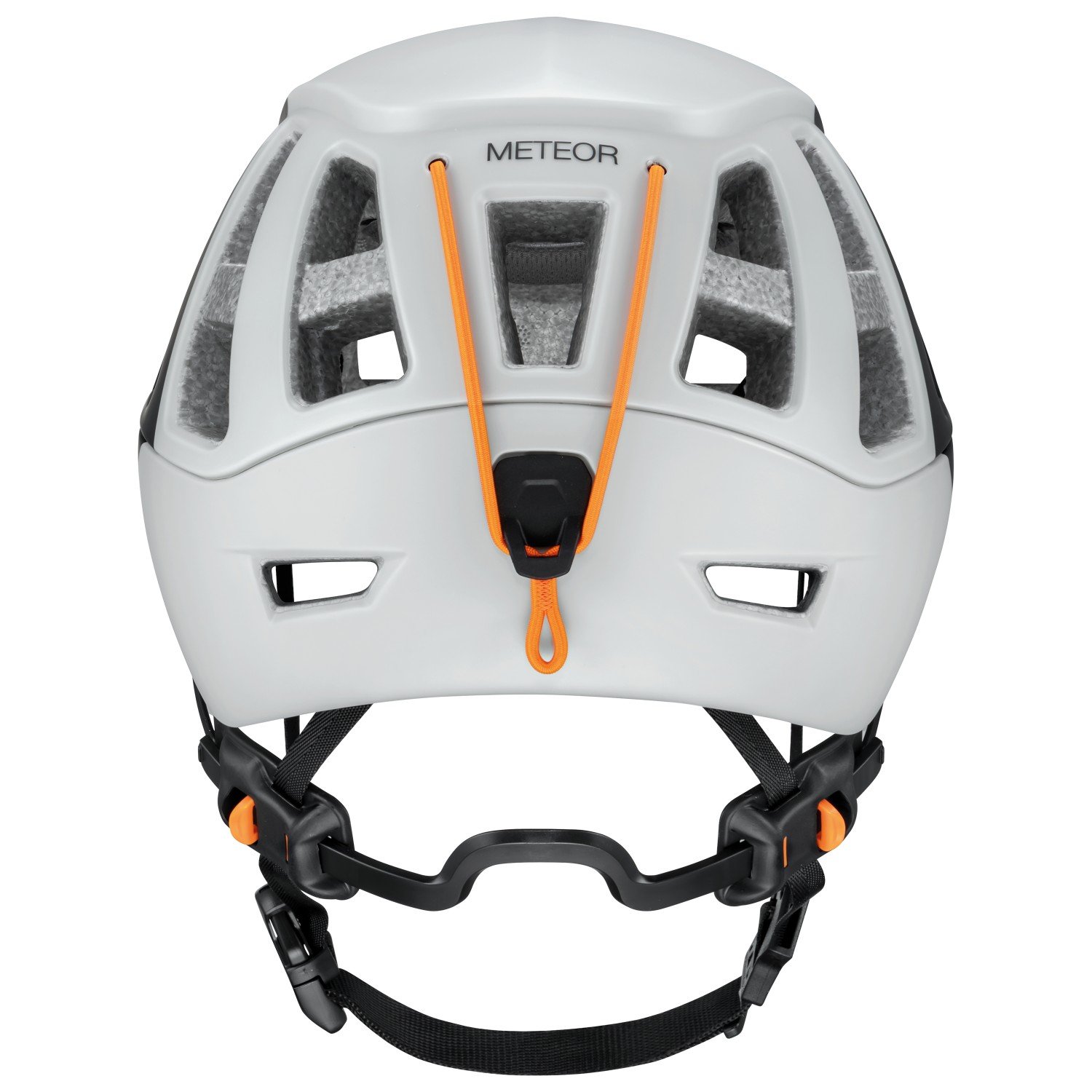
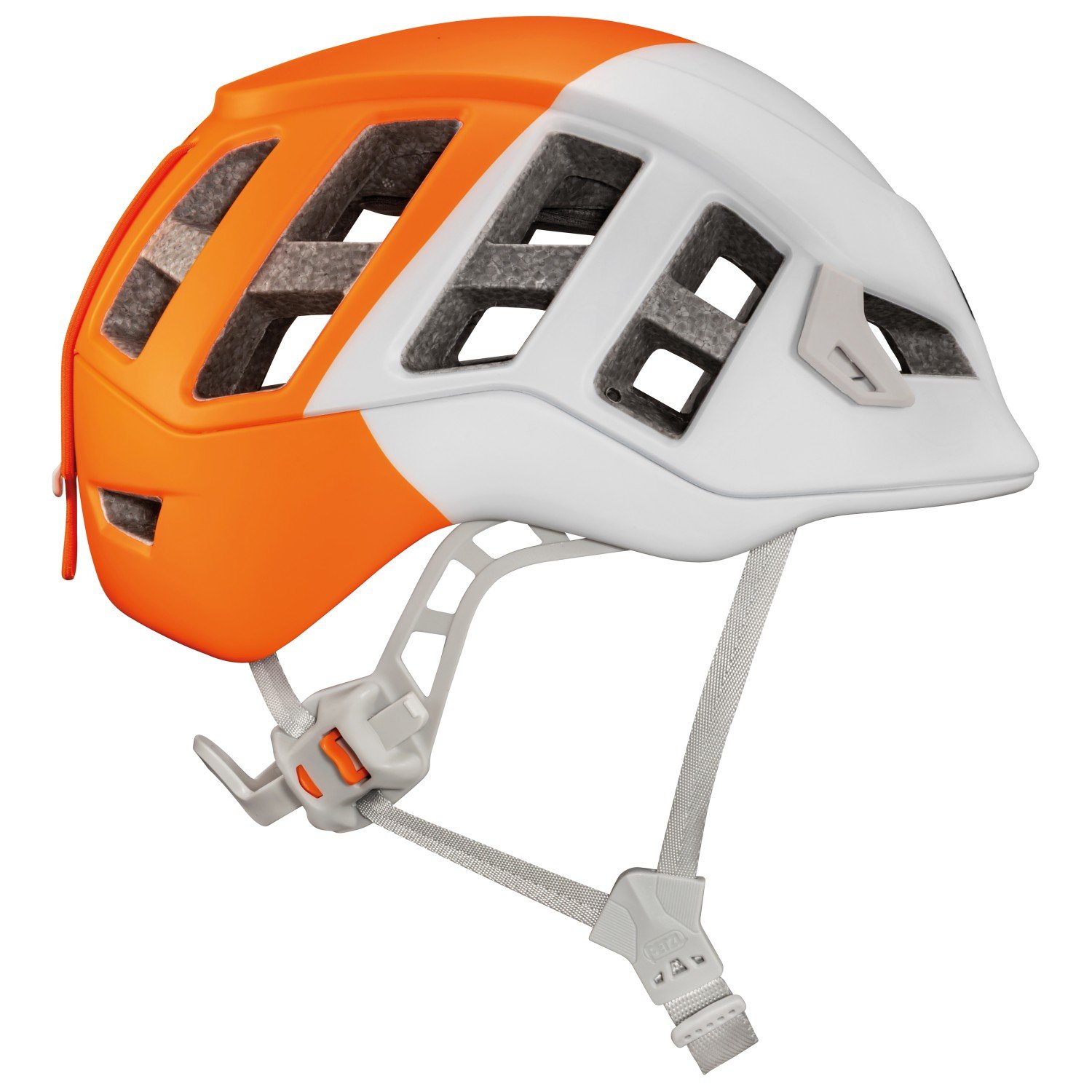
The Petzl Meteor/Meteora is the helmet that makes you forget you are wearing a helmet — and that is the highest compliment you can pay a piece of protective gear. At 240g it sits comfortably between the heavier Half Dome and the ultralight Sirocco, offering genuinely impressive ventilation through its large EPS foam openings without sacrificing the durability that comes from the polycarbonate outer shell.
The hybrid construction is what makes the Meteor/Meteora the all-round pick. The EPS foam core absorbs impacts more effectively than a pure hardshell suspension system, whilst the polycarbonate shell provides the resistance to repeated minor impacts and abrasion that a pure foam helmet lacks. For climbers who move between sport cragging in summer and trad climbing on rougher terrain, this balance is exactly right.
Best for: The travelling climber who wants one helmet that genuinely works across sport, trad, and multi-pitch — with no meaningful compromise in any discipline.
Pros
- Outstanding ventilation — genuinely cool to wear
- Hybrid construction — best of both worlds
- Light at 240g without sacrificing protection
- Excellent all-round performance for any discipline
- Clean headlamp compatibility front and rear
Cons
- More expensive than hardshell alternatives
- Less durable than the Half Dome against repeated knocks
- Large vents reduce protection against very small rockfall
- Slightly limited size range
3. Petzl Sirocco
Best Ultralight — 160g — Barely There Performance Helmet
Available at Alpinetrek UK and Vertical Extreme DE
Our Testing Score
Detailed Review
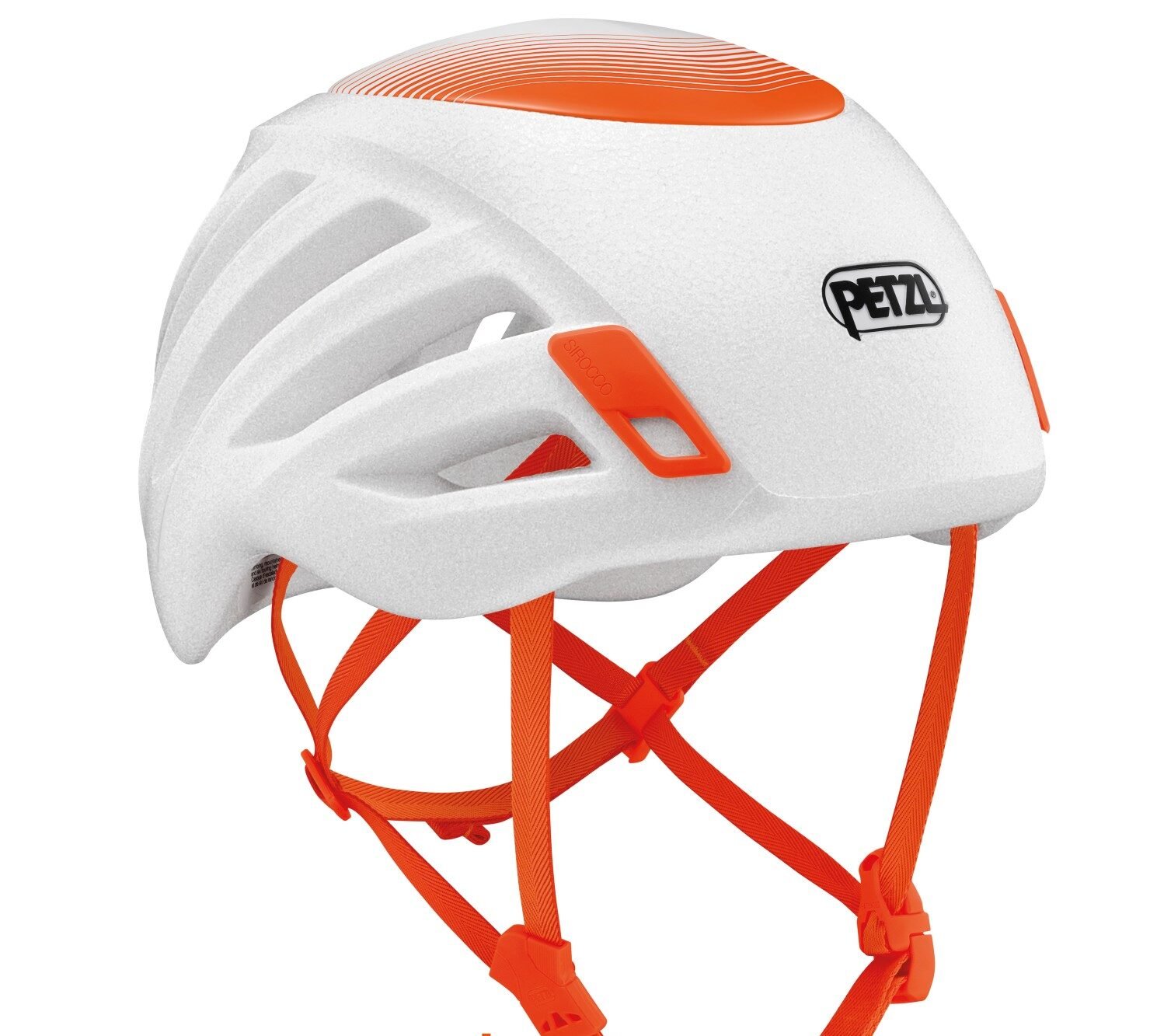
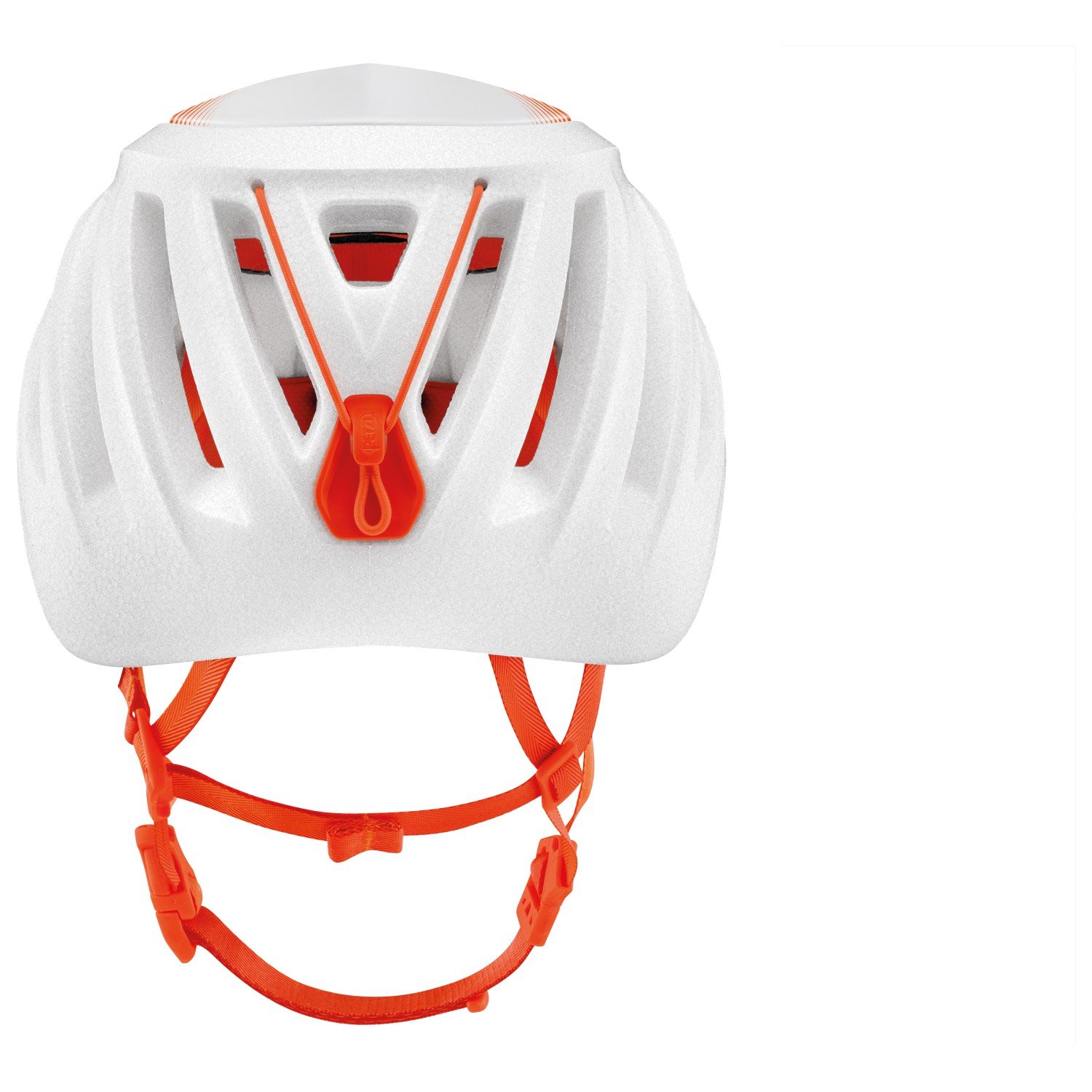
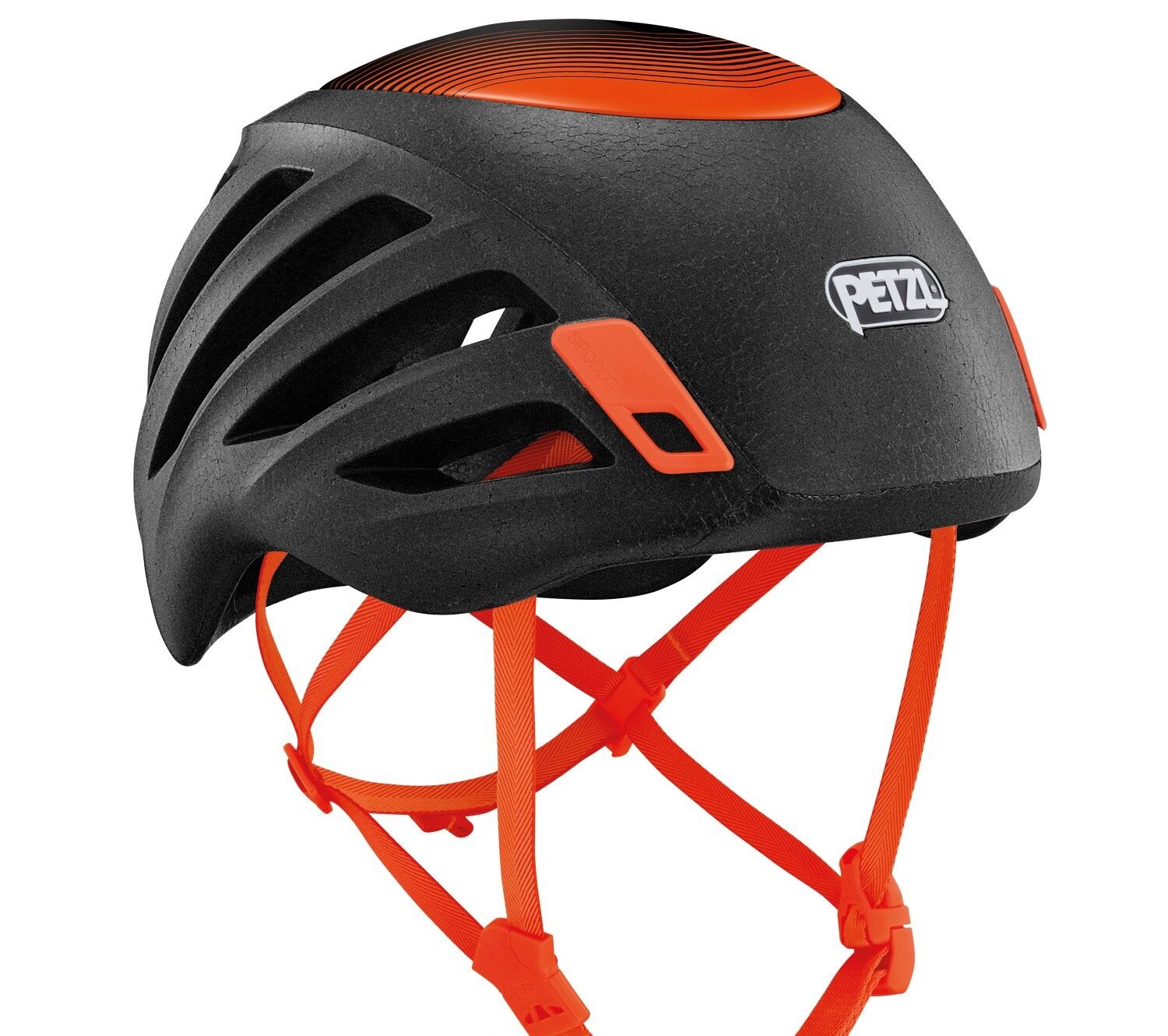
The Petzl Sirocco is the kind of helmet that makes you question why you ever wore anything heavier. At 160g it is one of the lightest certified climbing helmets available anywhere — light enough that first-time wearers instinctively check it is on their head correctly, because it barely registers. For sport climbers projecting routes in Mediterranean heat, or alpinists counting every gram, this weight saving is not trivial: the Sirocco weighs roughly half as much as the Half Dome.
The honest trade-off is durability. Pure foam helmets are more vulnerable to repeated minor impacts and abrasion — dropping the Sirocco on a sharp rock corner will cause more visible damage than the same drop to a Half Dome. It is not the helmet for trad climbing on rough rock, nor for beginners. But for experienced sport climbers who understand its limitations, it is exceptional.
The Petzl Boreo is the Sirocco’s more robust sibling — a hardshell helmet at around €45 and 295g. Where the Sirocco is the performance ultralight, the Boreo is the practical everyday choice: cheaper, more durable, and better suited to beginners, trad climbing, or any situation where the helmet takes regular knocks. Many climbers own both.
Best for: Experienced sport climbers projecting in hot conditions, alpine climbers where pack weight matters, and any situation where maximum comfort over a long day is the priority.
Pros
- Lightest helmet in this comparison at 160g
- Best ventilation — genuinely cool on hot days
- Exceptional all-day wearing comfort
- Compact for packing into a climbing bag
- Fully certified despite its minimal weight
Cons
- Less durable than hardshell alternatives
- Not ideal for trad climbing on rough rock
- Most expensive helmet in this comparison
- Not recommended as a first helmet for beginners
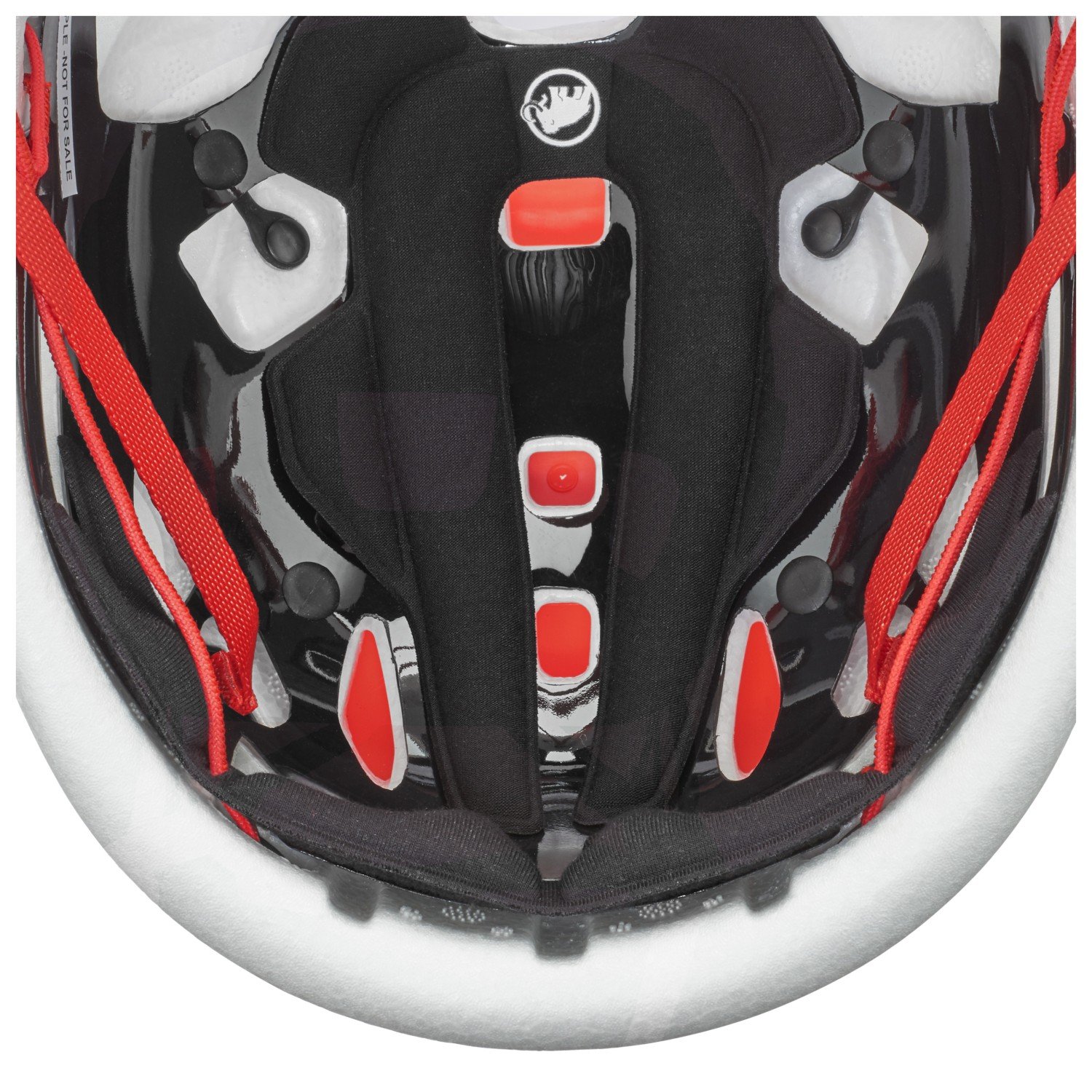
4. Mammut Wall Rider MIPS
🛡️ Best Safety • The First Climbing Helmet with MIPS Brain Protection
Available at Alpinetrek UK and Vertical Extreme DE
Our Testing Score
Detailed Review
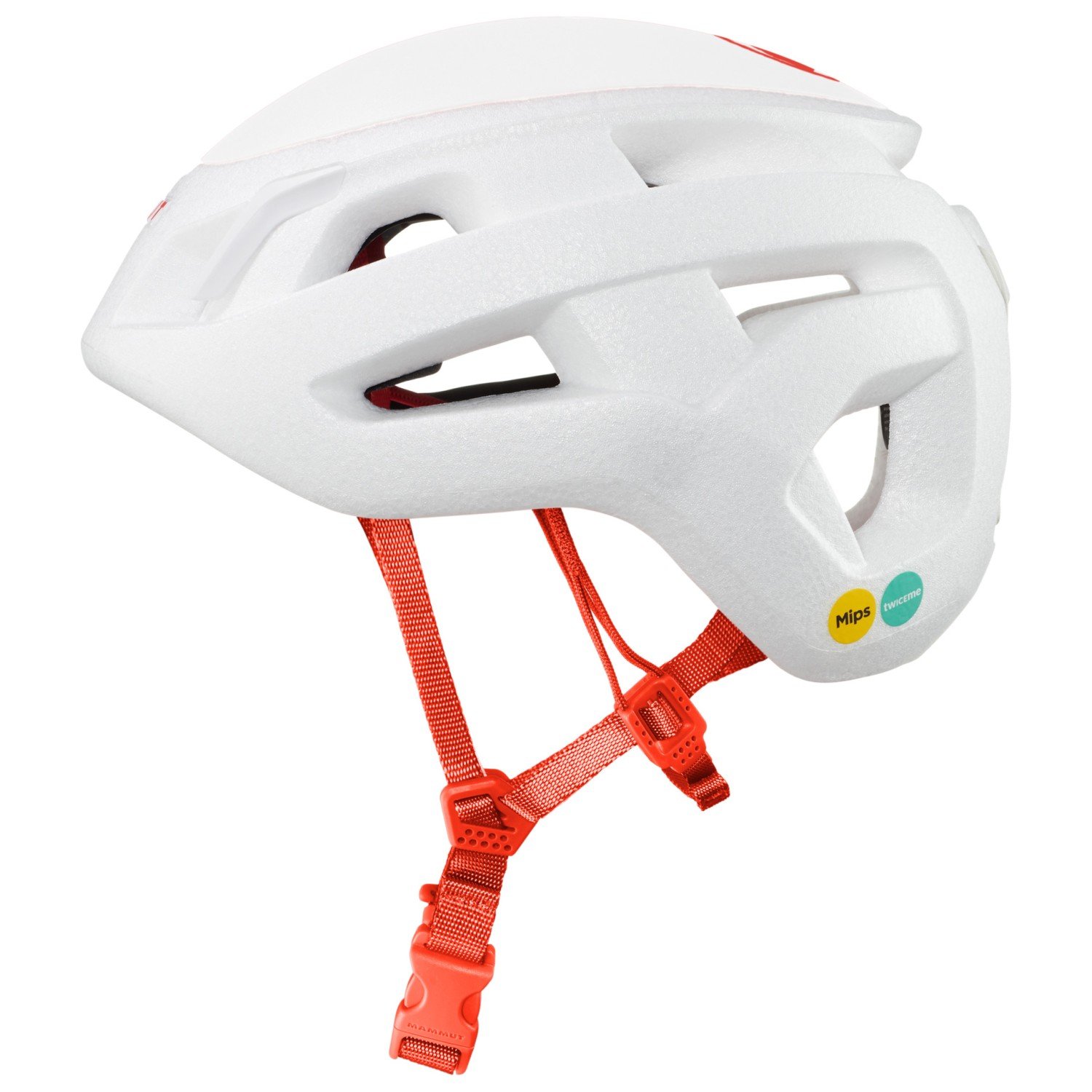
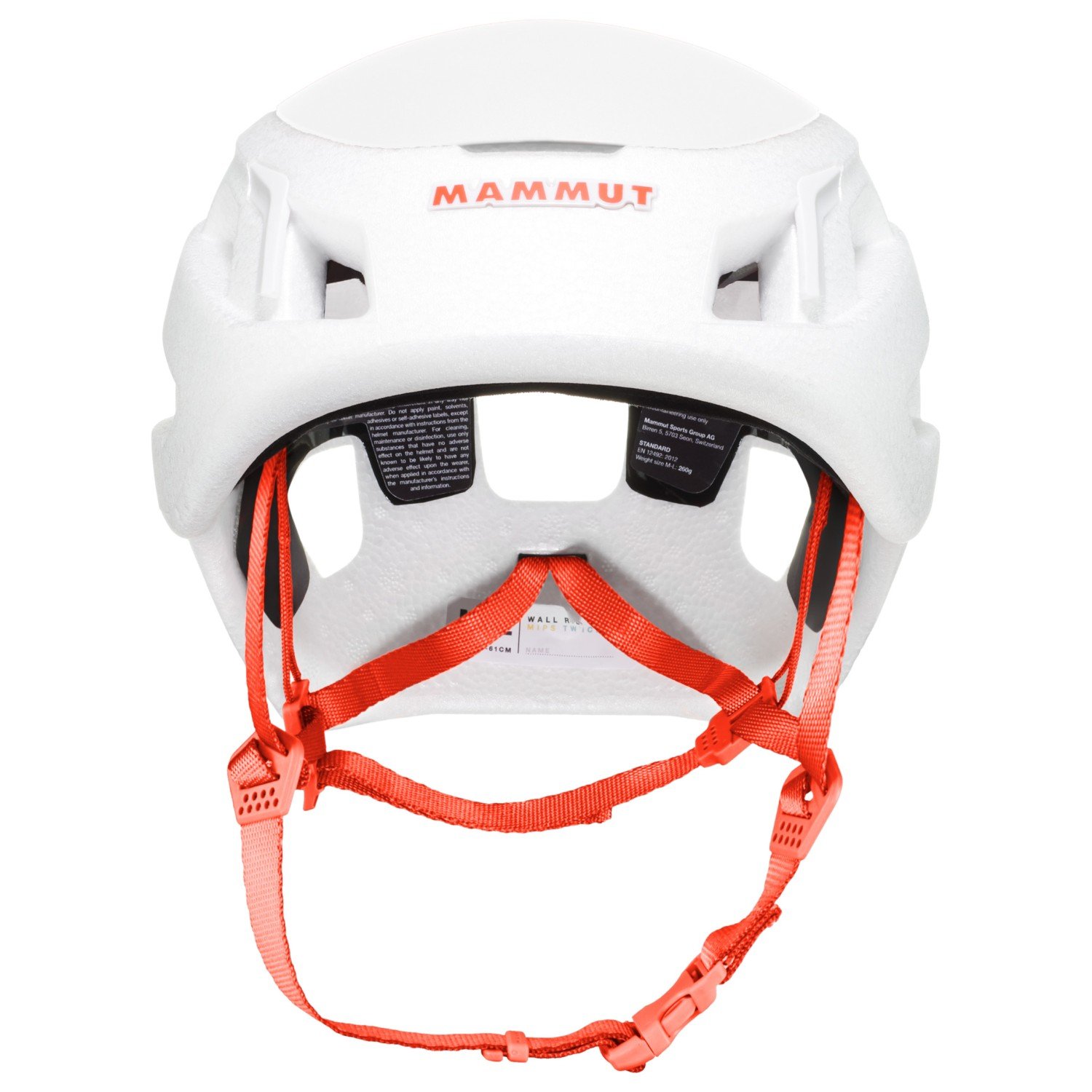
The Mammut Wall Rider MIPS is a landmark helmet — the first in the climbing world to incorporate MIPS (Multi-directional Impact Protection System). The principle is straightforward and important: most real-world impacts are angled, involving both direct force and rotational energy. Standard helmets absorb the direct impact but pass rotational forces directly to the brain. MIPS adds a low-friction layer inside the helmet that can slide 10–15mm in any direction on impact, redirecting some of that rotational energy away from the brain and potentially reducing the risk of concussion.
At 225g the Wall Rider MIPS is not meaningfully heavier than other hybrid helmets, and the ventilation through its generous openings is good for all-day wear. The EPP foam core combined with a partial hardshell gives excellent durability too — it handles the knocks and scrapes of regular use better than a pure foam helmet.
Best for: Safety-conscious climbers of any discipline, those who have had previous head injuries, and anyone who wants the most advanced impact protection currently available.
Pros
- MIPS — the most advanced impact protection in climbing
- First climbing helmet with MIPS technology
- Light at 225g despite the additional MIPS layer
- Good ventilation for a hybrid construction
- Excellent durability — EPP + partial hardshell
Cons
- More expensive than non-MIPS alternatives
- MIPS benefit difficult to verify in real-world use
- Slightly bulkier than pure foam helmets
- Limited colour options compared to competitors
5. Edelrid Salathe
Best for Trad — Hybrid Construction, Full Head Coverage, Washable Padding
Available at Alpinetrek UK and Vertical Extreme DE
Our Testing Score
Detailed Review
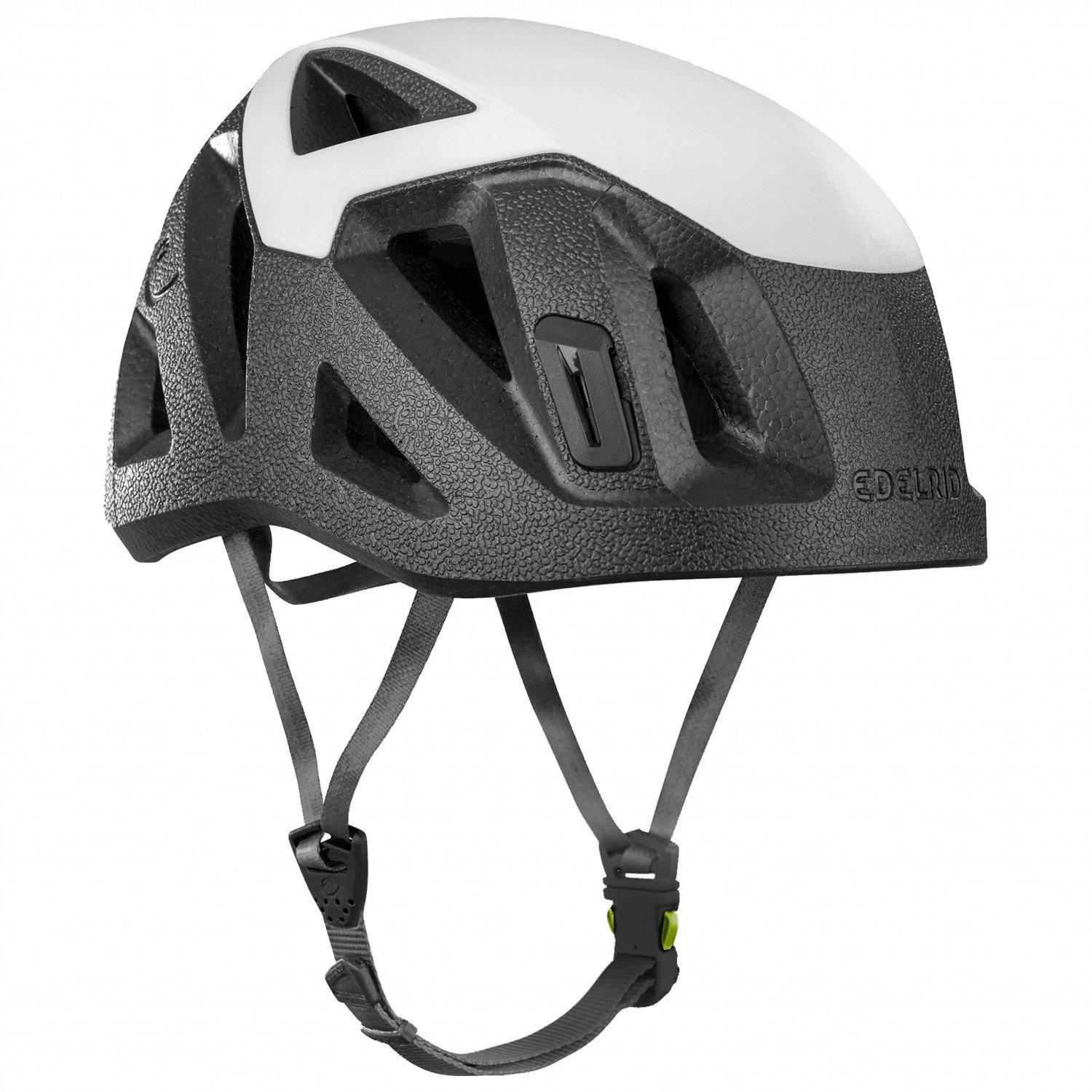
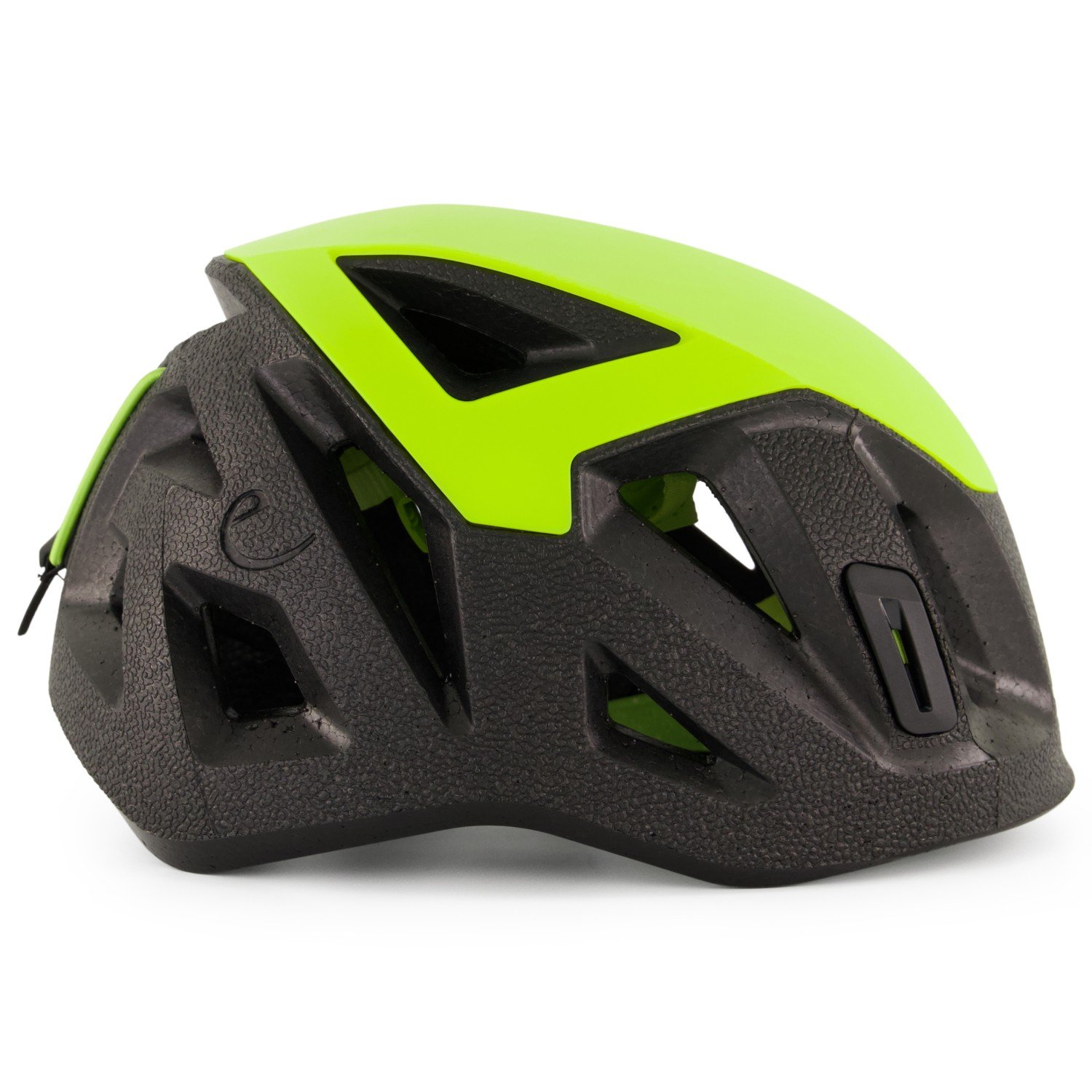
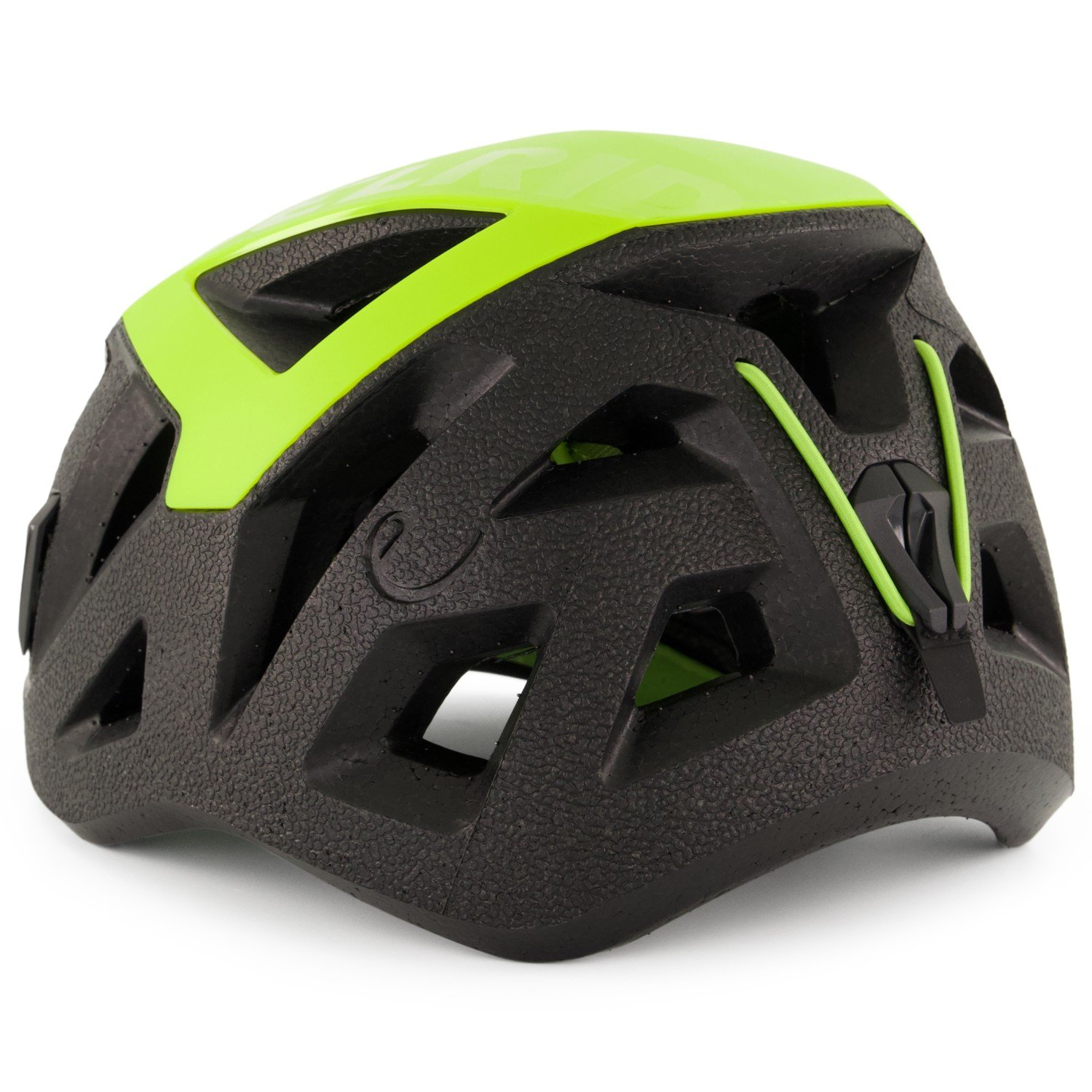
Edelrid designed the Salathe with full head coverage in mind — the ergonomic shape wraps around more of the skull than many hybrid helmets, providing extended side, front, and rear protection that matters specifically in trad climbing scenarios where a fall might swing you sideways into rock. That full-coverage design is the Salathe’s defining feature and the primary reason it earns its trad recommendation over the Meteor/Meteora.
At 215g it is one of the lighter hybrid helmets available. The combination of an EPP foam core with a partial ABS hardshell upper gives excellent impact absorption whilst the hard shell upper resists the kind of repeated scraping and minor rockfall that trad routes routinely deliver. The removable and washable internal padding is a practical detail that gets overlooked in most gear guides — after a long day at the crag in summer, being able to remove and wash the padding properly extends the helmet’s useful life.
Best for: Trad climbers who want better side and rear coverage, multi-pitch climbers spending full days in a helmet, and alpinists who want a versatile helmet that works across disciplines.
Pros
- Full head coverage — better side and rear protection
- Light at 215g for a full-coverage hybrid
- Removable, washable padding — practical for multi-day trips
- Good ventilation for all-day wear
- Compatible with ski goggles for alpine use
Cons
- Less widely known than Petzl or Black Diamond
- Only two size options — check fit carefully
- Premium price for a non-MIPS helmet
- Fewer colour options than main competitors
🔩 Helmet Construction: Hardshell vs Foam vs Hybrid
The single most important thing to understand when buying a climbing helmet is that construction type determines weight, ventilation, durability, and cost — and the right choice depends entirely on how and where you climb.
A rugged ABS plastic shell sits over a foam liner or suspension system. Built to deflect rockfall and withstand the daily chaos of life on the road.
- Heaviest construction (330–420g)
- Maximum durability — handles abuse
- Most affordable price point
- Lower ventilation than foam models
- Best for beginners and high-wear environments
Example: Black Diamond Half Dome
Constructed from Expanded Polypropylene (EPP) or EPS foam. EPP is “resilient,” meaning it can absorb multiple minor hits without shattering.
- Ultralight construction (150–200g)
- Superior ventilation for hot climates
- Excellent side and rear impact protection
- Delicate — prone to crushing in a packed bag
- Best for sport redpoints and fast alpine days
Example: Petzl Sirocco
A foam core (EPP/EPS) reinforced with a partial hard shell over the top and sides. Prevents micro-trauma to the foam from small rock hits and pack-wear.
- Mid-weight balance (210–270g)
- Excellent ventilation through foam ports
- More durable than pure foam; lighter than hardshells
- The standard for modern safety (often includes MIPS)
- Best all-round choice for most climbers
Examples: Petzl Meteor/Meteora, Edelrid Salathe, Mammut Wall Rider
How to Choose the Right Climbing Helmet
Sport Climbing
For sport climbing, ventilation and weight are the priority. A lightweight foam or hybrid helmet keeps you cooler and more comfortable on long projecting days.
Trad Climbing
Trad climbing increases the complexity of fall scenarios. Prioritise full coverage and durability. A hardshell or robust hybrid is the right choice.
Alpine & Mountain
Alpine climbing demands weight savings on long approaches, headlamp compatibility for early starts, and protection against objective hazards. A lightweight hybrid with headlamp clips is the right tool.
Beginners
For a first helmet, durability and value are the priority. You will knock it around, drop it, and store it carelessly — a hardshell handles this better than a foam helmet.
Replace your helmet immediately after any significant impact — even if it looks undamaged, the foam may be internally compressed and its protective capacity permanently reduced. Retire after 5–10 years regardless of condition, or sooner if the shell shows cracks, the straps are frayed, or the fit system is failing.
Final Recommendations
For most European van-life climbers, the Petzl Meteor/Meteora is the single best all-round helmet — light, well-ventilated, and genuinely comfortable across sport and moderate trad. Beginners should start with the Black Diamond Half Dome. Pure sport climbers in warm conditions should look at the Petzl Sirocco. Trad climbers on rough terrain will appreciate the Edelrid Salathe’s full coverage. And if protection is your absolute priority, the Mammut Wall Rider MIPS is in a category of its own.
Whatever you choose, wear it. Every time.
🌱 Why Sustainability Is Hard in Climbing Helmets — And What Actually Matters
Climbing helmets are the least sustainable category in a climber’s gear list, and the industry has been honest about why. Helmet construction requires composite materials — EPS foam bonded to ABS shells, MIPS liners, webbing, buckles — that are technically recyclable individually, but almost impossible to separate at end of life. There is currently no established recycling programme for climbing helmets from any major manufacturer.
What actually matters when buying:
- Brand-level commitments. Edelrid is a bluesign® System Partner since 2009 and a Fair Wear Foundation member — meaning their supply chain and worker conditions are independently audited. This is meaningful even for a helmet that itself has no bluesign fabric.
- Mono-material construction. Helmets built from a single foam type (like the Petzl Sirocco’s pure EPP) are more recyclable than composite EPS+ABS designs — one material means one recycling stream when the helmet finally retires.
- Retirement guidance. Petzl publishes detailed guidelines for retiring your equipment properly (including how to make a retired helmet unusable so no one else picks it up second-hand). This matters more than most brands admit.
- Made in Europe. Reduces shipping footprint significantly. Edelrid (Isny, Germany) and Petzl (Crolles, France) both manufacture their helmets in Europe; Black Diamond and Mammut helmets are typically manufactured in Asia.
- Longevity. The most sustainable helmet is the one you don’t need to replace. Full-shell hardshell designs (Half Dome, Salathe) genuinely outlast foam-only designs when subjected to real-world van-life abuse — a helmet lasting 5 years is more sustainable than one lasting 2, regardless of what it’s made from.
The industry frontier: Edelrid launched the ZODIAC 3R in 2023 — the world’s first partially recycled climbing helmet — and Mammut released the Wall Rider 2.0 MIPS Twiceme in 2025 with 100% recycled EPS and bamboo padding (ISPO Award winner). Neither is in our top 5 above (Zodiac 3R is heavier and more expensive than the Salathe; Wall Rider 2.0 is still very new and not yet stocked across our three retailers), but both signal where the industry is heading. If sustainability is your top priority above all other factors, both are worth investigating.
Frequently Asked Questions
Do I need to wear a helmet for sport climbing?
Absolutely. While there’s no rulebook forcing you to wear one, the modern consensus is clear: if you value your head, you wear a helmet. The hazards at a sport crag are often entirely out of your control. Rockfall from a party on a ledge above is unpredictable and lethal. Sport climbing also involves high-energy falls — if your leg catches behind the rope during a lead fall, it can flip you upside down and pivot your head directly into the wall.
What is MIPS and is it worth paying for?
MIPS stands for Multi-directional Impact Protection System. It involves a thin, low-friction layer inside the helmet that slides slightly (10–15mm) during a crash. This design is meant to divert rotational energy — the twisting, glancing blows typical of real climbing falls — away from your brain. Most standard helmets are only tested for straight-on, vertical hits and don’t account for these spinning forces. The research is very encouraging. For climbers who have had head injuries before or who simply want the best protection possible, the Mammut Wall Rider MIPS is the standout choice.
How do I know if my climbing helmet fits correctly?
A correctly fitted climbing helmet sits level on your head, approximately two fingers above your eyebrows. It should not tilt forward, backward, or side-to-side when you shake your head. The chin strap should be snug with one finger of clearance between the strap and your chin. When buckled, you should not be able to remove the helmet by pushing it backwards off your head. If any of these criteria are not met, the helmet does not fit — try a different size or model.
What is the difference between a hardshell and a foam climbing helmet?
Hardshell helmets use a rigid plastic outer shell that distributes impact energy across its surface. They are heavier, more durable, and less ventilated, handling repeated minor impacts better. Foam (in-mould) helmets bond EPS foam to a thin polycarbonate shell — lighter, better ventilated, more efficient at absorbing impact energy. However, the foam can be permanently compressed by a significant impact without visible damage. Hybrid helmets combine both: foam for weight and ventilation, partial hardshell for durability. Most experienced climbers end up on hybrid helmets as the best practical compromise.
When should I replace my climbing helmet?
Replace your helmet immediately after any significant impact — even if it looks undamaged, the foam’s protective capacity may be permanently reduced without any visible sign. Most manufacturers recommend replacing helmets every 5–10 years regardless of condition, accounting for UV degradation over time. Also replace if: the outer shell shows any cracks; the straps are frayed or buckles don’t close securely; the internal foam feels compressed; or the fit system is failing. Never buy a second-hand helmet — you cannot know its impact history.
Is the Petzl Sirocco durable enough for trad climbing?
The honest answer is: it depends on the trad climbing. For moderate single-pitch trad on good rock where the helmet rarely contacts the crag, the Sirocco is adequate. For climbing in cracks where the helmet regularly scrapes against the rock, or for routes with significant rockfall hazard, the pure foam construction is less suitable. The Petzl Meteor/Meteora or Edelrid Salathe — both hybrid constructions — offer significantly better durability for trad use while remaining much lighter than a hardshell.
Can I use a climbing helmet for ski touring or via ferrata?
For via ferrata, a standard climbing helmet is the industry norm as the risks mirror those found in trad climbing. However, for ski touring, most climbing helmets are not officially certified for ski-specific impacts, which test for different speeds and lateral falls. If you need a helmet for both sports, verify the specific dual-certification ratings on the manufacturer’s website. For a deep dive into ski-specific safety, consult a dedicated ski-safety resource or professional alpine guide.
🧗 Explore Our Climbing Guides
Detailed crag guides from our van life climbing adventures across Europe