Lisbon Climbing Guide
Portugal’s Year-Round Rock Paradise
The Lisbon climbing region delivers something increasingly rare in Europe: genuine diversity combined with exceptional value. Within 90 minutes of Portugal’s capital, you’ll find world-class granite bouldering in mystical forests, steep limestone sport climbing above pristine beaches, adventurous trad routes on Atlantic sea cliffs, and alpine-style mountain crags—all climbable year-round.
This isn’t just another single-style destination. Lisbon offers over 1,300 documented routes spanning every climbing discipline, from beginner-friendly F4 slabs to cutting-edge F9a projects. Add mild year-round weather, vanlife-friendly infrastructure, and daily costs 30-40% cheaper than France or Spain, and you’ve got one of Europe’s most compelling destinations for crag nomads.
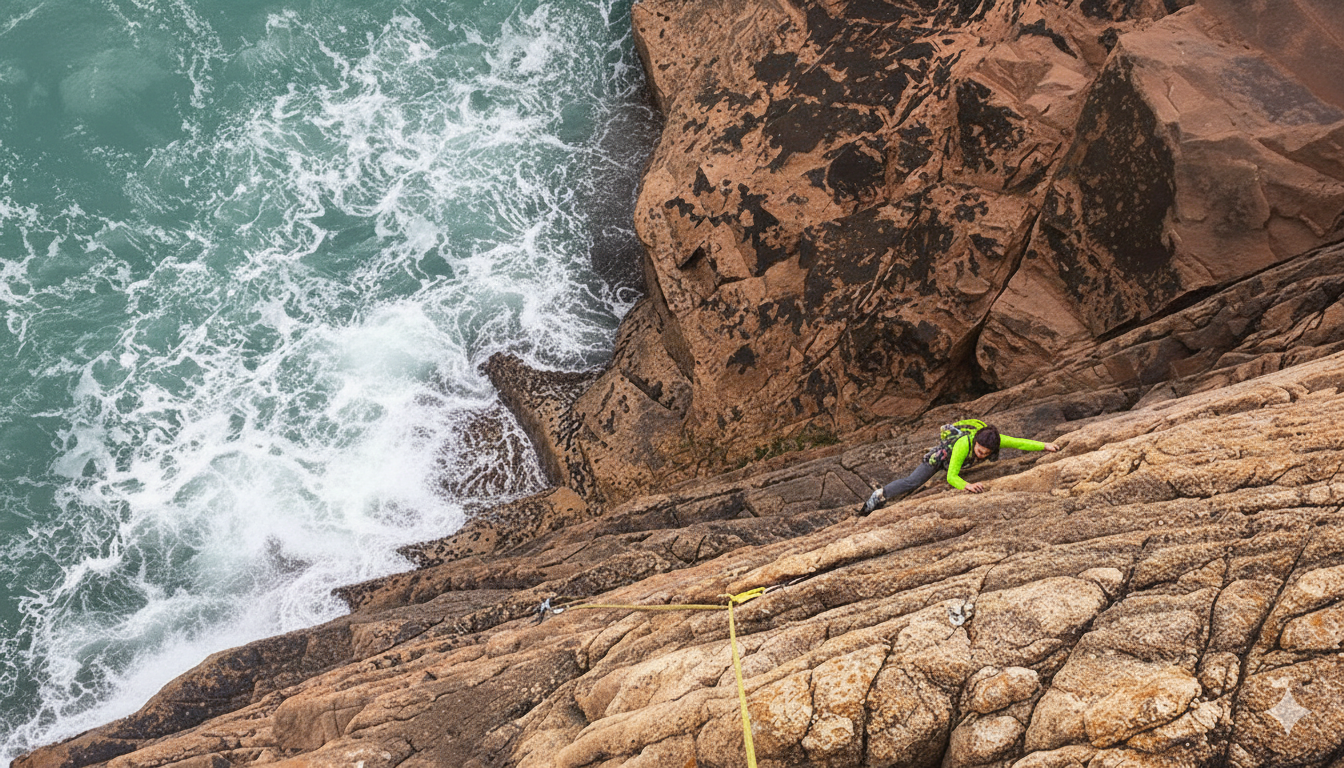
Time commitment: A minimum of one month lets you explore the major areas properly, but climbers return for years to fully experience the region’s depth.
| 📍 Location | Lisbon Region (Região de Lisboa), Portugal |
| 🚗 Distance | 30-90 minutes from Lisbon centre |
| 🧗 Climbing Styles | Sport, trad, multi-pitch, bouldering |
| 🪨 Rock Types | Limestone, granite, basalt |
| 🌤️ Best Season | Year-round (Sept-May optimal) |
| 📶 Cell Coverage | Excellent throughout region |
| 🚐 Van Parking | Good (wild camping tolerated in the right area) |
| 💰 Daily Budget | €15-30 (vanlife, self-catering) |
Van Parking & Wild Camping
The Portuguese Reality
Under Portuguese law (Articles 48 & 50-A), overnight stays in vans are strictly prohibited in Protected Areas like Sintra-Cascais and Arrábida, where GNR enforcement is frequent and fines reach €600. To stay safe, avoid “discreet” camping in these parks and instead use official Áreas de Serviço para Autocaravanas or like us, use park4night and don’t stay many days :).
For official regulations and a map of legal stopovers, check the Visit Portugal Camping Guide.
Golden Rule: Use Park4Night religiously. Check recent reviews (last 3 months) for enforcement updates. The Portuguese vanlife community actively shares current information—contribute your own experiences to help others.
Parking Locations by Area
Below are typical parking zones for each climbing area. Always verify current conditions on Park4Night before arriving:
| Area | Maps Link | Notes |
|---|---|---|
| Montejunto | Day Parking / Overnight | Mountain parking, quiet, no facilities. |
| Sintra | Day Parking Only | Tourist area—summer enforcement strict. |
| Cabo da Roca | Crag Parking / Overnight | Clifftop, windy, spectacular views. |
| Cascais | See guidebook | Affluent area—be discreet. |
| Cabo Espichel | Crag Parking / Overnight | Remote, very tolerant, lighthouse area. |
| Arrábida | See guidebook | National Park—multiple spots, busy in summer. |
🏨 Places to Stay Nearby
Accommodation Near Sintra & Northern Crags
Rentals, hotels and campsites on one map — filter by price, dates, and type. If nothing fits, you’ll still find a wild-camping spot up the road.
🏨 Places to Stay Nearby
Accommodation Near Arrábida National Park
Rentals, hotels and campsites on one map — filter by price, dates, and type. If nothing fits, you’ll still find a wild-camping spot up the road.
Practical Vanlife Essentials
💧 Water
Petrol stations, supermarket car parks, public fountains (look for “potável” = drinkable). Check Park4Night for free sources.
🚽 Facilities
Zero facilities at crags. Public beach toilets available. Cafés welcome customers. Be fully self-sufficient.
🗑️ Waste
Pack out everything. Town bins for rubbish. Grey water at campsites/petrol stations. Leave no trace—access depends on it.
🔌 Power
Portugal’s sun makes solar excellent. Otherwise, cafés for charging, or occasional campsite visits (€15-25/night).
The Six Climbing Areas
Each area offers distinctly different climbing experiences, rock types, and atmospheres. Here’s what makes each special:
Montejunto
~80 routes • F3-F8a • Limestone
Mountain refuge at altitude. Perfect for escaping summer heat. Vertical walls and slabs requiring technical footwork. Closure: Feb-July for bird nesting
Sintra
1,300+ boulders • Fb3-Fb8b+ • Granite
World-class bouldering in mystical forests. Also features ~40 sport routes at Penedo da Amizade. Atmospheric setting amongst palaces and castles.
Cabo da Roca
~40 routes • VS-E3 • Granite
Europe’s westernmost point. Adventurous trad climbing on sea cliffs with serious exposure. Wind can be extreme—check forecasts.
Cascais
100+ routes • F4-F8a • Limestone/Granite
Seaside resort town climbing. Mix of sport and trad, including multi-pitch up to 120m. Great cafés and beaches nearby.
Cabo Espichel
100+ routes • F5-F9a • Limestone
Remote sea cliff extremes. Steep, powerful climbing on overhanging limestone. Abseil access adds adventure.
Arrábida
700+ routes • F4-F9a • Limestone
The crown jewel. Protected natural park with pristine coastline. Fenda sector is the region’s most popular training crag.
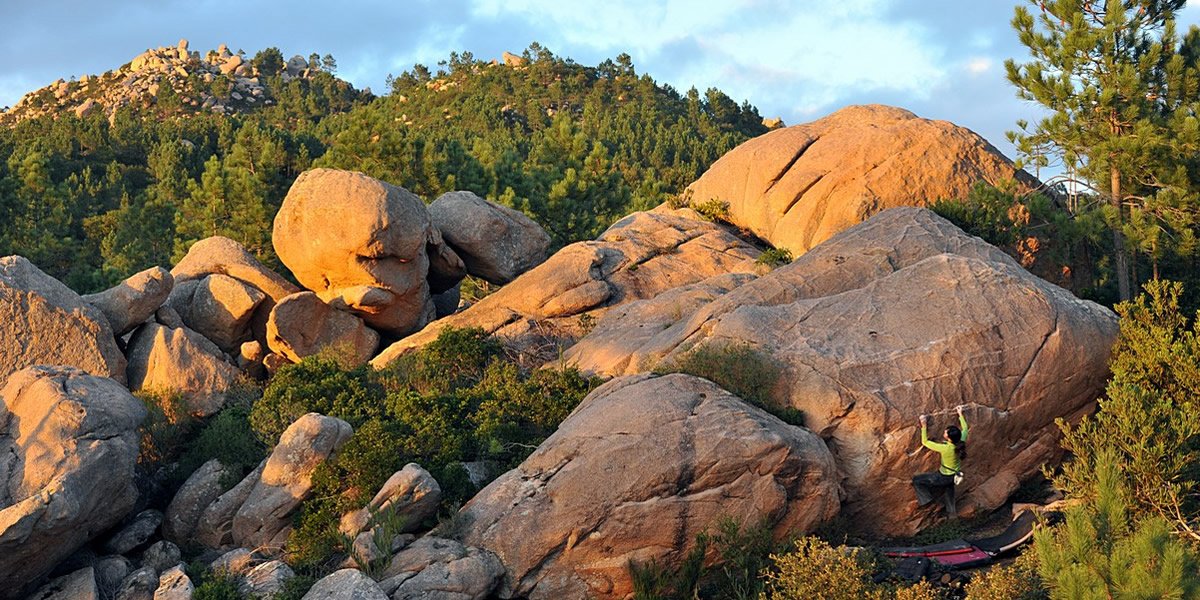
Note on Bouldering: Whilst Sintra is world-famous for bouldering, this guide focuses on sport and trad climbing. For comprehensive Sintra bouldering information, get the dedicated “Sintra Bouldering Guidebook” by Ricardo Alves (2021, 500 pages).
🚐 Van Life Pro-Tip: Lisbon & Beyond
Lisbon’s crags are incredible, but parking can be tight for larger rigs. If you’re looking for more space and world-class sea-cliff limestone, the southern coast is a dream for van-lifers.
🧗 Gear Check: Sharp limestone and Atlantic salt spray are tough on gear. We recommend a 70m dry-treated rope for the longer pitches in Arrábida. Check out our latest review of the Best Climbing Ropes 2026 to see what we’re currently using.
Keep Rolling: Check out our Sagres Climbing Guide for the best coastal routes and van-friendly parking.
Detailed Area Information
Montejunto – Cool Mountain Refuge
Sixty kilometres north of Lisbon, Montejunto sits at altitude where fresh mountain air provides refuge when coastal crags bake in summer heat. The quality limestone features vertical walls and slabs demanding technical footwork and delicate balance.
Key sectors: Montejunto Velho (closed Feb-July for raptor nesting), Montejunto Novo (open year-round), Torre de Vigia. Approaches range from 2-10 minutes depending on sector. Good selection of F4-F5 routes makes this beginner-friendly.
Sintra – Granite Bouldering Mecca
Thirty kilometres northwest of Lisbon, Sintra’s forested hills contain over 1,300 documented boulder problems on excellent granite. The atmospheric setting—amongst historical palaces, castles, and misty forests—adds unique character.
Sport climbing: Penedo da Amizade offers ~40 routes (F4-F6c) for those wanting roped climbing. Approaches vary from 5-20 minutes through forest trails.
Cabo da Roca – Atlantic Trad Adventure
Standing on mainland Europe’s westernmost point, Cabo da Roca delivers dramatic clifftop trad climbing with serious Atlantic exposure. The granite is solid but polished in places. Routes are genuinely adventurous—expect loose rock, runouts, and real commitment.
Local climbers describe nearby Casal Pianos basalt climbing as “a smaller Indian Creek by the sea”—highly featured rock with excellent crack systems. Wind is extreme here; always check forecasts.
Cascais – Seaside Sport & Trad Mix
This affluent coastal resort town thirty kilometres west of Lisbon offers varied climbing across multiple sectors. Farol da Guia provides ~100 sport routes on limestone. Espinhaço and Ponta Atlântica feature multi-pitch trad routes on granite up to 120m.
Cabo Espichel – Remote Sea Cliff Extremes
Fifty kilometres south of Lisbon, the remote Meio Mango sector is where Lisbon’s strongest climbers test themselves. You abseil ~30m to reach routes dramatically positioned above the Atlantic. Mostly F7-F8 range with classic test pieces.
Arrábida National Park – Sport Climbing Paradise
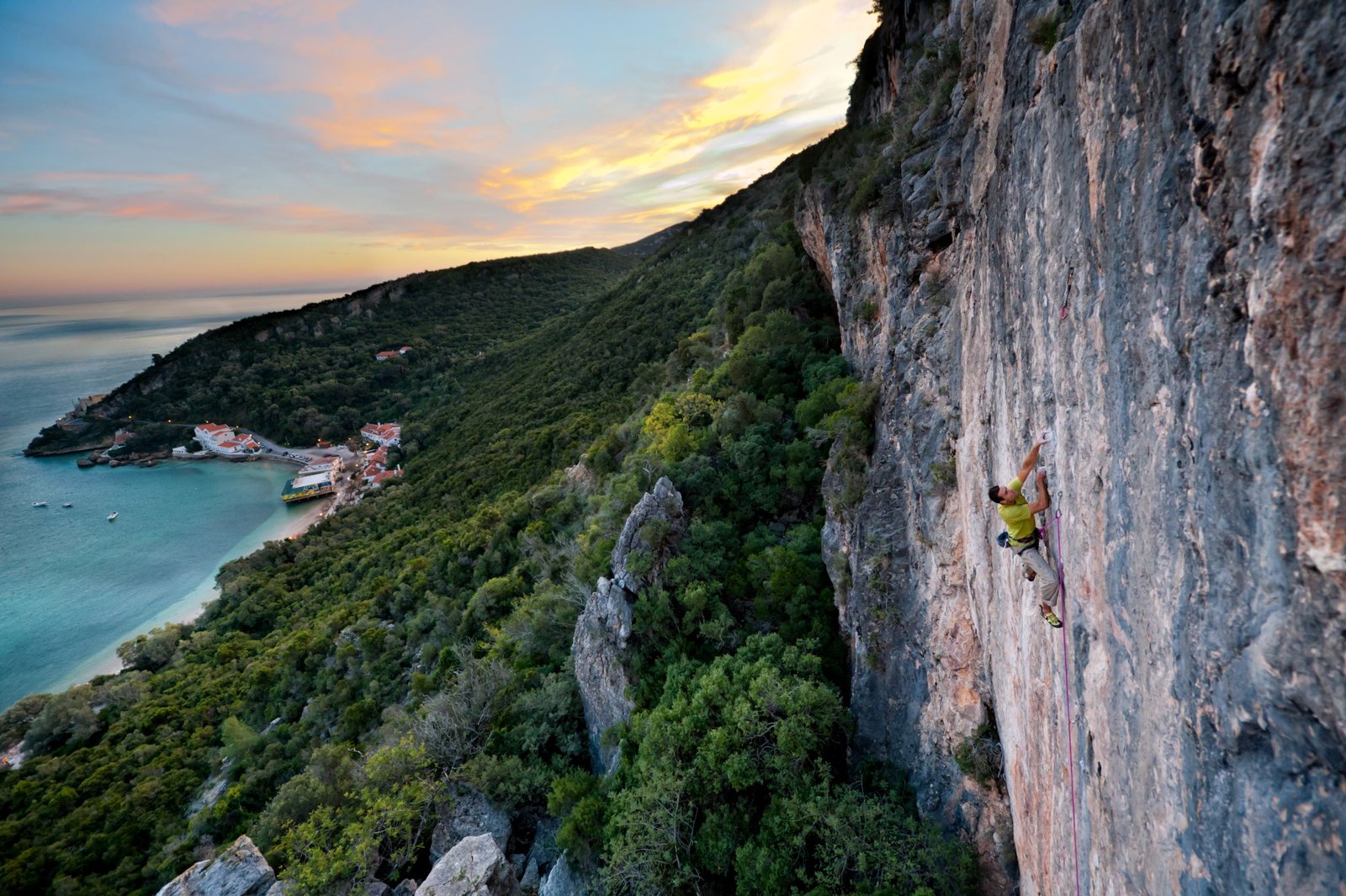
Unquestionably the crown jewel. Stretched along pristine coastline forty-five kilometres south of Lisbon, this protected natural park offers over 700 routes across 10 sectors.
Fenda (Portinho da Arrábida): Around 150 routes from F4-F8b on sustained, compact limestone with pockets. South-facing (sun from noon), with beach 5 minutes away for post-climb swims.
Azóia: More beginner/intermediate friendly with many F5-F6 routes. Less overhanging than Fenda, excellent for building confidence.
Fojo dos Morcegos: Historic multi-pitch venue (climbing since 1970s). Giant sea cliffs with routes up to 150m, grades IV-8th. Recently rebolted with a spectacular ocean valley setting.
Seasons & Weather
Year-Round Climbing
Lisbon’s greatest advantage is genuine year-round climbing. Portugal’s Atlantic climate delivers mild winters and hot (but manageable) summers.
Spring (Mar-May)
15-22°C. Perfect conditions everywhere. Mild temps, fewer crowds. Note: Montejunto Velho closed for nesting.
Summer (Jun-Aug)
25-35°C. Hot at coast—head to Montejunto’s altitude or Sintra’s forests. Evening climbing works well.
Autumn (Sep-Nov)
18-26°C. Many consider this the absolute best season. Warm days, cool evenings, tourists gone.
Winter (Dec-Feb)
10-16°C. Mild but rainier. Focus on south-facing coastal sectors. Crags beautifully empty.
Rainfall: ~100 rainy days yearly, mostly Nov-Mar. Rain comes in short bursts. Limestone dries quickly—morning showers often mean afternoon climbing, especially on overhangs.
Seasonal restrictions: Montejunto Velho closed February-July for bird nesting (Aug-Jan open). Other areas generally open year-round.
Guidebooks & Resources
Essential: Lisbon Climbing by Rui Rosado
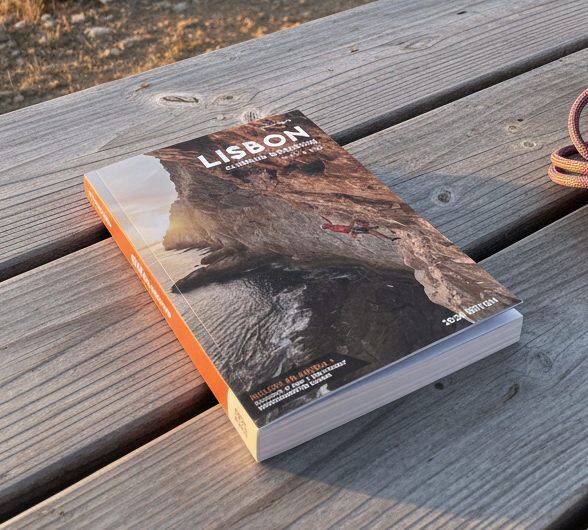
Lisbon Climbing Guidebook
Colour photo topos throughout, comprehensive crag planner, detailed approaches, child-friendly ratings, bolt quality assessments, season recommendations. Free app download included with purchase.
Buy from Climb EuropeWhere else to buy:
- Yupik: Lisbon climbing shop (Rua dos Fanqueiros 138, Lisboa)
- Espigas Café: Azóia village near Arrábida crags (climber hangout)
Why buy the physical book: The ~€35 directly supports Rui Rosado, who has spent years documenting and developing these areas. It funds continued route development and maintenance.
Supplementary Guidebooks
For Serious Bouldering: Sintra Bouldering Guidebook by Ricardo Alves (2021, 500 pages).
For All Portugal: Portugal Rock Climbing Guidebook by Climb Europe (2019 edition).
Online Resources & Communities
- 27Crags: Good coverage with user comments and beta
- TheCrag: Comprehensive route database, downloadable PDFs
- Lisbon Climbing Facebook Group: Active community, beta sharing, partner finding
- Instagram #lisbonclimbing: Follow local climbers for meetups
Practical Information
Supermarkets & Supplies
Main chains from cheapest to most expensive: Lidl (best value), Intermarché (wide range), Pingo Doce (good quality), Continente (mid-range), Auchan.
Cell Coverage & Connectivity
Excellent mobile coverage throughout. Most climbing areas have 4G signal. Major providers: MEO, Vodafone, NOS. Consider a Portuguese SIM if staying longer than a week—data is cheap and coverage reliable.
Approach Times
Montejunto: 2-10 min • Sintra: 5-20 min • Cabo da Roca: Varies (clifftop scramble/abseil) • Cascais: 5-15 min • Cabo Espichel: 10 min + 30m abseil • Arrábida: 5-20 min depending on sector
Budget & Costs
Daily vanlife budget: €15-30 (2 people, cooking in van, wild camping)
Breakdown: Food (cooking) €10-15 • Diesel/petrol €3-8 • Café/beer treat €2-5 (coffee €0.80-1.50, beer €1-2) • Miscellaneous €2-5
If using campsites occasionally, add €15-25/night for facilities (showers, WiFi, laundry).
Compared to Europe: Portugal is genuinely one of the cheapest climbing destinations in Western Europe—30-40% cheaper than France, Spain, Italy, or Switzerland, with excellent quality.
Access, Ethics & Community
Portuguese climbing access is generally excellent. Most areas are open with no major restrictions beyond Montejunto’s bird nesting closure (Feb-July).
Critical: The Portuguese climbing community has worked hard to maintain good relationships with landowners and authorities. Help preserve access by being respectful, following rules, packing out all rubbish, and representing climbers positively.
- Respect seasonal closures (raptors breed at Montejunto)
- Arrábida is a protected National Park—stay on trails, pack out everything
- Some crags cross private land—be respectful, close gates, don’t camp obviously
- Keep noise down at crags and parking spots
Meeting Local Climbers
Espigas Café in Azóia is the primary climber hangout—great coffee, guidebooks, and local beta. The climbing shop Yupik in Lisbon is another community hub with English-speaking staff.
Basic Portuguese Phrases
“Bom dia” (good morning) • “Obrigado/Obrigada” (thank you) • “Por favor” (please) • “Onde fica…?” (where is…?) • “Escalada” (climbing)
Why Lisbon Stands Out
Five Key Strengths
1. Genuine Diversity: Unlike single-style destinations, Lisbon offers everything within 90 minutes—granite boulders, limestone sport crags, trad sea cliffs, and multi-pitch routes.
2. Year-Round Climbing: Whilst most European destinations have 4-6 month optimal seasons, Lisbon genuinely works year-round.
3. Exceptional Value: €15-30/day for vanlife is hard to beat anywhere in Western Europe with this climbing quality.
4. Infrastructure & Safety: Excellent roads, reliable mobile coverage, good medical facilities, safe wild camping culture, welcoming locals.
5. Beyond Climbing: Rest days offer world-class surfing, stunning beaches, historic Lisbon, incredible food, and wine regions.
What Surprises Climbers
- The quality—routes are genuinely world-class, not just “good for Portugal”
- The variety—six totally different environments within 90 minutes
- How cheap it is—consistently 30-40% cheaper than similar destinations
- The community—welcoming, international, active local scene
- How uncrowded it is—even “popular” sectors feel quiet compared to French classics
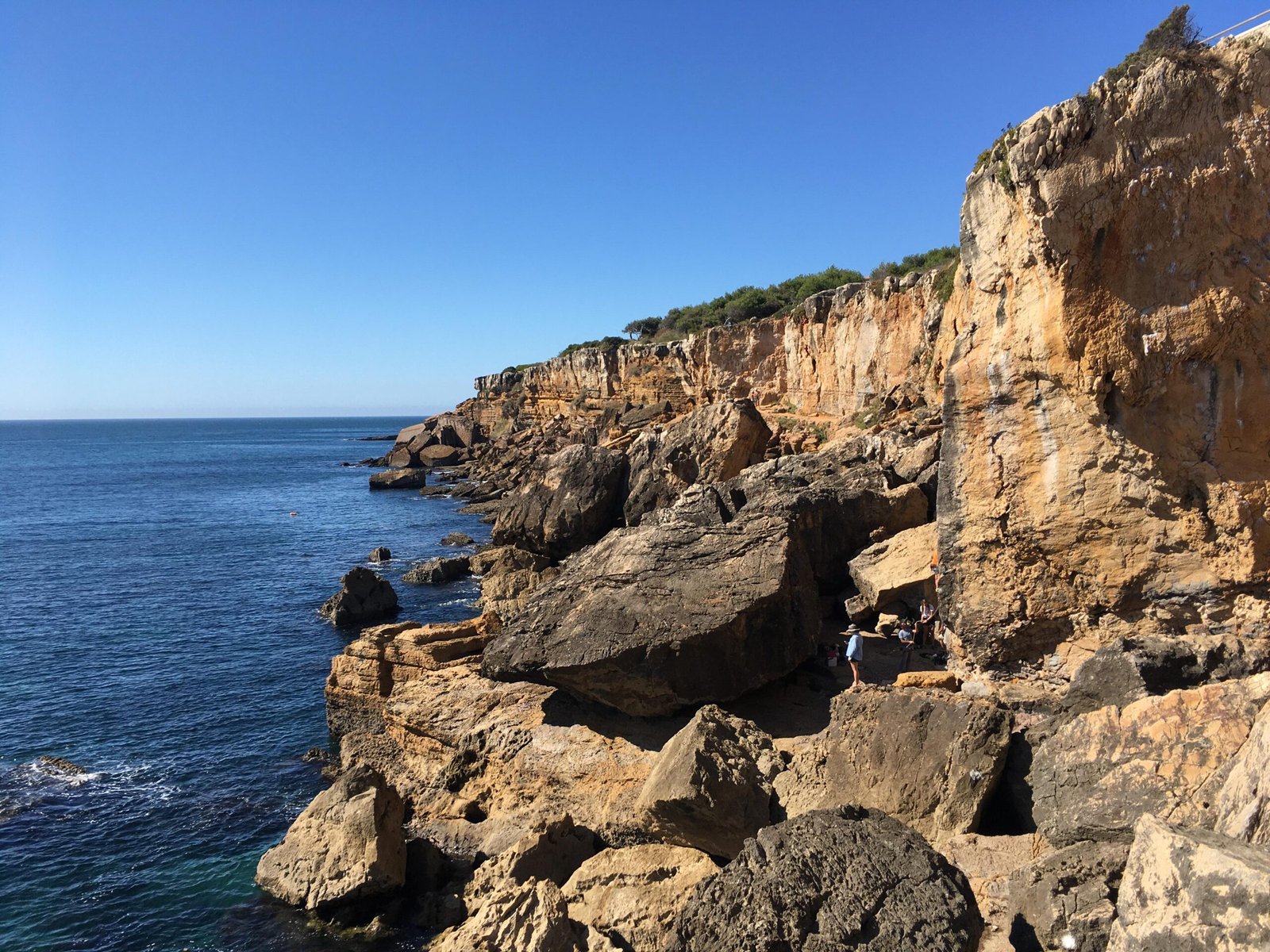
Top Tips for Vanlife Climbers
1. Buy the Guidebook
The Rui Rosado Lisbon Climbing Guidebook is genuinely essential. The €35 pays for itself in saved time and better route selection.
2. Use Park4Night
Wild camping works if done respectfully. Check recent comments before parking. Move every 2-3 nights. Be discreet.
3. Plan for Seasons
Check which sectors suit the current month. Summer? Mountains and shade. Winter? South-facing sea cliffs.
Frequently Asked Questions
How long should I spend climbing around Lisbon?
Is wild camping allowed in Portugal?
What’s the best season for Lisbon climbing?
Which area is best for beginners?
Which area is most challenging?
Are there climbing shops in Lisbon?
Is it safe for solo vanlife travellers?
Do people speak English?
Lisbon Crag Context & Beta
Keywords: Arrábida Limestone • Sintra Granite Bouldering • Cabo Espichel Sport • Sea Cliff Trad • Portuguese Grade Conversions • Montejunto Seasonal Closures • Atlantic Rock Friction • Cascais Coastal Access • Penedo da Amizade Topos • Lisbon Van Life Parking Laws
Final Thoughts
Lisbon represents something increasingly rare in European climbing: an undiscovered gem that genuinely deserves discovery. With 1,300+ routes spanning every climbing style, perfect year-round weather, exceptional vanlife infrastructure, and affordable prices, it’s difficult to imagine a better destination for crag nomads.
The region works for everyone: beginners on Azóia’s F5 slabs, boulderers on Sintra’s granite, sport climbers projecting Fenda’s F8 test pieces, trad climbers on Cabo da Roca’s sea cliffs, multi-pitch enthusiasts exploring Fojo dos Morcegos’ 150m walls.
Perfect for: Vanlifers seeking extended stays in affordable Western Europe • Climbers wanting diverse styles within one destination • Anyone seeking year-round climbing weather • Climbers of all abilities (genuine F4-F9 spread) • People who appreciate excellent food, wine, and café culture.
Final recommendation: Allocate at least one month if possible. Buy the Rui Rosado guidebook, use Park4Night responsibly, shop at Lidl/Intermarché, respect seasonal closures, and embrace Portuguese climbing culture.
Share Your Lisbon Experience
Have you climbed around Lisbon? Which areas did you love? Any hidden sectors or beta to share? Drop your experiences in the comments below to help the community.
Lisbon & Arrábida Climbing Context & Beta
Keywords: Arrábida Limestone Sport Climbing • Sintra Granite Bouldering • Cabo Espichel Sea Cliff • Azóia Climbing Crag • Fenda da Saudade Routes • Fojo dos Morcegos Multi-Pitch • Portuguese Grade Conversions • Montejunto Seasonal Closures • Atlantic Rock Friction • Cascais Coastal Climbing Access • Penedo da Amizade Topos • Rui Rosado Guidebook Lisbon • Lisbon Van Life Parking • Serra de Sintra Climbing • Year-Round Climbing Portugal • Cabo da Roca Trad Climbing • Lisbon Climbing Beginner • Park4Night Arrábida • Setúbal Climbing Region • Western Europe Climbing Vanlife
🧗 Explore Our Climbing Guides
Detailed crag guides from our van life climbing adventures across Europe