
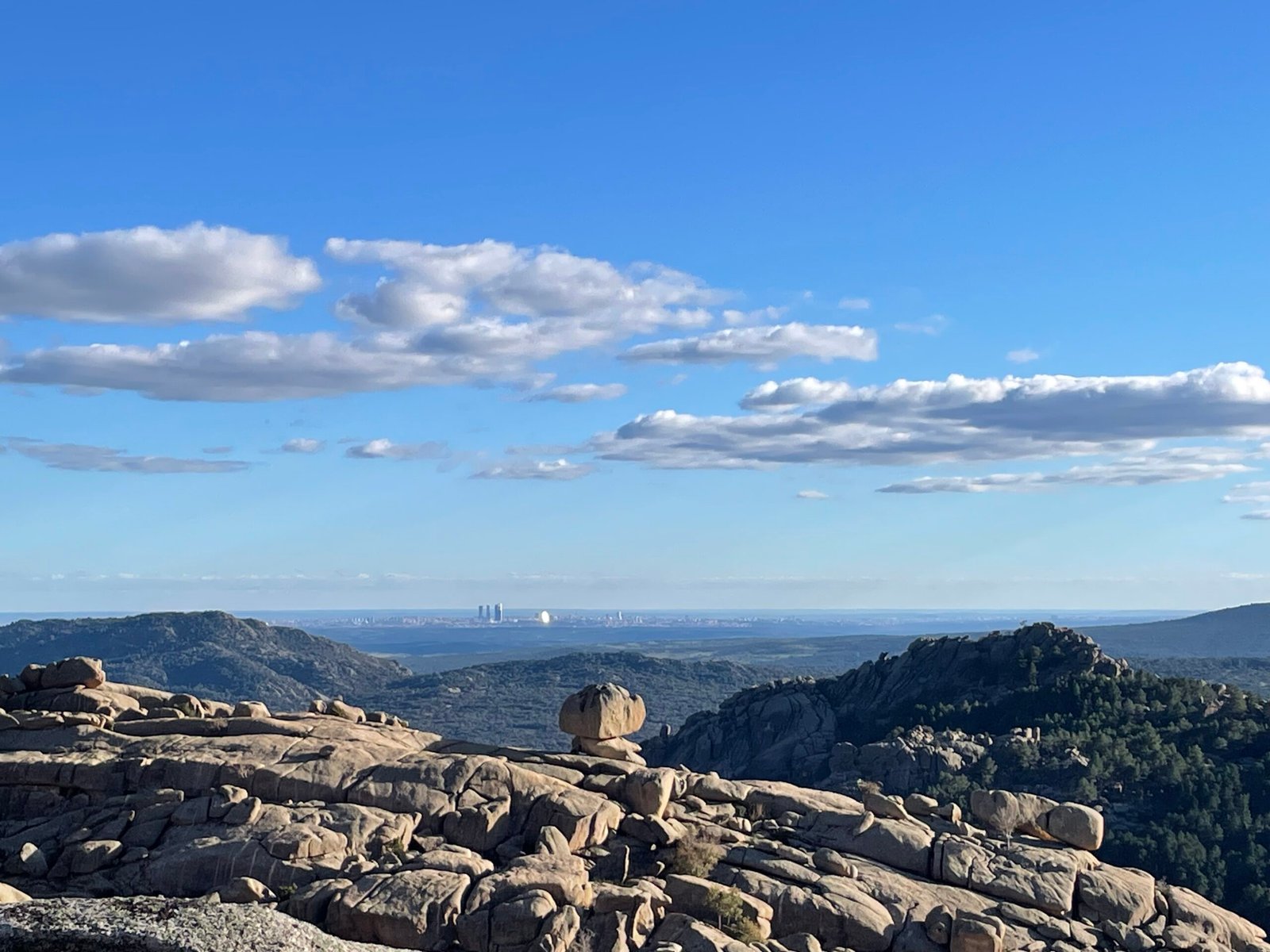
The Complete Crag Guide:
Madrid 2026
Granite sport, limestone walls, trad crack lines, and high-altitude summer crags — all within 90 minutes of the Spanish capital. Every venue with GPS, parking beta, gear requirements, and honest field notes.
| 📍 Region | Comunidad de Madrid & Sierra de Guadarrama, Central Spain |
| 🪨 Rock Types | Granite (La Pedriza, La Cabrera, Zarzalejo) · Limestone (Patones, El Vellón, Carabaña) |
| 📊 Grade Range | 4 (beginners) through 9a+ (Panodrama, Patones) — genuinely all levels |
| 🧗 Styles | Sport climbing, friction slabs, trad & multi-pitch, bouldering |
| 🌤️ Best Seasons | October–March for granite (La Pedriza); autumn–spring for limestone (Patones) |
| ☀️ Avoid | June–August at granite crags (slab friction collapses in heat) |
| ✈️ Nearest Airport | Madrid Barajas (MAD) — 30–60 min to most crags |
| 🗺️ Resources | theCrag Madrid · Montaña Regulada (bird closures) |
| 📋 Guidebooks | La Pedriza Escalada Deportiva (Desnivel 2022) · Patones y Alrededores (Desnivel 2015) |
Why Climb Near Madrid?
Pull up a map of climbing in Spain and your eye naturally drifts to the coasts — the limestone gods of the south, the Catalan crags of the northeast, the ocean-washed walls of the Basque Country. Madrid sits in the centre, 600 metres above sea level on the Castilian plateau, and is easy to overlook. That is a genuine mistake.
Within a 90-minute drive of the Spanish capital lies one of the most diverse and underrated climbing landscapes in Europe. You have La Pedriza, a labyrinthine granite dome-land that is — depending on who you ask — either the largest sport climbing area in Spain or the largest bouldering area, and likely both. You have Patones, a south-facing limestone fortress above an ancient reservoir that regularly hosts the hardest sport routes on the peninsula. You have La Cabrera’s Pico de la Miel, a dramatic granite spire visible from the A1 motorway that rewards patient trad climbers with classic multi-pitch in genuine mountain terrain. And scattered around all of it: lesser-known gems for bouldering, sport, and slab that the Madrid climbing community has developed quietly and obsessively for decades.
What makes Madrid genuinely special for vanlifer climbers is the combination of variety, accessibility, and absence of crowds you get outside summer weekends. Unlike Chulilla or Siurana, you won’t share belay space with 40 other climbers from five countries on a Tuesday in November. The madrileños have their crags largely to themselves during the week, and they’re a welcoming community when you show up at their local wall.
Granite vs. Limestone: What to Pack, What to Expect in 2026
Madrid’s crags divide into two geological worlds separated by roughly 60 kilometres of the Sierra de Guadarrama: granite to the north and northwest, limestone to the north and northeast. Choosing between them determines not just where you drive but what goes in your bag, what shoes you put on, and what physical qualities you’ll need to call on. Get this wrong and even a technically perfect climber will have a frustrating day.
The granite world — La Pedriza, Valdemanco, La Cabrera — is defined by adherencia: friction climbing on smooth, rounded domes and slabs where positive holds are sparse and the discipline is entirely about trusting rubber against crystal. Here, shoe rubber quality is more important than finger strength. In 2026, the consensus among Madrid locals is clear: Vibram XS Grip 2 and Stealth C4 outperform everything else on cold, dry granite. Downturned aggressive shoes designed for pocketed limestone are actively counterproductive — they reduce the contact surface area you need for smearing. A flatter, softer shoe with maximum rubber contact is what this rock demands. Grades feel stiff: a La Pedriza 6a climbs like a limestone 6b+ everywhere else. This is not sandbagging; it is physics. Cold rock equals maximum friction — the best granite climbing in this region happens between October and March.
The limestone world — Patones, El Vellón, Entrepeñas — is familiar territory for gym climbers and European sport climbing veterans. Pockets, crimps, sequential movement, dynos on the harder lines. Here the requirement shifts from shoe rubber to endurance and contact strength. Routes at Patones in the 6b–7c range are sustained rather than boulder-intense; the ability to keep moving efficiently for 25–30 metres on a slightly overhung wall separates the climbers from the wishful thinkers. Grades are honest, protection is solid, and the rock dries fast after rain. Autumn and spring are ideal, though south-facing sectors climb comfortably through winter.
La Pedriza — The Granite Universe
The largest climbing area near Madrid and one of the most remarkable granite landscapes in Europe. Friction slabs, bouldering, sport routes, and long multi-pitch adventures — all inside the Sierra de Guadarrama National Park.
There is nowhere else in Europe quite like La Pedriza. A vast granite dome-land sprawling across more than 20 square kilometres inside a National Park, it is simultaneously the largest sport climbing area in Spain and — depending on your source — the largest bouldering area too, with over 3,400 documented boulder problems and approaching 1,000 roped routes across dozens of sectors. The centrepiece is El Yelmo, a magnificent granite dome visible from half the park, with multi-pitch routes reaching 200 metres and a commitment level that earns the term “adventure climbing” even on the bolted lines.
What defines La Pedriza is its adherencia — friction climbing. Smooth, rounded granite that requires the climber to trust smeared rubber against the rock rather than pulling on positive holds. Coming from limestone sport climbing, the adjustment takes time and patience. The rock wants balance, not strength. It wants footwork, not arm power. Once that click happens — usually partway through day two — La Pedriza becomes addictive in a way that polished pocketed limestone never quite manages.
The park limits vehicle access to a maximum of 270 cars per day, so an early start is not just recommended — it is essential on spring and autumn weekends. The barrier opens around 6:30am and fills fast. Midweek visits in winter are the sweet spot: empty sectors, cold crisp air giving maximum friction, and the whole extraordinary landscape largely to yourself.
Don’t underestimate the complexity. La Pedriza is genuinely labyrinthine. Sectors that look close on the map are separated by boulder fields, dry stream beds, and unmarked paths. Download offline topos before leaving signal range, and budget extra time for your first approach. Getting truly lost here for an hour is a rite of passage — and a reminder to plan better next time.
🗺️ Key Sectors at La Pedriza
- El Yelmo — The iconic summit dome. Multi-pitch routes to 200m. Requires solid route-finding ability and comfort with run-outs. The view from the top justifies everything.
- Quebrantaherraduras — Most accessible single-pitch sport sector. Closest to the main car park. A good first day introduction before heading deeper into the park.
- El Pájaro / Peña Sirio — Intermediate multi-pitch granite with excellent quality and a more sheltered aspect. Popular with local guiding companies for good reason.
- El Hueso — Also known as Pared de Santillana. Long, serious granite faces requiring full trad rack on some lines. For experienced parties only.
- Bouldering areas — Spread across 80+ sub-areas throughout the park. The Pedriza Boulder guidebook (464 pages, 2021) is the definitive resource.
Patones — Limestone Sport Climbing at Its Finest
The home crag of madrileño sport climbers. South-facing limestone with 900+ routes across five crags, from 4+ warm-ups to world-class 9a+ test pieces. The complete sport climbing destination in one valley.
If La Pedriza is the granite soul of Madrid climbing, Patones is its limestone heart. The Patones area — properly called the Pontón de la Oliva complex — is a collection of five distinct crags above an old water reservoir north of Madrid, all on quality limestone that has been developed, bolted, rebolted, and extended for decades by generations of local climbers. The result is one of the most complete sport climbing venues near any major European city: over 900 routes from 4+ to 9a+, nearly all single pitch, well-bolted with stainless steel and titanium hardware, and organised into sectors that catch or avoid the sun depending on the season.
The climbing is fundamentally athletic. Pocket pulling, crimp sequences, dynamic movement between tufas on the harder walls — it rewards gym climbers making the outdoor move in a way that La Pedriza’s friction slabs initially don’t. The majority of routes sit in the 6a to 7a+ range, which is Patones’ sweet spot: brilliant mid-grade sport climbing on solid, well-protected limestone.
Sector Stradivarius is the showpiece — a long, overhung wall of extraordinary quality hosting some of the area’s hardest lines, including the legendary Panodrama (9a+), put up by local hero Kymy de la Peña in May 2021. Even if you’re climbing 6c rather than 9a+, Stradivarius is worth the walk just to belay beneath the scale of the thing.
The approach is the one consistent annoyance. Historically, climbers could drive close to the crags, but access has tightened. The final 3km is on a rough unsurfaced road requiring patience. Some sectors have 5–10 minute approaches, others 30 minutes. Park at the designated areas and never leave valuables visible in the car — vehicle break-ins have been reported at the lower parking areas, and it is an ongoing issue.
🗺️ The Five Patones Sub-Areas
- Pontón de la Oliva — The largest and most popular crag. Multiple sectors from beginner walls to serious overhangs. Hosts Stradivarius and the 9a+ Panodrama. Start here.
- Peñarrubia — Further into the canyon, quieter during busy weekends. Good mid-grade lines and a more adventurous feel.
- Los Alcores — Short approach from the lower car park. Fast drying, good for days after rain when wetter sectors are still seeping. Bird closure applies Jan–Jul.
- Patones Pueblo — Routes directly above the medieval village of Patones de Arriba. Unusual setting, vertical limestone, mostly 6a–7b range. No tidal or bird-closure restrictions.
- Cañón de Uceda — The most remote sub-area. Worth the extra drive for quieter climbing on excellent rock. Requires more approach time than the others.
La Cabrera — Pico de la Miel & Classic Granite Trad
The dramatic granite ridge visible from the A1 motorway north of Madrid. Pico de la Miel towers over the landscape and rewards patient trad climbers with multi-pitch crack lines in real mountain terrain. The anti-La Pedriza.
Where La Pedriza gives you rounded domes and friction slabs, La Cabrera gives you cracks, dihedrals, and features. The granite here is more broken, more textured — the kind that rewards traditional gear placement and classic climbing movement rather than rubber-on-glass balancing. It is the closest thing to UK-style granite trad climbing you will find within striking distance of Madrid, and it is significantly less visited than La Pedriza because its reputation as a trad crag puts off the sport climbing majority.
Pico de la Miel is the showpiece — a spire that rises 200–300 metres above the village of La Cabrera and dominates the skyline from the A1 motorway. Most routes are traditional, requiring confident gear placement and route-finding in a genuine mountain environment. The famous Espolón Manolín is cited as the must-do classic: a sustained multi-pitch line with historical significance as one of the landmark routes in the development of Spanish granite climbing.
There is no definitive guidebook for La Cabrera. Knowledge circulates through the local climbing community, through the blog escaladorescabrera.blogspot.com, and through word of mouth at the Cancho del Águila bar — a roadside trucker stop and climbers’ haunt at the base of the main approach that deserves a visit regardless of what you’re planning to climb. Most people park in its generous car park, and it is the correct place to ask for beta from anyone who looks like they might know the mountain.
Seasonal closures are significant at La Cabrera. Griffon vultures and other protected raptors nest on the ledges from January to August on certain routes. Check montanaregulada.org before every visit and take the restrictions seriously — the community’s ability to access this mountain depends on climbers demonstrating self-regulation.
Valdemanco — Bolted Mountain Granite for the 5 to 6c+ Climber
The overlooked gem of the Madrid granite scene. Properly bolted single-pitch sport routes on excellent rock with a genuine mountain atmosphere — less committing than La Pedriza’s run-outs, less competitive than Patones. The sweet spot for mid-grade granite sport climbing.
Valdemanco deserves a far stronger reputation than it currently holds in the English-language climbing world. Sitting roughly 50km north of Madrid in the quieter Sierra Norte, it offers something that neither La Pedriza nor Patones quite manages: properly bolted, single-pitch granite sport routes with a genuine mountain feel, in a grade range that perfectly suits the 5 to 6c+ climber who wants something more committed than an indoor wall but less serious than La Pedriza’s friction discipline or run-out multi-pitch.
The key distinction from La Pedriza is that Valdemanco has been developed with modern bolting ethics — the routes are protected to sport climbing standards rather than the historically sparse style of La Pedriza. You can focus on movement and technique without worrying whether a 10-metre runout is about to test your composure. The granite here is textured and featured rather than pure friction-smooth; there are actual holds, cracks to use, and dihedrals to bridge. It is the ideal venue for climbers transitioning from limestone to granite, or for those who want to build granite confidence before committing to La Pedriza’s longer, more serious objectives.
The named sectors each have a distinct personality. Placa del Tejo is the most accessible — a clean granite slab with routes in the 5–6b range that give a proper feel for Guadarrama granite technique without intimidation. Cancho Albalá steps things up with steeper faces and some overhanging sequences in the 6a–6c+ range. Punta Isis offers the most aesthetic lines on the wall, with a couple of routes that local climbers cite as among the finest single-pitch granite sport routes in the Sierra Norte. Placa PR is the easiest sector — a learning venue rather than a tick-list destination. Peña del Tejo inferior adds some trad-flavoured crack lines for climbers who want to practise gear placement in a less committing setting than La Cabrera.
The atmosphere midweek is one of complete solitude. No guiding groups. No queue for classic lines. No noise except the pines. On weekends in good autumn and spring weather it remains far quieter than La Pedriza or Patones, simply because it has not yet made it into the standard weekend-trip conversation among visiting climbers. That will change. Use it now.
🗺️ Valdemanco Sector by Sector
- Placa del Tejo — The entry-level granite slab. Routes 5–6b, cleanly bolted, ideal for first granite leads or warming up before moving to harder sectors.
- Cancho Albalá — The main event. Steeper faces in the 6a–6c+ range with actual holds to complement the friction. The most complete sector for mid-grade granite sport climbing.
- Punta Isis — The aesthetic sector. Local climbers’ favourite for the quality of movement. Routes feel like they’ve been chosen rather than just bolted wherever the rock allowed.
- Placa PR — Simplest sector, mainly 4–5+. Not a tick-list destination but genuinely useful for building granite slab movement from the ground up.
- Peña del Tejo inferior — Lower wall with some crack lines worth exploring if trad skills are part of your development. More adventurous feel than the bolted sectors.
Tier 2 Gems — Sport, Trad & Summer Crags
Beyond the four headline venues, the Madrid climbing landscape hides a set of genuinely excellent secondary crags that most visiting climbers never reach. These are the places the madrileños go when La Pedriza is full, when Patones is too hot, or when they simply want somewhere with a different character. Each earns its place.
Entrepeñas sits in the province of Guadalajara near the town of Sacedón, roughly 100km east of Madrid — the furthest venue in this guide but worth the drive for climbers who want something categorically different from the standard Guadarrama circuit. The crag sits above the Entrepeñas reservoir, where vertical to steeply overhung limestone walls rise from the water’s edge in a setting that immediately evokes the canyon sport climbing of Rodellar or the Ardèche gorges. It is the closest thing to Margalef-style athletic limestone climbing within reach of the capital.
Two sectors straddle the old dam: the main right-bank wall (year-round access) and the left-bank extension (restricted January–August due to ZEC nature protections — always check montanaregulada.org before visiting). Routes span 200 lines from 6a+ to 8b+, with some reaching 50 metres in two or three pitches. The climbing is pocket-and-crimp athletic sport on compact but not perfectly solid limestone — the rock improves higher on the wall. Grades lean hard; don’t expect the numbers to feel easy. This is endurance sport climbing in the Patones mould but with more roof and overhanging terrain and a wilder, more reservoir-canyon setting.
The town of Sacedón has basic amenities and a pleasant bar culture. Park near the dam wall (GPS approximately 40.4906° N, 2.7652° W) with a five-minute flat approach to the right-bank sectors. A full day here leaves most mid-grade limestone climbers well worked.
El Vellón is the crag madrileños drive to when they want a quick fix — the closest decent limestone to the city, reachable in 40 minutes from the centre. The routes are short and powerful: pocketed limestone walls with bouldery sequences, mostly in the 6b–7b range, where skin shreds fast but the movement is satisfying. Don’t expect beauty or scale — this is a crag built for efficiency. Several small sectors cluster around the Pedrezuela reservoir, each with a different character: some overhung, some vertical, some with shade. The car park GPS is 40.7797° N, 3.6229° W, with a five-minute flat approach to the first sectors. Note: Sectors Los Alcores 1 and 2 have a bird closure from 1 January to 31 July — check montanaregulada.org. Water level in the Pedrezuela reservoir can rise seasonally and flood the base of some sectors; check embalses.net before travelling.
Tucked into pine forest at the foot of Las Machotas — the same mountains from which stone was quarried for El Escorial monastery — Zarzalejo offers weathered granite on a comfortable, accessible scale. The main attraction is bouldering, with over 650 documented problems from Font 5b to 8c, but a handful of bolted sport routes make it worth a rope. The setting is genuinely beautiful and the area is family-friendly with flat landings and manageable heights. Good for a morning session, a rest-day warm-up, or combining with a visit to El Escorial monastery (5km). GPS 40.5400° N, 4.1680° W, 15-minute flat approach.
The Sierra de Gredos is not strictly “near” Madrid in the way that Patones or La Pedriza are — but it earns its place in any comprehensive Madrid climbing guide because nothing else in the region matches its scale or ambition. A vast range of granite towers stretching 140km west of the capital, the Gredos offers genuine alpine-style multi-pitch climbing at altitude on a maze of 40+ spires, with routes to 300m and a commitment level that demands experience, a full trad rack, and double ropes. The most accessible area is Los Galayos near the village of Guisando (GPS approximately 40.2500° N, 5.2000° W). The climbing style is pure trad — bolts are rare, belay stations are slings and pitons. For experienced trad climbers this is one of the great venues in Spain.
Full Crag Comparison — At a Glance
Not sure where to start? This table covers every venue so you can match your goals, ability, and timing to the right crag.
| Crag | Rock / Style | Distance | Grades | Best Season | Best For |
|---|---|---|---|---|---|
| La Pedriza | SportMulti-pitch | ~50 km | 5–8a+ (stiff) | Oct–Mar | Friction slab mastery; multi-pitch adventure |
| Patones | Sport | ~65 km | 4+ to 9a+ | Oct–Apr | Sport climbing all grades; endurance training |
| La Cabrera | TradMulti-pitch | ~60 km | IV–7a+ | Sep–Dec | Classic granite trad; experienced climbers |
| Valdemanco | Sport | ~50 km | 5–6c+ (sweet spot) | Oct–Mar | Bolted granite; transition from limestone; quiet |
| Entrepeñas | Sport | ~100 km | 6a+ to 8b+ | Oct–Apr (right bank) | Athletic limestone; reservoir canyon; harder grades |
| El Vellón | Sport | ~40 km | 6a–8a | Aug–Dec | Closest limestone; quick after-work sessions |
| Zarzalejo | Bouldering | ~58 km | Font 5b–8c | Year-round | Pine forest; families; rest-day combination |
| Sierra de Gredos | Trad Alpine | ~130 km | IV–6b+ | May–Oct | Epic multi-pitch; experienced trad teams only |
Van Life in Madrid’s Climbing Region: The Miraflores Base Camp Strategy
Madrid requires more logistical thought than some climbing destinations — National Park rules are strictly enforced, summer enforcement is active, and the greater metropolitan sprawl means scattered crags rather than a single convenient valley. The solution the local van community has settled on is a centralised base camp strategy, and after extensive time in the region there is one clear answer: Miraflores de la Sierra.
Miraflores de la Sierra sits at 1,150m in the heart of the Sierra Norte, directly between the main climbing clusters. From here, La Pedriza is 25 minutes, La Cabrera is 20 minutes, Patones and El Vellón are 30 minutes, and Valdemanco is under 20 minutes. It is the one location from which every significant crag in this guide is reachable without a long morning drive.
The town has genuine infrastructure: a Mercadona supermarket for full van resupply, multiple restaurants serving good mountain food (the cocido madrileño here is worth seeking out), a petrol station, a pharmacy, and enough parking on the quieter streets at the edge of town to leave a van without causing friction with residents. It does not have dedicated van camping facilities — this is a town, not a campsite — but discreet overnight parking at the edge of the residential areas is tolerated with respect. Arrive quietly, leave the area cleaner than you found it, and spend money in local businesses. Those three things are what separate a van traveller from a problem.
The altitude means mornings are genuinely cool even in October and November — ideal for warming up the van and the body before a La Pedriza day. And crucially, Miraflores gives you the flexibility to make last-minute crag decisions based on conditions: wind pushing you off Siete Picos? Twenty minutes to Valdemanco. La Pedriza barrier already full by 7am? Fifteen minutes to La Cabrera. Patones sectors wet after rain? El Vellón is thirty minutes in the other direction. No base camp in the Madrid region offers this degree of tactical flexibility.
La Pedriza: Wild camping inside the National Park is illegal and actively enforced by SEPRONA rangers. Fines run €200–600. The correct option is the campsites at Manzanares el Real — La Fresneda and El Ortigal charge around €12–18/night with showers. Outside the park boundary on the approach road, some van spots exist that the community uses — these are a genuine grey area with unpredictable enforcement. The campsite is the right call; the hot shower after a day on the slabs is worth every euro.
Patones area: The lower parking areas near Pontón de la Oliva have historically tolerated overnight vans with discretion. Keep the area spotless, avoid peak summer weekends, and spend money in the restaurants of Patones de Arriba and Torrelaguna. The town of Torrelaguna (20 min from the crag) has small hotels and AirBnBs for when you want a proper bed.
La Cabrera: The Cancho del Águila car park at the base of the mountain is generous and climbers park here routinely. Overnight stays have been tolerated though not formally designated. The bar is the social hub — buy breakfast there, ask for beta, contribute to the culture. It works.
🌤️ Rest Days Around Miraflores — When You’re Not Climbing
A climbing trip to Madrid without a rest day at San Lorenzo de El Escorial or a walk along the Cuerda Larga is a missed opportunity. Both are within easy reach of Miraflores and offer something genuinely different from another day on the rock.
🏛️ San Lorenzo de El Escorial — Architecture, Town & Zarzalejo Warm-Up
El Escorial is 35 minutes south of Miraflores and one of the great architectural set-pieces of Spain. The Royal Monastery of El Escorial, built by Philip II in the 16th century, is extraordinary in scale and ambition — the largest Renaissance building in the world, built to serve simultaneously as a monastery, palace, library, and royal mausoleum. The town around it has excellent restaurants, independent shops, and a pleasant market atmosphere that rewards a slow morning. Plan: visit the monastery (budget 2 hours, book tickets in advance in summer), lunch in town, then drive 5km to Zarzalejo for an easy afternoon on the granite boulders if your fingers have recovered enough. An ideal 60–70% rest day that genuinely satisfies non-climbing partners while giving you a light session to keep the body ticking.
🥾 Cuerda Larga — The High Ridge Walk Above Madrid
The Cuerda Larga is the long granite ridge running east–west through the Sierra de Guadarrama at around 2,000m — one of the finest ridge walks in central Spain, and almost entirely unknown outside the Madrid hiking community. Access from the Puerto de la Morcuera (GPS 40.7603° N, 3.8208° W, 20 min from Miraflores) puts you directly on the ridge. Walk east toward Cabezas de Hierro or west toward Peñalara, staying above the treeline with 360° views: Madrid sprawling to the south, the high Guadarrama peaks to the north, and on clear days the Sierra de Gredos visible 80km to the west. The path is clear, the terrain is non-technical, and on a weekday in October you may have the entire ridge to yourself for hours. A 4–5 hour walk covering 10–15km. It takes enough out of your legs to justify a genuine rest day without depleting you for the following morning — and the contrast with a day on La Pedriza’s enclosed granite universe is striking in the best possible way.
🧗 More RockVanLife Climbing Resources