Best Climbing Slings, Runners & Cordelettes 2026
Dyneema vs nylon, 60cm vs 120cm, alpine draws vs cordelettes — everything you need to build the right sling rack for sport, trad, and everything in between.
When you live out of a van, your approach shoe isn’t just for the walk-in.
In this guide we review five of the best slings available to European climbers in 2026, cover the material differences between nylon and Dyneema in plain language, explain the different types and what each one is for, and tell you exactly what to start with if you are building your first trad rack.
📊 Quick Comparison Table — Best Climbing Slings 2026
| Sling | Price (60cm) | Weight (60cm) | Material | Width | Best For | Score |
|---|---|---|---|---|---|---|
| Mammut Contact 8mm | ~€12 | 19g | Dyneema | 8mm | Best All-Round | 9.4/10 |
| Black Diamond 18mm Nylon | ~€7 | 38g | Nylon | 18mm | Best Value | 8.8/10 |
| Petzl Pur’Anneau 10mm | ~€16 | 20g | Dyneema | 10mm | Best Durability | 9.1/10 |
| Edelrid Aramid Cord | ~€20 | 43g | Aramid (Kevlar) | 6mm cord | Best for Sharp Rock | 9.0/10 |
| DMM Dyneema Sling | ~€11 | 21g | Dyneema | 10mm | Best for Trad Racks | 9.0/10 |
⚖️ Nylon vs Dyneema: What You Actually Need to Know
Most gear guides on this topic over-complicate it. Here is the honest version: Dyneema is lighter, smaller, and more abrasion-resistant. Nylon is cheaper, better for knotting, and absorbs shock in a static fall. Both are certified to the same 22kN strength standard. Which you choose depends on what you are using the sling for — not which material is objectively “better”.
- Building equalised anchors requiring tied knots
- Slinging trees, boulders, and natural features
- Any situation where shock absorption matters (static falls)
- Beginners building a first rack on a budget
- Abseil anchor backup where knots must be undone
- Situations where slings may be left behind (cheaper to lose)
- Cold and wet conditions — nylon handles better than frozen Dyneema
- Extending protection and reducing rope drag on trad pitches
- Mountain and alpine routes where pack weight matters
- Situations where knots will not need to be tied (clipped, not knotted)
- Ice climbing — does not absorb water or freeze stiff
- Any situation where bulk and weight are the primary constraints
- Experienced climbers who understand the knotting limitations
Dyneema slings should never be relied upon in configurations where a loaded knot must be untied. An overhand knot in a loaded Dyneema sling can be impossible to undo without a knife. More critically, knots reduce Dyneema’s strength more severely than they reduce nylon’s — a knotted Dyneema sling may retain only 40–50% of its rated strength. If you need to tie knots in your sling, use nylon. This is not a theoretical concern — it is a practical safety limitation that experienced trad climbers build their rack choices around.
📐 Types of Sling and What Each One Is For
One note for sport climbers: if you exclusively clip bolts on single-pitch routes, you genuinely do not need a full sling rack. One or two, maybe three 60cm Dyneema slings for the occasional wandering bolt line is all you need — slings become essential kit the moment you start trad climbing, building your own anchors, or heading onto multi-pitch routes where managing rope drag across multiple pitches makes the difference between a pleasant day and a miserable one.
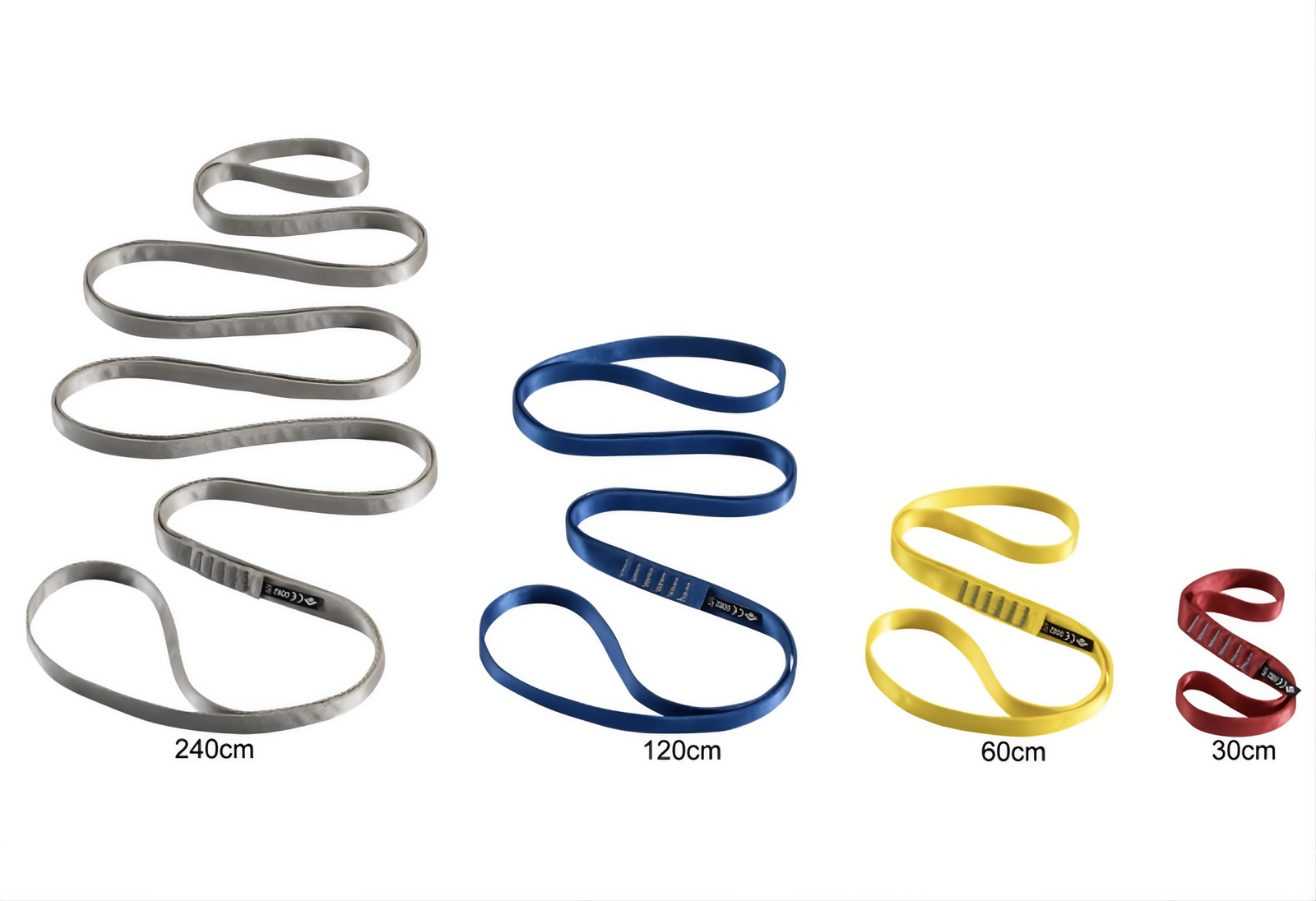
Single-Length Sling (60cm)
The standard unit of the trad rack. Carried doubled over the shoulder or clipped to a gear loop, opened out to full length to extend a protection placement. Provides 30cm of extension when doubled, 60cm when open.
The most versatile sling length for most climbing — equally useful for clipping directly to a bolt, extending a cam or nut, or threading a natural feature.
Double-Length Sling (120cm)
The anchor-builder’s sling. 120cm is the standard for equalising two bolts at a sport anchor, threading around a large rock feature, or creating an alpine draw with significant extension for reducing drag on a very wandering pitch.
Worn over the shoulder like a bandolier between placements. Essential for multi-pitch and for UK trad routes where gear placements often require longer extensions.
Alpine Draw (Extended Quickdraw)
A 60cm sling tripled with two carabiners to create an extendable quickdraw — clip it short, half-extended (30cm), or fully open (60cm) depending on the route direction. This is exactly what we use on trad and multi-pitch: minimal bulk on the harness, instant extension when you need it.
Almost always made from Dyneema for minimal bulk on the harness. The standard setup for trad multi-pitch in Europe.
Cordelette
A longer loop of cord — typically 5–6m of 7mm nylon or 5mm Dyneema tied into a loop — used for building multi-point equalised anchors. The extra length allows connection to three or more gear placements and the construction of a master point with a figure-of-eight knot.
The cordelette is essential kit for trad climbers who build their own anchors. A single cordelette covers most anchor scenarios from two bolts to a three-cam arrangement in a crack.
Prusik Cord
A short loop of thinner cord (5–6mm) used to tie friction hitches (prusik, klemheist, autoblock) on a rappel rope or for ascending a fixed line. The cord must be thinner than the rope it grips — typically 5–6mm against a 9–10mm rope.
Usually carried as a 60cm loop tied with a double fisherman’s knot. Nylon is the standard material for prusik cord — it grips reliably and holds knots well.
Personal Anchor System (PAS)
A dedicated sling or daisy chain for attaching yourself directly to a belay anchor or to protection while you sort gear on a multi-pitch route. A 120cm sling doubled and clipped to your belay loop with a locking carabiner works as a simple PAS — purpose-built versions (like the Petzl Connect Adjust) offer adjustable length with a safety mechanism.
📏 Sling Lengths Explained
| Length | Common Use | Carry as | Notes |
|---|---|---|---|
| 30cm | Short extension, piton tie-off | Doubled on gear loop | Limited use — many climbers skip this length |
| 60cm | Standard extension, alpine draw | Doubled over shoulder or tripled as alpine draw | The most useful sling length — start here |
| 120cm | Anchor building, long extension, PAS | Over shoulder or doubled on gear loop | Essential for trad and multi-pitch |
| 180–240cm | Slinging large features, cordelette | Coiled on gear loop | Niche use — very long extensions or big boulders |
| 5–6m cord loop | Cordelette — building multi-point anchors | Coiled and clipped to harness | Tie yourself from 7mm nylon — cheapest option |
🎒 Where to Start: Your First Sling Rack
If you are transitioning from sport climbing to trad, or building your first full trad rack from scratch, slings are one of the most confusing categories. Here is a practical starting point that covers the majority of UK and European trad routes up to a solid intermediate level.
🧗 Starting Trad: Keep It Simple
- 1 × 60cm Dyneema sling — one per climber is enough to get started on straightforward routes.
- 1 × prusik loop (60cm of 5–6mm cord) — one each, carried on any route with abseiling. Essential, weighs nothing.
That is genuinely enough to begin. The honest advice: start on easy, accessible trad routes with a minimal rack. Talk to local climbers at the crag, take a course with a guide who knows the area, and build your rack based on what you actually find yourself needing. Every crag is different, every climbing style is different, and the best rack is the one that matches your routes — not a generic list from a gear guide.
🧗 Once You Add Anchors at the Top
- 3–4 × 60cm Dyneema slings (e.g. Mammut Contact or DMM) — for extending protection and building alpine draws.
- 1 × 120cm nylon sling (e.g. Black Diamond Nylon) — for anchor building, slinging large natural features, and situations where knots are needed.
- Carabiners for the slings — you need two carabiners per sling to make an alpine draw.
You will naturally acquire more slings, in the right lengths, as your trad climbing develops. A 120cm nylon sling becomes essential the first time you need to equalise a two-bolt anchor. A cordelette becomes obvious the first time three gear placements are spread further apart than a sling can reach. Let the routes tell you what you need rather than buying everything upfront.
This guide compares five slings that cover the full range of what a European climber actually needs — from the lightest Dyneema draw extension to a heavy-duty nylon anchor builder to a Kevlar-grade cord for sharp rock. Understanding why they differ is more useful than a straight ranking — the right sling depends entirely on what you are doing with it.
1. Mammut Contact Sling 8mm
⭐ Best All-Round • The Benchmark Dyneema Sling for European Trad & Alpine
Available at Alpinetrek UK
Our Testing Score
Detailed Review
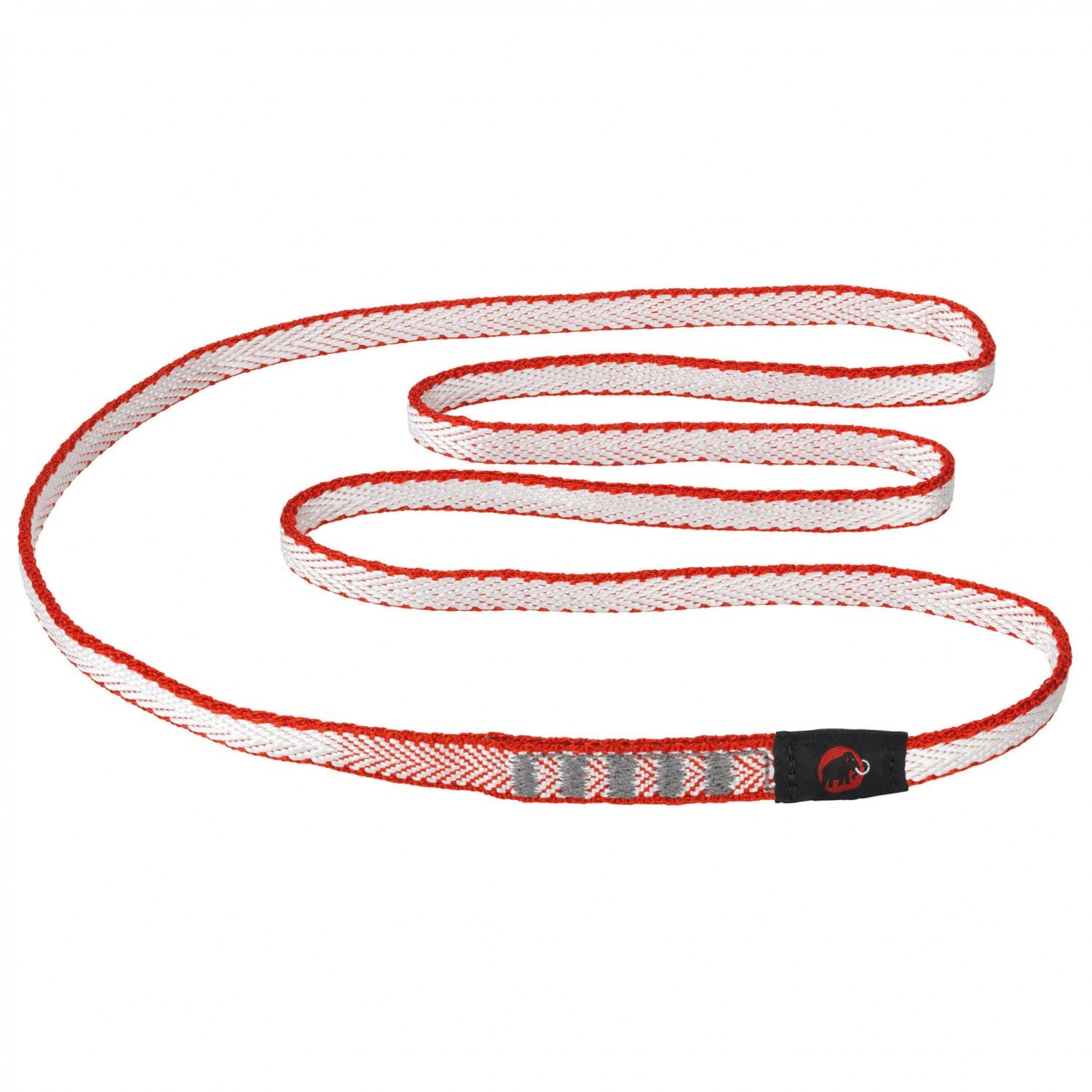
The Mammut Contact is the sling that testers consistently reach for first — and having used it from Welsh sea cliffs to Dolomite multi-pitch, we understand why. At 19g for a 60cm sling, it is the lightest here by a meaningful margin, and the 8mm tubular construction is remarkably slim.
What sets it apart is the bar tack design. Most slings create friction at the stitched junction where both ends overlap — it catches on carabiners, rotates in gates, and generally slows things down mid-pitch. Mammut covers theirs with a small fabric sleeve that eliminates the snag entirely. Tripling into an alpine draw is effortless, and the sling stays neat on the harness rather than bunching.
The one real limitation is anchor building — knots in Dyneema can be nearly impossible to untie once loaded. For anchors where you need to tie and untie, reach for the Black Diamond Nylon instead.
Best for: Extending trad protection, alpine draws, and reducing rope drag on wandering pitches.
Pros
- Lightest sling in this comparison at 19g
- Best-in-class handling and racking behaviour
- Low-profile bar tack — no snagging on carabiners
- Triples into an alpine draw effortlessly
- Good value for a premium Dyneema sling
Cons
- Knots very difficult to untie after loading
- Not ideal for anchor building requiring tied knots
- Abrasion resistance lower than nylon at 8mm width
- Slick — can rotate unexpectedly in some configurations
The Mammut Contact 8mm is not directly available on Vertical Extreme — for Euro buyers, Vertical Extreme stocks the Edelrid Dyneema Sling II 8mm, which is functionally the same: an 8mm Dyneema sling at the same 22kN rating, similar weight, and equally suited to alpine draws and extending protection.
2. Black Diamond 18mm Nylon Runner
💰 Best Value • The Reliable Workhorse for Anchors, Threads & General Use
Available at Alpinetrek UK and Vertical Extreme DE
Our Testing Score
Detailed Review
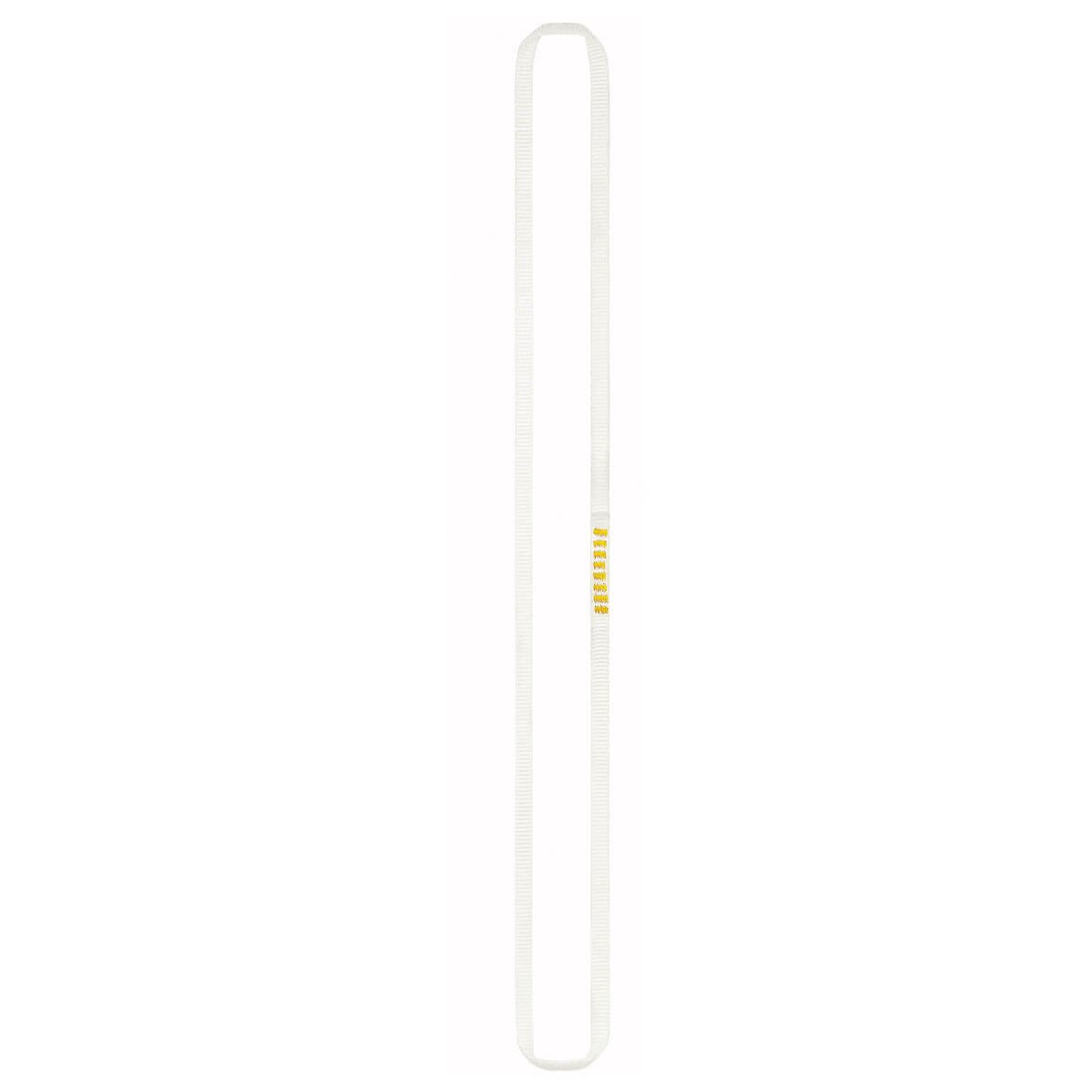
The Black Diamond Nylon Runner is not the lightest or the most technically impressive sling in this guide — and it does not need to be. It is the sling you use when reliability, versatility, and cost matter more than shaving grams. At roughly half the price of a Dyneema sling, you can afford to carry more of them and leave one behind on an abseil without significant regret.
Nylon’s most significant practical advantage over Dyneema is knot behaviour. You can tie an overhand, a figure-of-eight, or a clove hitch into an 18mm nylon sling and expect to untie it after it has been loaded. For building equalised anchors, slinging natural features like trees and boulders, or threading through rock features on trad routes, nylon’s knotability is genuinely important.
Nylon also has meaningful dynamic stretch — approximately 20–25% before failure — which absorbs some of the shock force in a static fall, an important safety advantage when Dyneema’s near-zero stretch would transmit all that force directly to the anchor and your body.
Best for: Anchor building, slinging natural features, abseil backups, general trad climbing where knots are regularly tied and untied, and beginners building their first rack at a sensible price.
Pros
- Cheapest sling in this comparison — great for first racks
- Knots tie and untie reliably even after loading
- Dynamic stretch absorbs shock in static falls
- Wide and comfortable to handle and step into
- Excellent durability against abrasion
Cons
- Heaviest sling in this comparison at 38g
- Bulky when racked — particularly as alpine draws
- Absorbs water — heavier and stiffer when wet
- Harder to pass through small carabiner gates when bulky
3. Petzl Pur’Anneau Dyneema
🛡️ Best Durability • Exceptional Abrasion Resistance in a Slim Dyneema Sling
Available at Alpinetrek UK
Our Testing Score
Detailed Review
If the Mammut Contact wins on weight and racking behaviour, the Petzl Pur’Anneau wins on longevity. In independent abrasion testing, the Pur’Anneau consistently outperforms every other Dyneema sling on the market — the surface barely fuzzes even after sustained contact with rough limestone or coarse granite.
At 20g for the 60cm version, it is within 1g of the Mammut Contact — effectively the same weight in practice. The 10mm width gives marginally better handling than the Mammut’s 8mm for climbers who find very thin slings harder to manipulate in cold conditions or with thick gloves.
The price is the honest caveat. The Pur’Anneau is the most expensive Dyneema sling in this comparison, and the durability advantage — whilst real — requires years of use to fully justify the premium. For climbers who regularly leave slings behind on abseils, paying the Pur’Anneau premium makes less sense.
Best for: Climbers who prioritise longevity, high-frequency trad climbing where slings are heavily used, and anyone who has had cheaper Dyneema slings fuzz out after a single season.
Pros
- Best abrasion resistance of any Dyneema sling tested
- Near-identical weight to Mammut Contact (20g vs 19g)
- Very durable — looks and performs like new for years
- 10mm width easier to handle in cold conditions
- Good racking behaviour as alpine draws
Cons
- Most expensive sling in this comparison
- Slightly stiff straight from the packet — breaks in after use
- Knots difficult to untie after loading (all Dyneema slings)
- Premium hard to justify if you regularly abandon slings
The Petzl Pur’Anneau is not directly available on Vertical Extreme — for Euro buyers, Vertical Extreme stocks the Ocun O-Sling 8mm and the Edelrid Dyneema Sling II 8mm as the closest alternatives.
4. Edelrid Aramid Cord Sling
🪨 Best for Sharp Rock • Kevlar-Grade Cut Resistance & Unique Stiffness Advantage
Available at Vertical Extreme DE
Our Testing Score
Detailed Review
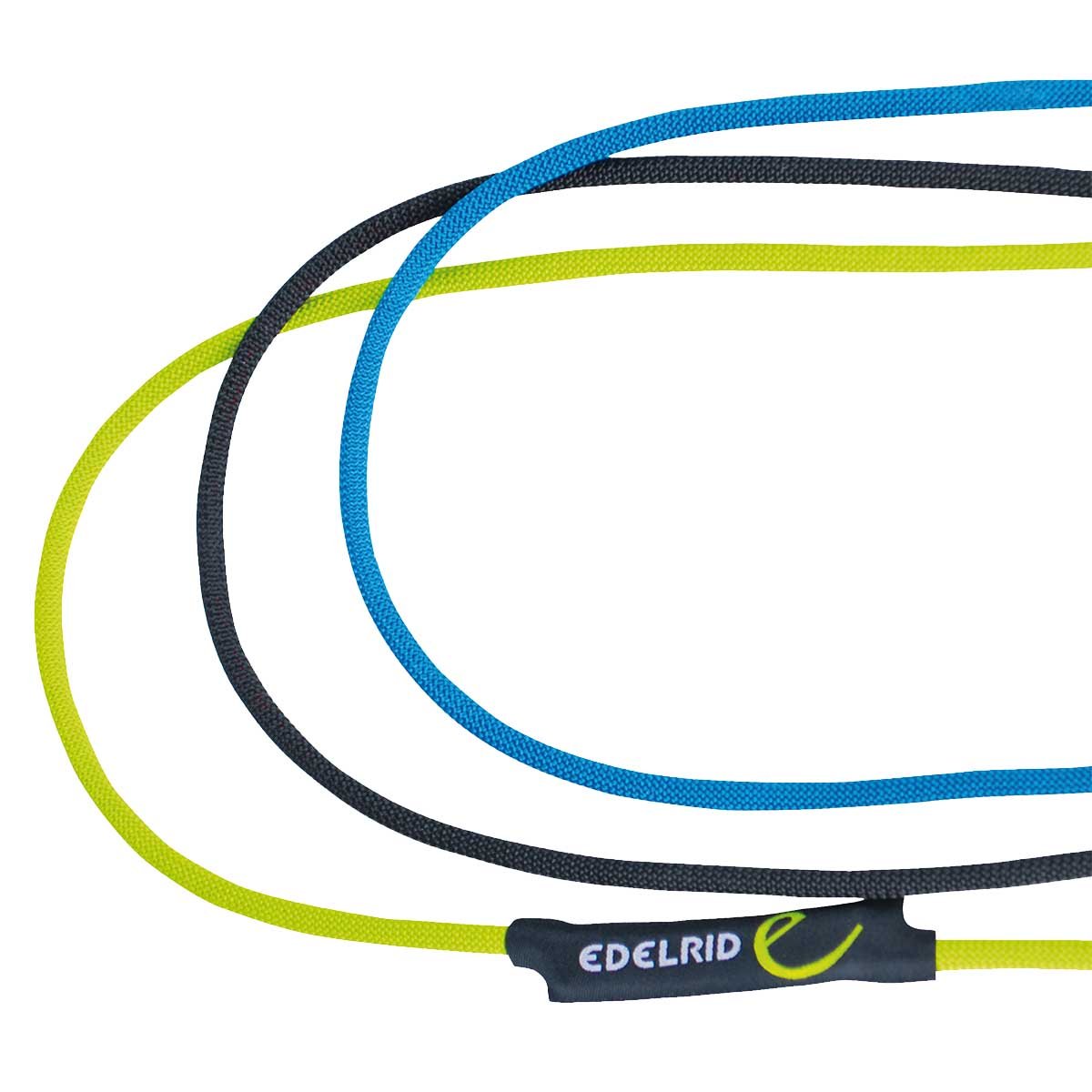
The Edelrid Aramid Cord Sling occupies a specific and valuable niche that nylon and Dyneema slings simply cannot fill: situations where the sling will sit over a sharp rock edge and needs to survive the contact without cutting. Aramid fibres have extraordinary cut and abrasion resistance — the kernmantle construction means the outer sheath provides protection for the load-bearing core, in the same way a climbing rope’s sheath protects its core.
The semi-stiff handling is the Aramid Cord’s most distinctive physical characteristic — and it is genuinely an advantage for threading through a narrow crack, a natural thread, or around a chockstone one-handed. The Aramid Cord’s stiffness makes this threading action noticeably easier — you can direct it where you need it to go rather than fighting a floppy loop.
The high heat resistance is also worth noting: unlike nylon and Dyneema which can melt under friction heat, Aramid maintains integrity at much higher temperatures, making it appropriate for use as a prusik friction hitch backup on abseils.
Best for: Sharp rock edges and natural threads on trad routes, prusik backups on abseils, and any scenario where maximum cut resistance is the priority.
Pros
- Best-in-class cut and edge resistance
- Semi-stiff construction — excellent for threading natural features
- High heat resistance — suitable as rappel friction backup
- Knots easier to untie after loading than Dyneema
- Outstanding long-term durability
Cons
- Heaviest sling in this comparison at 43g
- Stiff — awkward as alpine draws compared to webbing
- Most expensive per sling in this guide
- Overkill for general sport climbing or straightforward trad
The Edelrid Aramid Cord Sling is currently unavailable on Alpinetrek UK — the best alternative is the Beal Jammy, which shares the same high-strength Aramid core and is considerably more supple, allowing it to bite more effectively onto the climbing rope for superior performance during rappels or rescues.
5. DMM Dyneema Sling
🏴 Best for Trad Racks • Welsh-Made, Smooth Handling, Excellent Snag-Free Racking
Available at Alpinetrek UK
Our Testing Score
Detailed Review
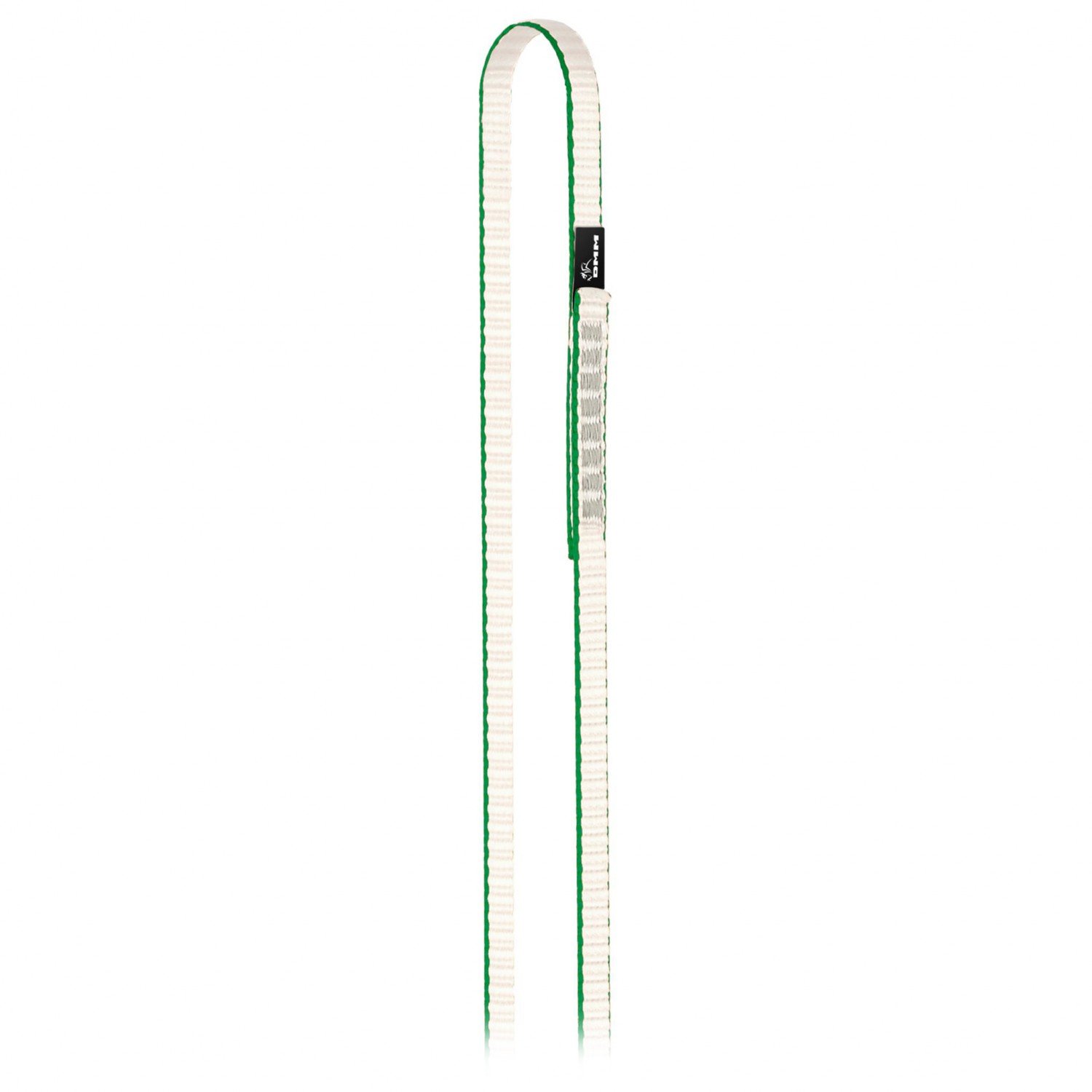
DMM makes their slings in Llanberis, Wales — the same factory that produces their carabiners, nuts, and cams. At 21g for the 60cm version and 10mm wide, the DMM sits in the sweet spot between the ultra-slim Mammut Contact (excellent racking, slightly harder to handle) and the wider nylon slings (easier to handle, much heavier).
Handling is where the DMM Dyneema genuinely earns its place. The webbing is supple and smooth from new — it does not require a break-in period the way some Dyneema slings do — and it passes through carabiners and over gear placements without the awkward resistance that occasionally plagues stiffer competitors. DMM’s quality control is consistent — you know exactly what you are getting, and that predictability matters on a full trad rack.
Best for: Building a trad rack where handling quality and consistent performance matter, UK climbers who want to support a British manufacturer, and anyone looking for a high-quality Dyneema sling at a competitive price point.
Pros
- Excellent handling — supple from new, no break-in needed
- Good value for a quality Dyneema sling
- Made in Wales — consistent, high quality control
- 10mm width gives better abrasion resistance than 8mm options
- Racks neatly — does not bunch or rotate on the harness
Cons
- Slightly heavier than the Mammut Contact (21g vs 19g)
- Knots difficult to untie after loading (all Dyneema slings)
- Less widely available in continental Europe than Petzl or Mammut
- No significant innovation over other quality Dyneema slings
The DMM Dyneema is not directly available on Vertical Extreme — for Euro buyers, Vertical Extreme stocks the Edelrid Dyneema Sling II 8mm as the best alternative.
🔵 What Is a Prusik — and Do You Need One?
A prusik is a short loop of thinner cord — typically 60cm of 5–6mm diameter — tied around a climbing rope using a friction hitch. When unloaded, the hitch slides freely along the rope. When weighted, it grips the rope and holds. It is named after the Austrian mountaineer Karl Prusik, who described the technique in 1931.
In practical climbing, a prusik has two main uses. As an abseil backup, you tie it around both strands of the abseil rope and clip it to your belay loop — if you let go during a descent, the hitch grips the rope and stops you. As an emergency rope ascender, two prusiks allow you to climb up a fixed rope if needed. Neither scenario is common on a normal day at the crag, but both are situations where having one can be the difference between a manageable problem and a serious one.
Carry one per climber on any route involving abseiling. A prusik weighs almost nothing, takes up no space, and costs very little. There is no good reason not to have one.
Our Prusik Pick
The Edelrid HMPE Cord Sling 6mm (30cm version) is the cleanest ready-to-use prusik on the market. The kernmantle construction — a polyester sheath over an HMPE core — gives it excellent grip on the rope and high abrasion resistance. Unlike pure Dyneema, the polyester sheath ensures it won’t melt under friction heat during a fast abseil.
If you are looking for the absolute gold standard in suppleness and grip, the Beal Jammy 5.5mm is our top recommendation. It uses a specialised Aramid (Technora) core, making it even more heat-resistant and significantly softer, which allows it to bite effectively on everything from thick single ropes to ultra-thin half ropes. We recommend the 35cm version for most climbers — it is the most versatile “third hand” backup available and stays flexible even after years of being repeatedly knotted and loaded.
Final Recommendations
The Mammut Contact 8mm is the benchmark Dyneema sling for any climber who wants the lightest, most packable option for extending protection and building alpine draws. The Black Diamond Nylon earns its place on every trad rack for anchor building and situations where knots matter. Carry both — they are complementary, not competing. For sharp rock and natural threads, add one or two Edelrid Aramid Cord slings. And never leave for a trad route without your prusik loops. For more on sling safety and testing, the BMC guide to slings for climbers is excellent further reading.
Slings are one of the few pieces of climbing gear you can still buy in bulk from a local shop — by the metre or in pre-sewn lengths. Your local climbing shop understands your local crags and can advise on what the community actually uses. These retailer links are for reference. Your local specialist deserves your business first.
Frequently Asked Questions
What is the difference between a sling, a runner, and a quickdraw?
All three are used to connect your rope to protection, but in different configurations. A quickdraw is a pre-assembled, fixed-length unit — two carabiners connected by a short, stiff dogbone — designed for clipping sport bolts quickly. A sling or runner is a loop of webbing that you can configure flexibly: doubled, opened out, tripled as an alpine draw, or tied as needed. A runner is simply the older British term for a sling used to extend protection. The practical distinction is that quickdraws are optimised for sport climbing efficiency, while slings are optimised for trad climbing versatility.
Can I tie knots in a Dyneema sling?
Technically yes, but with significant caveats. A knot in a Dyneema sling can be very difficult or impossible to untie after it has been loaded, and knots reduce Dyneema’s strength more severely than in nylon. For situations where you need to tie knots — building anchors, slinging natural features, abseil backups — use nylon. Dyneema slings are at their best when used as clipped (not knotted) extensions.
What is a cordelette and do I need one?
A cordelette is a long loop of cord — typically 5–6 metres of 7mm nylon tied into a loop with a double fisherman’s knot — used to build equalised anchors at belay stations. You clip it to two or three pieces of gear, pull the strands towards the load direction, and tie a figure-of-eight or overhand knot to create a master point. If you are trad climbing and building your own anchors, yes — you need one. If you are exclusively sport climbing on fixed bolts, no — a single 120cm sling handles two-bolt anchors efficiently.
How long do slings last and when should I retire them?
The general guideline is ten years from manufacture for slings stored and used normally — but this is a maximum, not a target. Retire a sling immediately if it shows any cuts, fraying, or significant fuzzing on the webbing; if the bar tack stitching is pulling apart or worn through; if the sling has been shock-loaded in a serious fall; or if it has been exposed to chemicals, battery acid, or sustained UV. Slings left fixed outdoors deteriorate significantly faster than slings stored in a bag. Slings are inexpensive — there is no justification for using one you have doubts about.
Do I need different slings for sport and trad climbing?
For pure sport climbing on bolted routes, most climbers manage with their quickdraw rack and two or three 60cm slings for reducing rope drag on wandering bolt lines. You do not need a full sling rack for sport climbing. For trad climbing, slings are fundamental to the system — you cannot trad climb effectively without them. The minimum trad setup is a few 60cm slings and a prusik loop. Build from there as your climbing develops.
What is a prusik and how do I use it?
A prusik is a friction hitch tied with a loop of thinner cord around a thicker rope. When unloaded, the hitch slides freely along the rope. When loaded — if you fall or weight it — the hitch grips the rope and holds. To use as an abseil backup: tie a 60cm loop of 5–6mm cord into a prusik hitch around both strands of the abseil rope, clip it to your belay loop with a carabiner, and keep your top hand loosely on it as you descend. It should slide freely under the slight downward pressure of your hand; if you let go completely, it grips. Practice on the ground before relying on it.
Is Dyneema or Spectra the same thing?
Yes — essentially. Both are brand names for ultra-high-molecular-weight polyethylene (UHMWPE) fibre made by different manufacturers. Dyneema is made by DSM (now Avient) and is the most commonly used in European climbing gear. Spectra is made by Honeywell and is more common in American products. Dynex is Black Diamond’s branded name for the same material. The performance characteristics are virtually identical — the different names reflect manufacturing origin rather than meaningful material differences.
🔍 Semantic & Keyword Index
Primary: best climbing slings 2026 · climbing runners and slings · best trad climbing slings · climbing cordelette guide · Secondary: Mammut Contact sling review · Dyneema vs nylon slings · Black Diamond nylon runner · Petzl Pur’Anneau review · Edelrid Aramid cord sling · DMM Dyneema sling · alpine draw slings · climbing sling lengths · cordelette for trad climbing · prusik cord climbing · Long-tail: what slings do I need for trad climbing · difference between sling and quickdraw · how to build a climbing anchor with slings · Dyneema sling knot problems · best sling for sharp rock climbing · first trad rack slings · how long do climbing slings last · nylon vs dyneema climbing explained · what is a cordelette climbing · when to retire a climbing sling
🧗 Explore Our Climbing Guides
Detailed crag guides from our van life climbing adventures across Europe