
10 Underrated European Sport Climbing Destinations
The crags nobody puts on the “best of Europe” lists — and that’s exactly the point. Ten quiet, quality destinations across five countries, almost all climbed by us from the van, with honest logistics and links to our full guide for every single one.
Every “best climbing in Europe” list recycles the same names: Kalymnos, Siurana, Céüse, El Chorro, Finale. Brilliant crags — and permanently queued. This is our counter-list of underrated European climbing destinations: ten places across Portugal, France, Spain, Italy and Germany where the rock is superb and the carpark is empty, drawn from two years of full-time van climbing across the continent.
What counts as “underrated”? Our three rules
“Hidden gem” gets slapped on everything these days, including crags with a bus stop and a queue. So we set actual rules before writing this list. Every destination here has to pass all three:
- Quiet, even on weekends. You can turn up on a Saturday in season and still have sectors to yourself. At half of these crags we climbed entire days seeing two or three other parties — at some, none.
- Enough quality for a real stay. Not a novelty roadside wall. Each destination holds 100 to 1,280+ routes on genuinely good rock — enough for 3 days to 3 weeks of climbing.
- Locally built, locally loved. These crags were bolted and are maintained by local clubs and volunteers, not tourism boards. Which is why every card below tells you which guidebook or club to support.
All 10 Underrated European Climbing Destinations at a Glance
| # | Crag | Country | Rock | Routes | Grades | Best season | Van rating |
|---|---|---|---|---|---|---|---|
| 1 | La Panocha | 🇪🇸 Murcia | Conglomerate | 200+ | 4b–8a | Year-round | ⭐⭐⭐⭐ |
| 2 | Mula | 🇪🇸 Murcia | Pocketed limestone | 900+ | 3b–8a+ | Winter–spring | ⭐⭐⭐⭐ |
| 3 | Pène Haute | 🇫🇷 Pyrenees | Limestone | ~200 | 4c–9a | Spring & autumn | ⭐⭐⭐⭐⭐ |
| 4 | Gorges du Tarn | 🇫🇷 Massif Central | Pocketed dolomite | Hundreds | 5a–9a | Mar–May, Sep–Nov | ⭐⭐⭐ |
| 5 | Boffi / Millau | 🇫🇷 Aveyron | Dolomitic limestone | 159+ | 4b–9a | Jun–Sep (closure Mar–Jun) | ⭐⭐⭐⭐ |
| 6 | Labeil | 🇫🇷 Hérault | Sculpted dolomite | ~103 | 4a–8c | Spring, autumn, winter | ⭐⭐⭐⭐ |
| 7 | Rocha da Pena | 🇵🇹 Algarve | Limestone | ~150 | 5a–7a+ | Autumn–spring | ⭐⭐⭐⭐⭐ |
| 8 | Marvão & Escusa | 🇵🇹 Alentejo | Granite | Small venue | Mid-grades | Spring & autumn | ⭐⭐⭐ (campsite) |
| 9 | Le Rocchette | 🇮🇹 Tuscany | Compact limestone | 171 | 5c–8b+ | Mar–Nov | ⭐⭐⭐⭐ |
| 10 | Okertal | 🇩🇪 Harz | Coarse granite | 1,280+ | UIAA 1–9+ | Apr–Jun, Sep–Oct | ⭐⭐⭐ (Trad only) |
🇪🇸 Spain — Murcia’s quiet corner
Everyone drives past Murcia on the way to the Costa Blanca circuit. That’s their mistake. The region hides some of the best-value winter climbing in Spain — as theCrag’s Murcia database shows, there are hundreds of routes across dozens of crags — and we spent most of a January here without ever queueing for a route.
1 La Panocha, Murcia — the historic Corncob
Just 4–6 km from Murcia city sits a 55-metre conglomerate monolith shaped exactly like a corncob — a natural monument since 1931 and the beating heart of the local scene. We climbed here in January 2025: polished historic classics like Pany (4c) on the monolith, a purpose-built beginner sector (Paisaje Lunar, 27 routes 4b–6a+), and multi-directional walls that mean there’s always a face in the sun or the shade. The friendly locals we met here are also the reason the next crag made this list.
👉 Full La Panocha climbing guide, GPS parking & topos
2 Mula, Murcia — the kilometre-long escarpment
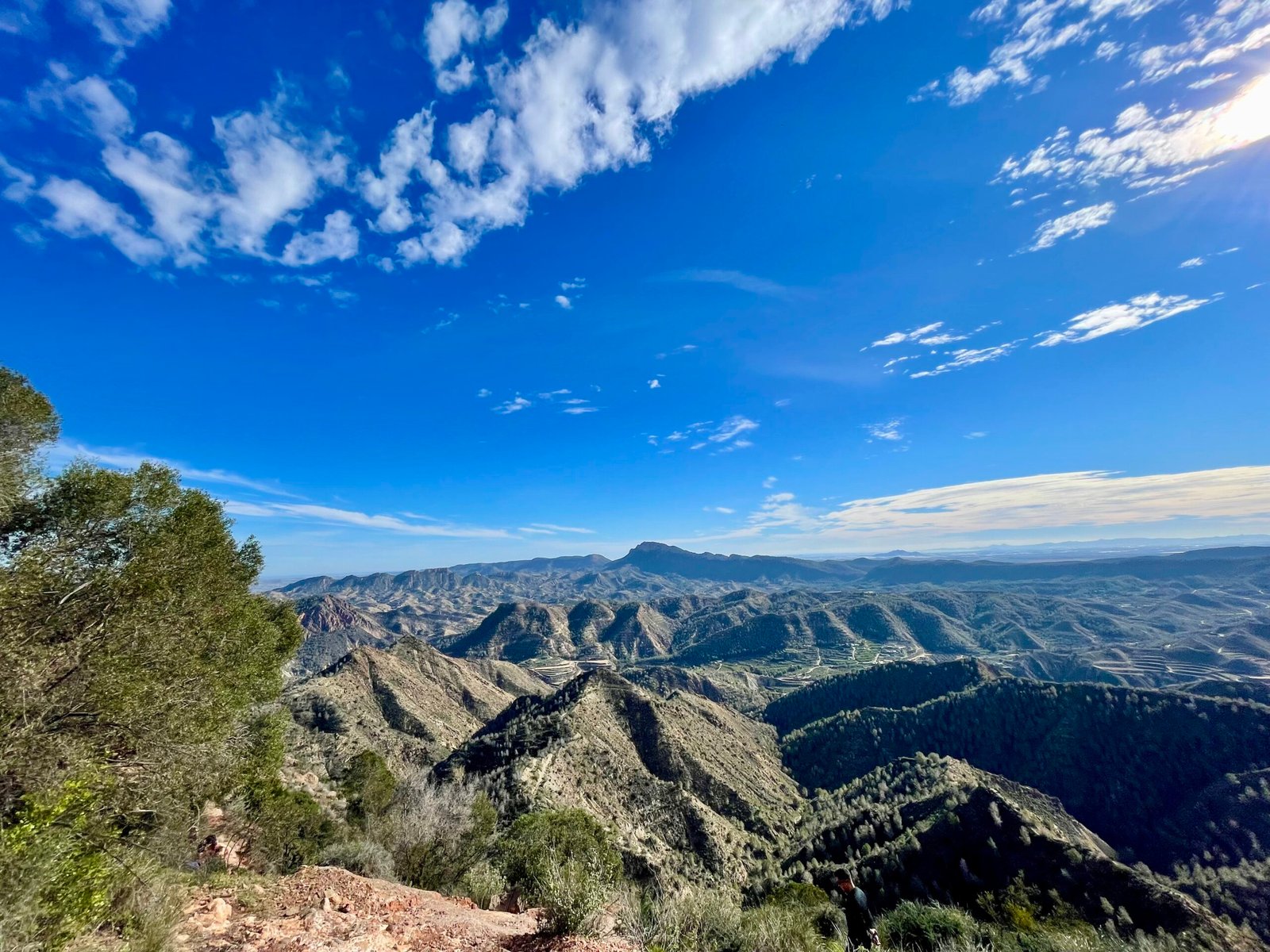
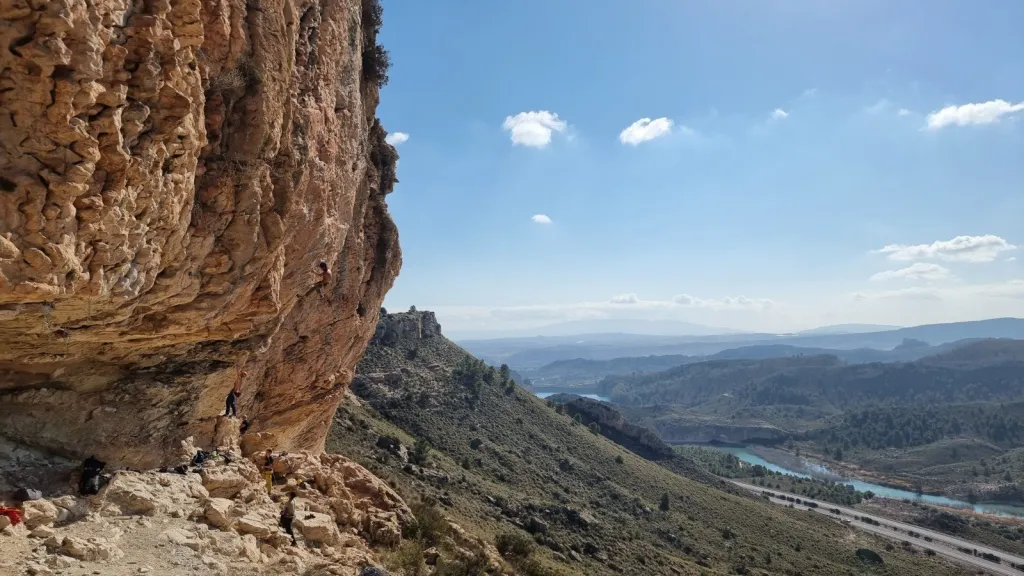
Mula was a tip-off from local climbers at La Panocha — and it turned into one of the best sessions of our entire trip. A south-facing limestone escarpment stretching over a kilometre, 900+ routes across sectors like Ferrari and El Abuelo, and steep, powerful pocket-pulling that will humble you (El Abuelo’s grades are famously stiff). It’s windy, it’s raw, and in late January we climbed above a valley of blossoming almond trees. Park at the top, walk down, pick your wall.
👉 Full Mula climbing guide, van spots & sector breakdown
🇫🇷 France — beyond Céüse and the Verdon
France has so much famous rock that entire world-class regions go quietly about their business. The four picks below run from the high Pyrenees to the Massif Central — and yes, we’re aware one of them is a legend among French climbers. Read on for why it still belongs here.
3 Pène Haute, Hautes-Pyrénées — old-school limestone with donkeys
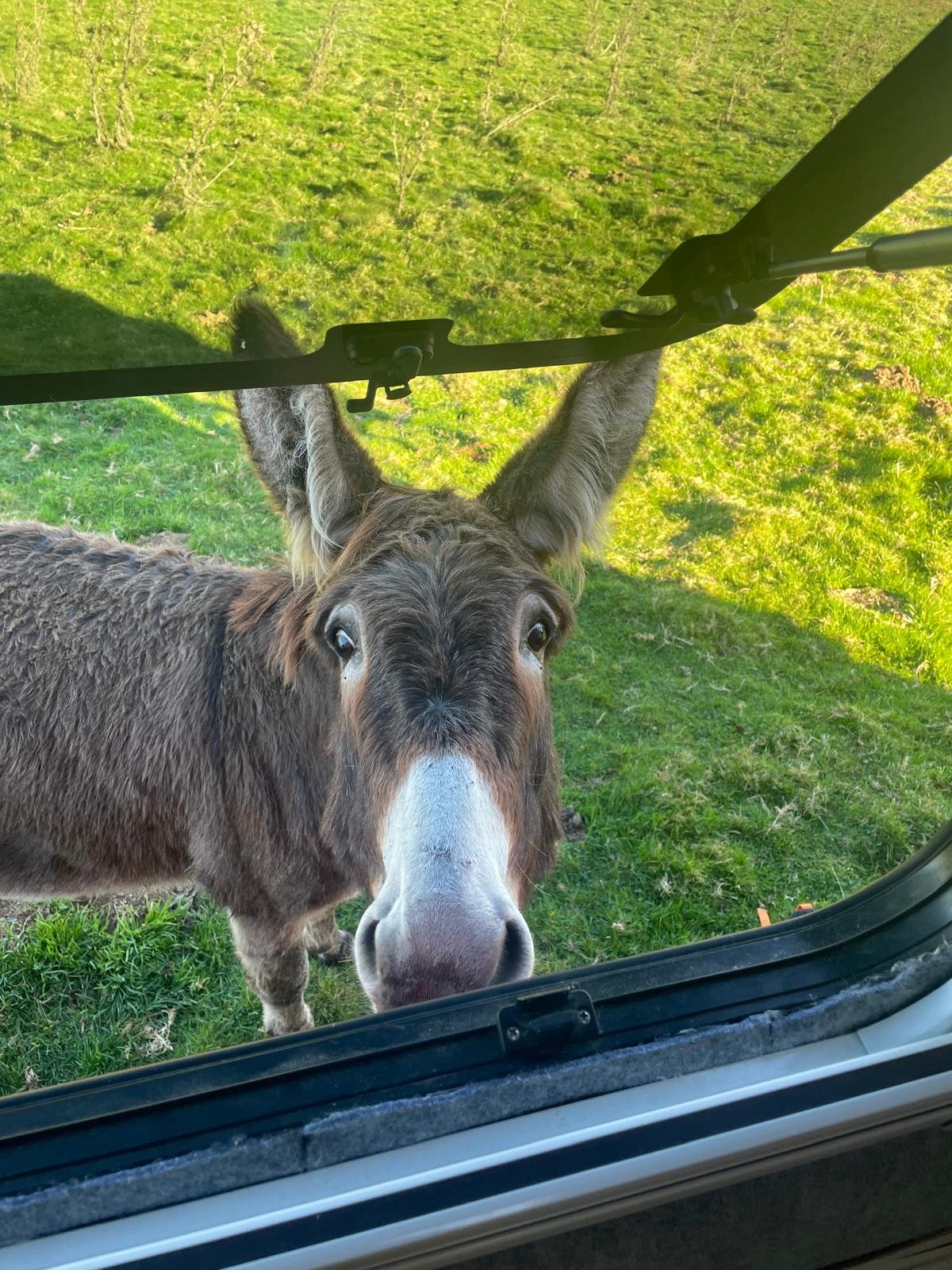
A magnificent 100-metre wall above the Aure valley, and one of our favourite landscapes in all of France. The climbing is “old school” technical — slabs, gouttes d’eau, mono-pockets — the kind of routes that reward feet over biceps, topping out at the 9a Remise de pène. We climbed here in October 2024 and the gigantic free parking area, complete with morning visits from donkeys and cows, remains one of the best van spots we’ve found anywhere in Europe. The forest-track drive up takes a little courage; the reward is total.
👉 Full Pène Haute climbing guide & the forest track explained
4 Gorges du Tarn, Massif Central — Europe’s forgotten pocket legend
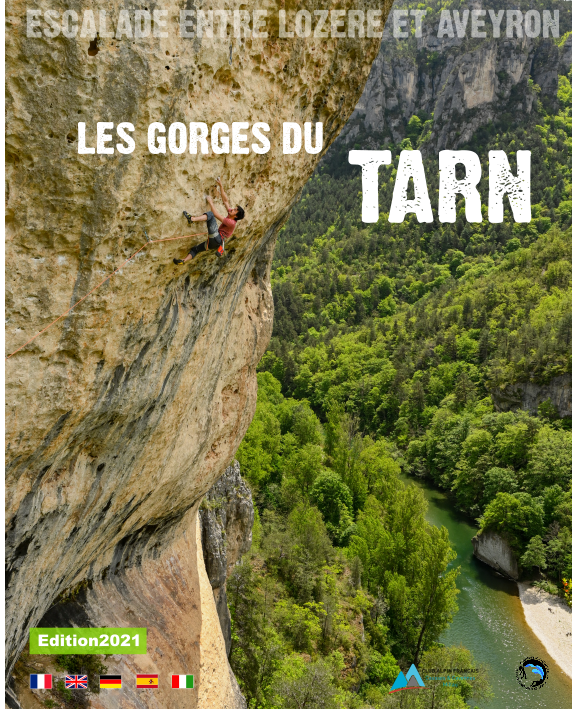
The honest asterisk on this list: French climbers revere the Tarn. But internationally? It gets a fraction of the traffic that its rock deserves — ocher dolomite riddled with pockets that draws comparisons to the Frankenjura and Margalef, mega-pitches up to 70 metres in sectors like Tennessee, and a 500m-deep canyon that empties out completely in the shoulder seasons. We based ourselves here along the D907 bis and sector-hopped for days: mid-grade classics at Trésor du Zèbre, overhanging 7s at Le Navire, power problems at Güllich.
👉 Full Gorges du Tarn climbing guide — sectors, seasons & van access
5 Boffi / Millau, Aveyron — the peaceful gorge above the viaduct
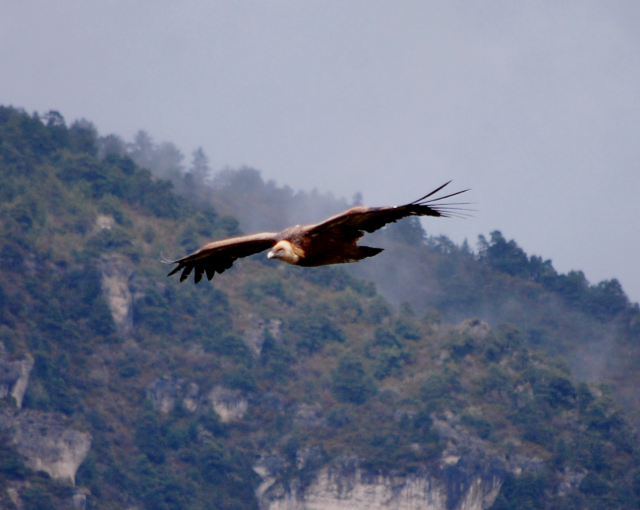
We spent a full week at Boffi — then came back for a second one. Yellow and cream dolomitic limestone above the Dourbie gorge, 159+ routes with a genuinely even grade spread, vultures overhead, and views to the Millau Viaduct. The free via ferrata parking is quiet, legal and became an unofficial vanlife hub; the 30–40 minute approach filters out the crowds better than any gate could. One rule matters: the crag closes from mid-March to mid-June for raptor nesting — plan around it.
👉 Full Boffi / Millau climbing guide & parking beta
6 Labeil (Rocher des Esclops), Hérault — the empty dolomite amphitheatre
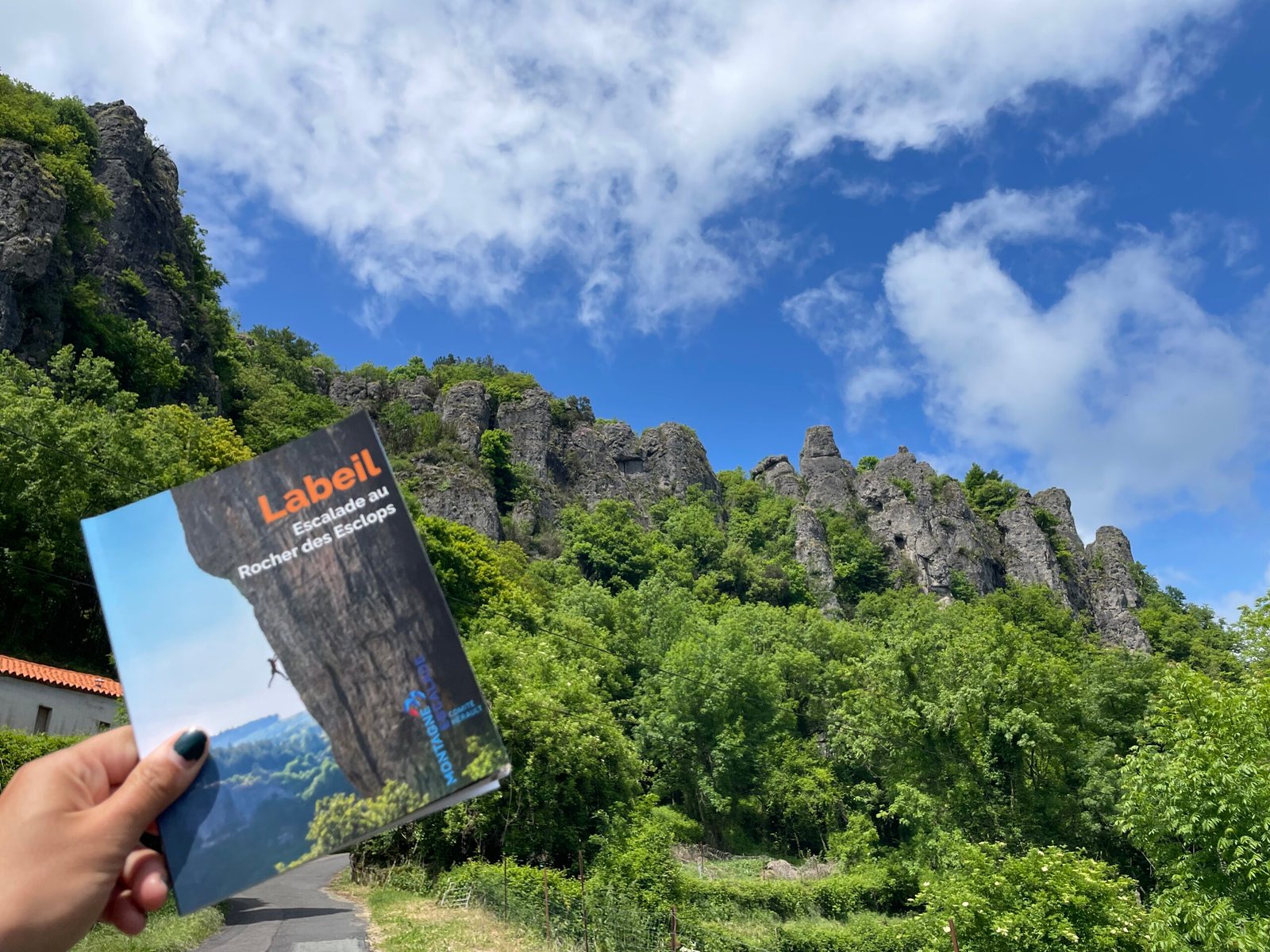
The quietest crag we’ve climbed in France. Labeil is a natural amphitheatre of dolomite above Lodève, eroded into surreal pockets and through-holes that climb like nowhere else in the region. We parked at the trailhead for three nights without seeing another van, and on weekdays you will very likely have all five sectors — from the beginner-friendly L’École to the steep Tryptique — entirely to yourself. Sunset turns the whole cirque gold. The €19.80 local guidebook is essential (routes aren’t numbered at the crag) and funds the FFME 34 volunteers.
👉 Full Labeil climbing guide — sectors, parking & the spring water source
🇵🇹 Portugal — the interior nobody drives to
Visiting climbers land in Lisbon, tick Sintra or the Sagres sea cliffs, and fly home. Portugal’s inland crags — Algarve limestone and Alentejo granite — stay wonderfully empty year-round.
7 Rocha da Pena, Algarve — the inland limestone ridge
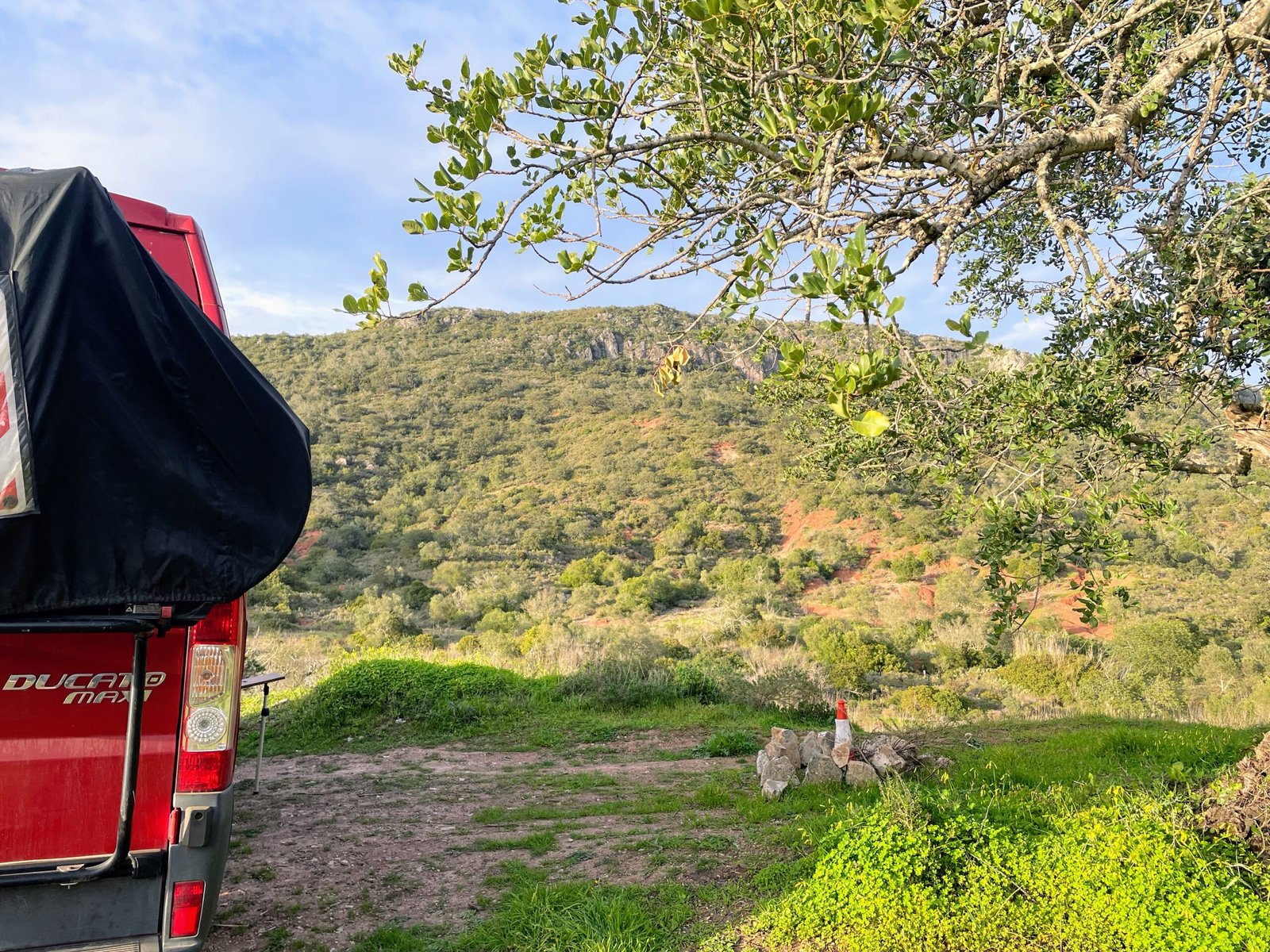
Twenty minutes inland from the Algarve tourist strip, a 2-kilometre limestone ridge rises above the village of Pena with ~150 routes across six sectors — from the striking orange wall of Carpe Diem to the wildly overhanging starts of Grossen Problem. We climbed here in perfect 20°C late-February sun and had the crag essentially to ourselves. The free overnight parking is among the best we’ve used in Europe, and the AMEA club sells up-to-date PDF topos for €3 — the friendliest local-club setup we’ve encountered.
👉 Full Rocha da Pena climbing guide, topos & van parking GPS
8 Marvão & Escusa, Alto Alentejo — granite under a medieval fortress
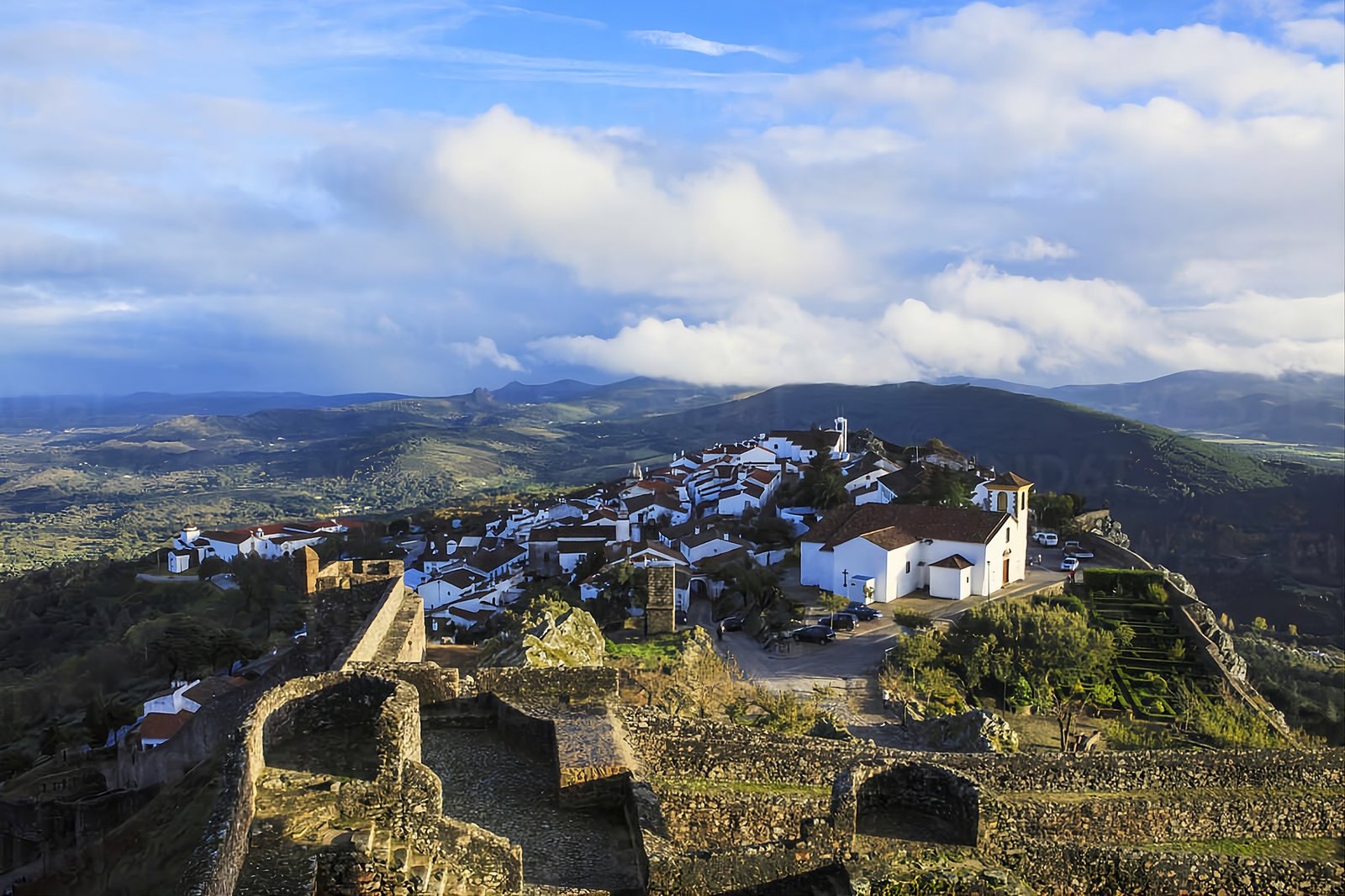
The most dramatic setting on this list: an entire medieval village — castle, walls, whitewashed streets — perched on a granite shoulder at 860 metres, with views into Spain. The roped climbing lives 5 km below in the valley at Escusa, where the local community has bolted quality granite sport lines in a sheltered, forested setting; the hillside under the fortress holds coarse granite bouldering. It’s a small venue, best combined with Penha Garcia’s quartzite gorge an hour north for one of Portugal’s great inland road trips. Note the natural park rules: base yourself at the excellent camper area near Portagem (free for 72 hours) or Campscape Beira Marvão.
👉 Full Marvão & Escusa climbing guide & the inland Portugal loop
🇮🇹 🇩🇪 Italy & Germany — the two nobody expects
Tuscany means wine and Renaissance art; northern Germany means, well, not climbing. Both assumptions are wrong, and both places hide destination-grade rock.
9 Le Rocchette, Tuscany — limestone towers in the beech forest
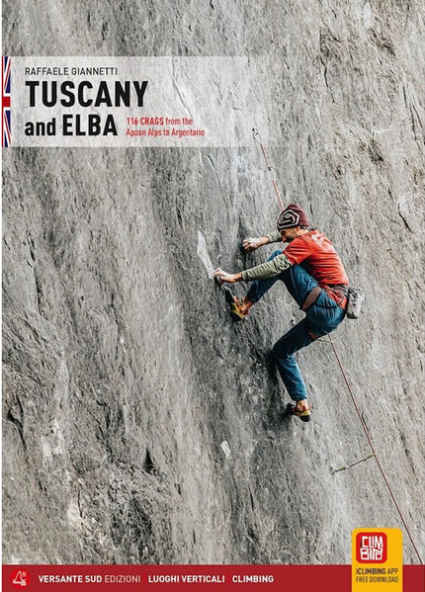
Three limestone towers at 1,050 metres in the Garfagnana mountains, an hour north of Lucca, with 171 bolted routes and — by reputation — almost nobody on them. The rock is described locally as compact and technical, closer to British limestone than juggy holiday tufa, and the appeal is the setting: dappled beech-forest light in the morning, and Lucca’s medieval walls with a gelato an hour away in the afternoon. The altitude keeps it climbable through summer when the valleys roast. This is the one crag on the list we haven’t personally climbed at yet — it’s on the shortlist and lands here on the strength of local reports and the volume-to-crowds ratio.
👉 Full Le Rocchette climbing guide — towers, parking & the Lucca factor
10 Okertal, Harz Mountains — Germany’s granite labyrinth (the wildcard)
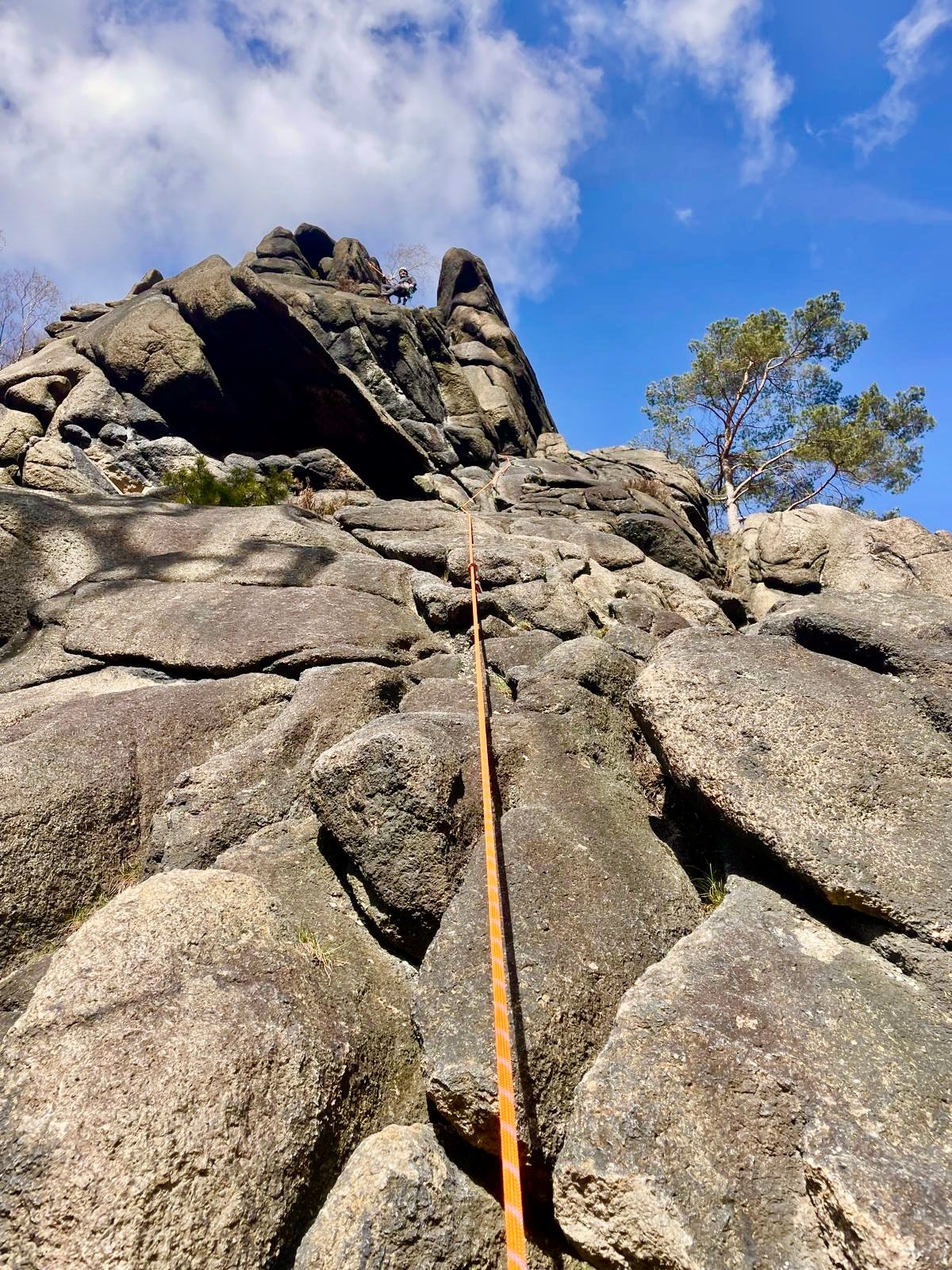
The wildcard of the list — and the biggest venue on it. Ten kilometres of valley in the Harz mountains, 106 crags in 11 groups, 1,280+ routes on rough, grippy, fast-drying granite, from student-classic slabs to the fearsome finger crack of Völkermordriss (UIAA 8/8+). Full honesty: most routes below UIAA 7 are unbolted, so pack nuts and cams alongside your draws. We visited in April 2026: respect the falcon closures (Feb–July at several crags), skip wild camping entirely (it’s a strict nature reserve), and base yourself at the valley campsite or use park4nights.
👉 Full Okertal climbing guide — all 11 sector groups explained
Choosing Between Underrated European Climbing Destinations
| Chasing winter sun | Mula, La Panocha, Rocha da Pena — or string all three into our winter Iberia van circuit |
| First outdoor season | La Panocha (Paisaje Lunar sector), Rocha da Pena, Boffi |
| Total solitude | Labeil, Le Rocchette, Marvão |
| Big volume, long stay | Mula (900+), Okertal (1,280+), Gorges du Tarn |
| Technique school | Pène Haute (slabs), Le Rocchette (compact limestone), Tarn (pockets) |
| Best van park-ups | Pène Haute (the donkeys!), Rocha da Pena, Labeil |
| Adventure & trad spice | Okertal — full rack required |
Frequently asked questions
What makes a climbing destination “underrated”?
Our test is simple: quality rock and enough routes for a proper multi-day stay, but you can still turn up on a Saturday and have sectors to yourself. Every crag on this list was quietly developed by local climbers, sits off the international circuit, and has van-friendly logistics. If it headlines other “best of Europe” lists, it’s disqualified from this one.
Which of these crags is best for beginners?
La Panocha is the standout — the Paisaje Lunar sector was purpose-built for beginners with 27 routes from 4b to 6a+. Rocha da Pena is a close second with safe modern bolting from 4a, and Boffi and Labeil’s L’École sector also work well for a first outdoor season.
Which destinations work for winter sun?
Mula, La Panocha and Rocha da Pena. Mula’s south-facing escarpment is a genuine winter paradise, La Panocha’s multi-directional walls always give you a sunny face, and inland Algarve delivers 20°C days in February. The French, Italian and German picks are spring-to-autumn venues.
Can I park a van overnight at these crags?
At most, yes — Pène Haute, Rocha da Pena, Labeil, Mula and Boffi all have excellent free overnight options we’ve used ourselves. The exceptions are protected areas: no camping inside the park at La Panocha, no wild camping anywhere in the Okertal nature reserve, and at Marvão use the campsite or the free 72-hour camper area. GPS coordinates are in each destination’s full guide.
Is Okertal really a sport climbing destination?
It’s the wildcard. The rock and route count are outstanding, but most routes below UIAA 7 are unbolted and harder lines are sparingly protected — bring a full rack of nuts and cams. We included it because it’s one of the most unjustly ignored climbing valleys in Europe, and sport climbers who can place gear will love it.
Do I need guidebooks, or are apps enough?
Buy the local guidebooks. At lesser-known crags, apps often have thin or outdated coverage — and the €3–25 you spend directly funds the volunteers who bolt and maintain the routes. AMEA’s Rocha da Pena topos cost €3; Aure Vertical’s Pyrenees book covers 800+ routes for €25; at Labeil and Le Rocchette the guidebook is essential just to find the routes.
Final thoughts
The real value of underrated European climbing destinations isn’t harder grades or fancier scenery — it’s space. It’s pulling into an empty carpark on a Saturday, warming up on whatever route you like, and hearing nothing but wind and birds. Every one of these ten places gave us that, and each links to a full guide with the GPS parking, topos and honest logistics to go find it yourself.
Start with the region that matches your season: Murcia and the Algarve for winter, the Massif Central and Pyrenees for spring and autumn, Tuscany and the Harz for summer. And when the locals at one quiet crag recommend you another — go. That’s how we found half of this list.
Plan the whole trip, not just the crag
Three of these destinations link into our complete winter van route through Spain and Portugal — GPS spots, budgets and a week-by-week plan included.
Read the Winter Iberia Circuit →