
Mammut Ophir 3 Slide 2.0 Review – Specs, Fit & Where to Buy
Mammut’s all-round harness for gym, sport and multi-pitch: adjustable leg loops, four rigid gear loops and 80% recycled materials.
Comparing more than one harness? The Ophir 3 Slide 2.0 is ranked #1 overall in our full climbing harness comparison — see how it stacks up against the Black Diamond Solution, DMM Renegade, Petzl Corax, Arc’teryx Skaha and Edelrid Jay / Jayne.
Read the full comparison →| Size | Waist | Thigh |
|---|---|---|
| XXS | 55–64 cm | 47–54 cm |
| XS | 61–71 cm | 49–57 cm |
| S | 68–77 cm | 53–61 cm |
| M | 73–85 cm | 56–64 cm |
| L | 80–92 cm | 57–67 cm |
| XL | 86–100 cm | 60–70 cm |
| XXL | 94–108 cm | 62–72 cm |
The sizes overlap deliberately — if you fall between two, the adjustable leg loops and waist buckle mean either will fit, so size down for sport and up if you climb in winter trousers.
The Women’s Version Is a Different Harness
Mammut sell a women’s Ophir 3 Slide 2.0 under its own article number, 2020-01230, and it isn’t just a colourway. It has a women-specific shape with a longer leg loop bridge and wider leg loops relative to the waist, and it runs in four sizes rather than seven.
| Men’s (2020-01220) | Women’s (2020-01230) | |
|---|---|---|
| Sizes | XXS, XS, S, M, L, XL, XXL | XS, S, M, L |
| Weights | S 360 g · M 385 g · L 405 g · XL 430 g | XS 345 g · S 365 g · M 385 g · L 410 g |
| Shape | Standard rise | Longer leg loop bridge, wider leg loops relative to the waist |
| Everything else | Identical — split webbing, four rigid 20 kg loops + one soft, two ice clipper slots, 1 kN haul loop, drop-seat, replacement indicator, 80% recycled, CE EN 12277 Type C + UIAA | |
Two practical notes. Size M weighs 385 g either way, so there’s no weight penalty in choosing the cut that fits rather than the one matching your gender. And because the women’s version stops at L, anyone who needs XXS, XS or XXL is buying the men’s cut whatever their preference — which is worth knowing before you spend an hour deciding. The fit difference is about the ratio of leg loop to waist, not about who you are, so try both if your local shop stocks them.
See the women’s specification at Mammut →
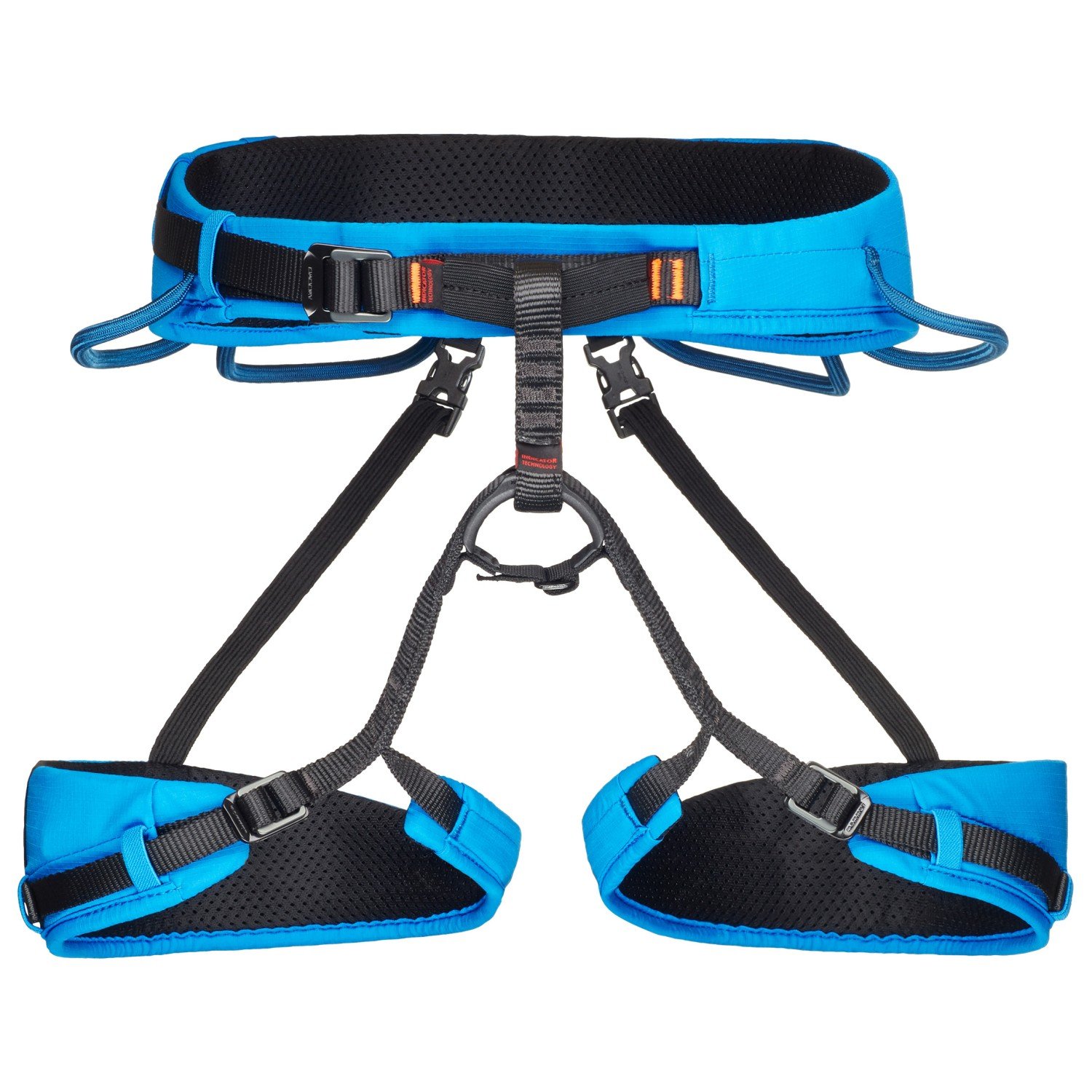
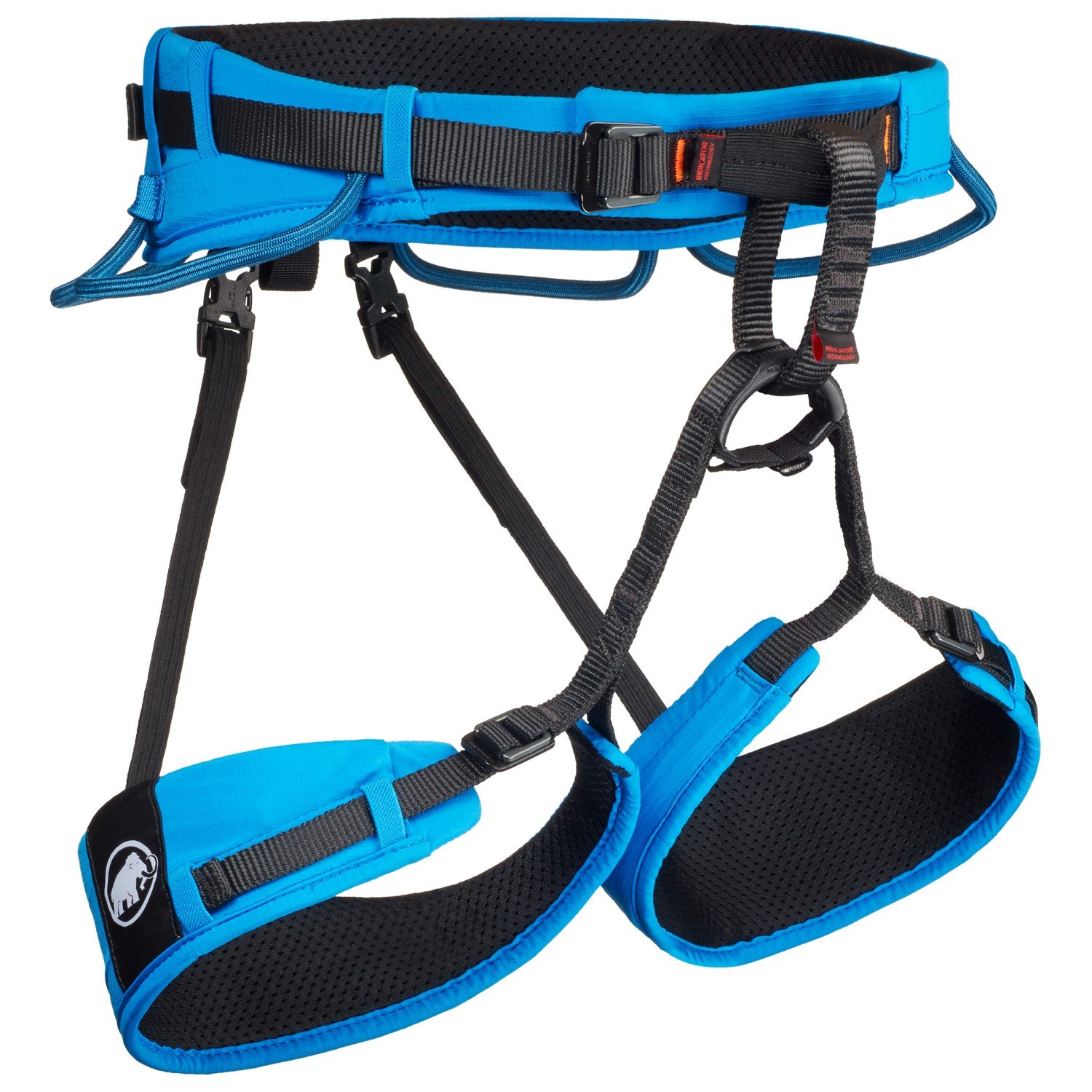
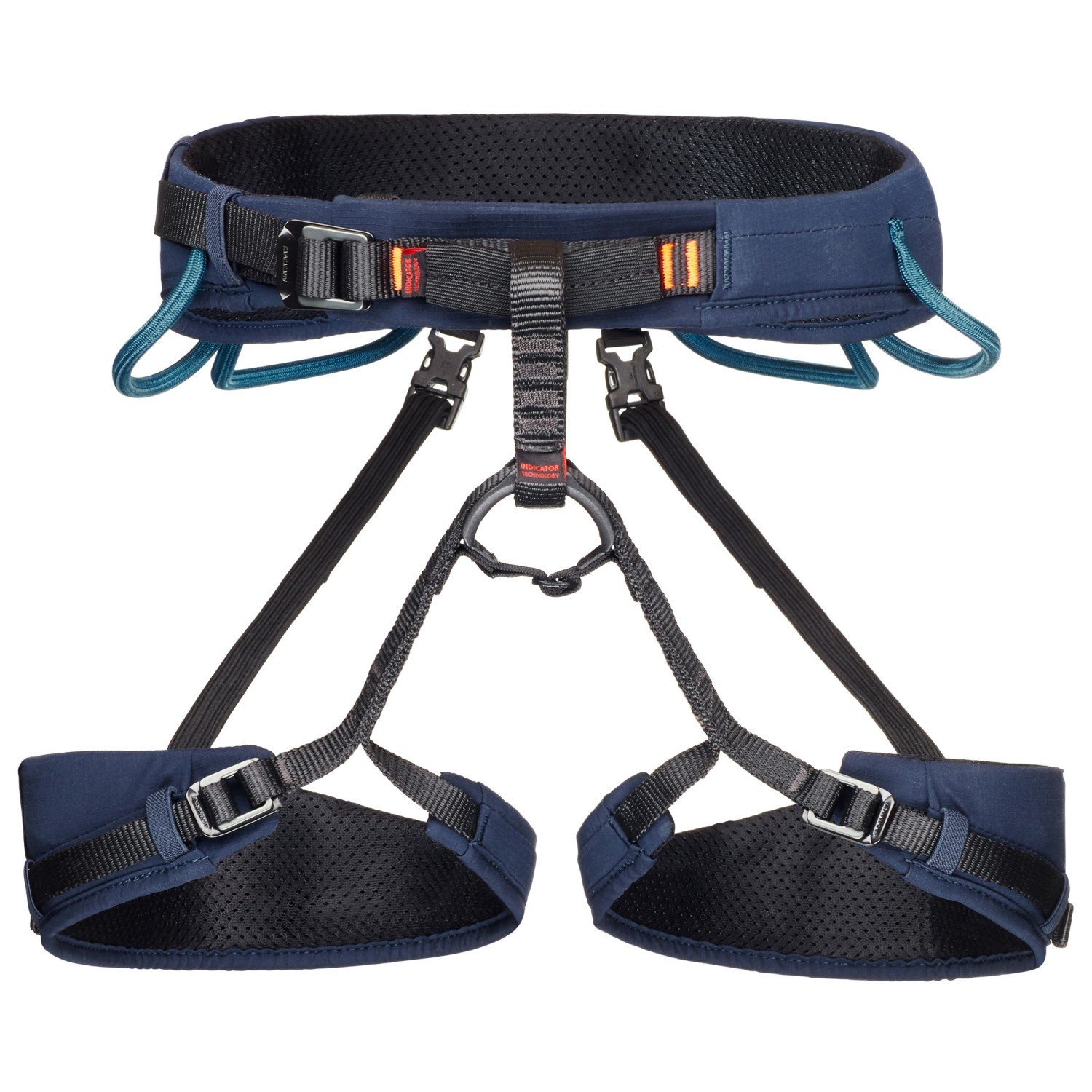
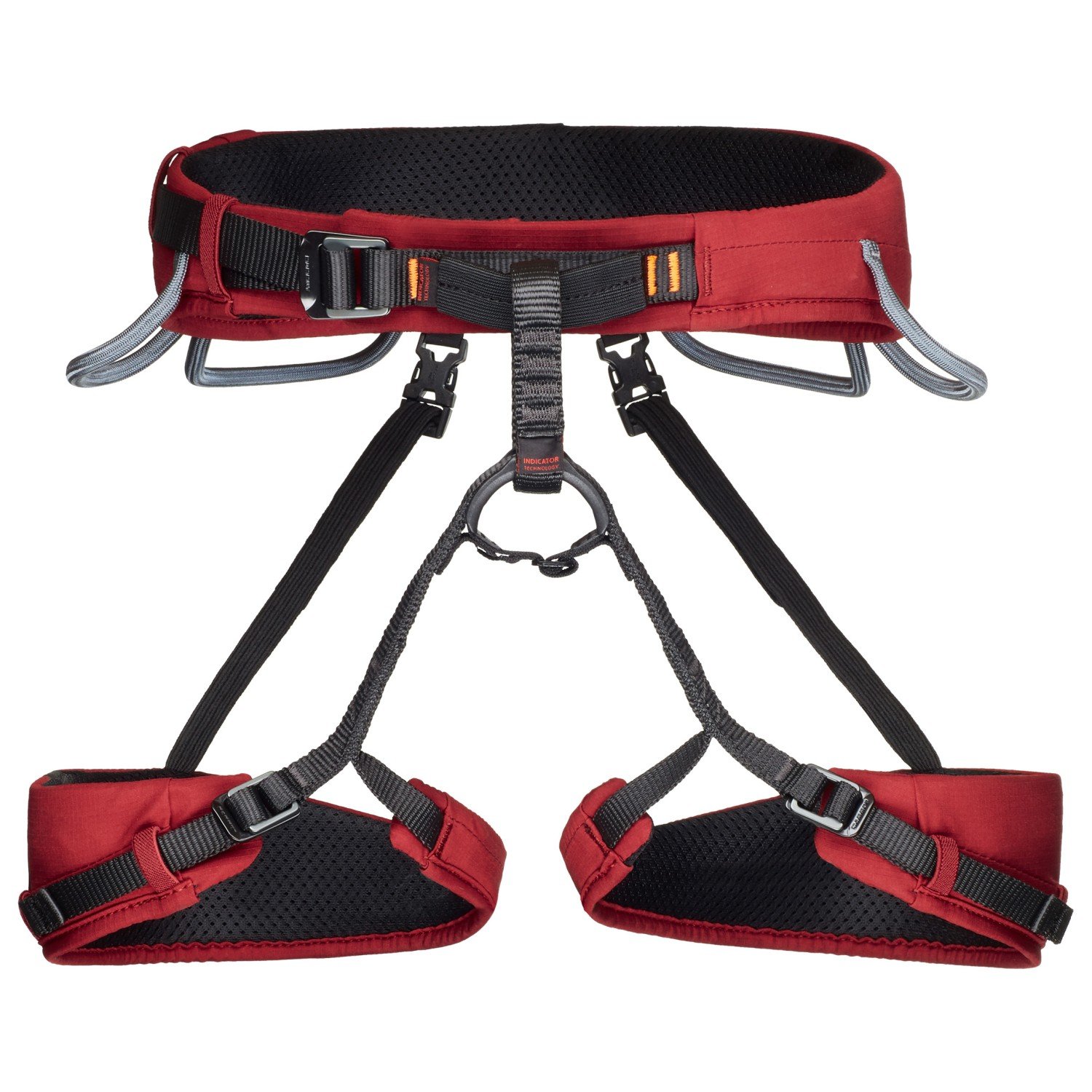
Front view
Our Score
In This Review
Where to Buy the Mammut Ophir 3 Slide 2.0
Support your local climbing shop first. If it's out of stock, these retailers ship across Europe:
Prices checked October 2026 — tap through for current pricing and stock.
What Mammut Built the Ophir 3 Slide 2.0 to Do
Mammut pitches the Ophir 3 Slide 2.0 as an all-rounder: indoors or out, on rock or ice, single pitch or multi-pitch. Its own activity ratings back that up, scoring it 6/6 for sport climbing, gym climbing and via ferrata, and 3/6 for alpine climbing and mountaineering.
The leg loops are adjustable, which Mammut says lets you fit the harness precisely over shorts or thick trousers. Drop-seat buckles mean you can stay tied in when nature calls. Split webbing at the waist and leg loops spreads your weight to reduce pressure points and add comfort, even on long hanging belays.
For racking, you get four large rigid textile gear loops, each tested to 20 kg, plus one small soft loop. Mammut says that is enough for the longest trad routes. There are also two ice clipper slots, a 1 kN haul loop and a chalk bag attachment.
Durability details are practical rather than flashy. The tie-in loops have an abrasion protector, the tie-in loop is protected by plastic, and a contrast-coloured indicator in the tie-in points and belay loop shows when the harness needs replacing. It's made with 80% recycled materials by overall product weight, and carries Mammut's bluesign® PRODUCT and Fair Wear labels.
What Testers Found — and Which Ophir They Tested
Read this before you read any other review of this harness. The published testing you'll find online is of the Ophir 3 Slide, not the Ophir 3 Slide 2.0. They're different products: the 2.0 is a rebuild around split webbing technology and 80% recycled materials, and it carries the replacement indicator in both the tie-in points and the belay loop. Every "best overall" badge and every tester quote below belongs to the previous generation. We've seen nobody flag that, so reviews are being read as though they describe a harness nobody has published a test of yet.
With that said, the older model's findings are still the best evidence available, and the parts that carry over are worth having. Treeline Review named the Ophir 3 Slide its best overall climbing harness, on a test that included belaying, climbing and a standardised five-minute hanging session in each harness. Their testers rated its padding the most comfortable of everything they tried despite the waist belt and leg loops not being the widest, praised the ventilation, and put its adjustability second only to the Petzl Corax.
Their most specific criticism does carry straight over, because the 2.0 keeps the part responsible: the plastic reinforcement on the lower tie-in point makes the harness jolt slightly when you shift your weight while hanging or being lowered. They also found the harness a touch bulky and heavy for climbers who only do hard sport.
OutdoorGearLab tested the same previous-generation harness and were cooler on it — a good option for sport or trad, comfortable and easy to adjust and strong on value, but not exceptional at any one thing. Two reputable publications, the same harness, different conclusions. Treat both as a steer on the family rather than a verdict on the 2.0.
Pros and Cons
Pros
- Adjustable leg loops with drop-seat buckles
- Four rigid gear loops plus a soft loop and two ice clipper slots
- Replacement indicator in the tie-in points and belay loop
- 80% recycled materials, bluesign® PRODUCT, Fair Wear
- Testers rated the previous generation's padding the most comfortable they tried
Cons
- Mammut rates it only 3/6 for alpine climbing and mountaineering
- Only four full-size gear loops; the fifth is a small soft loop
The harness is one of four things you need before you leave the ground. The belay loop needs a locker — we compare five HMS carabiners including Mammut's own Crag HMS. The tie-in point needs a rope, and our ropes guide covers the ones we actually climb on. And if you're buying a harness because you're buying everything, start with the beginner climbing gear list instead of piecing it together review by review.
Best climbing helmets 2026 →Mammut Ophir 3 Slide 2.0 Review: Final Verdict
If you want one harness for the gym, sport crags and multi-pitch days, the Ophir 3 Slide 2.0 covers it: adjustable leg loops, a full set of rigid gear loops, a built-in replacement indicator and a sustainability story Mammut can back up. If you only climb hard sport and every gram counts, look at a lighter, sport-specific harness instead.
It's our top all-round pick. Compare it with the other five harnesses in our 2026 guide → — and if you're kitting out for a season on the road, the full starter list is the better place to begin.
Frequently Asked Questions
How much does the Mammut Ophir 3 Slide 2.0 weigh?
Mammut lists 360 g for size S, 385 g for M, 405 g for L and 430 g for XL. Check Mammut's size chart against your waist and thigh measurements before you buy.
What sizes does the Ophir 3 Slide 2.0 come in?
Seven: XXS through to XXL, covering waists from 55 cm to 108 cm and thighs from 47 cm to 72 cm. Mammut only publishes weights for S to XL. The ranges overlap, so if you fall between two sizes either will fit — size down for sport climbing and up if you climb in winter trousers.
Is the Ophir 3 Slide 2.0 good for trad climbing?
Mammut says its four large rigid gear loops and one small soft loop let you carry everything you need for the longest trad routes. It rates the harness 6/6 for sport climbing, gym climbing and via ferrata, and 3/6 for alpine climbing and mountaineering.
What's the difference between the men's and women's Ophir 3 Slide 2.0?
They're separate products — 2020-01220 for the men's, 2020-01230 for the women's. The women's version has a longer leg loop bridge and wider leg loops relative to the waist, and runs in four sizes (XS to L, 345–410 g) rather than seven (XXS to XXL, 360–430 g in the sizes Mammut publishes). Size M weighs 385 g in both. Every other feature is identical.
Does the Ophir 3 Slide 2.0 have adjustable leg loops?
Yes. The leg loops are adjustable so you can fit the harness over shorts or thick trousers, and drop-seat buckles let you stay tied in when nature calls.
When should I replace my Mammut Ophir 3 Slide 2.0?
Mammut's manual says to replace it at the latest after 7 years, even with infrequent use and good storage, and much sooner with frequent use: up to 5 years if used once a month, up to 3 years several times a month, up to 1 year weekly. Replace it immediately after a heavy fall, if the stitching or webbing is damaged, or if the contrast-coloured indicator core shows through on the tie-in loop or belay ring. The same thinking applies to the rest of your soft goods — we cover rope retirement in our climbing ropes guide.