
Best Hangboards in Europe 2026: 5 Boards Tested & Compared
Five boards compared — from niche European makers to the classics — for finger strength, grip training, and everything in between. How I searched, what I considered, and why I ended up with the Gripnatic.
I had trained on the Beastmaker 1000 in gyms for a while and knew exactly what it offered. For my own board at home I wanted something different: a wider range of grip depths, and spherical holds.
So I compared the best hangboards in Europe — five boards, from niche makers to the classics. Here is what I found, and why I ended up with the one I did.
📊 Best Hangboards in Europe 2026 — Quick Comparison
| Board | Price | Material | Origin | Best For | Score |
|---|---|---|---|---|---|
| Gripnatic FingerPeg 1.0 | €149.90 | Beech wood | 🇸🇮 Slovenia | Our Pick | 9.3/10 |
| Beastmaker 1000 | ~€125.96/£107.96 | Tulipwood / Beech | 🇬🇧 UK | The Classic | 9.1/10 |
| YY Vertical VerticalBoard One | ~€120 | Poplar wood | 🇫🇷 France | Best Innovation | 9.0/10 |
| Metolius Simulator 3D | €89.96 / £77.36 | Polyester resin | 🇺🇸 USA | Best Hold Variety | 8.9/10 |
| Café Kraft Gimme Kraft Large | €84.96 €99.95 | Wood | 🇩🇪 Germany | Best Community Pick | 8.7/10 |
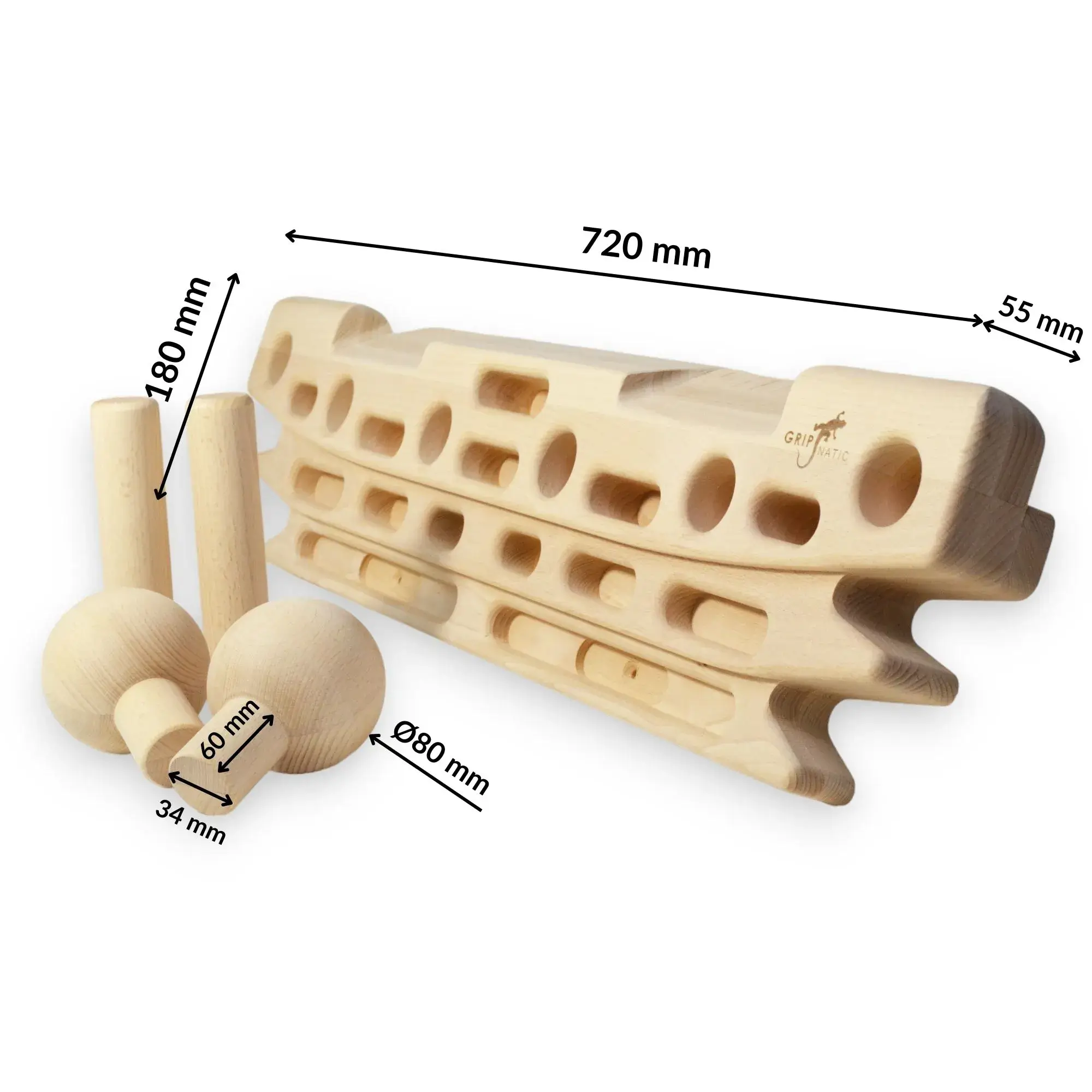
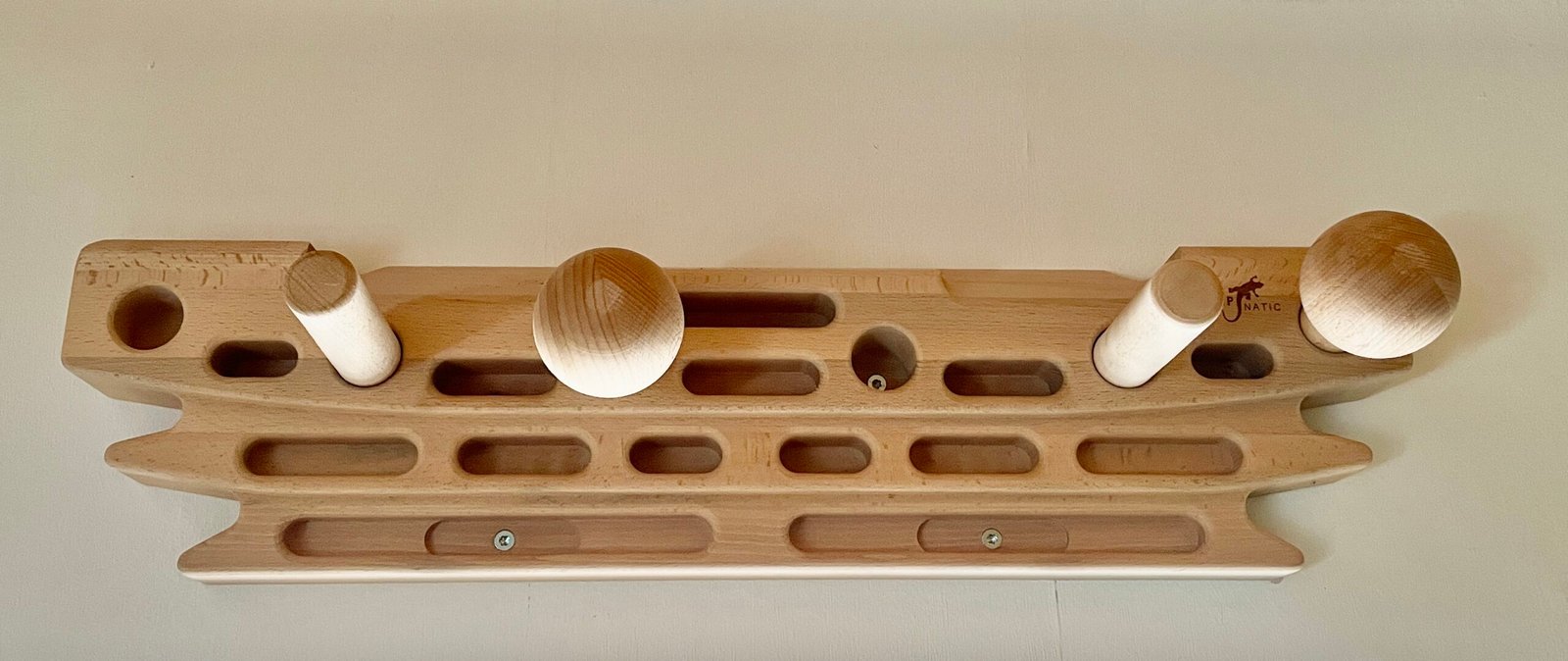
1. Gripnatic FingerPeg 1.0
🏆 Our Pick — Slovenian family business, spherical holds, exceptional range of depths
Available directly at Gripnatic.com and via Gripnatic on Etsy
Our Testing Score
Why I Chose This One
I looked at a lot of boards before landing here. The Beastmaker 1000 was the obvious first stop — I had trained on one in gyms and knew its hold set well. The YY Vertical range caught my attention early for being European and well-designed. The Metolius Simulator 3D was on my list for its hold variety.Truth is I didn’t choose this one, this was a birthday gift which made it easy for me 🙂
The FingerPeg 1.0 is not just a hangboard — it is a multi-system training tool in a single piece of beech wood. Six pocket depths from 15mm to 40mm give you a genuine progression path, with 2, 3, and 4-finger configurations and four sloper angles covering terrain that most boards in this price range ignore entirely.
The spherical holds are what set it apart. They screw into the six calisthenics bar holes, so you can use the board as a standard hangboard, a pegboard, or both. The spherical shape creates an unstable, pinch-dominant grip that loads the forearm completely differently to edge training — a genuinely different stimulus that I rotate in for conditioning sessions alongside structured pocket work.
Beech wood, clean radiused edges, grippy without being abrasive. The build quality is what you would hope for from a small family business that actually climbs.
Best for: Intermediate climbers who want finger training, grip conditioning, and a board that keeps offering something new as you get stronger. The spherical holds in particular are worth having.
Pros
- Six pocket depths — genuine beginner-to-intermediate progression
- Spherical holds included — unique training stimulus
- Four sloper angles on a single board
- Exceptional beech wood build quality
- Doubles as calisthenics bar setup
- Small European family business — genuinely made by climbers
Cons
- Less well-known than Beastmaker — smaller community and training resources
- No dedicated training app
- Larger footprint than compact boards — requires adequate wall space
- No mono pockets for advanced finger isolation
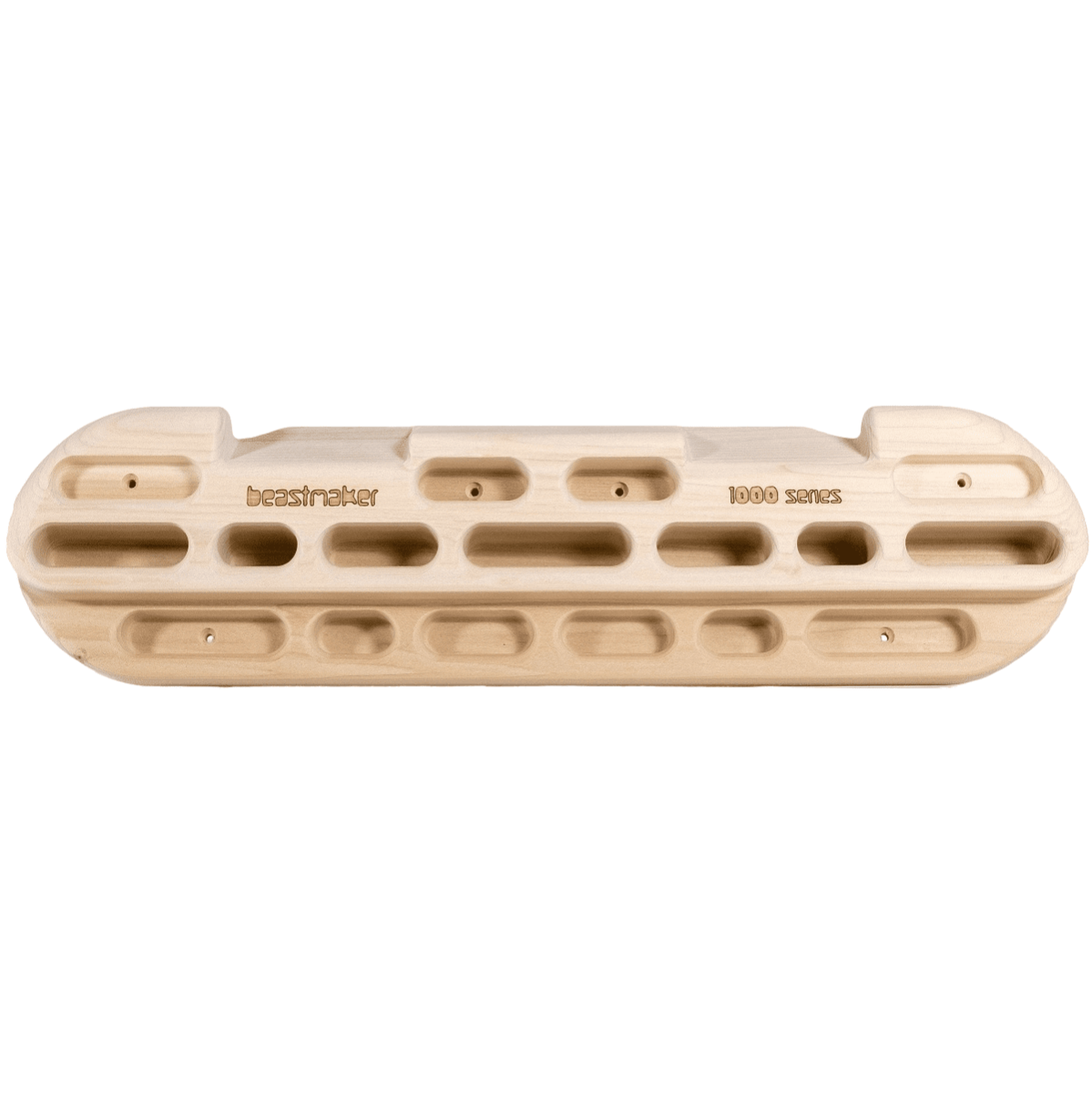
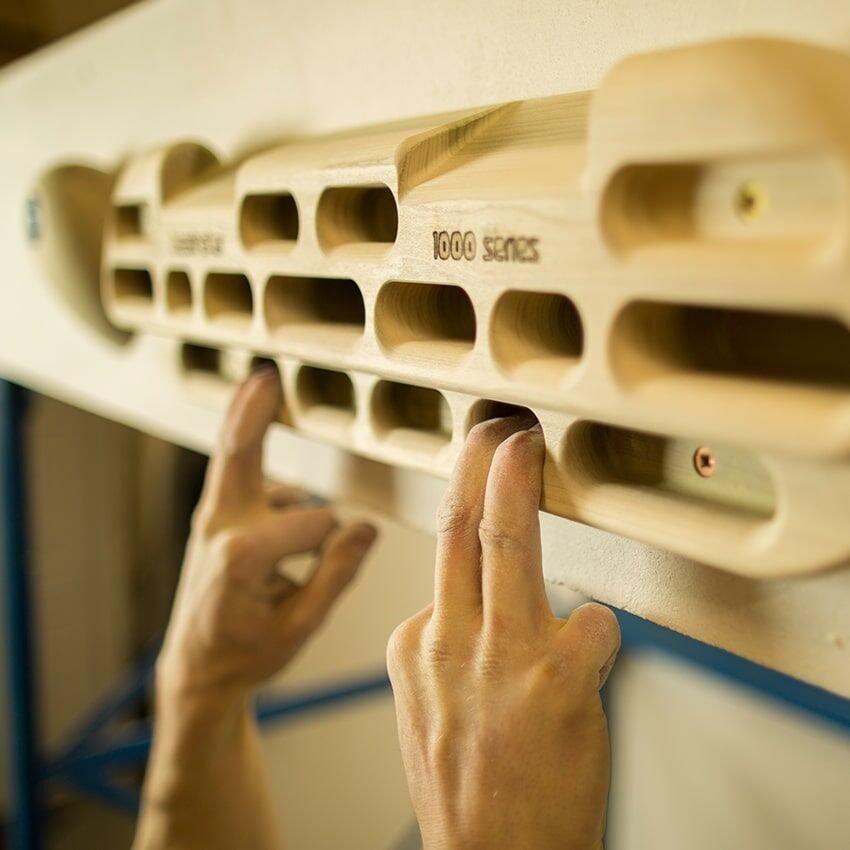
2. Beastmaker 1000
🏛️ The Classic — Sheffield-made, FSC wood, the board that put wooden hangboards on the map
Available at Bergfreunde DE and Alpinetrek UK
Our Testing Score
Detailed Review
The Beastmaker 1000 is the board I trained on in gyms for years before buying my own. It was designed in Sheffield by Dan Varian and Ned Feehally — two of the UK’s top boulderers at the time — and it has genuinely earned its reputation as the most recognisable wooden hangboard in the world. If there is a board above a doorframe in a climbing gym anywhere in Europe, there is roughly a fifty-fifty chance it is a Beastmaker.
The hold variety is genuinely good: jugs for warm-up and pull-ups, 35° and 20° slopers, a very deep 4-finger pocket, deep and medium 4-finger, 3-finger, and 2-finger pockets, a 10mm small 4-finger edge, and additional 2 and 3-finger pocket sizes. The range takes you from absolute beginner to advanced intermediate on a single board, which is a significant achievement. The tulipwood has a texture that is kind to skin while providing enough friction to hang confidently — it does not feel like polished wood and it does not shred skin the way resin boards can.
The reason it did not become my pick despite all of this is that it does not have spherical holds or any equivalent which i like and found fun, and I had already used one extensively. I wanted something new. But if you have never had a board at home and want the most tried, tested, and community-supported option available — buy this one. You will not regret it.
Best for: Anyone who wants the most proven wooden hangboard in the world, with the largest community, best app ecosystem, and a hold set that works from beginner through advanced intermediate.
Pros
- The most recognised and trusted wooden hangboard in climbing
- FSC-certified tulipwood — sustainably sourced, skin-friendly
- Also available in EU-grown beech for lower carbon footprint
- Excellent hold variety from beginner to advanced
- Large training community and app (Grippy platform)
- Made in Sheffield — renewable energy workshop
Cons
- No spherical or peg-style holds
- Large jumps between hold depths — progression less granular
- Beech edition significantly pricier than tulipwood
3. YY Vertical VerticalBoard One
🇫🇷 Best European Innovation — French Alps, magnetic inserts, physio-designed, poplar wood
Available at YY Vertical and via specialist European climbing retailers
Our Testing Score
Detailed Review
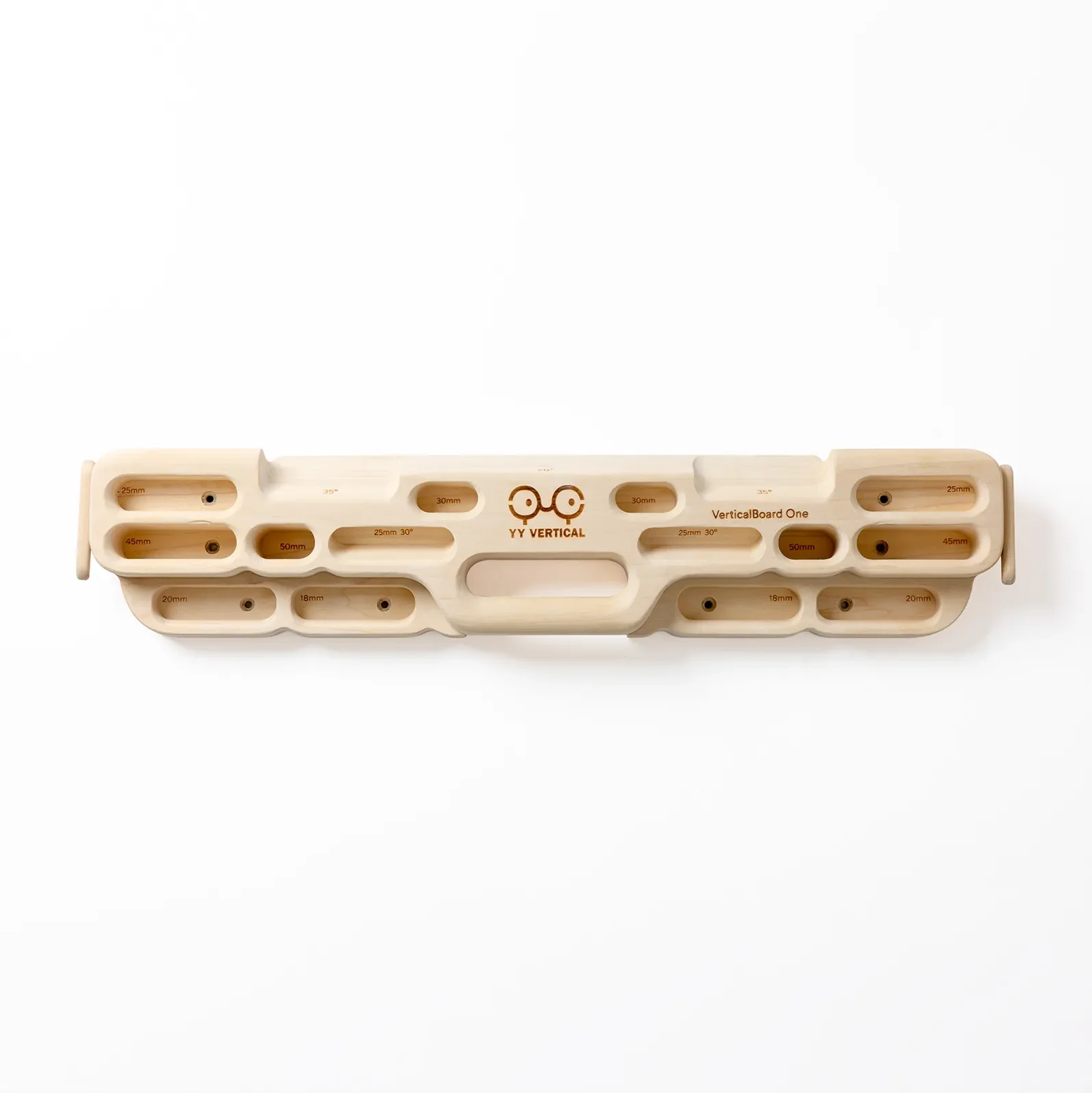
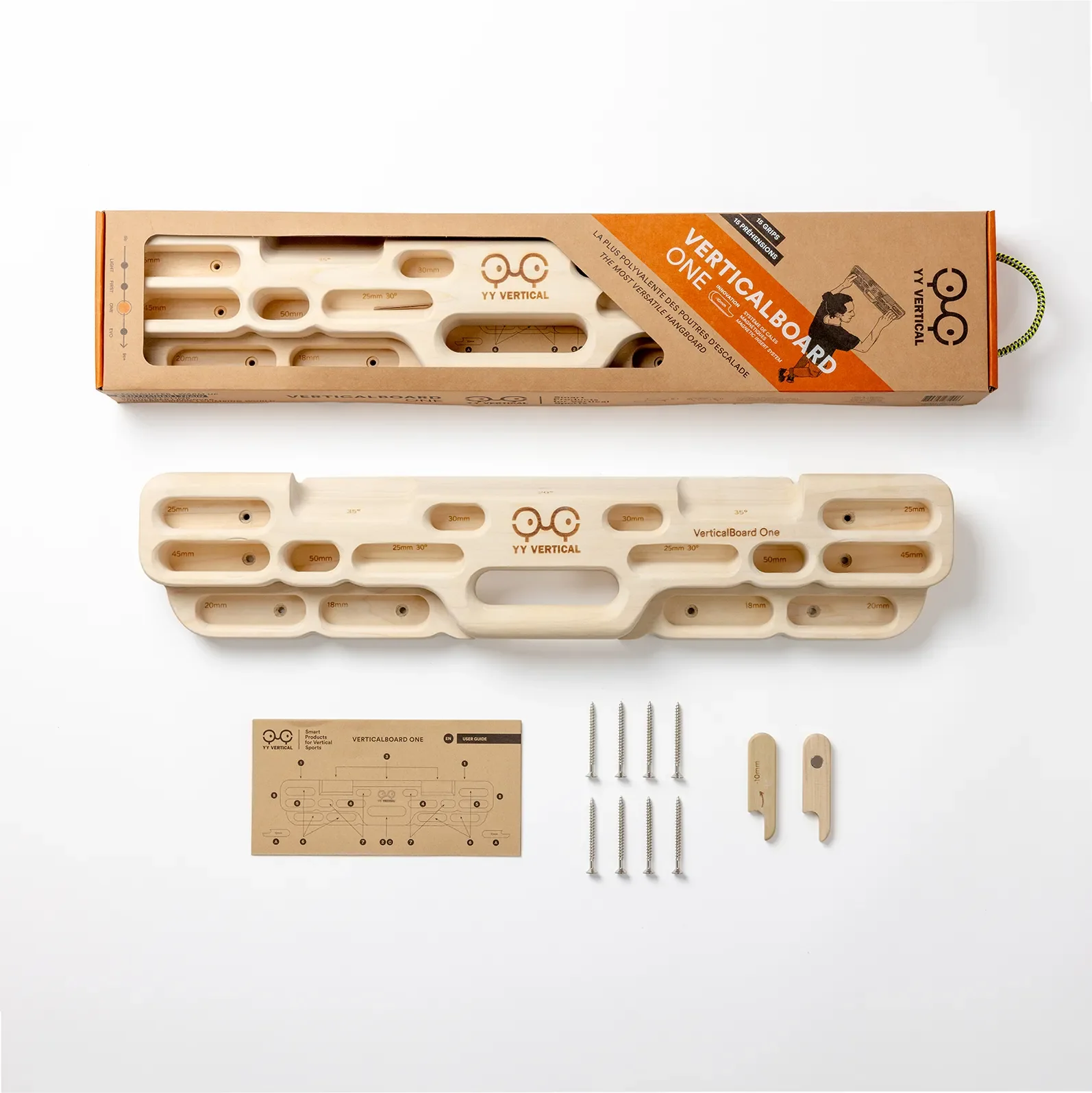
YY Vertical is a French company based in the Alps, and the VerticalBoard range is one of the most intelligently designed hangboard lines available in Europe. The VerticalBoard One covers the 5b–8b grade range with 15 grips including edges, two-finger pockets, inclined holds, slopers, and jugs — and the stand-out feature is the magnetic insert system. Two inserts are included that reduce any pocket depth by 10mm, stored magnetically on the sides of the board so you never lose them. This means the effective hold range doubles: every pocket on the board becomes two different depths depending on whether the insert is in place.
The elastic band attachment point at the centre of the board is a thoughtful addition — it allows assisted training on holds that are currently too hard for your fingers to hang unloaded, which is exactly the kind of progressive overload that makes hangboard training effective and reduces injury risk. This is a board that has clearly been designed with input from physiotherapists and coaches who think about load management, not just climbers who want to pull hard.
Poplar wood is a different material choice from the beech of the Gripnatic or the tulipwood of the Beastmaker — it is lighter and slightly softer, which makes it very gentle on skin but means it wears slightly faster over years of heavy use. For moderate training frequency it is perfectly adequate and the environmental credentials are strong: poplar is fast-growing, requires little water, and is sustainably managed in the regions where YY Vertical sources it.
Best for: European climbers who want a modern, well-engineered board with genuine modularity, physio-informed design, and strong sustainability credentials — particularly those who appreciate the progression the insert system provides.
Pros
- Magnetic insert system effectively doubles the hold range
- Elastic band attachment for assisted training — injury-smart
- Designed with physiotherapists — load management built in
- Poplar wood — sustainable, fast-growing, skin-friendly
- French Alpine design and engineering
- Strong European availability and shipping
Cons
- Poplar softer than beech or tulipwood — wears faster under heavy use
- No spherical or peg-style holds
- Smaller community than Beastmaker
- Insert system adds complexity — requires tracking which holds have inserts
4. Metolius Simulator 3D
🔢 Best Hold Variety — the world’s best-selling training board, massive hold selection, ergonomic arc
Available at Bergfreunde DE (€89.96) and Alpinetrek UK (£77.36)
Our Testing Score
Detailed Review
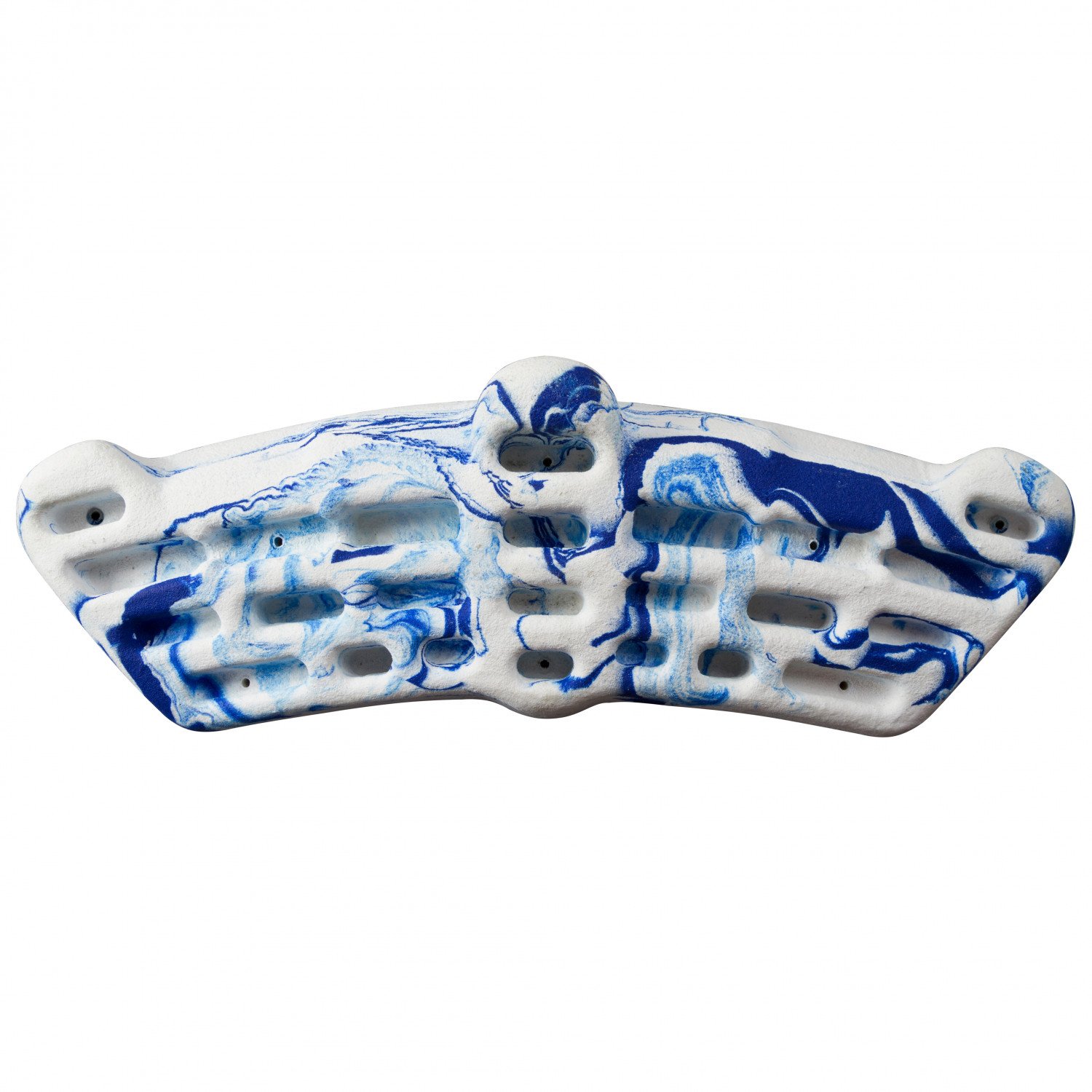
The Metolius Simulator 3D is the board that has been in more climbing gyms and home setups worldwide than any other — now in its seventh generation, it is the benchmark against which most training boards are measured. The hold count is genuinely extraordinary: jugs, flat and round slopers at 55mm and 65mm, a full ladder of edges from 36mm down to 14mm, and 2 and 3-finger pockets across multiple depths. If sheer variety of training stimuli is the priority, nothing in this comparison comes close.
The three-dimensional profile is the key ergonomic feature — the board tapers from top to bottom, which puts your forearms and elbows in a more natural position when hanging on the upper holds. This reduces shoulder and wrist stress compared to a flat board and is the reason climbers with tweaky joints specifically seek this board out. The fine-grained resin texture is considerably more skin-friendly than older generation plastic boards — not wood, but noticeably better than the coarse texture of budget resin alternatives.
The honest limitation: it is resin, not wood. Over long sessions, resin wears on skin faster than wood regardless of texture quality. It also ships from the US, which adds cost and carbon footprint for European buyers. But as a pure assessment of training value — the range of holds, the ergonomics, the included training guide, and the sheer proven track record — the Simulator 3D is hard to argue with at this price.
Best for: Climbers who want the widest possible variety of holds on a single board, those with shoulder or wrist sensitivities, and anyone who wants a proven, globally respected training tool with decades of refinement behind it.
Pros
- Most hold variety of any board in this comparison
- 7th generation design — decades of refinement
- Ergonomic arc reduces shoulder and wrist stress
- Fine-grained resin — more skin-friendly than most plastic boards
- Includes training guide — useful starting point for structured sessions
- Available on Bergfreunde DE
Cons
- Resin — harder on skin than wood over long sessions
- American brand — higher shipping cost and carbon footprint to Europe
- Edge depths not labelled in standard mm increments — harder to run precise protocols
- Large footprint — requires significant wall space
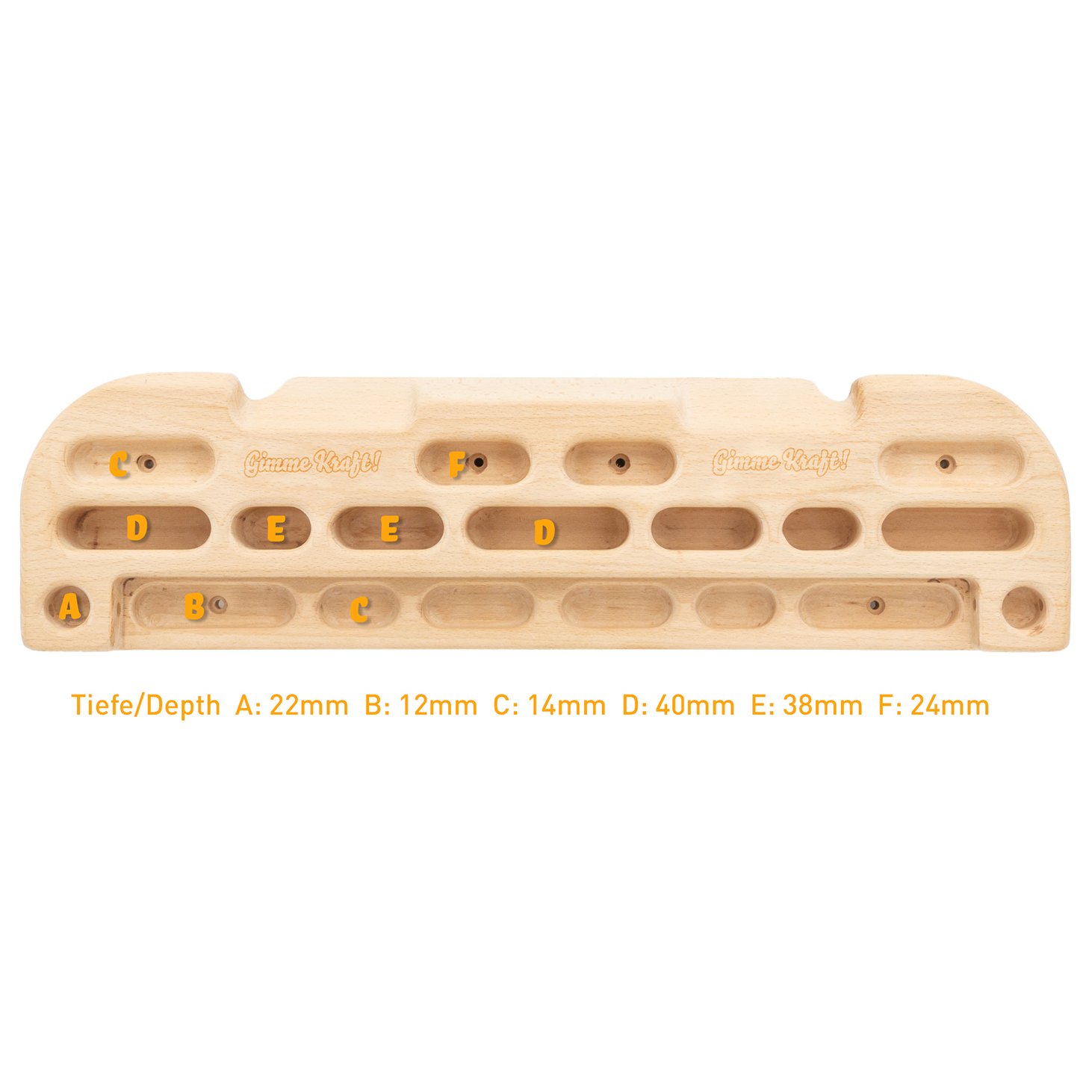
5. Café Kraft Gimme Kraft Hangboard Large
🇩🇪 The German Classic — Nuremberg climbing gym’s own board, wide hold range, 20% off
Available at Bergfreunde DE (20% off) and Alpinetrek UK
Our Testing Score
Detailed Review
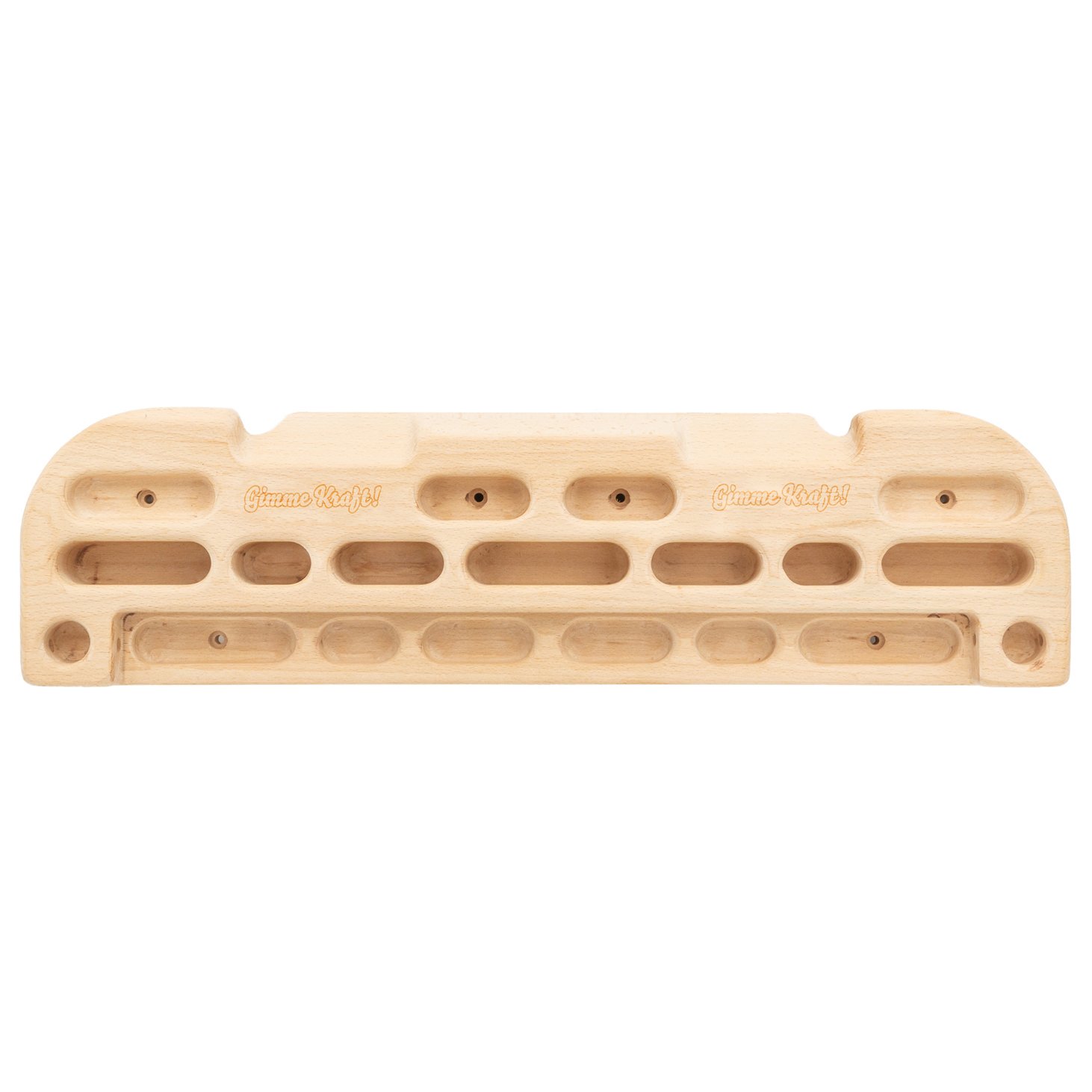
Café Kraft is a climbing gym in Nuremberg that has built a genuine reputation across German-speaking climbing culture — and the Gimme Kraft range is the product of that culture taken off the wall and put on your doorframe. The Large board (also known as the Eisenfinger) is their most comprehensive model: 1 to 4-finger pockets, slopers, and a crimp range running from a forgiving 38mm down to a demanding 13mm. At 55cm wide it gives you enough space to train full-width positions comfortably.
What makes the Gimme Kraft interesting in this comparison is that it comes from a community rather than a manufacturer. Café Kraft is primarily a climbing gym — the board exists because the people who run it wanted one for their own use, and eventually made it available. That origin shows in the hold design, which prioritises what actually works for training over what looks good in a product photo.
One honest note from reviews: some users find the edge rounding on the pockets less generous than on the Beastmaker, which can make long sessions harder on skin. The wood finish is also described as smoother than expected, which reduces chalk absorption slightly. Neither is a deal-breaker at this price, and at 20% off on Bergfreunde it represents excellent value for a board with this hold range.
Best for: Climbers who want a wide crimp range in a single board, a genuine community-rooted product, and strong value at the current discounted price.
Pros
- Wide crimp range — 13 to 38mm covers beginner through advanced
- 1 to 4-finger pocket configurations on a single board
- Community-rooted design — built by climbers for climbers
- Currently 20% off on Bergfreunde — excellent value
- Available on both Bergfreunde and Alpinetrek
- German-made — short supply chain for European buyers
Cons
- Edge rounding less generous than Beastmaker — harder on skin over long sessions
- Smoother wood finish reduces chalk absorption
- No spherical or peg-style holds
- Less international community than Beastmaker
🎯 How to Choose the Right Training Board
The single most important thing to understand before buying a hangboard is that training boards are responsible for a significant proportion of climbing finger injuries. Tendons adapt more slowly than muscles — you can feel strong enough to hang a 15mm edge weeks before your tendons are ready to absorb that load safely. A training board is not something to buy on impulse and jump straight onto at full intensity.
🪵 Wood vs resin
Wooden boards are gentler on skin, absorb chalk over time and develop friction, and feel more like real rock. They are generally better for long training sessions and skin-sensitive climbers. Resin boards offer more creative hold shapes and tend to have more variety per board, but can be harder on skin over long sessions. For home training where you use the board frequently, wood is usually the better choice.
📐 Hold depth matters more than hold quantity
A board with 30 different holds at similar depths is less useful than a board with 8 holds covering a genuine depth range from 40mm to 15mm. What enables progression is the ability to move to smaller holds incrementally as your fingers get stronger. When evaluating a board, focus on the range of depths available, not the total number of hold shapes.
| Your Situation | What to Look For | Our Pick |
|---|---|---|
| Complete beginner to hangboards | Wide grips, elastic band support, gentle introduction | YY Vertical VerticalBoard Light |
| Intermediate, want long-term board | Wide depth range, spherical option, good build quality | Gripnatic FingerPeg 1.0 |
| Want the proven classic | Community support, app, FSC wood, trusted design | Beastmaker 1000 |
| European-made, innovative design | Magnetic inserts, physio-designed, modular progression | YY Vertical VerticalBoard One |
| Maximum hold variety | Pockets, slopers, edges on one board | Metolius Simulator 3D |
| Sustainable / European-only | European wood, European maker, short supply chain | Gripnatic or YY Vertical |
⚠️ Training Boards & Injury: What You Need to Know First
This section comes after the comparisons deliberately. The boards are only useful if you stay healthy enough to use them.
✅ What reduces injury risk
- Starting on larger holds and progressing slowly
- Using an elastic band to unload bodyweight initially
- Warming up thoroughly before any hanging
- Open-hand grip position rather than full crimp
- Rest days — tendons need more recovery time than muscles
- Never training on hangboards when tendons feel strained
❌ What increases injury risk
- Jumping straight to small edges without progression
- Training to fatigue — tired tendons are vulnerable tendons
- Full crimp position on any hold smaller than 20mm
- Skipping warm-up
- Training through pain or discomfort in fingers
- Increasing intensity too quickly
The Board I Chose — and Why
After looking at all five boards, the Gripnatic FingerPeg 1.0 with spherical holds offered something none of the others did: a single board that covers finger training across six depths, four sloper angles, and an entirely different training stimulus through the spherical holds — all from a small Slovenian maker who clearly built this because they climb, not because they wanted to compete with Metolius.
In the end the decision was made easier than expected — I had been looking at it for a while, my birthday came around, and my partner made the call. Sometimes that is all it takes. The Beastmaker is genuinely excellent and I have no criticism of it. But I had already trained on one for years, and I wanted something new. If you have never had a board at home and want the safest, most community-supported choice — the Beastmaker 1000 is the answer. If you want something with more flexibility, more stimuli, and from a part of Europe that does not get enough attention for its climbing culture — go Gripnatic.
Frequently Asked Questions
Should a complete beginner buy a hangboard?
Probably not immediately. Most coaches and physiotherapists recommend having at least six months to a year of regular climbing before starting structured hangboard training, because tendons take time to adapt to climbing loads. If you start hangboarding too early, you are loading tendons that have not yet built the baseline resilience to handle it safely. The exception is a very introductory board like the YY Vertical VerticalBoard Light, used conservatively with an elastic band to reduce load — but even then, get some time on the rock first.
What grip position should I use on a hangboard?
Open-hand or half-crimp for most training. Open-hand (fingers slightly bent, no hyperextension at the first joint) is the safest and most transferable position for most training. Full crimp (thumb wrapped over fingers, significant bend at the first joint) puts much more stress on the A2 pulley and should be used sparingly if at all on a hangboard — save it for climbing, where you use it only when the hold demands it. The open-hand position builds strength that transfers well to both open-hand and crimp on the rock, while being significantly lower injury risk.
How often should I train on a hangboard?
Twice a week maximum for most climbers, especially when starting. Tendon adaptation is slow — it takes 6–12 weeks for connective tissue to respond to a new training stimulus, and overloading it during that period causes injury. Two sessions per week with full rest days between them is the standard recommendation. More experienced climbers with well-conditioned tendons may train three times per week, but this is not a starting point.
What is the difference between a hangboard and a campus board?
A hangboard is static — you hang from it, building isometric finger strength. A campus board is a series of rungs on an overhanging wall used for dynamic, explosive movements — catching rungs from below and moving between them without using your feet. Campus boards build power and contact strength; hangboards build finger endurance and maximum strength. They train different things and are often used together in a training programme, but campus boards are significantly higher injury risk and should only be used by experienced climbers with well-conditioned tendons.
Can I use a hangboard to warm up at the crag?
Some climbers do, but it is generally not recommended as a primary warm-up tool. A hangboard activates fingers intensely without the full-body engagement of climbing — using one cold as a warm-up is a recipe for tendon stress before the climbing even starts. Better warm-up options are easy climbs or traversing at the crag, progressing from very easy terrain to your project grade. If you do use a hangboard to warm up, use the largest, most comfortable holds only and treat it as activation rather than training.
Wood or resin — which is better?
For home training, wood is generally better. Wooden boards are gentler on skin, absorb chalk and develop character over time, look significantly better on a wall, and feel more like actual rock. Resin boards offer more creative hold shapes and are often available at lower price points, but the skin toll over long sessions is real. If you are training frequently at home — which is the point — wood is worth the extra cost.
🔍 Semantic & Keyword Index
Primary: best climbing training boards 2026 · best hangboard for climbing Europe · climbing fingerboard comparison · home climbing training board · Secondary: Gripnatic FingerPeg review · Beastmaker 1000 review · YY Vertical VerticalBoard review · Metolius Simulator 3D hangboard · wooden hangboard Europe · spherical holds hangboard · hangboard beginner guide · climbing finger strength training · Long-tail: best hangboard for intermediate climbers · hangboard injury prevention · wood vs resin hangboard · European climbing hangboard · Beastmaker vs YY Vertical · hangboard training frequency · open hand vs crimp hangboard · sustainable climbing training gear Europe · Gripnatic FingerPeg 1.0 spherical holds review · YY Vertical VerticalBoard One magnetic inserts
🧗 Explore Our Climbing Guides
Detailed crag guides from our van life climbing adventures across Europe