Petzl Bug Review — The Crag Pack That Can Also Carries Your Laptop
Don’t waste money on gear you don’t need. Check out our full 2026 breakdown of the essentials for every new climber.
View the 2026 Starter Pack →| Capacity | 18 litres |
|---|---|
| Weight (empty) | 665 g |
| Material | Exterior 100% recycled polyester (eco-design); TPU, EVA, polyurethane, nylon and aluminium components; high-strength lining on the base |
| Frame / Back System | Frameless — low-profile back panel, ergonomic padded shoulder straps |
| Access | Top-load, plus large exterior zip pocket and two interior zip pockets |
| Hydration Compatible | Yes — padded interior sleeve doubles as laptop or hydration sleeve |
| Rain Cover / Waterproofing | No cover included, no waterproof rating stated by Petzl |
| Colours | Black · Orange · Smoked Blue |
| Guarantee | 3 years |
| Best For | Multi-pitch · Day cragging · Everyday and travel use |
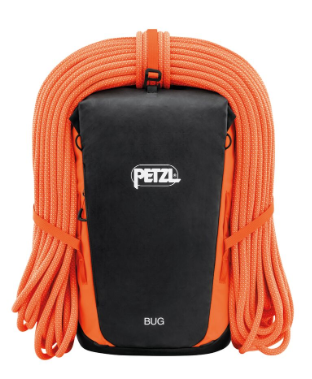
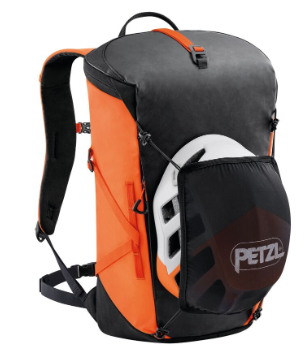
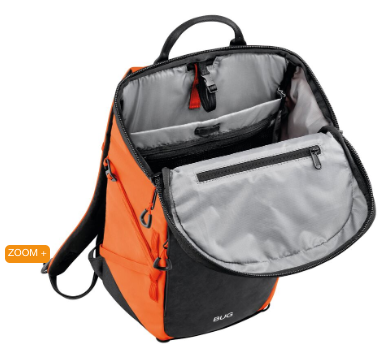
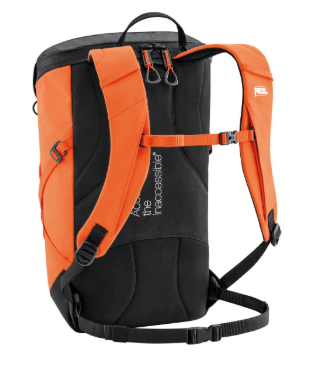
Front view — the 18-litre low-profile shape
How It Rates
The climbing packs, ranked and scored
One pack’s rarely the whole story. See the Bug ranked against its rivals — crag, alpine, winter and hauling — and find your perfect match.
Read the backpacks guide →In This Review
Where to Buy the Petzl Bug
Support your local climbing shop first. If it’s out of stock, these two trusted retailers ship across Europe:
Bergfreunde
Germany-based, EU shipping
€89.95
check live price and stock
Check price at Bergfreunde →Prices shown are approximate — tap through for current pricing and stock.
Why This Pack Matters for Van Life Climbers
The short version of this Petzl Bug review: it is the only pack in our 2026 backpacks comparison that Petzl designs explicitly for two jobs — multi-pitch climbing and everyday use — and it’s the one most likely to end up doing both in a van.
Why the Petzl Bug Has to Do Everything
Van storage punishes single-purpose gear. A pack that only works at the crag competes for cupboard space with the one that carries the laptop into a café and the shopping back from a market. The Bug is built for that overlap: a padded internal sleeve takes a laptop or a hydration bladder, and the climbing features come off when you don’t want them.
Which Bug This Review Covers
Petzl has revised this pack, and the difference matters. The current eco-design Bug (references S073AB00, AB01 and AB02) uses an exterior fabric of 100% recycled polyester and weighs 665 g. The previous nylon version weighed 525 g on Petzl’s own listing, and OutdoorGearLab measured 510 g — so the current pack is around 140–155 g heavier. It isn’t all penalty: OutdoorGearLab’s one wish for the old Bug was a removable hip belt rather than one that tucked away, and Petzl have made exactly that change, with replacement waistbelts now sold as a spare part. Most published Bug reviews — including OutdoorGearLab’s — and a lot of retailer spec tables still online describe that older, lighter pack. If a listing quotes 0.5 kg or says the pack is nylon, it isn’t the one you’ll receive.
Build & Materials
How It’s Made
The exterior is 100% recycled polyester, with TPU, EVA, polyurethane, nylon and aluminium making up the fittings and structure. Petzl reinforces the base with a high-strength lining — a sensible place to spend weight, since the bottom panel is where crag packs die first. The trade for the recycled fabric and the reinforcement is mass: at 665 g this is no longer a lightweight pack by the standards of its own size class.
Fittings & Features
For 18 litres the Petzl Bug’s feature count is high: side compression straps, an adjustable strap across the top for carrying a rope, an adjustable and removable waistbelt, an adjustable sternum strap, a large exterior zip pocket, two interior zip pockets, a padded interior sleeve, and a removable helmet holder. Petzl sells the waistbelt (in packs of two) and the helmet holder as spare parts, which is a quietly good sign — the parts most likely to break or get lost are replaceable rather than terminal. The pack carries a three-year guarantee.
Capacity & Organisation
What 18 Litres Actually Holds
Petzl’s stated brief is a harness, shoes and clothes in the main compartment, with the rope strapped under the top strap rather than stuffed inside. That’s the realistic loadout: a single-pitch sport day for one climber, or the personal half of a multi-pitch kit while your partner carries the rope. It is not a pack for a full trad rack plus rope for two.
Organisation Is the Selling Point
This is where the Bug separates itself from the stripped-back competition. Most packs at this size give you one hole and a lid pocket. The Bug adds a large exterior zip pocket for the things you grab constantly, two interior zip pockets for keys, phone and tape, and the padded sleeve. One honest caveat from OutdoorGearLab’s testing: that exterior pocket gets hard to open once the main compartment is full. If you have ever emptied an entire crag pack onto the ground looking for a phone, the appeal is obvious — and it’s the same feature set that makes it work as a town bag.
Top Access at the Belay
It opens from the top, which Petzl specifically pitches as the practical option at a hanging belay: you can get into it clipped to an anchor without the wide-mouth spill risk of a big offset zip. The compromise is the usual one — slower rummaging at the base of the crag than a panel-loading pack.
Comfort & Carry
On the Approach
Ergonomic padded shoulder straps, an adjustable sternum strap and a removable waistbelt make up the carry system; there is no frame or framesheet. For 18 litres of crag kit on a 20–60 minute walk-in, that is enough. What the extra 100–140 g over the previous version buys is padding and reinforcement rather than dead weight — the shoulder straps and the high-strength base lining are where it goes. That’s the honest counterweight to the weight gain, though nobody has yet published long-term carry testing on the eco-design version.
On the Route
The low-profile shape is designed to sit snugly against your back rather than lever away from it, which is what you want when seconding a pitch with a pack on. Strip the waistbelt and the helmet holder and it climbs cleaner still. Against dedicated alpine packs it gives away close-fitting refinement; against general daypacks it is in a different league.
Van Life Considerations
Living in a Gear Cupboard
Frameless and soft-sided, the Petzl Bug squashes into gaps that structured packs won’t take. The recycled polyester exterior wipes down, and the reinforced base is the panel that meets grit, gravel and van floors — the right place for the toughest fabric. As with any polyester or nylon pack, keep it out of prolonged direct sun through a window; UV is what ages these fabrics in storage.
The Everyday Argument
This is the strongest van-life case for the Bug and the reason it scores well here despite the weight. OutdoorGearLab’s testers put it plainly after a season with the previous version: the Bug doesn’t “scream climbing nerd”, they were happy using it around town, and it’s “more than capable of toting around a laptop” with room left for a light grocery run. The padded sleeve takes that laptop, the zip pockets keep daily clutter in order, the helmet holder comes off so it doesn’t look like climbing hardware. Petzl don’t publish dimensions, so check the pack against your airline’s sizer rather than assuming 18 litres qualifies as a free personal item — the limits at Ryanair and easyJet are tighter than the volume suggests. One pack that covers crag days, café work and weekends away is worth more van space than two specialised ones.
The Wet-Kit Caveat
Petzl publishes no waterproof rating and includes no rain cover. Treat it as shower-resistant at best: a liner bag or dry bag for anything that must stay dry, particularly given that the interior sleeve is likely carrying electronics.
Pros & Cons
Pros
- Genuinely dual-purpose — climbing pack and everyday bag
- Best organisation in its size class: exterior zip pocket, two interior pockets, padded sleeve
- Hydration or laptop sleeve included
- Removable helmet holder and waistbelt — both available as spare parts
- Rope carry strap and side compression straps
- Exterior fabric 100% recycled polyester
- Reinforced high-strength base panel
- Three-year Petzl guarantee
Cons
- 665 g — heavier than several larger packs, and up on the previous version
- No longer the lightweight budget option many older reviews describe
- No rain cover and no stated waterproofing
- Frameless, no back-length options
- 18 L is tight for trad days or carrying kit for two
- Top-load access is slower than a panel zip at the crag
- No clip to secure a hydration bladder — full 2–3 L reservoirs can flop or fold
- Exterior zip pocket is awkward to reach when the pack is stuffed
- Sternum buckle isn’t a whistle, unlike several rivals
How It Compares
Petzl Bug vs Black Diamond Blitz 28
Everyday all-rounder versus alpine specialist. The Blitz carries 10 more litres for 250-odd grams less, but it’s a stripped ultralight built for fast alpine days and thin-fabric careful ownership. The Bug is the one you use every day of the week.
Read our Blitz 28 review →Petzl Bug vs Patagonia Ascensionist 35
Crag bag versus mountain load-carrier. The Ascensionist is nearly twice the volume at 771 g with a supportive carry and three back lengths, for days that need rope, rack and layers. The Bug costs far less and handles the other 80% of the year. Plenty of climbers own exactly this pair.
Read our Ascensionist 35 review →Petzl Bug vs Blue Ice Warthog 30
Everyday bag versus winter mountain tool. The Warthog is 30 litres at 630 g — lighter and bigger than the Bug — with ice tool sleeves, a strippable frame and two back-length fits. It’s the better pack for anything involving snow; it has no interest in carrying your laptop. If your year stops at rock, the Bug does more for less.
Read our Warthog 30 review →Petzl Bug vs Black Diamond Creek 35
Wear-it pack versus haul-it pack. The Creek is a 1,660 g stand-up gear barrow for moving everything from van to crag; the Bug is what you actually climb and travel with. They pair rather than compete.
Read our Creek 35 review →Petzl Bug Review: Final Verdict
The Bug has quietly changed identity. It used to be recommended as the light, cheap sport-crag pack; the current eco-design version is a heavier, better-organised, more versatile bag — and it should be judged on what it is now.
The strengths: the best pocket layout in its size class, a padded sleeve that takes a laptop or a bladder, a removable helmet holder and waistbelt with spare parts available, a reinforced base, recycled exterior fabric and a three-year guarantee. The trade-offs are equally clear: 665 g is heavy for 18 litres, there’s no rain cover or stated waterproofing, and it can no longer be sold as the featherweight option.
Buy it if you want one pack that climbs multi-pitch on Saturday and carries a laptop on Monday — which describes most people living out of a van. If your priority is the lightest possible pack, look at the Blitz 28; if it’s alpine capacity with a supportive carry, look at the Ascensionist 35.
Frequently Asked Questions
How much does the Petzl Bug actually weigh?
The current eco-design Bug (ref S073AB) weighs 665 g. Older listings and reviews quote 525–570 g, but those describe the previous nylon version, which Petzl has replaced. If weight is your deciding factor, use the 665 g figure.
Is the Petzl Bug hydration compatible?
Yes. The padded interior sleeve is designed to take either a hydration system or a laptop, which is unusual at this size and one of the main reasons the Bug doubles as an everyday pack. The bladder isn’t included — and note that OutdoorGearLab found there’s no clip to secure the top of a reservoir, so a full 2–3 litre bladder can flop about or fold over and restrict flow. A smaller bladder, or one with a rigid top, avoids it.
Can the Petzl Bug carry a rope and a helmet?
Both. There’s an adjustable strap across the top of the pack for a rope, side compression straps to hold it steady on the approach, and a removable helmet holder. Petzl sells replacement helmet holders and waistbelts as spare parts.
Is the Petzl Bug waterproof?
No. Petzl publishes no waterproof rating and supplies no rain cover, so treat it as shower-resistant only. Use a liner or dry bag in wet climates — especially relevant here, since the internal sleeve is often carrying a laptop.
Is 18 litres enough for a day at the crag?
For one climber at a sport crag, yes: harness, shoes, chalk, layers and food fit inside, with the rope carried under the top strap. For a full trad rack, or carrying kit for two, you want 30 litres or more — see the Ascensionist 35 or Creek 35 in our comparison.
Not sure it’s the right pack?
See the Bug scored against the rest of the lineup — crag, alpine, winter and hauling — in our full 2026 comparison.
Read the backpacks guide →Related Climbing Guides

🧗 Explore Our Climbing Guides
Detailed crag guides from our van life climbing adventures across Europe