Best Climbing Shoes for Beginners 2026
Five beginner climbing shoes reviewed and rated.
I have been climbing in the same model of shoe for five years now (May 2026). Same brand, same size, bought new once when the sole weared out. I resole the previous pair rather than bin it. That is not loyalty for its own sake. It is what happens when you find a shoe that genuinely fits your foot.
I started in the women’s version of the same model — a retailer at a climbing shop in London pointed me toward it because the women’s last is slightly narrower and suited my foot better. They were right. The right shoe is the one that fits your specific foot, not the one that tops a list.
📊 Quick Comparison Table — Best Beginner Climbing Shoes 2026
Five shoes covering different foot shapes, budgets, and climbing styles. Each review below goes into full detail — use this table to find your starting point.
| Shoe | Price | Closure | Sole | Fit | Best For | Score |
|---|---|---|---|---|---|---|
| La Sportiva Finale | €121.46 €134.95 · from €97.50 on VE | Lace | Vibram XS Edge 5mm | Medium — narrow heel | Our Pick | 9.3/10 |
| Scarpa Origin | ~€95 / ~£100 · 10% off at Bergfreunde | Velcro | Vision Rubber (5mm) | Wide — generous toebox | Best Wide Fit | 9.1/10 |
| Evolv Defy | ~€89 / ~£85 · 10% off at Bergfreunde | Velcro or Lace | Trax SAS 4.2mm | Medium — asymmetric | Best Value | 8.8/10 |
| Scarpa Helix | ~€95 / ~£85 · women’s prev. model €64.98 | Lace or Velcro | Vibram XS Edge 3.5mm | Flat — neutral | Best Slab | 9.1/10 |
| Black Diamond Momentum | €87.35 / £78.15 · women’s clearance €45.48 | Velcro | Rubber Fusion 2mm+5mm | Wide — comfortable | Best First Shoe | 8.7/10 |
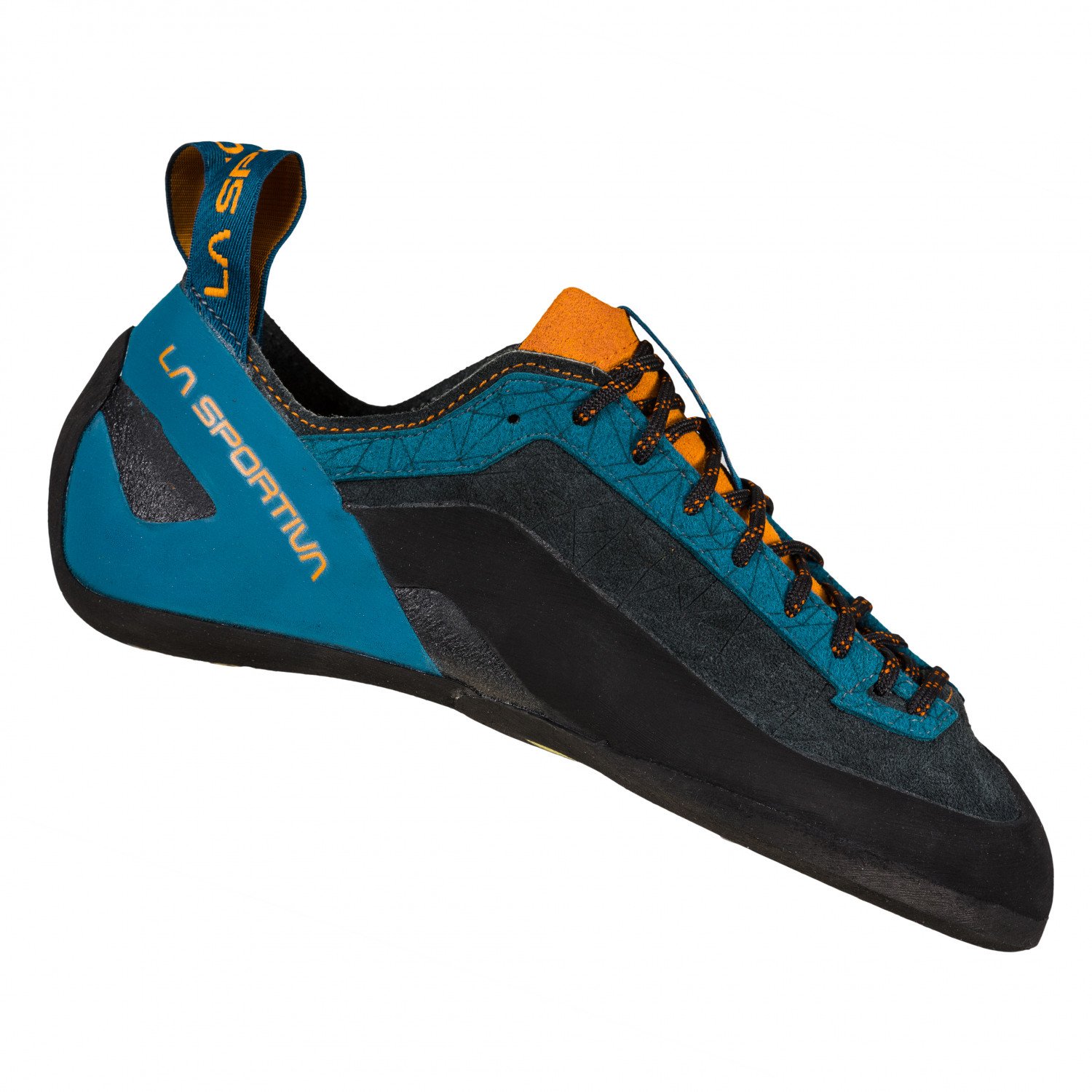
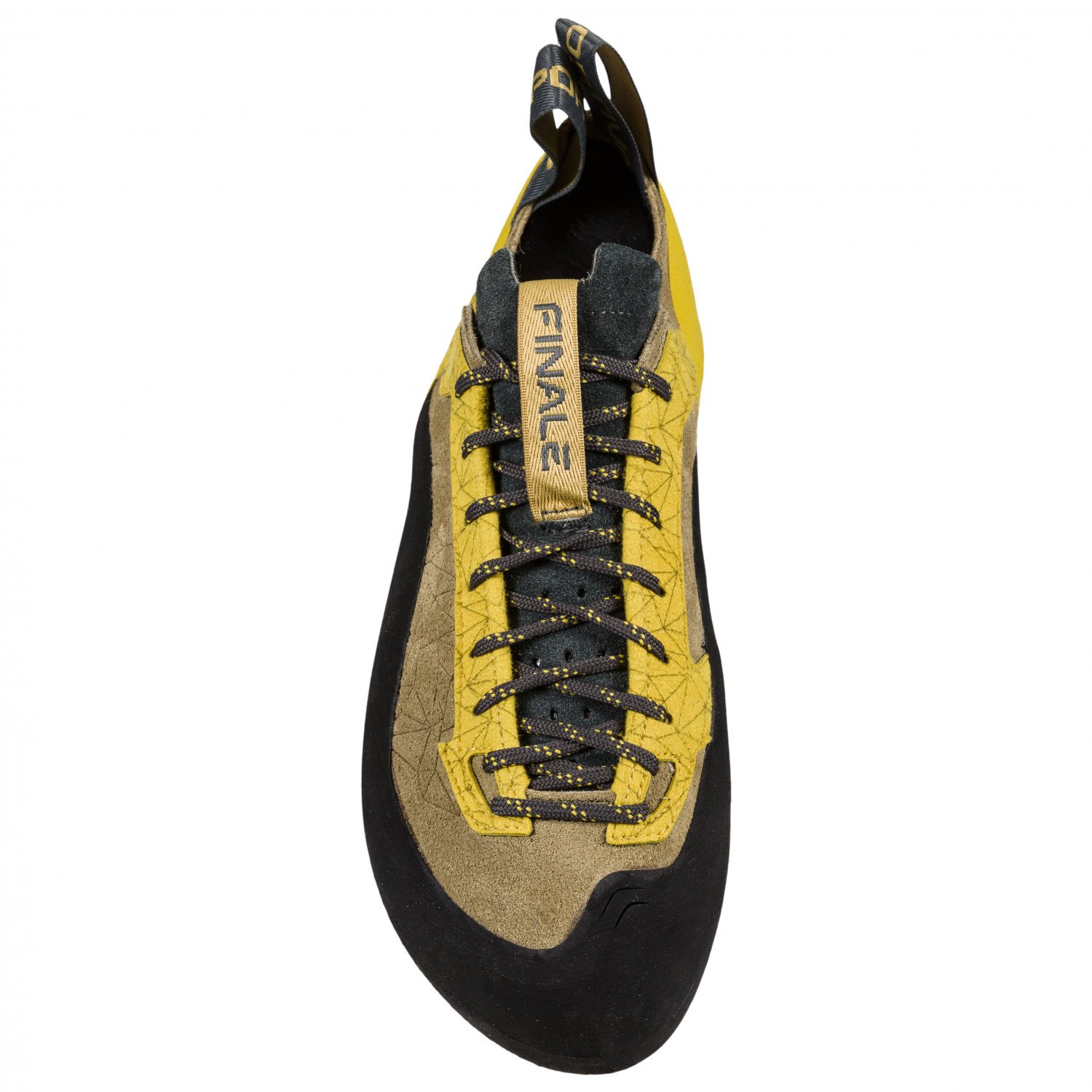
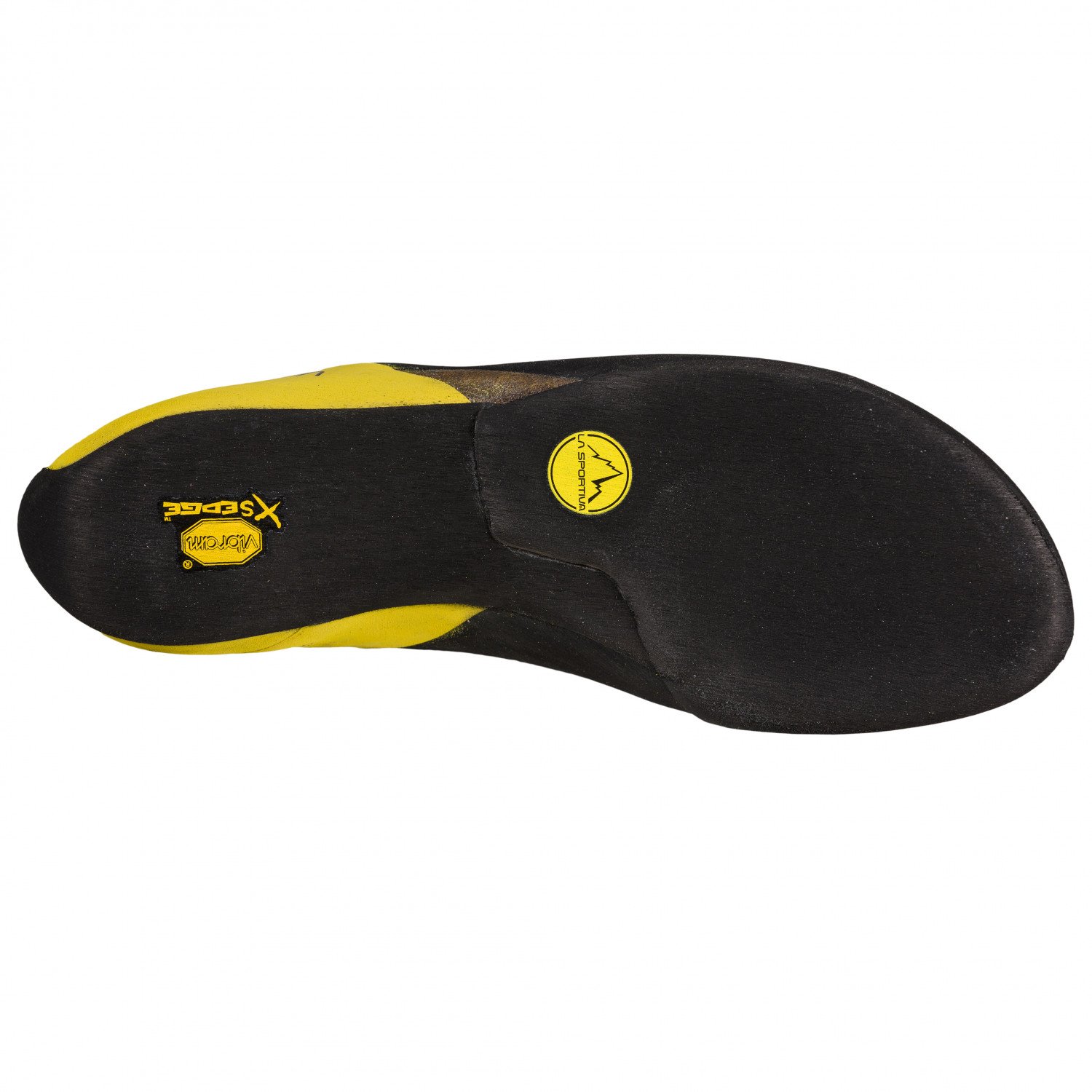
1. La Sportiva Finale
🏆 Our Personal Pick — the shoe I have bought the same model and size for five years running
Available at Bergfreunde DE with 10% off, Vertical Extreme DE (only €97.50!), Alpinetrek UK (£121.46, reduced from £134.95)
Our Testing Score
Detailed Review
I started in the women’s version of the Finale — the person in the shop pointed me toward it because the women’s last is slightly narrower with a smaller heel cup, and it suited my foot better than the men’s version at the time. After a couple of years I switched to the men’s version and have been buying the same model and same size every time since. That is five years of the same shoe, which tells you everything you need to know about how much I trust it.
The Finale sits in an interesting position in the La Sportiva range: it is marketed as a beginner shoe, but it performs genuinely well outdoors across a variety of terrain. The Vibram XS Edge sole is significantly better rubber than you find on most shoes in this price range — stickier, more durable, and more consistent across different rock types. I have used these on limestone in Spain and France, granite in Portugal, and sandstone in Germany and they have performed reliably across all of it.
I am a street shoe EU43 and my Finales are EU40. That is three full sizes down, which sounds alarming until you understand that the Finale breaks in over sessions, moulding to the shape of your foot until what felt punishingly tight in the shop becomes exactly right on the rock. La Sportiva’s guidance is to size down about half to one full EU size for comfort— I went further because my foot shape suited it. The right sizing depends on your foot, not a formula. Which is why the next section of this guide about how to choose matters more than any specific number.
Closure note: The Finale is lace-up only — no velcro version exists. The lace closure gives a precise, adjustable fit but is slower to get on and off than velcro alternatives.
Best for: Beginners and intermediates who want a shoe they will still be climbing in years from now. The Finale is comfortable enough to learn in and capable enough to progress with — a rare combination at this price.
Pros
- Vibram XS Edge — significantly better rubber than competitors at this price
- Leather upper moulds to your foot over time
- Comfortable enough for full-day sessions
- Available in both men’s and women’s lasts — try both
- Resoleable — extends life substantially
- Works well outdoors on varied European rock types
Cons
- Not ideal for steep overhanging routes — flat last limits power on roofs
- Leather stretches — will need re-tightening as it breaks in
- Lace closure slower to get on and off than velcro
- Not the widest toebox — may not suit very wide feet
2. Scarpa Origin
👣 Best for Wide Feet — generous fit, high-mileage comfort, Italian construction
Available at Bergfreunde DE (10% off currently), Vertical Extreme DE (€109.90) and Alpinetrek UK (£100.76, discount included)
Our Testing Score
Detailed Review
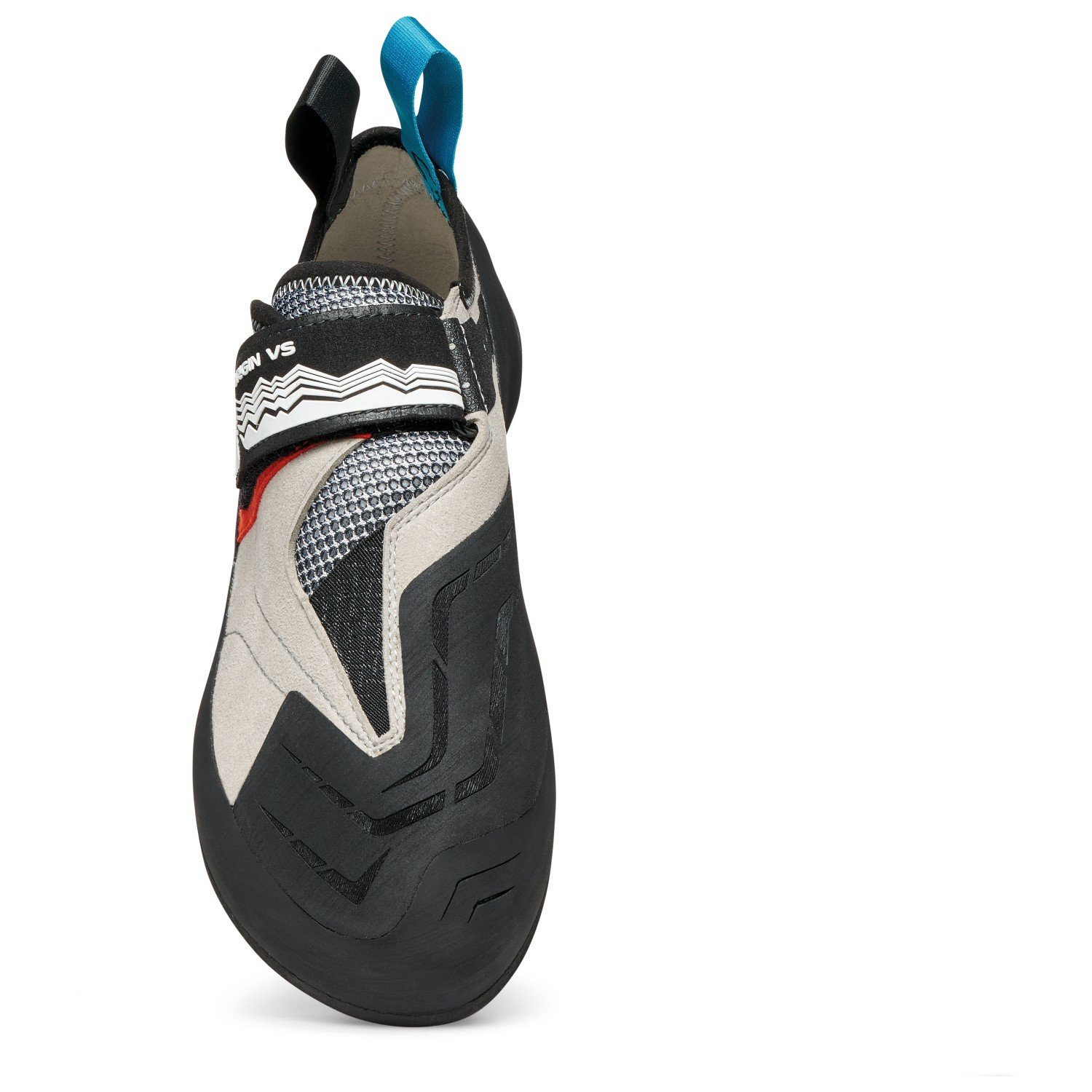
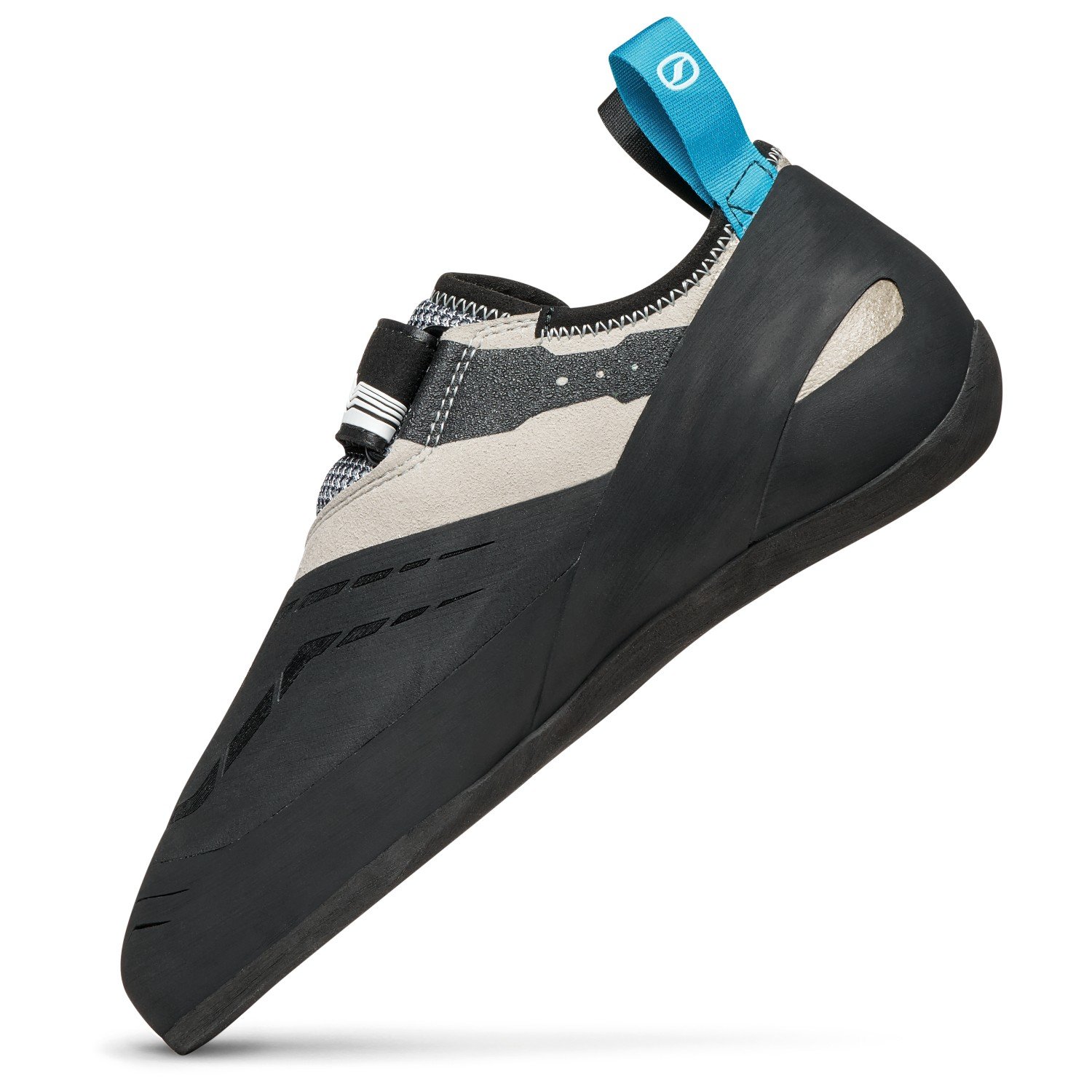
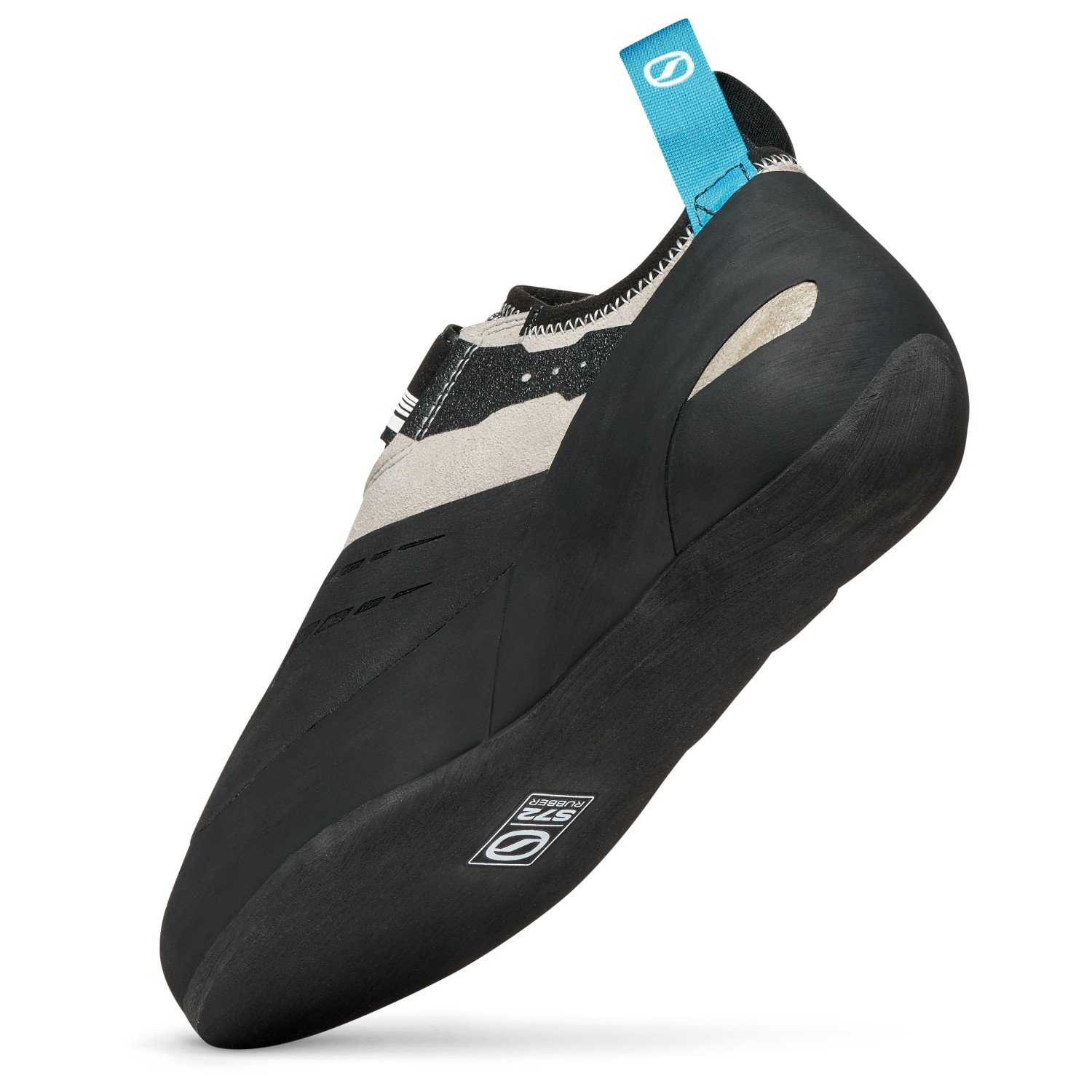
The Scarpa Origin is the shoe that people with wider feet often end up in after trying La Sportiva and finding the fit too narrow. The last is noticeably more generous — particularly in the toebox — and the leather upper has more volume than its Italian competitor. For climbers whose toes splay naturally or whose forefoot is wider than their heel, the Origin simply fits better than anything from La Sportiva’s beginner range.
The 5mm Vibram XS Edge sole is the same rubber compound used on the Finale — so there is no compromise on grip quality. Where the Origin earns its recommendation for beginners is the combination of that rubber quality with exceptional all-day comfort, which matters enormously when you are learning. A beginner in comfortable shoes will spend more time on the wall, place their feet more confidently, and develop better technique than a beginner in shoes that hurt. The Origin is one of the best shoes available for pure beginner comfort without sacrificing performance.
It is worth noting the Origin is also an excellent trad climbing shoe for experienced climbers — the stable 5mm sole and generous fit make it ideal for crack climbing and long routes where comfort over sustained use matters. A shoe that serves a beginner well and still gets reach for on multi-pitch days years later is genuinely good value.
Closure note: The Origin comes with twin velcro straps only — no lace version. The velcro makes it fast on and off, which is practical for gym sessions and beginners still finding their feet.
Best for: Climbers with wide or high-volume feet, anyone who found La Sportiva too narrow, and beginners who want maximum comfort while learning technique.
Pros
- Best fit for wide feet of any shoe in this comparison
- Vibram XS Edge — same high-quality rubber as La Sportiva Finale
- 5mm sole — extremely durable for high-mileage beginners
- Comfortable enough for crack climbing and trad later on
- Italian construction — reliable build quality
Cons
- Very flat sole — less performance on steep overhanging routes
- Heavier than more aggressive alternatives
- Less precise than downturned alternatives on technical footholds
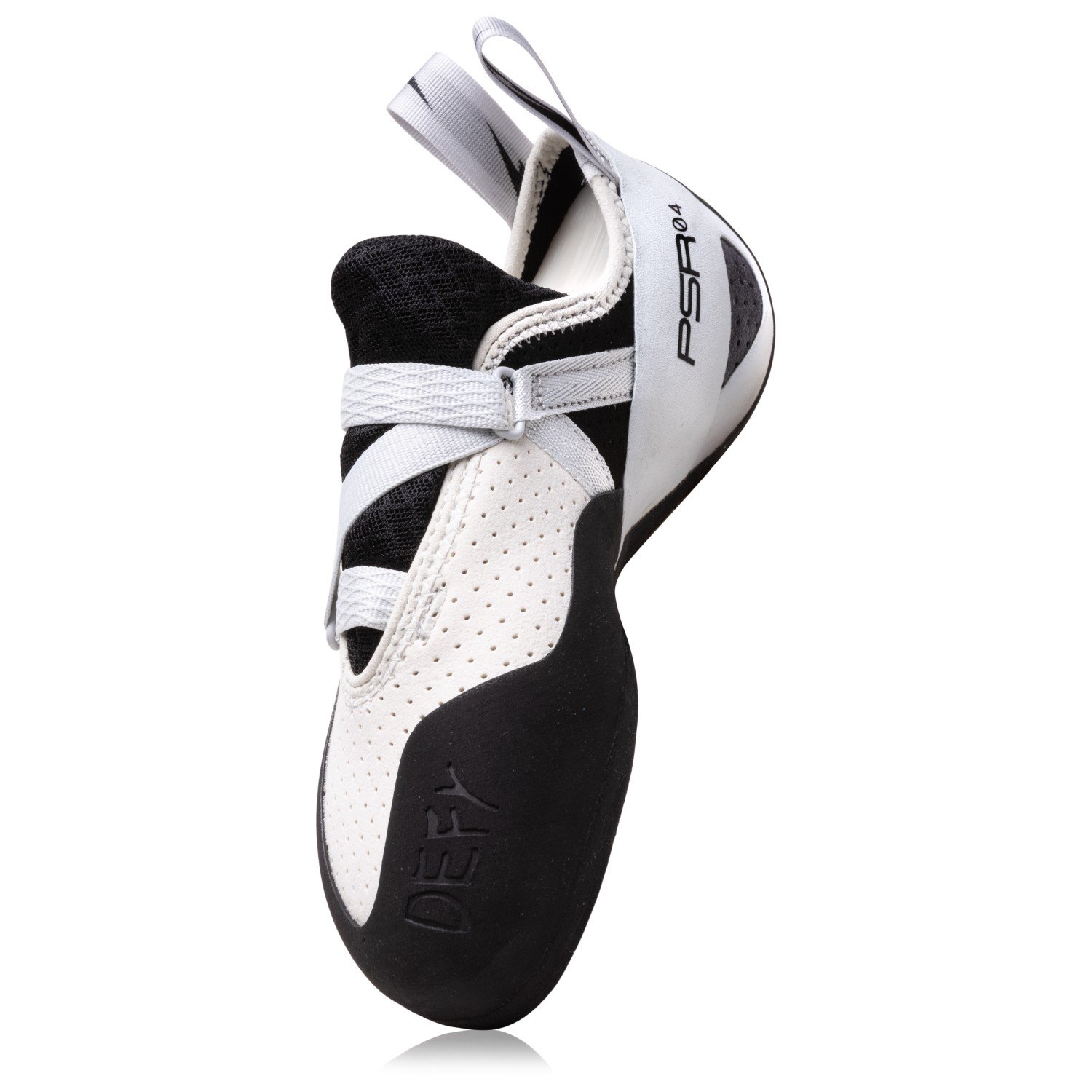
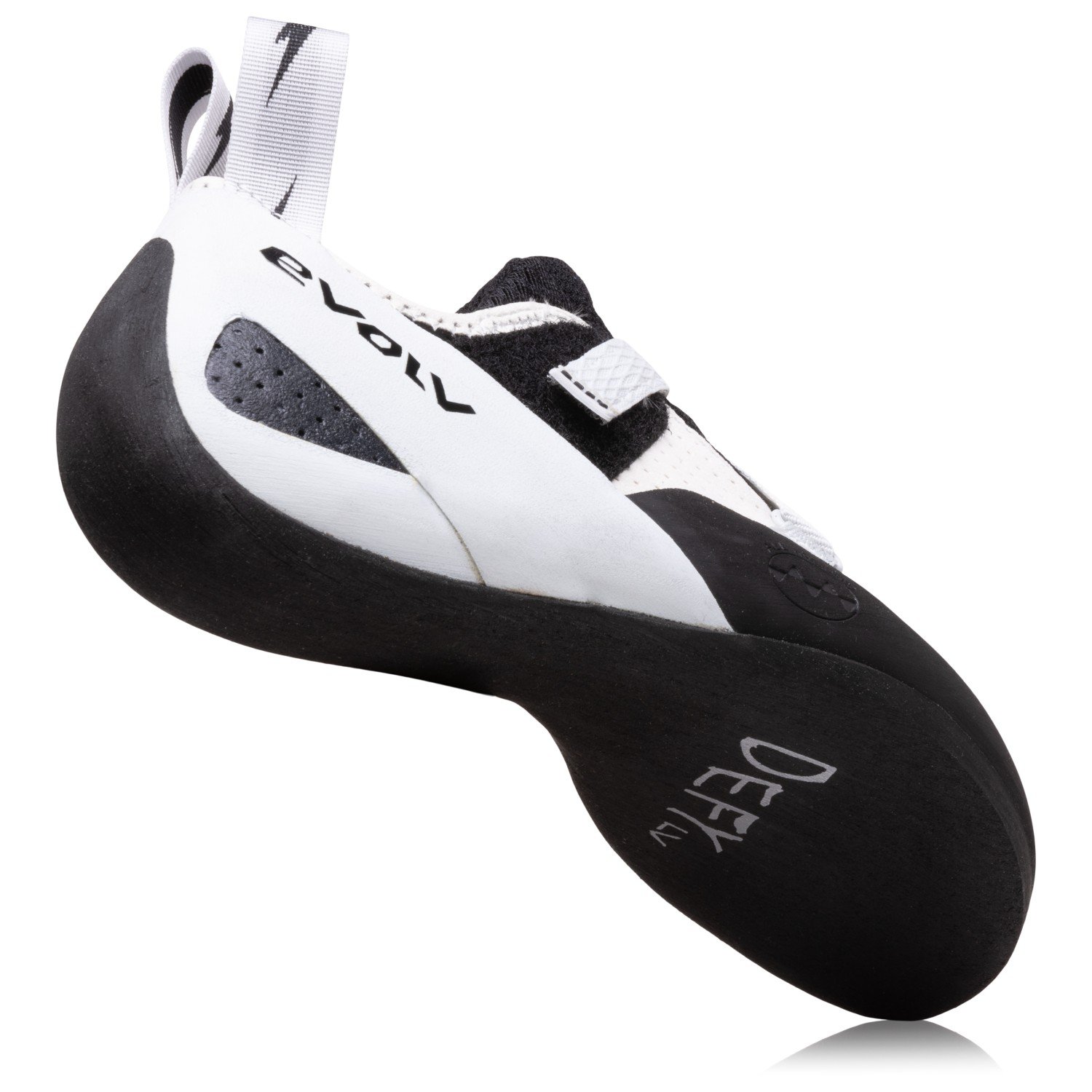
3. Evolv Defy
💰 Best Value — vegan, fast-on, better rubber than the price suggests
Available at Bergfreunde DE (10% off, velcro version), Vertical Extreme DE (€93.95) and Alpinetrek UK (£85.46, reduced price)
Our Testing Score
Detailed Review
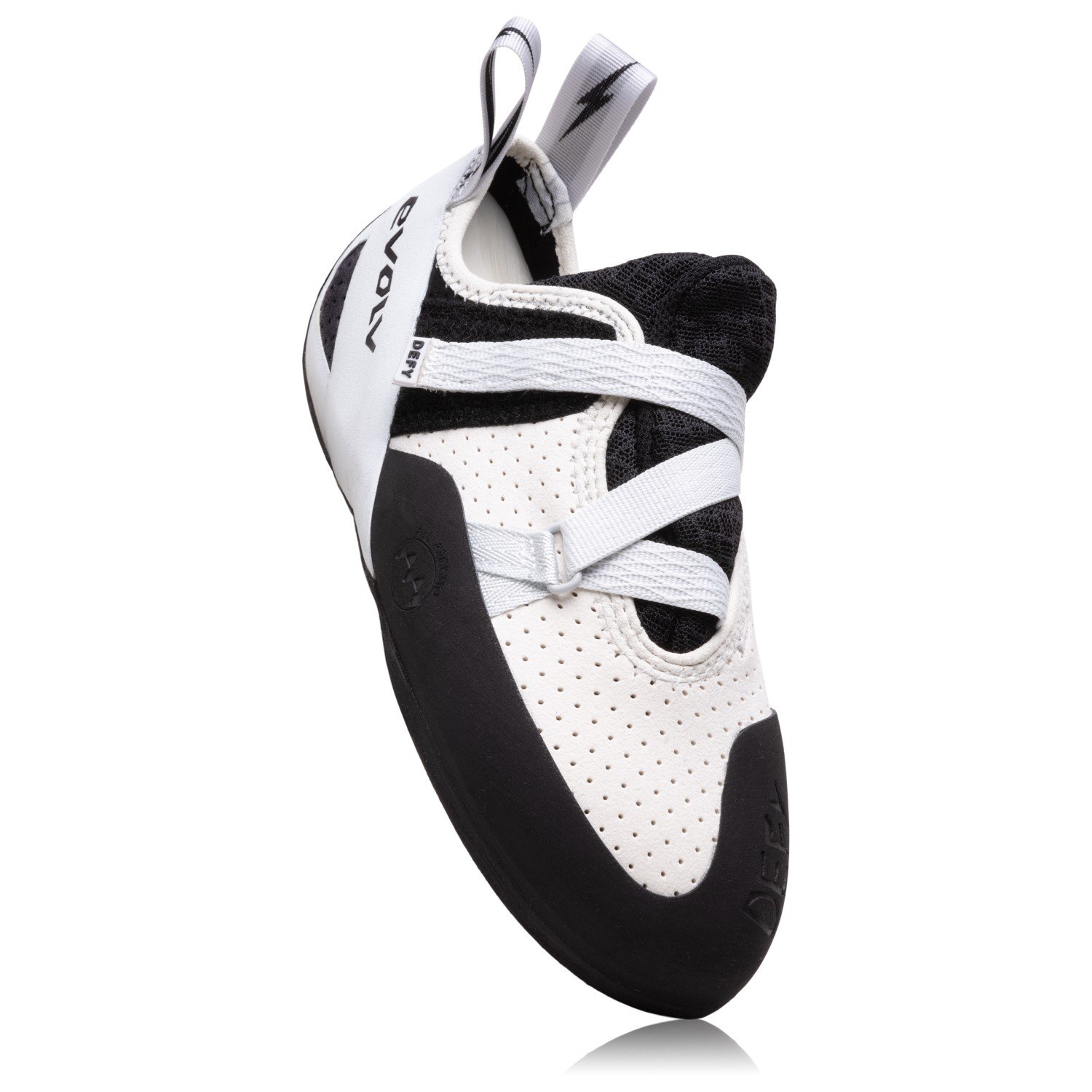
The Evolv Defy is the shoe that dominates indoor climbing walls across Europe — you will see more pairs of these in gym lost-and-founds and on beginners’ feet at sport crags than almost any other model. The reason is simple: at around £85, with dual velcro closure, a synthetic upper that does not stretch significantly, and Trax rubber that outperforms its price point, it delivers everything a beginner needs without asking for a major financial commitment.
The synthetic upper is both an advantage and a limitation. Unlike leather, it stretches very little — which means the fit you buy is roughly the fit you keep, which makes sizing more straightforward. It also means the shoe does not mould to your foot the way leather does, so getting the fit right in the shop is important. The velcro closure is a genuine practical benefit for gym climbers who take their shoes on and off dozens of times a session.
The Defy is notably good for bouldering and steep gym climbing — the slight asymmetry in the sole gives it more power transfer on holds than a purely flat shoe. For outdoor use on friction slabs or long routes, it is less at home than leather alternatives with thicker soles. But as an introduction to the sport and a gym training shoe, it is hard to beat at this price.
Closure note: The Defy comes in both velcro (softer, more sensitive) and lace versions. The lace version (Defy Lace) is slightly stiffer with more edging power — worth considering if you prioritise precision over ease of use.
Best for: Gym-focused beginners, bouldering, anyone who wants an affordable first shoe with minimal commitment, and vegan climbers.
Pros
- Most affordable quality shoe in this comparison
- Velcro — fast on and off for gym sessions
- Synthetic upper — minimal stretch, easier to size
- Good performance for bouldering and indoor use
- Fully vegan construction
Cons
- Trax rubber less sticky than Vibram XS Edge outdoors
- Synthetic upper does not mould to the foot like leather
- Less suited to friction slab climbing outdoors
- Thinner sole wears faster on rough rock
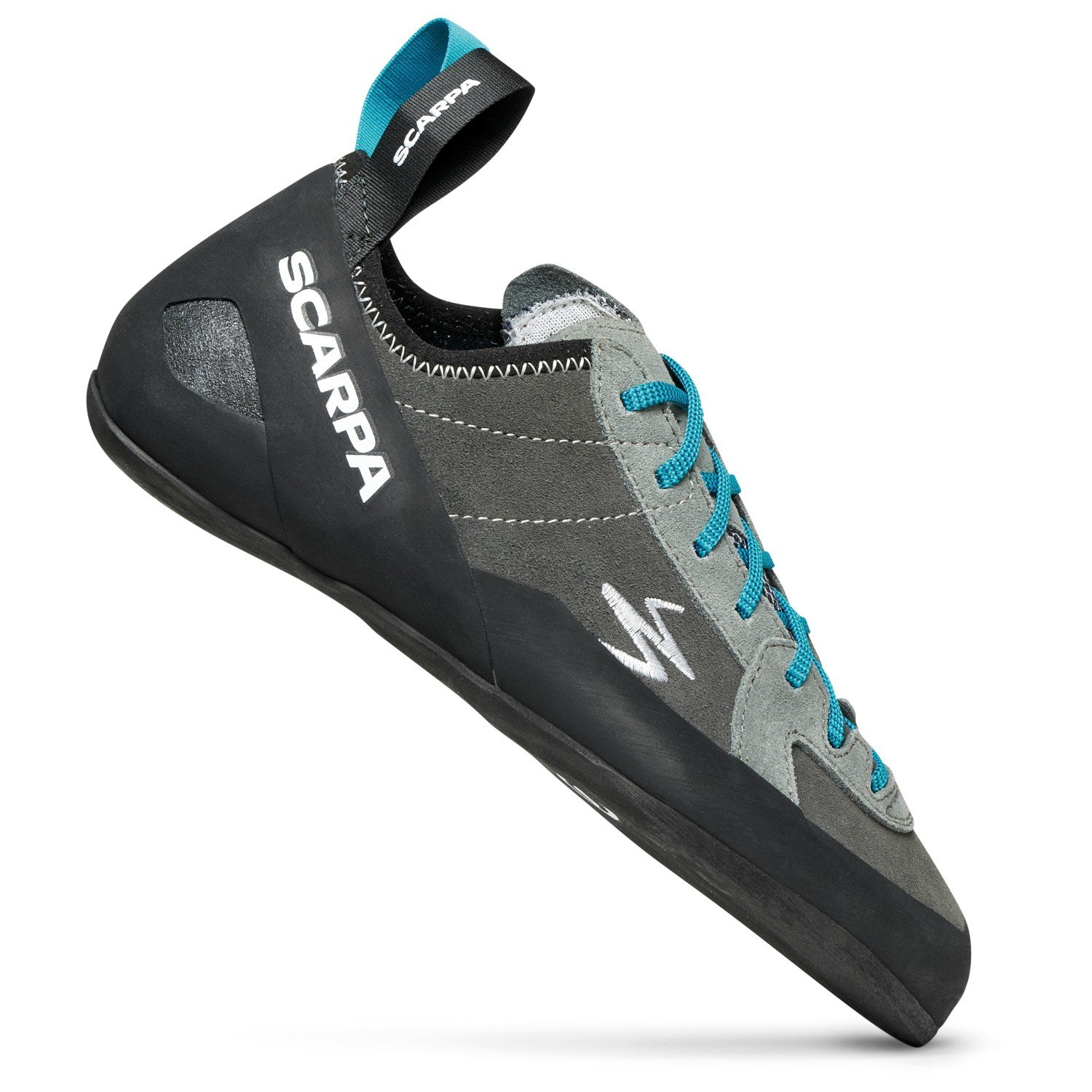
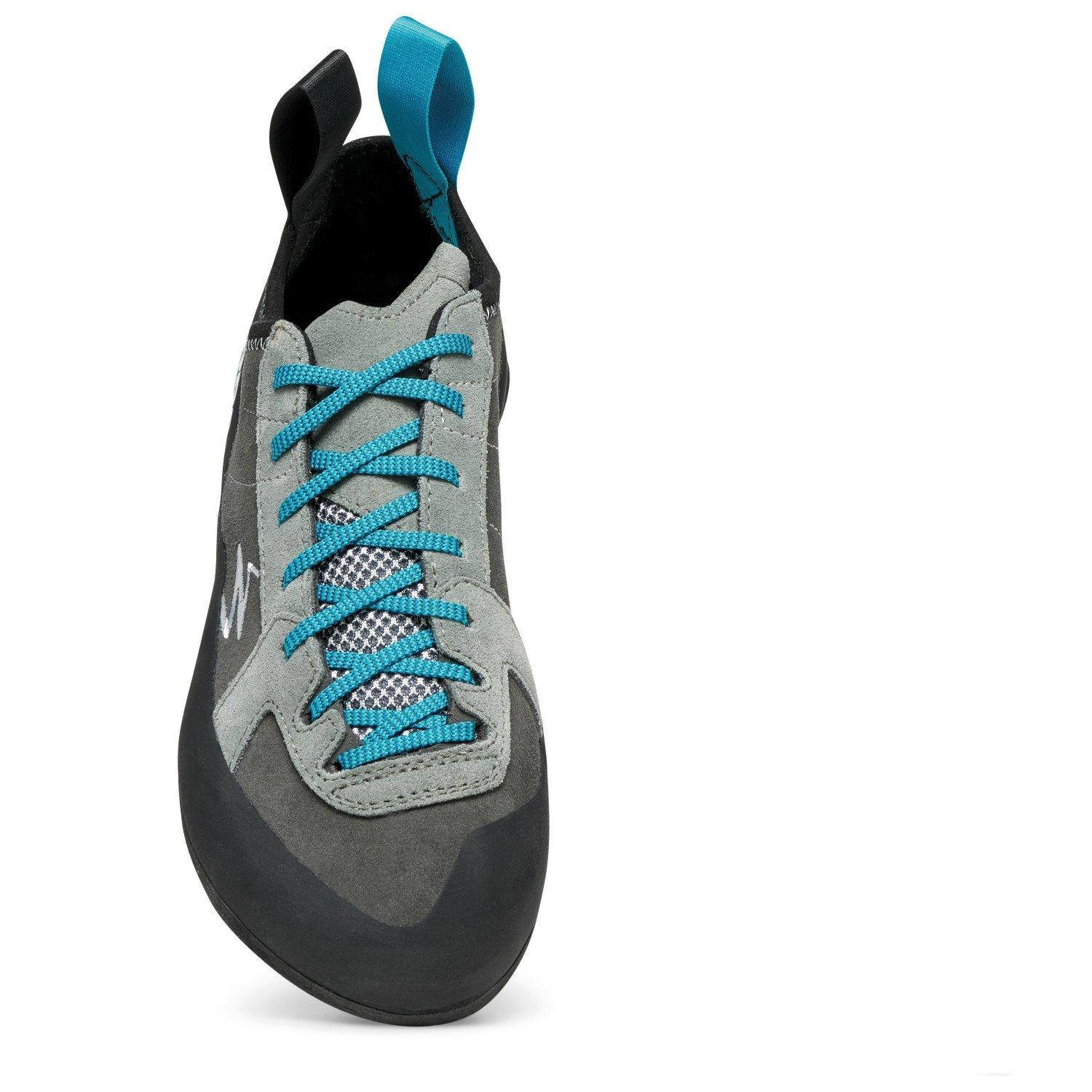
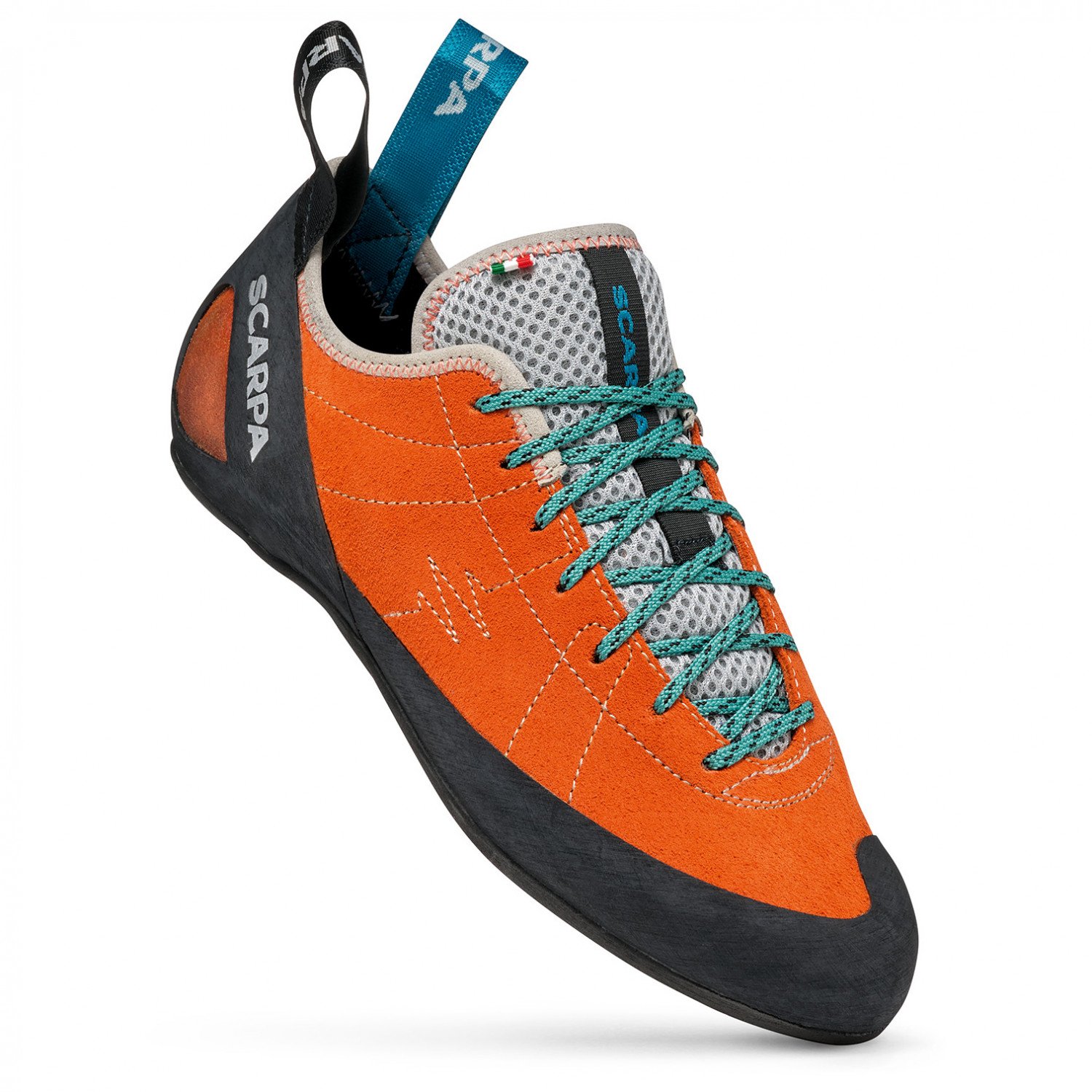
4. Scarpa Helix
🪨 Best for Slab & All-Day Comfort — Italian-made, Vibram XS Edge, flat last, lace or velcro
Available at Bergfreunde DE and Alpinetrek UK — both currently 10% off the men’s version, and an exceptional 50% off the previous women’s model at just €64.98 / £55.98
Our Testing Score
Detailed Review
The Scarpa Helix is one of those shoes that keeps appearing on lists for the right reasons rather than because of marketing. It is Italian-made, uses Vibram XS Edge rubber on a flat neutral last, and has a suede leather upper that breaks in quickly and molds comfortably to a wide range of foot shapes. It sits at a similar price to the Origin but occupies a different space — where the Origin prioritises all-day comfort and wide-foot fit, the Helix is the better choice for climbers who spend meaningful time on slabs and friction-dependent terrain.
Full disclosure: these are my partner’s shoes, and watching them perform across granite in Portugal and limestone in Spain is part of why they made this list. On slab terrain in particular, the confidence they inspire is immediately noticeable — and that is not something you get from reading a spec sheet.
The flat last maximises sole contact on friction rock — on granite in particular, more rubber in contact with the surface means more trust in your feet, which is exactly what slab climbing demands. The 3.5mm XS Edge sole is softer and thinner than the 5mm version on the Origin and Finale, which trades some durability for more sensitivity. Reviewers consistently note that on granite nubbins and low-angle smearing, the Helix lets you paste your foot and trust the friction in a way that stiffer or more downturned shoes do not.
The choice between lace and velcro versions is worth thinking about. The lace version gives a more adjustable, precise fit and is better for crack climbing where velcro can snag. The velcro version (Helix V) is faster on and off — practical for gym sessions and easier outdoor days. Both use the same last and rubber.
Closure note: The Helix is available in both lace and velcro (Helix V) versions at the same price. Choose lace for outdoor crack climbing or if you want a more adjustable fit; choose velcro for gym use or if you prefer quick on and off.
Best for: Climbers who spend time on slab and friction terrain, anyone looking for an all-day outdoor shoe that performs well on granite, and beginners wanting a quality Italian shoe at a reasonable price.
Pros
- Italian-made — quality construction and materials throughout
- Vibram XS Edge — same trusted rubber as La Sportiva Finale
- Flat last — excellent for slab and friction climbing
- Available in both lace and velcro versions
- Suede leather upper — skin-friendly and moulds to the foot
- Widely available across European retailers
Cons
- 3.5mm sole wears faster than 5mm alternatives
- Less precise on technical overhanging routes than downturned alternatives
- Flat last not ideal for steep gym climbing
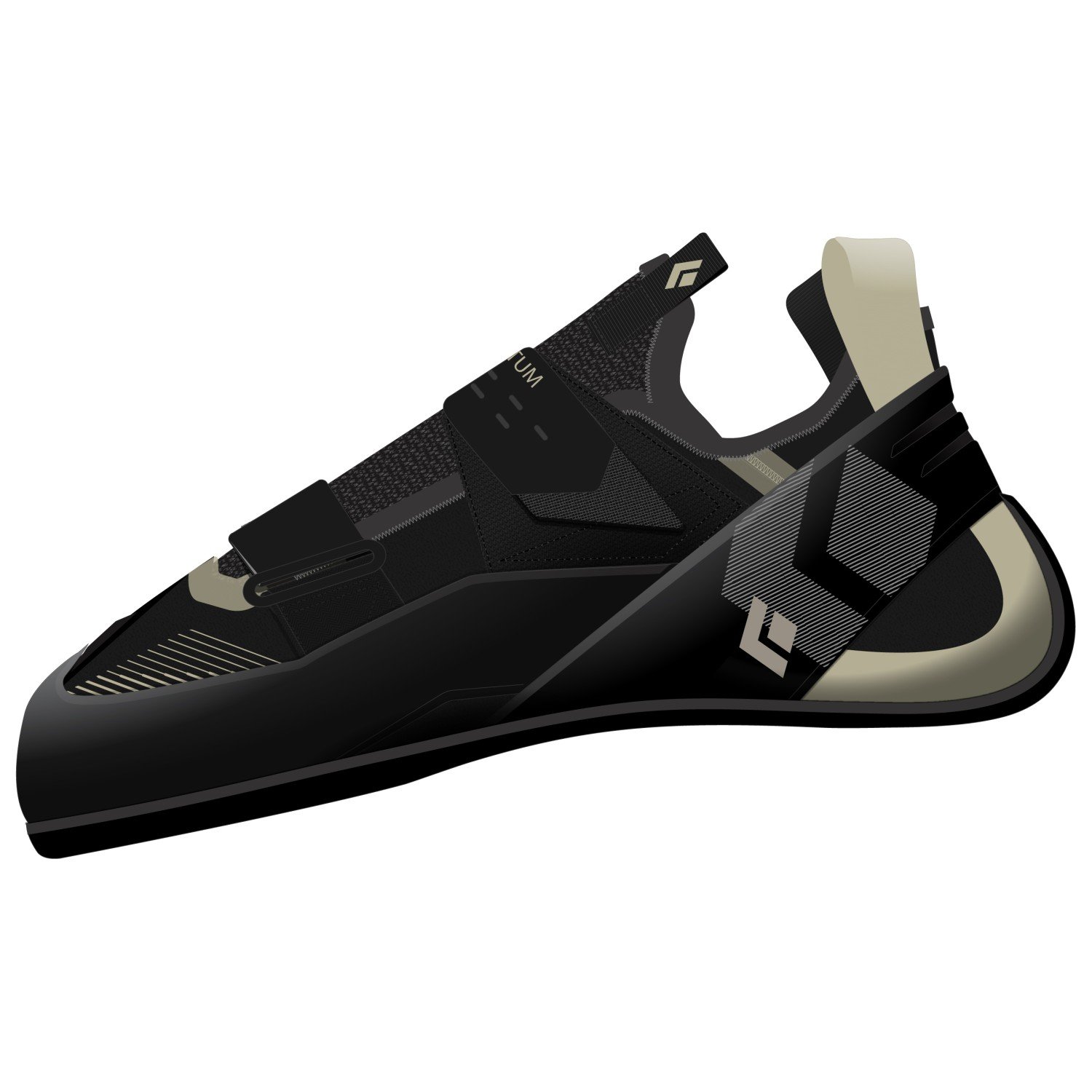
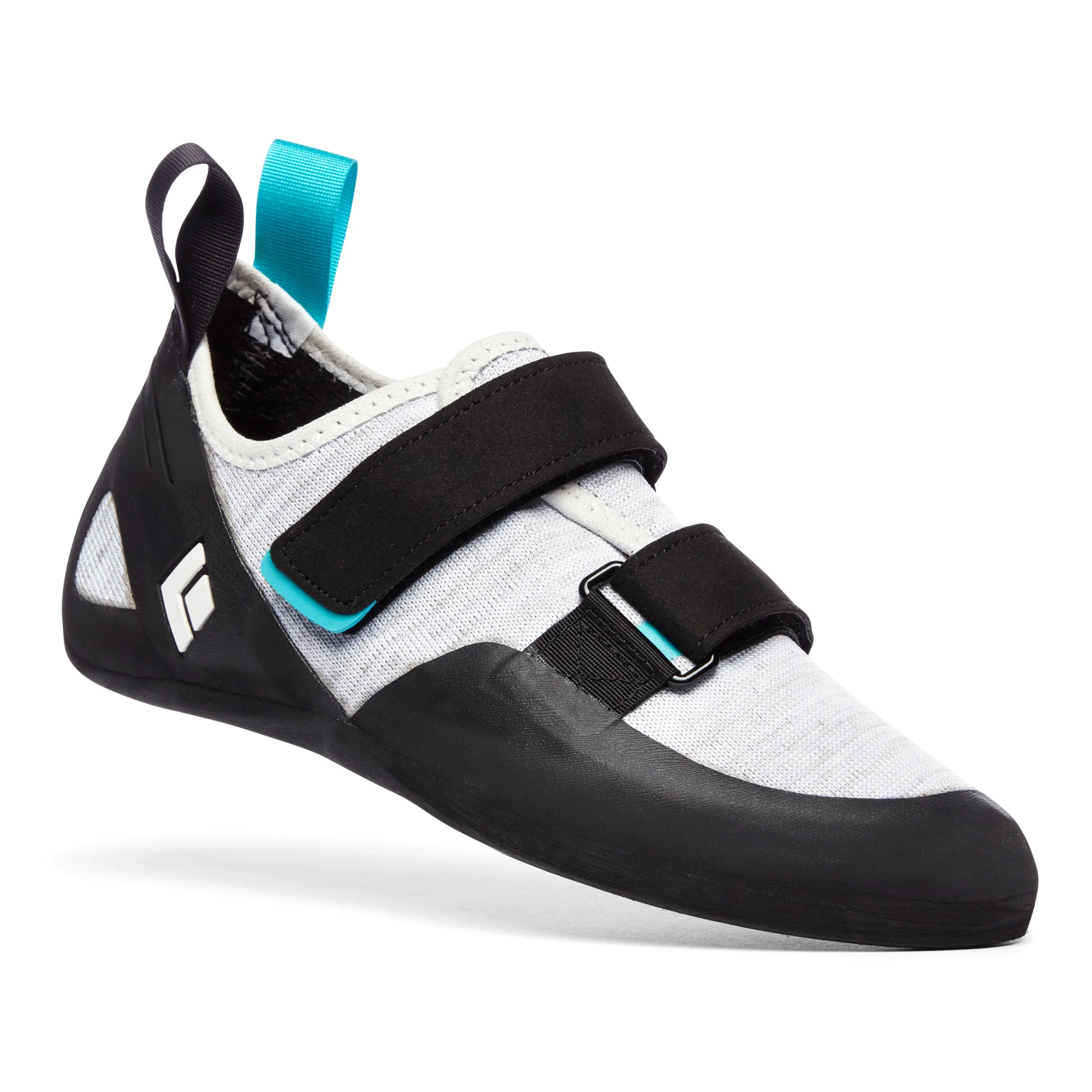
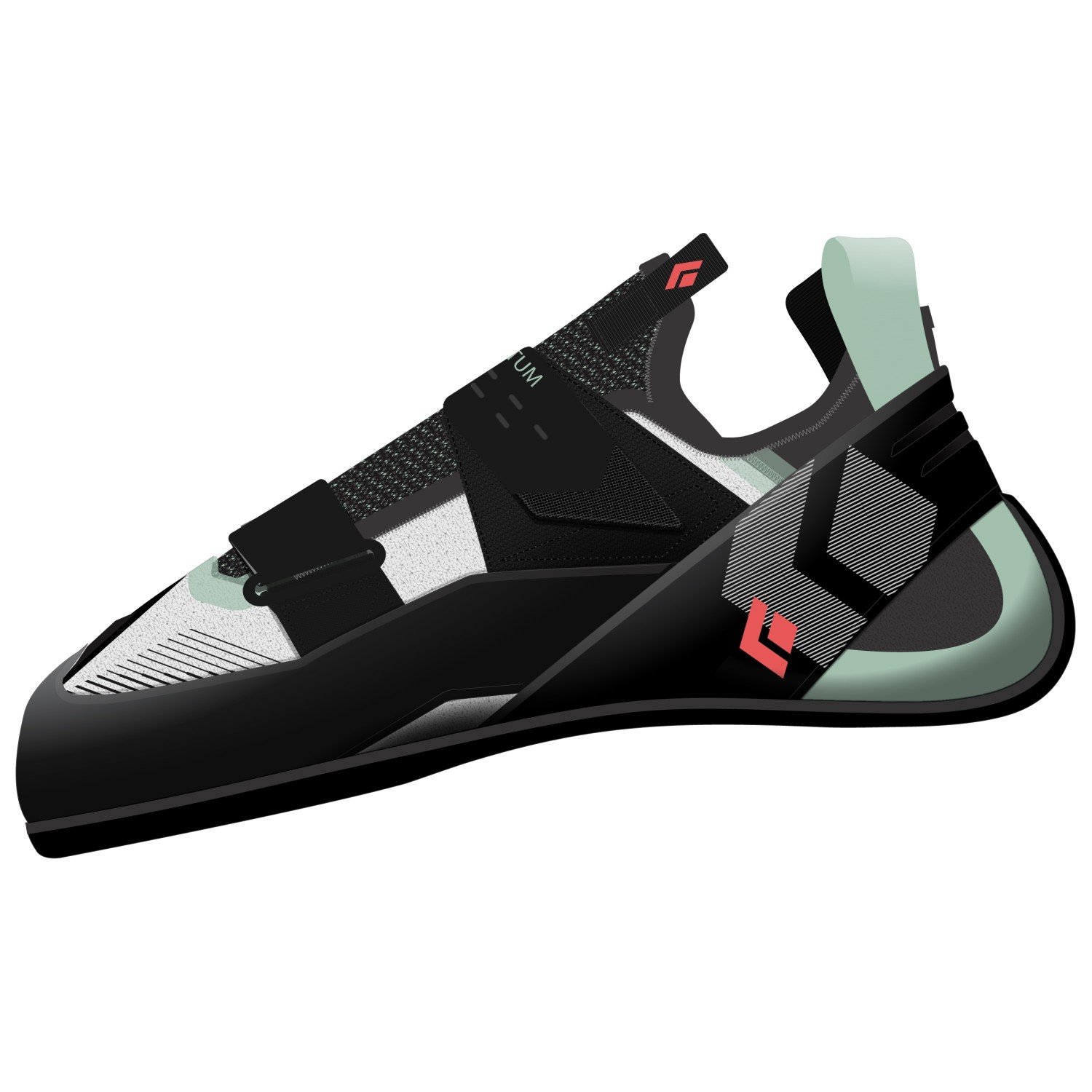
5. Black Diamond Momentum
🎓 Best First Shoe — wide, comfortable, forgiving, made by a brand climbers trust
Available at Bergfreunde DE (€87.35) and Alpinetrek UK (£78.15) — and Vertical Extreme DE is clearing stock with 52% off the women’s version, just €45.48
Our Testing Score
Detailed Review
The Black Diamond Momentum is one of the most widely available beginner climbing shoes in Europe — you will find it stocked at almost every outdoor retailer and climbing shop, which matters when you need to try before you buy. It is also consistently one of the most highly rated beginner shoes at major outdoor retailers, and that reputation is earned: it is comfortable, easy to get on and off, and forgiving enough that a complete beginner can focus on learning rather than managing foot pain.
The multi-zone knit upper is notably breathable — significantly more so than leather alternatives — which makes it a good choice for indoor climbers and summer use. The wide, rounded toebox accommodates a range of foot shapes without forcing a narrow fit, and the rubber Fusion sole combines a 2mm heel compound with a 5mm toe section for durability where it matters most.
As a purely technical climbing shoe it does not match the Vibram XS Edge rubber of the Finale or Origin. But for someone on their first outdoor sessions, or transitioning from gym-only climbing to outdoor sport climbing, the Momentum provides a very comfortable and confidence-building experience. It is a good shoe to buy, climb in for a season while you figure out what you actually want, and then resole or pass on when you are ready for something more specific.
Closure note: The Momentum uses a dual velcro strap, although a lace version also exists. Fast on and off, which suits the beginner gym-focused use case this shoe is designed for.
Best for: Complete beginners, anyone who found other shoes uncomfortable, climbers transitioning from gym to outdoor, and people who prioritise ease of use above all else.
Pros
- Excellent all-day comfort — ideal for long beginner sessions
- Widely available in Europe — easy to try in person
- Velcro closure — fast and practical
- Breathable knit upper — good for indoor and summer use
- Wide toebox — accommodates varied foot shapes
Cons
- Rubber not as sticky as Vibram XS Edge competitors
- Knit upper less durable on rough outdoor rock edges
- Less precise on technical footwork as skills develop
- You will likely want to move on to something more specific within a year
🎯 How to Choose the Right Climbing Shoe
There is no single right climbing shoe. There is only the right climbing shoe for your specific foot shape, your current level, and the type of climbing you are doing. The most important thing you can do is go to a proper climbing shop, find someone who actually climbs, and spend time with them trying on shoes. It took me two hours to choose my first pair. I have bought the same model and size every year since.
👣 Understand your foot shape first
Before you think about brand or model, think about your foot. Are your toes roughly equal in length or does your big toe dominate? Do you have a narrow heel, a wide forefoot, a high arch? La Sportiva lasts tend to suit narrower feet; Scarpa lasts tend to be wider. Trying the women’s version of a shoe on a narrow-footed man, or vice versa, is entirely normal — the fit is what matters, not the label.
📐 Sizing: snug, not painful
Climbing shoes should fit snugly with no dead space around the toes and no heel lift — but without active pain. The culture of extreme downsizing exists to serve elite climbers on technical routes; for a beginner, painful shoes teach you nothing and make you hesitant on footwork. Some discomfort in stiff new leather is normal and will ease as it breaks in. Sharp pain from day one is a wrong size.
| Your Situation | What to Look For | Our Pick |
|---|---|---|
| First pair ever | Maximum comfort, velcro or lace, forgiving fit | Black Diamond Momentum or Scarpa Origin |
| Narrow or average feet | La Sportiva last — try women’s version too | La Sportiva Finale |
| Wide feet | Scarpa last — wider toebox, more volume | Scarpa Origin |
| Gym + bouldering focus | Velcro, slight asymmetry, good value | Evolv Defy |
| Slab / granite climbing | Flat last, Vibram XS Edge, soft sole for maximum friction contact | Scarpa Helix |
| Long routes / trad later | Thick sole, lace, comfort over hours | Scarpa Origin or La Sportiva Finale |
| Vegan preference | Synthetic upper, no leather or animal products | Evolv Defy or Black Diamond Momentum |
📏 Sizing: The Section Most People Get Wrong
Climbing shoe sizing is not street shoe sizing. Every brand, every model, and every last is different. Here is the practical reality for the five shoes in this guide:
| Shoe | Sizing Guidance | Stretch? |
|---|---|---|
| La Sportiva Finale | La Sportiva recommends sizing down about half to one full EU size. With leather, many climbers go further as it breaks in. I am EU43 street, EU40 in the Finale — but this depends entirely on your foot. | Yes — leather stretches significantly over sessions |
| Scarpa Origin | Generally runs close to true size. Scarpa sizing is more consistent than La Sportiva. Start at street size and size down half a size if snug fit is preferred. | Yes — leather stretches over time |
| Evolv Defy | Synthetic upper stretches minimally. Size down about half a size from street shoe. What you buy is roughly what you keep. | Minimal — synthetic |
| Scarpa Helix | Runs close to true size. Lace version gives more adjustability than velcro. Suede stretches slightly over sessions — if between sizes, size down half a size. | Slight — suede leather |
| Black Diamond Momentum | Runs close to true size. Generous fit by design — the widest toebox in this comparison. Comfortable at or near street shoe size. | Minimal — knit upper |
🔧 Resoling: Why You Should Never Bin a Good Pair
This is one of the least talked-about aspects of climbing shoe ownership and one of the most important, both financially and environmentally. When the rubber on your climbing shoes wears through — and it will, especially on rough rock — the shoe is not finished. The rubber is. The rest of the shoe, the rand, the upper, the heel, the structure — will typically outlast several soles. Resoling replaces the worn rubber and gives you effectively a new shoe in a perfectly broken-in shell.
I have two pairs of La Sportiva Finales. One is my current pair; the other is my previous pair with a fresh sole from a resoling service. This approach costs less than buying a new pair, produces less waste, and means I never have to break in a new shoe from scratch. That matters on a van life climbing trip where you might be climbing six days a week — the last thing you want is blisters from new shoes at a crag in the middle of nowhere.
🕐 When to resole
The right time to resole is before you wear through the rand — the rubber that wraps around the sides of the shoe. Once the rand is damaged, the resole becomes more expensive and the shoe may not be worth saving. The signal to act is when the sole rubber at the toe starts to look smooth and shiny rather than textured, or when you can feel it getting thin under your toe. Do not wait until there is a hole.
💰 What it costs
A standard half-resole (the most common repair — front section only) costs roughly £35–55 / €40–65 across Europe depending on the service and rubber chosen. A full resole costs slightly more. Compared to a new pair of shoes at £85–110, the maths are straightforward. Most good resolers in Europe also offer rand repair, heel replacement, and patching for additional cost.
🚐 The Van Life Angle: Two Pairs (and a DWS Spare)
Living out of a van changes the climbing shoe calculation. You do not have a wardrobe with six pairs of shoes — you have a limited storage system and everything in it needs to earn its place. At the same time, you might be climbing six days a week across wildly different terrain, which means a single pair of shoes doing everything is both a practical compromise and a genuine limitation.
- Primary pair: La Sportiva Finale — my current main shoe, used for everything from granite slab in Portugal to limestone sport in Spain. Cleaned and dried after every session.
- Resoled pair: My previous Finale with a fresh sole. Same fit, same feel, ready to go — used when the primary pair is damp or being rested, and as a backup on longer trips.
- DWS pair: Found in the lost and found of a climbing gym in London. Very used, nothing fancy — completely guilt-free for deep water soloing where the shoes are going in the water regardless.
Two pairs of the same model means you are never breaking in new shoes, never adjusting to a different fit, and never caught out when one pair is wet at the end of a long day. If you climb regularly from a van, this is the most practical shoe strategy available — find the model that fits your foot, buy it, resole it, repeat.
The DWS pair is a bonus rather than a requirement — but if you do any deep water soloing or coasteering-adjacent climbing in Europe (the Portuguese coast, Mallorca, the Calanques), keeping a dedicated pair that you are happy to put in water means your main shoes stay in the condition they deserve.
Final Recommendations
For most beginners with average or narrow feet, the La Sportiva Finale is the shoe that keeps giving — buy it, break it in properly with guidance from a knowledgeable shop, resole it when the rubber wears, and you will likely still be buying the same model years from now. For wide feet or maximum comfort, the Scarpa Origin. For the best value introduction, the Evolv Defy. For granite slab specialists and long outdoor days, the Scarpa Helix. And for the most forgiving first shoe imaginable, the Black Diamond Momentum.
But before any of this: go to a shop. Find someone who climbs. Try things on. Give them your time. That conversation is worth more than any guide.
Climbing shoe fit is one of the most personal equipment decisions you will make. None of these links replace the experience of trying shoes on with guidance from a knowledgeable person. Your local climbing shop deserves your business first. These affiliate links are for reference and for when you already know what you want.
Frequently Asked Questions
How tight should beginner climbing shoes be?
Snug, not painful. Your toes should be in contact with the front of the shoe with no dead space, and your heel should not lift when you stand on your toes — but there should be no sharp pain. The culture of extremely tight shoes exists to serve elite climbers on technical routes; for a beginner, it is counterproductive. Painful shoes make you hesitant on footwork, shorten your sessions, and teach you nothing. As a beginner, comfortable and precise is the goal.
Should I size down from my street shoe size?
Usually yes, but by how much depends entirely on the brand, model, and your foot shape. La Sportiva tends to run smaller and many climbers go a size or more below street size in leather La Sportiva shoes. Scarpa is closer to true size. The Evolv Defy and Black Diamond Momentum in synthetic materials stretch very little, so sizing guidance is more consistent. The only reliable way to get this right is to try the shoe on in person. Online sizing charts are a rough starting point, not a substitute.
Is there a real difference between men’s and women’s climbing shoes?
Yes, but it is about fit, not function. Women’s versions of climbing shoes typically use a narrower last with a smaller heel cup, designed for lower-volume feet. Men’s versions have more volume throughout. These are anatomy-based differences, not performance ones — a man with narrow feet who finds the women’s version fits better should absolutely buy the women’s version, and vice versa. The rubber and construction are identical. What matters is which last suits your foot.
When should I replace my climbing shoes?
When the rubber sole wears smooth and loses friction — not when there is a hole. The ideal time to act is before the rand is damaged, which is the rubber wrapping around the sides of the shoe. Once the rand is worn through, a resole becomes more expensive and more complicated. Run your thumb along the toe rubber after sessions; when it starts to feel thin and smooth rather than textured, it is time to either resole or replace. A well-maintained pair of quality climbing shoes can be resoled multiple times and last years.
Can climbing shoes be repaired?
Yes — and they should be, rather than replaced. Resoling replaces the worn rubber sole while keeping the upper and rand intact. A half-resole (the front section, where most wear occurs) costs roughly £35–55 / €40–65 across Europe. This is significantly cheaper than a new pair, produces less waste, and means you keep a perfectly broken-in shoe. The only time a shoe cannot be economically repaired is when the rand and upper have been worn through as well — which is why the right time to resole is before you reach that point. A full guide on resoling is coming soon.
How many pairs of climbing shoes do I need?
As a beginner, one pair is enough. As you climb more regularly — especially if you are living from a van and climbing most days — two pairs of the same model becomes genuinely practical. You can alternate between them, keep one drying while you climb in the other, and never have the stress of starting with a new pair mid-trip. A third pair for deep water soloing or any situation where the shoes are getting wet is a nice addition if that type of climbing features in your plans.
What is the best climbing shoe for granite slab?
The Scarpa Helix, for its flat neutral last and Vibram XS Edge rubber in a softer 3.5mm configuration that maximises sole contact on friction rock. For granite slab specifically — La Pedriza, Valdemanco, Rocha da Pena, Fontainebleau — what matters most is how much rubber you can paste against the surface, and the Helix flat last does exactly that. The La Sportiva Finale also performs well on slab terrain, which is one reason it works so well for all-round European climbing. Both are covered in detail above.
What’s the difference between the La Sportiva Finale and the Tarantulace?
Both are beginner-friendly La Sportiva shoes but they sit at different levels. The Tarantulace uses FriXion RS rubber — a softer, less durable compound aimed squarely at first-timers and gym use — with a flatter, more relaxed fit and a lower price point. The Finale steps up to Vibram XS Edge rubber, which is stickier and considerably more durable on real rock, while still keeping a comfortable, approachable last. We chose the Finale specifically because it performs well enough outdoors that you are unlikely to outgrow it within a year, whereas the Tarantulace is more of a true entry-level shoe that many climbers replace once they start climbing outside regularly. If budget is the main constraint, the Tarantulace is a reasonable starting point — but if you can stretch to the Finale, it is the better long-term buy.
🔍 Semantic & Keyword Index
Primary: best climbing shoes for beginners 2026 · beginner climbing shoes Europe · first climbing shoes · how to choose climbing shoes · Secondary: La Sportiva Finale review · Scarpa Origin climbing shoe · Evolv Defy review · Scarpa Helix · Black Diamond Momentum climbing shoe · Vibram XS Edge climbing shoe · climbing shoe sizing guide · women’s vs men’s climbing shoes · climbing shoe resole Europe · Long-tail: best climbing shoes wide feet · climbing shoes for slab granite · how tight should climbing shoes be · beginner climbing shoes UK · climbing shoe resole cost Europe · La Sportiva Finale women’s vs men’s · how to choose first climbing shoes · climbing shoes van life · two pairs climbing shoes · climbing shoes for outdoor beginners Europe
🧗 Explore Our Climbing Guides
Detailed crag guides from our van life climbing adventures across Europe