Cirque de Gens — Chauzon Climbing Guide
A Natural Limestone Amphitheatre Above the Ardèche River
| 📍 Location | Chauzon, Ardèche, Auvergne-Rhône-Alpes, France |
| 🪨 Crag GPS | 44.4799, 4.3453 ↗ |
| 🅿️ Overnight Parking | 44.483900, 4.358100 ↗ |
| 🪨 Rock | Compact limestone — pockets, edges, some slabs |
| 📊 Routes | 300+ routes — ranging from 5a to 8b |
| 📏 Wall Height | Up to 35m — some longer routes have intermediate anchors |
| 🧭 Orientation | South-east facing horseshoe — morning and midday sun, afternoon shade from the curve |
| ⛰️ Altitude | 145m |
| 🚶 Approach | ~15/20 minutes from parking — descending path, some loose sections |
| 🔩 Bolting | Sport — fully bolted, rappel descent on most routes |
| 🏘️ Nearest Town | Pradons (800m) — Chauzon (2.2km) shops, restaurants, fuel, pharmacy etc. |
| ⚠️ Restricted Sectors | Enola Gay & Dévers — check FFME/Montagne Régulée before visiting |
What Makes the Cirque de Gens Different
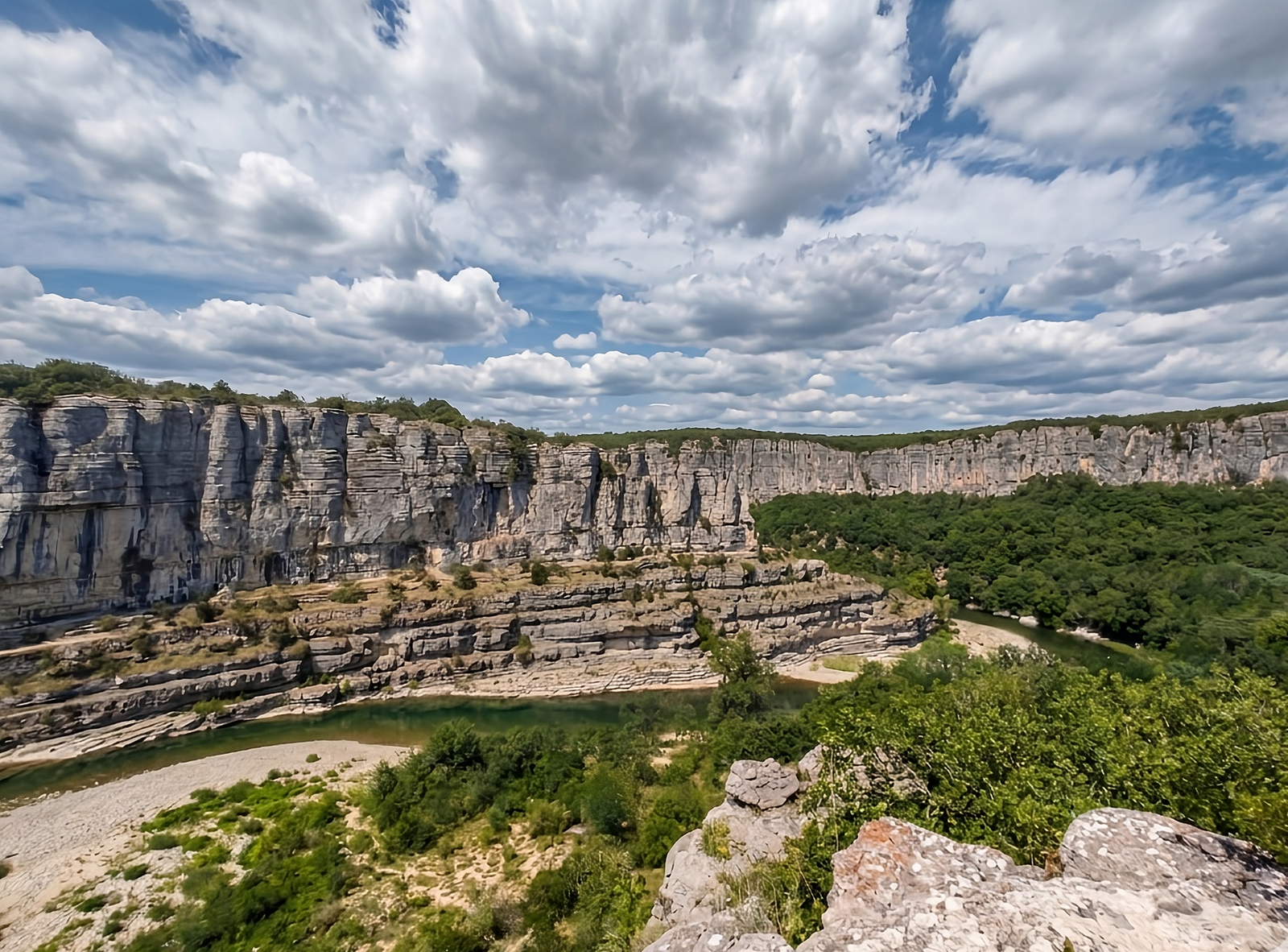
Most people who drive through the Ardèche head straight for Labeaume, Balazuc, or the gorge crags near Vallon-Pont-d’Arc. The Cirque de Gens climbing area sits slightly off the main Ardèche circuit — past the small village of Chauzon, across a narrow bridge over the Ardèche, and down a track that dead-ends at a modest car park. That alone keeps the crowds thinner than at the valley’s bigger names. On a weekday in spring, you might have the whole horseshoe to yourself.
The cirque is genuinely one of the most beautiful settings in the region. The cliffs form a natural amphitheatre — a sweeping curve of pale grey and ochre limestone rising directly above a meander in the Ardèche, with Mediterranean scrub spilling down the slopes below. From up on the wall, particularly in the late morning when the light catches the water below, the views are remarkable. Canoes drift beneath you. The river sounds carry up the cliff. It’s the kind of place that makes you linger longer than planned.
Geologically, this limestone has a character all its own. The rock here was quarried in antiquity — local stone from the Ruoms area was used in the construction of the Saint-Charles station in Marseille, the port of Sète, and local legend even claims the stone was used for the base of the Statue of Liberty in New York (though historians usually point to Connecticut or Germany, the Ruoms limestone remains world-renowned for its durability). The climbing itself reflects that quality: compact, textured pockets and edges on vertical and slightly overhanging walls, with technical slabs appearing on some of the lower-grade sectors. This is all according to what I found online so take it with a pinch of salt… 🙂
The first routes here were equipped in 1980 by local pioneers Jean Mathieu and Robert Courbis — names still active in the local scene decades later. In 1988, the cirque hosted the first French climbing championship ever held on natural rock, with the then-Minister of Sport attending. That history sits quietly in the stone. The Cirque de Gens was genuinely important in the development of French sport climbing culture, and it remains one of the most complete single-crag experiences in southern Ardèche.
Sectors & What to Climb
The crag wraps in a horseshoe from left to right when approached from below, with the sectors broadly ordered from easier on the outer arms to harder in the central and steeper sections. The descent path from the parking follows the left-hand side of the cliff base; most climbers work their way right across the wall as the day progresses.
The most accessible sector, receiving sun from early morning. Vertical walls with generous holds and a good number of routes in the 5c–6a range — ideal for warming up or for a team with mixed abilities. Routes are well-spaced with clean fall lines. Longer than they look from below; carry a 60m rope minimum, although 70m would be more suitable.
The heart of the crag and the busiest part of the wall. A concentration of pocketed limestone routes where the grade distribution is most dense. The 6c–7a range is particularly well-represented here — sustained, athletic climbing on compact grey limestone with occasional sloping holds. The views from midway up are outstanding.
Steeper than the left side, with a more pronounced overhang character as you move right. The routes here reward dynamic movement and reading the sequence from the ground. Afternoon shade arrives earlier on this side, which in summer makes it a good option for a late session after the central sector bakes. Some longer routes on this side carry intermediate anchors for the upper pitches.
The upper technical sector and home to the crag’s hardest lines. These routes have a notoriety among local climbers and were considered among the best hard sport pitches in southern Ardèche. This sector is subject to periodic closure due to Bonelli’s eagle nesting — always verify current status with FFME before planning your visit.
The overhanging sector — “Dévers” means lean or overhang in French, and the name is apt. Steep, physical climbing on a wall that pushes you outward as the routes climb. The lower-grade options here feel significantly harder than their grades suggest on first acquaintance. Shares the nesting restriction zone with Enola Gay.
A distinct character from the rest of the crag — lower-angled, friction-dependent slab climbing on smoother limestone. Confidence on the feet matters more than upper-body strength here. A good option for beginners to outdoor sport climbing who have made the step from gym climbing, or for anyone who wants to work on footwork and balance rather than strength.
Grade Distribution — Who Is This Crag For?
The Cirque de Gens is strongest in the 6a to 7a range, where the quality and quantity of routes is at its best. It is not a beginner crag in the same way that some roadside venues in the gorge are — the approach descent requires attention, and several sectors involve slightly longer, committing routes that reward experience. That said, the left wing and slab sector give genuine options for solid 5th-grade climbers ready to tackle their first multi-bolt routes outdoors.
📊 Approximate Route Distribution
Numbers are approximate and reflect currently accessible sectors. Some routes in restricted sectors not included.
Getting There & Parking
🏨 Places to Stay Nearby
Accommodation Near Chauzon & the Cirque de Gens
Campsites, gîtes and hotels on one map — filter by price, dates and type. Handy in July and August, when the Ardèche fills up fast.
Booking through this map supports the blog at no extra cost to you.
The approach to the Cirque de Gens is slightly more involved than many Ardèche crags, which is precisely why it stays less crowded. There are two main approaches depending on where you’re coming from.
From Chauzon (primary approach)
Drive to the village of Chauzon from Ruoms or Aubenas via the D579. In Chauzon, cross the bridge over the Ardèche river and follow the narrow road to its end — the former organised car park. This road was previously maintained as a proper parking area; it now operates informally but is widely used as the main climber’s parking. Parking GPS: 44.4839, 4.3581. From the car park, follow the descending path towards the base of the cliffs — approximately 15–20 minutes on a clear trail with some rocky sections. The path drops noticeably as you approach the wall; this is worth bearing in mind when you’re tired at the end of the day.
When to Visit
The Cirque de Gens is a spring and autumn crag at its core. The south-east facing orientation means it collects morning sun from October through April — excellent for keeping routes dry after overnight dew and for staying warm on cool days. By late June, the central sectors are in full sun through midday and the limestone heats up considerably; afternoon shade arrives courtesy of the cliff’s own curve, which helps, but midsummer sessions are best started early and ended by noon.
Winter visits are entirely viable in dry spells — the low altitude (145m) and southerly aspect mean the crag rarely stays wet for more than a day after rain. November and December can offer genuinely pleasant climbing when the rest of northern Europe is cold and grey.
Seasons in Detail
Wildlife, the Bonelli’s Eagle & Access Restrictions
The Cirque de Gens sits within the Natura 2000 zone FR8201657 (“Moyenne vallée de l’Ardèche, pelouses du plateau des Gras”), and is also listed as a sensitive natural site (Espace Naturel Sensible) and subject to a biotope protection order. That’s a significant amount of conservation designation for one crag, and it reflects the genuine ecological richness of the limestone cliff environment here.
The most significant wildlife consideration is the Bonelli’s eagle (Aigle de Bonelli) — France’s rarest raptor, classified as “endangered” on the national red list and covered by Annex I of the European Birds Directive. A pair returned to the Cirque de Gens area in recent years after a long absence, and the commune of Chauzon issued a formal access order in 2023 creating a 1.65-hectare quiet zone around the eastern nesting area. Sectors Enola Gay and Dévers fall within or adjacent to this zone, and climbing has been restricted on these sectors with some bolt removal carried out.
This is a sensitive subject in the local climbing community. The crag has a forty-year climbing history — the original bolters Jean Mathieu and Robert Courbis are still active locally — and the restriction was made without initial consultation with climbers, generating significant pushback. The situation has evolved since the original 2023 order, and the current position requires checking directly before any visit.
Van Life at the Cirque de Gens
The Chauzon area has a quieter, less commercial feel than the main Ardèche gorge tourist circuit. It is not a van life hub in the way that Labeaume or the campsites near Vallon-Pont-d’Arc are, which cuts both ways — less infrastructure, but also fewer competing vehicles for informal spots and a noticeably calmer atmosphere outside the peak summer weeks.
Nearby Crags — Building a Week in the Ardèche
The Cirque de Gens is at its best as part of a wider Ardèche climbing trip rather than a standalone destination. The cluster of crags within 20 kilometres makes this one of the finest sport climbing regions in France — each venue distinct enough in character that you can climb a different style every day of the week without repetition.
The vanlifer’s favourite Ardèche crag — 100+ routes in a riverside gorge with roadside parking and a medieval village above. Shadier and cooler than the Cirque de Gens; excellent for alternating between the two on a multi-day trip. Our full guide here.
A compact crag directly above one of the most beautiful villages in France. Steep pocketed routes in the 6b–7b range with superb views over the Ardèche valley. Combine climbing and culture in one afternoon.
A large cliff complex above another classified village. Good mix of grades including genuine beginner-friendly options. Afternoon shade makes it a reliable choice when the Cirque de Gens faces full sun.
A small, relaxed crag with a shaded riverside campsite directly below — genuinely the best post-climbing swim situation in the region. Lower grades dominate, making it ideal for mixed-ability groups or a gentle day between harder sessions at the Cirque.
An isolated limestone tower rising above the Ardèche — a completely different rock type and character from the local limestone, offering multi-pitch routes on a striking landmark. The descent is an adventure in its own right.
The western face of the same cirque, accessible from the Grazel approach in Ruoms, offers additional lower-grade options along the base of the cliff band that are rarely recorded in guidebooks. Worth exploring on a second visit once you know the main sectors well.
Guidebooks & Resources
Finding a dedicated single-crag topo for the Cirque de Gens is less straightforward than for the region’s bigger names — it appears across several Ardèche-wide guides rather than having a standalone book. The following are the most useful starting points.
The regional guide covering the main Ardèche crags including the Cirque de Gens. Not the most detailed treatment of this crag specifically, but a solid reference for anyone climbing across the region. Available from most French outdoor shops and online.
climbing-guide.eu →The best online resource for Ardèche crags. The Cirque de Gens page on Rockfax Digital lists sectors, route counts, grades and approach directions. Slightly limited in detail but invaluable for pre-trip planning.
View on Rockfax Digital →theCrag carries community-contributed route information under both “Cirque de Chauzon” and “Le Cirque de Gens” listings. Useful for recent conditions reports, ascent logs, and current access notices. Worth checking in the week before your visit.
View on theCrag →🧗 Rock Van Life Resources — Ardèche & France
❓ Frequently Asked Questions
📌 Related Topics
📚 Helpful Climbing Resources
Essential guides, tips, and advice for your climbing adventures
🔧 Gear Lab
View all →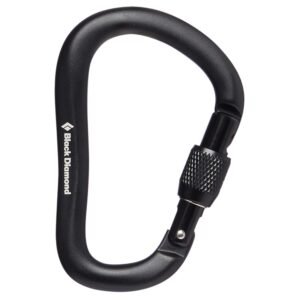
Black Diamond RockLock Review — Our Biggest, Toughest Locker
Read more →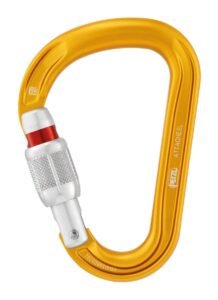
Petzl Attache Review — The Most Versatile First Locker
Read more →🚐 Road Trip Essentials
View all →
10 Underrated European Sport Climbing Destinations (That We Actually Drove To)
Read more →
Van Life Electrical Setup 2026 — Our Exact Power System
Read more →📖 Climber's Handbook
View all →
Beginner Climbing Gear List 2026 – Everything You Need to Start Climbing Outdoors
Read more →