
Best Approach Shoes for Climbing 2026
Five approach shoes reviewed for European crags — from granite scrambles in Portugal to limestone sport approaches in Spain and trad routes in Wales. The shoe that gets you there matters as much as the one that climbs.
When you live out of a van, your approach shoe isn’t just for the walk-in. It’s often your supermarket shoe, your campsite shoe, your easy-slab shoe, and the pair that goes on every time your climbing shoes come off.
We’ve reviewed five of the best approach shoes for climbing across European limestone crags, granite slabs, and long mountain approaches.
Here’s our thoughts and experience, and what to buy depending on how you actually climb.
📅 Last updated: August 2026 · Prices verified across all three retailers · Sale flags reflect current live pricing
🧭 How We Chose These 5
The approach shoe market is crowded — La Sportiva alone makes 8 variants of the TX4 Evo, and Scarpa’s lineup runs to 40+ models. Rather than list every option, we’ve picked what we consider the 5 best approach shoes for climbing right now — covering the buying decisions that actually matter for European van-life climbers.
Our selection criteria, in priority order:
- Climbing capability first. These are approach shoes for climbers, not hiking shoes with sticky rubber. Every shoe here has a dedicated toe zone or climbing-shoe-inspired lacing that lets it climb into low fifth-class terrain confidently.
- Available across our three European retailers. Alpinetrek UK, Bergfreunde DE, and Trek-Expert UK cover the majority of European climbing regions. Shoes only stocked on Amazon US or Backcountry didn’t make the cut.
- Verifiable sustainability credentials. Given the size of the environmental cost of a pair of leather-plus-GORE-TEX shoes, we prioritised shoes with declared recycled content, bluesign certification, or resole options.
- Real durability data, not marketing. We favoured shoes with either personal experience (AKU Rock DFS II GTX — 18 months of full-time van use) or long-term reviewer consensus (OGL, GearJunkie, Switchback).
- Price transparency. Live UK & DE sale prices, not MSRP guesses. Reviewed monthly.
What we deliberately rejected:
- Shoes with weak or opaque sustainability data — the Merrell MOAB and similar hiking-crossover shoes lacked declared recycled content or third-party certifications we could verify.
- Trail-runner-approach hybrids — models like the Arc’teryx Vertex Alpine straddle categories; they climb worse than a real approach shoe and hike worse than a real trail runner. We prefer buying the right tool for the job.
- US-only availability — the Adidas Five Ten Guide Tennie is a legitimate great shoe but Adidas’s European distribution and Awin affiliate structure make it a bad recommendation for our reader base right now.
📊 Quick Comparison Table — Best Approach Shoes 2026
Five shoes covering different use cases, price points, and disciplines. Each targets a different type of climber — scroll down for detailed reviews.
| Shoe | Price | Weight (per shoe) | Sole | Waterproof | Resoleable | Best For | Sustainability | Score |
|---|---|---|---|---|---|---|---|---|
| AKU Rock DFS II GTX | £138.77 −20% | 480g | Vibram Megagrip | ✅ GTX | ❌ No | Our Pick | Partial recycled insole, bluesign® GTX | 9.2/10 |
| La Sportiva TX4 Evo | £131.82 −21% | 405g | Vibram Megagrip | Optional GTX | ✅ Yes (Resole Platform) | Best All-Round | Recycled laces & rands, Resoleable, Carbon Neutral brand | 9.4/10 |
| Scarpa Rapid XT | £132.81 | 400g | Vibram Megagrip | ❌ Non-GTX (GTX version sold separately) | ✅ Yes (SCARPA centres) | Best for Wide Feet | PFAS compliant, Resoleable | 9.0/10 |
| Salewa Wildfire 2 GTX | £128.11 −21% | 420g | Pomoca Speed MTN | ✅ GTX | ⚠️ Not officially | Best Wet Conditions | Salewa Committed, PFC-free lining, bluesign® GTX | 9.0/10 |
| Scarpa Crux GTX | £109.46 −25% | 410g | Vibram Megagrip | ✅ GTX | ✅ Yes (SCARPA centres) | Best Value | 50-70% recycled interior, PFAS Compliant, Resoleable | 8.9/10 |
- La Sportiva TX Guide — The most climbing-focused shoe La Sportiva makes. It out-climbs the TX4 Evo on technical terrain, but with reports of premature midsole delamination and a very narrow last, it didn’t earn a slot over the TX4 Evo for most buyers.
- Arc’teryx Konseal LT / Konseal FL 2 — Genuinely excellent shoe with premium alpine capability. Excluded because Arc’teryx uses a proprietary sizing system (runs a full size big), pricing is £220+, and the shoe isn’t resoleable. Bergfreunde and Alpinetrek stock inconsistently.
- La Sportiva Boulder X — The proven workhorse. A great budget-friendly hiking-focused shoe, but sits high on a thick foam platform that hurts precision — outperformed by both the Crux GTX (budget) and TX4 Evo (all-round) for the way most European climbers actually use approach shoes.
1. AKU Rock DFS II GTX
🏔️ Our Personal Pick 🔥 20% Off All Retailers
⚡ On sale now: Trek-Expert UK from £138.77 · Alpinetrek UK from £155.96 · Bergfreunde DE €159.96
Our Score
Detailed Review
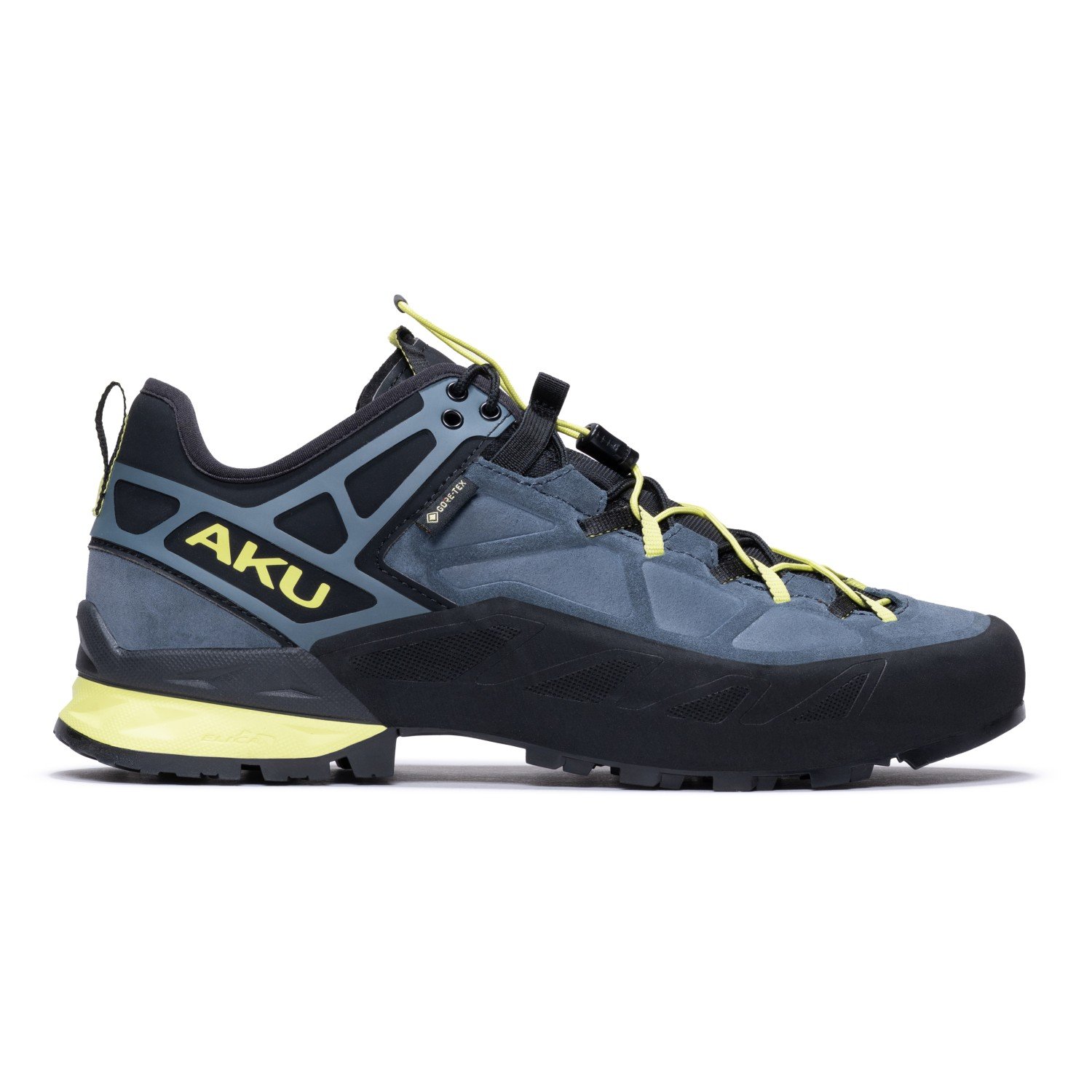
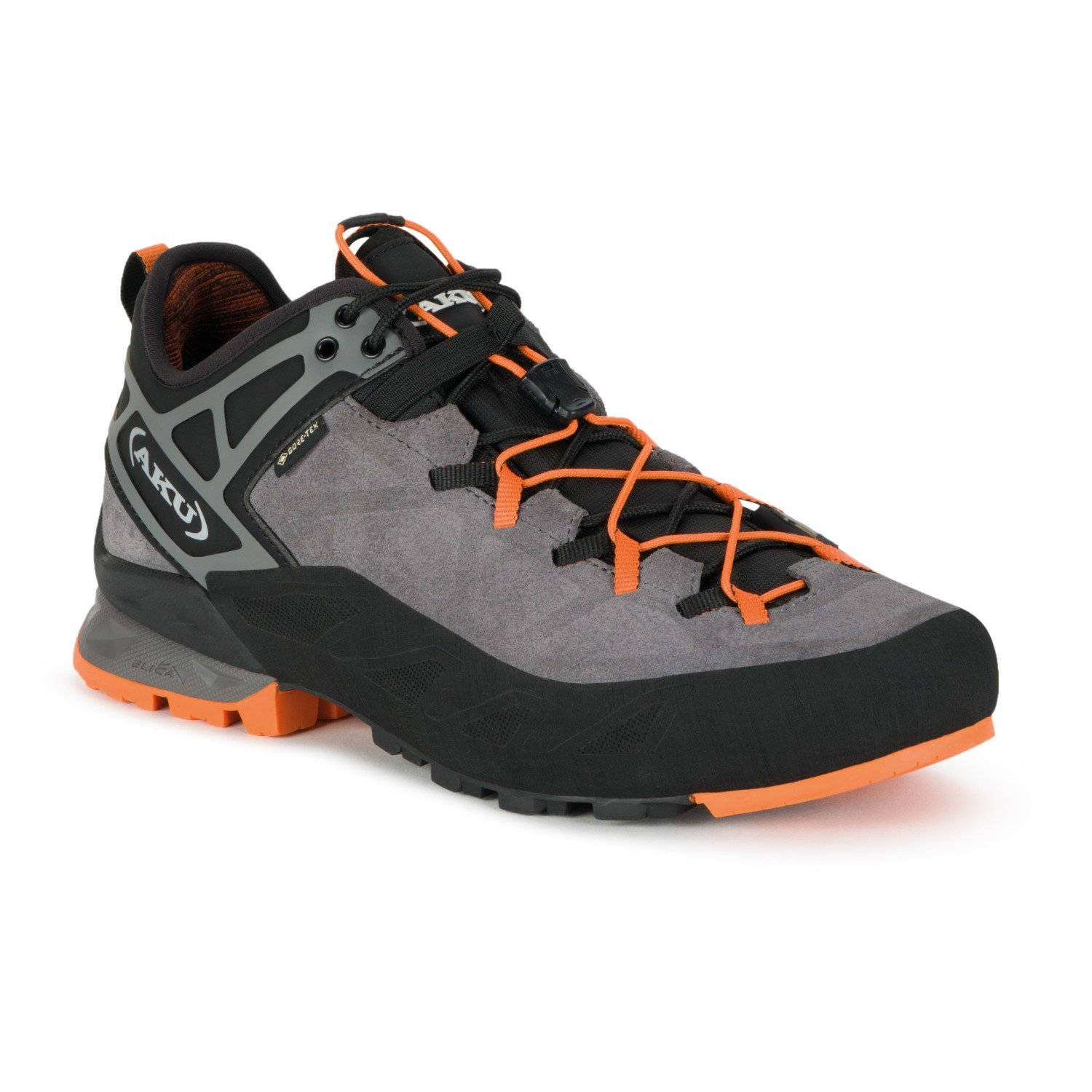
AKU is an Italian footwear brand that does not get the attention it deserves — and the Rock DFS II GTX is the shoe that made me a convert. I have put these through two full seasons across France, Portugal & Spain, and a series of wet trad routes in the Harz. They have not let me down once, and I have stopped actively looking for something better.
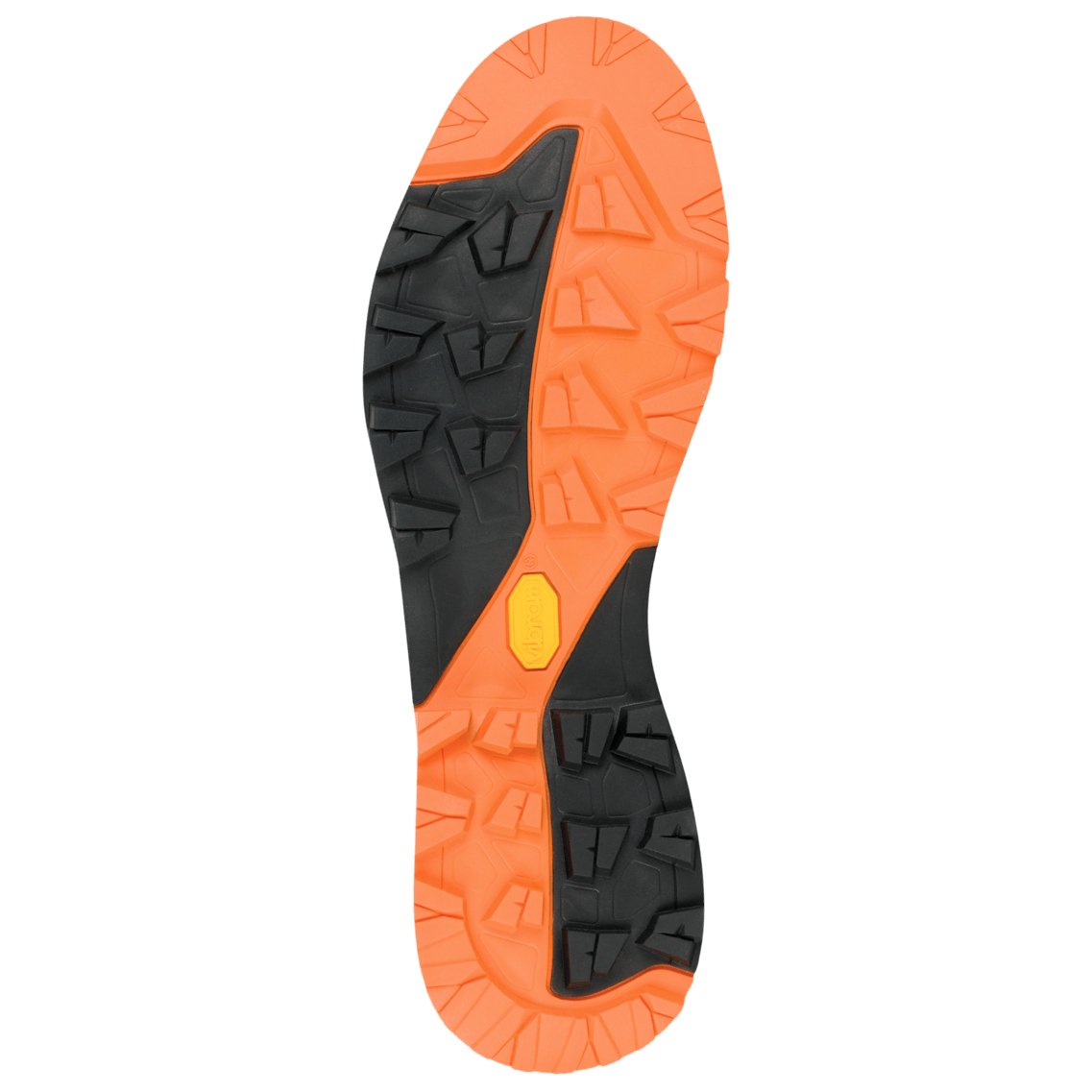
The Vibram Megagrip sole is the foundation of everything the Rock DFS II does well. On dry limestone in Spain it is predictably excellent — sticky, confident, and precise enough on small footholds that I have walked up to the base of 6a routes without changing shoes. The GORE-TEX membrane kept my feet dry through a full day of autumn rain without a hint of moisture inside.
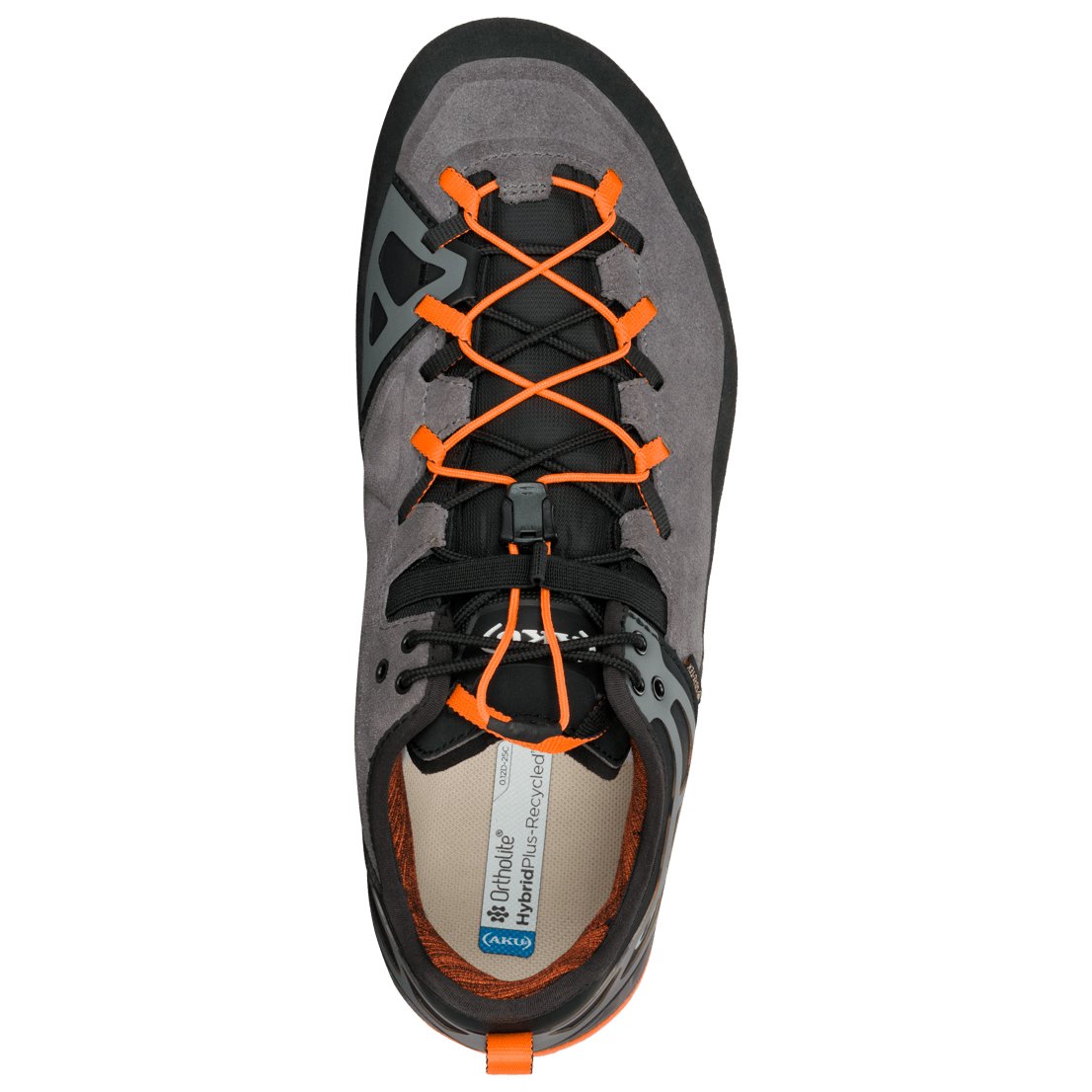
The suede leather upper breaks in quickly and develops a personalised fit after the first few sessions. AKU’s last tends to suit medium-width feet — if you have very wide feet, try before you buy. The overall construction is notably robust; these shoes feel like they are built to survive multiple seasons of serious use. I use them for everyday life as much as approach, visiting a city, doing bits of mountain biking or hiking.
Best for: Climbers who want one shoe for wet and dry approaches across varied European terrain — and who are willing to pay for Italian build quality that genuinely lasts.
Why we chose these over the other 4 in this guide: Given the choice, we went with the AKU over the La Sportiva TX4 Evo (too narrow for our medium feet), the Salewa Wildfire 2 GTX (too narrow at the heel), and the two Scarpas (better shoes for pure climbing, but the AKU’s GTX plus Vibram Megagrip plus leather build has proven more durable across 18 months of daily van-life use than we expected from any single-model choice). It’s not the shoe we’d necessarily recommend to a hard sport climber — but for the way we actually use approach shoes 300+ days a year across France, Portugal, Spain and Germany, it’s the one that keeps earning its place in the van.
🚐 Van-life verdict: What we actually wear. The Italian craftsmanship shows in the long-term feel — after 18 months of full-time van use, ours are still going strong. Not the flashiest name, but a rare shoe that quietly outperforms brands three times its marketing budget.
Pros
- Vibram Megagrip performs superbly on both wet and dry rock
- GORE-TEX keeps feet genuinely dry in prolonged rain
- Suede upper develops a personalised fit quickly
- Excellent build quality — feels built to last
- Precise lacing for technical terrain control
Cons
- Higher price than most competitors
- Minor lace issue on one pair — replaced without fuss by the retailer
- GTX membrane reduces breathability in summer heat
2. La Sportiva TX4 Evo
⭐ Best All-Round • The European Approach Shoe Benchmark 🔥 21% Off at Trek-Expert
⚡ Best price: Trek-Expert UK from £131.82 (was £166.87) · Alpinetrek UK from £167.95 · Bergfreunde DE €194.95. Women’s-specific fit available at all three retailers.
Our Score
Detailed Review
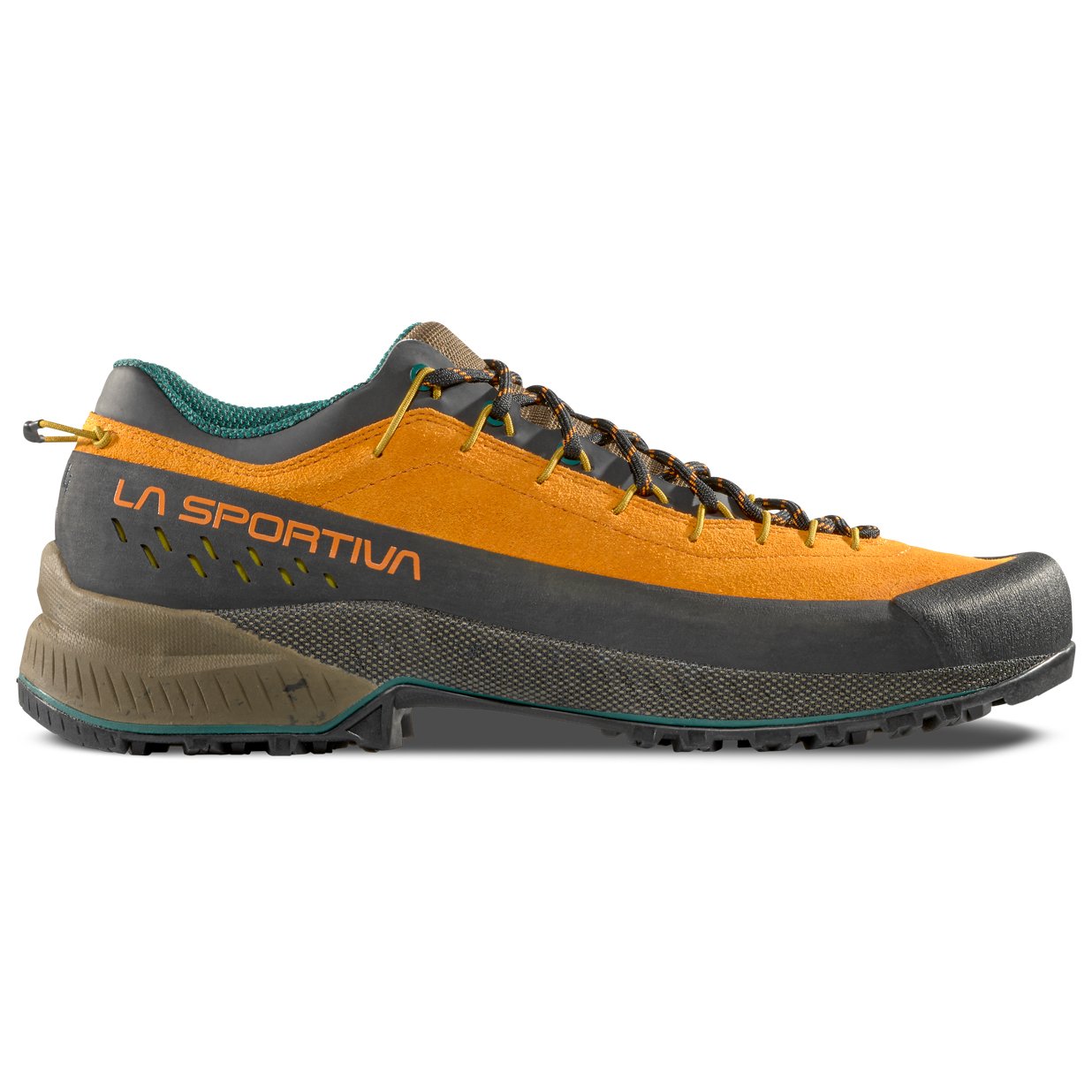
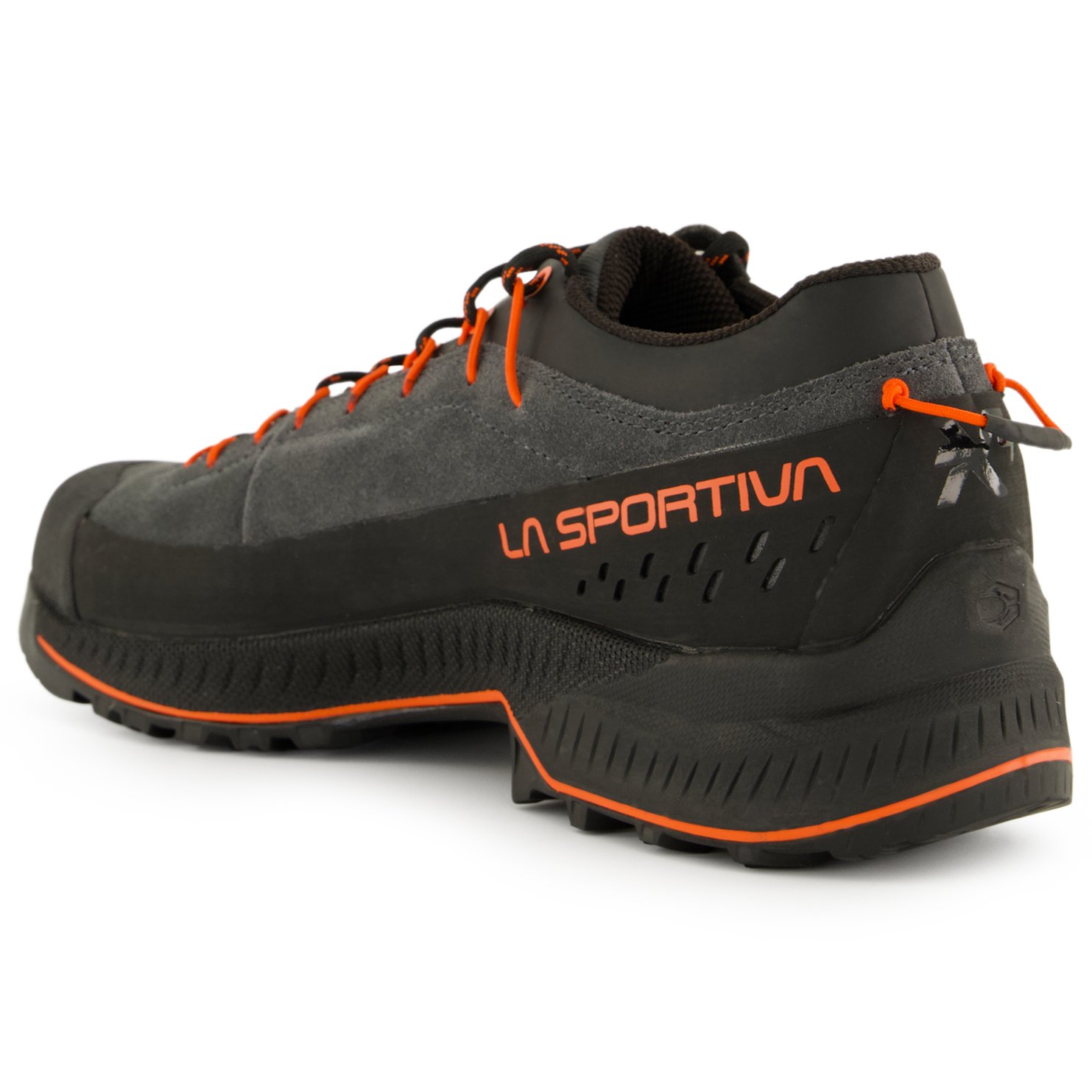
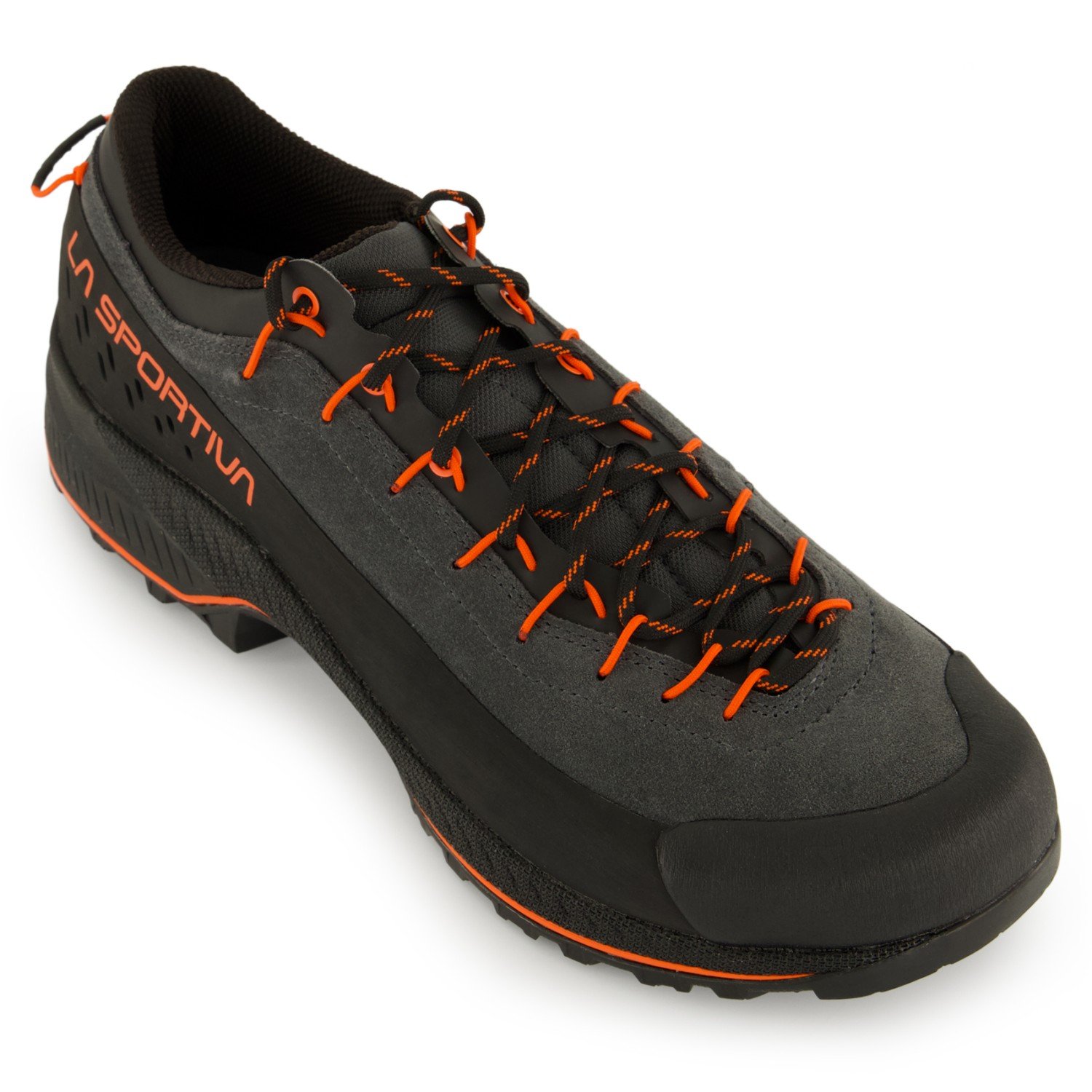
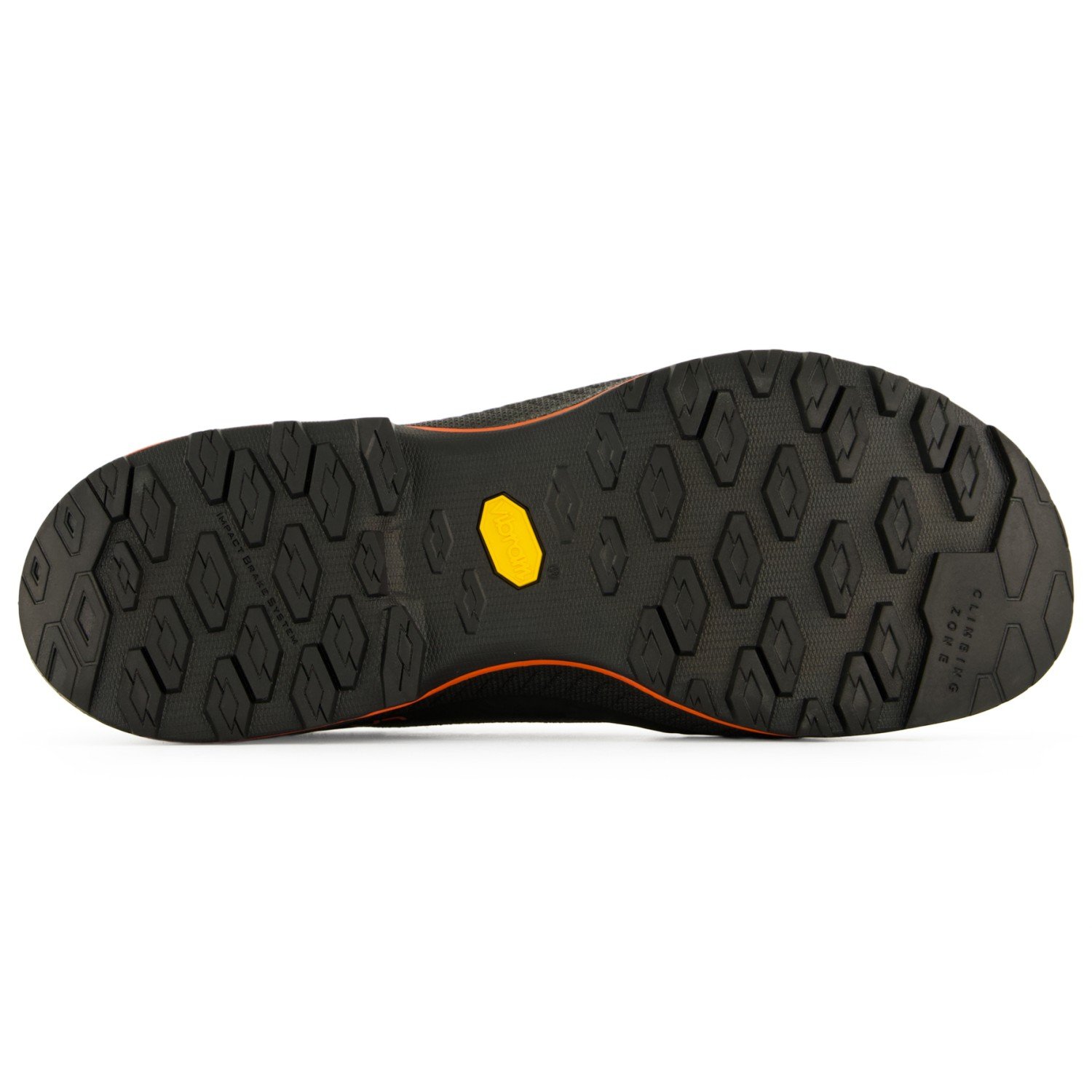
The La Sportiva TX4 Evo is the approach shoe against which everything else is measured in Europe. At 380g for the non-GTX version, it is the lightest shoe in this guide whilst still offering the suede leather upper and full rubber rand that serious approach terrain demands. The Vibram Megagrip sole with La Sportiva’s dedicated climbing zone at the toe is the best climbing-specific sole configuration in the category — the flat, slightly concave zone at the tip of the shoe functions almost like a climbing shoe on moderate terrain.
The TX4 Evo’s particular strength is its balance. It hikes well, it scrambles confidently, and it climbs better than any other shoe in this guide. The Resole Platform technology is worth calling out: the TX4 Evo can be professionally resoled at a La Sportiva-certified cobbler, which extends the shoe’s lifespan significantly. One note on sizing: La Sportiva approach shoes typically run slightly shorter — size up half a European size from your normal La Sportiva fit.
Best for: Climbers who want the single best-performing approach shoe in the category — particularly those who regularly climb in their approach shoes.
🚐 Van-life verdict: The single best van-life choice. The Resole Platform means one pair lasts multiple seasons — saving £150+ in replacements over three years of hard use.
Pros
- Best climbing performance of any shoe in this guide
- Lightest leather approach shoe at 380g
- Resoleable — significantly extends lifespan
- Vibram Megagrip with dedicated climbing zone
- Available with or without GORE-TEX
Cons
- Runs short — size up half a EU size
- Narrower fit than Scarpa alternatives
- Non-GTX version not suitable for prolonged wet weather
- GTX version adds weight and reduces breathability


3. Scarpa Rapid XT
👟 Best for Wide Feet • Wide Ergonomic Last, Exceptional Durability, Resoleable
Alpinetrek UK from £132.81 · Bergfreunde DE from €154.65. Women’s-specific fit available at both retailers.
Want waterproofing? Rapid XT GTX at Alpinetrek from £138.51 · Bergfreunde from €161.46.
Our Score
We haven’t worn this pair. Unlike the other four shoes here, this score is built from published testing by Advnture, Outdoorsmagic, WeighMyRack and Climbing Gear Reviews rather than our own use — flagged so you can weigh it accordingly.
Detailed Review
The Scarpa Rapid XT is the wide-fit, breathable pick in this comparison — the role the Mescalito Planet used to fill before Scarpa discontinued it. The upper combines 1.8mm suede leather with polyester mesh panels for airflow, backed by a reinforced TPU perimeter band and rubber toe cap, over a compression-moulded EVA midsole and a Vibram Agility XT/Megagrip outsole with a dedicated climbing zone.
Where the Rapid XT earns its place here is fit: Scarpa describes a wide, ergonomic toe shape, and an independent review from Advnture measured that directly — roughly 4.3 inches across the toe versus about 3.8 inches on comparable models. That’s a genuinely roomier shoe for anyone who finds narrower approach shoes elsewhere in this comparison uncomfortable on long days. The same review noted the interior isn’t heavily padded, which is fine for a day on approach but not what they’d recommend for multi-day trips.
The lack of a waterproof membrane on this version means the Rapid XT is a dry-conditions choice — Scarpa sells a separate Rapid XT GTX for anyone who needs GORE-TEX, also at Bergfreunde.
On durability the reviews are unusually consistent. Climbing Gear Reviews reported the outsole showing no visible wear after six months of hard use, with the wrap-around TPU rand protecting the suede upper — and Outdoorsmagic, testing the unlined version across a UK summer in the Lakes and in Wales, lists durability and resoleability as the shoe’s headline strengths. For a shoe you intend to keep for several seasons rather than replace annually, that combination is the strongest argument in its favour.
Best for: Climbers with wide feet who want a genuine Vibram Megagrip sole without a narrow last, and anyone prioritising a shoe that lasts several seasons and can be resoled rather than replaced.
🚐 Van-life verdict: The wide-fit, long-life pick. Resoleable and built to take abuse — if you wear through a pair a year, that matters more than 30g of weight saving.
Pros
- Genuinely wide, ergonomic toe shape — measured wider than comparable models by an independent review
- Vibram Megagrip with a dedicated climbing zone, confident on wet and dry rock
- Resoleable at official SCARPA resole shops — extends the shoe’s working life
- PFAS compliant
Cons
- No GTX option on this version — soaks through in rain
- Light interior padding — better suited to day approaches than multi-day trips
- Easy to buy the wrong variant — Rapid XT, Rapid XT GTX, Rapid XT Mid GTX and Rapid LT are all sold in parallel
- Not stocked at Trek-Expert, unlike some other shoes in this comparison
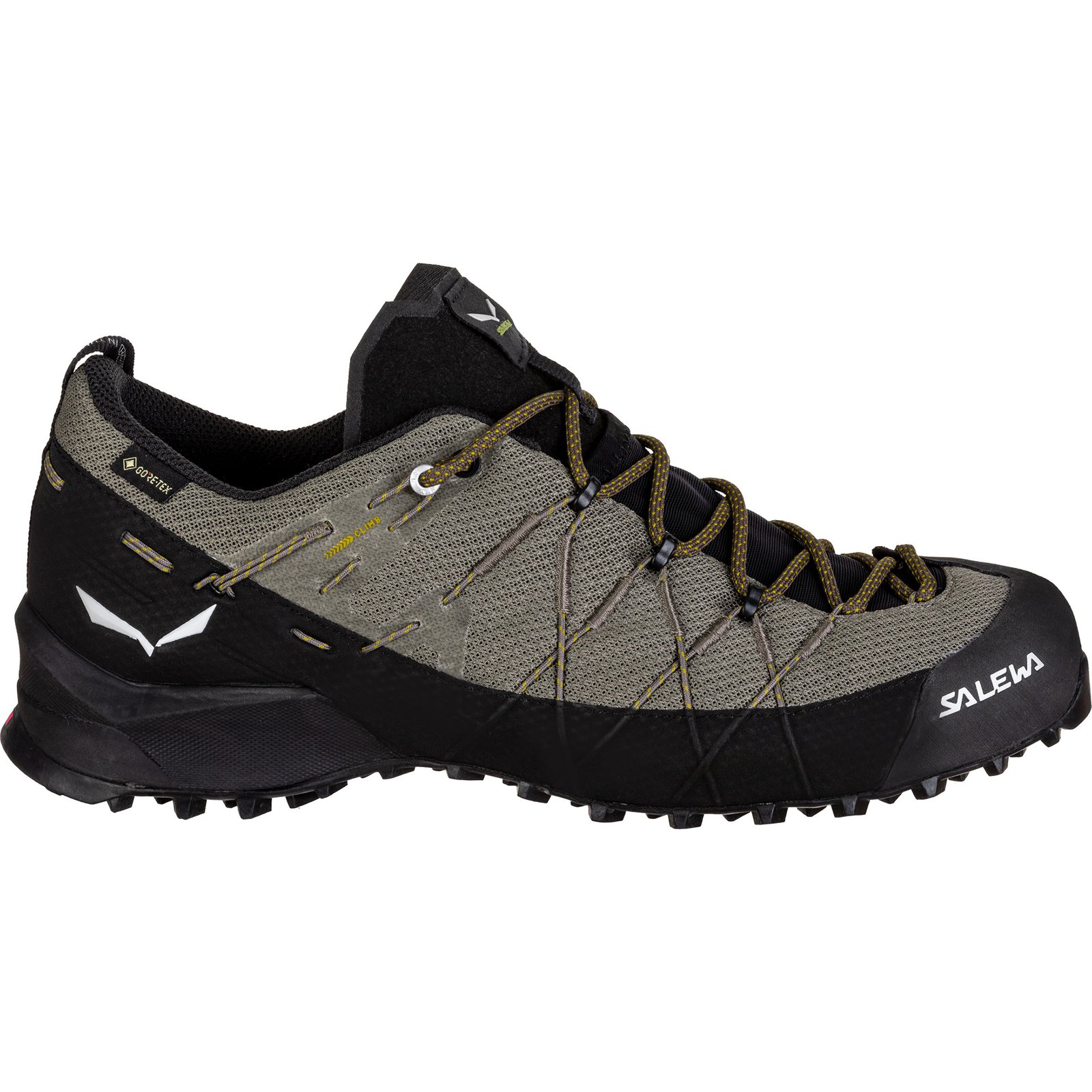
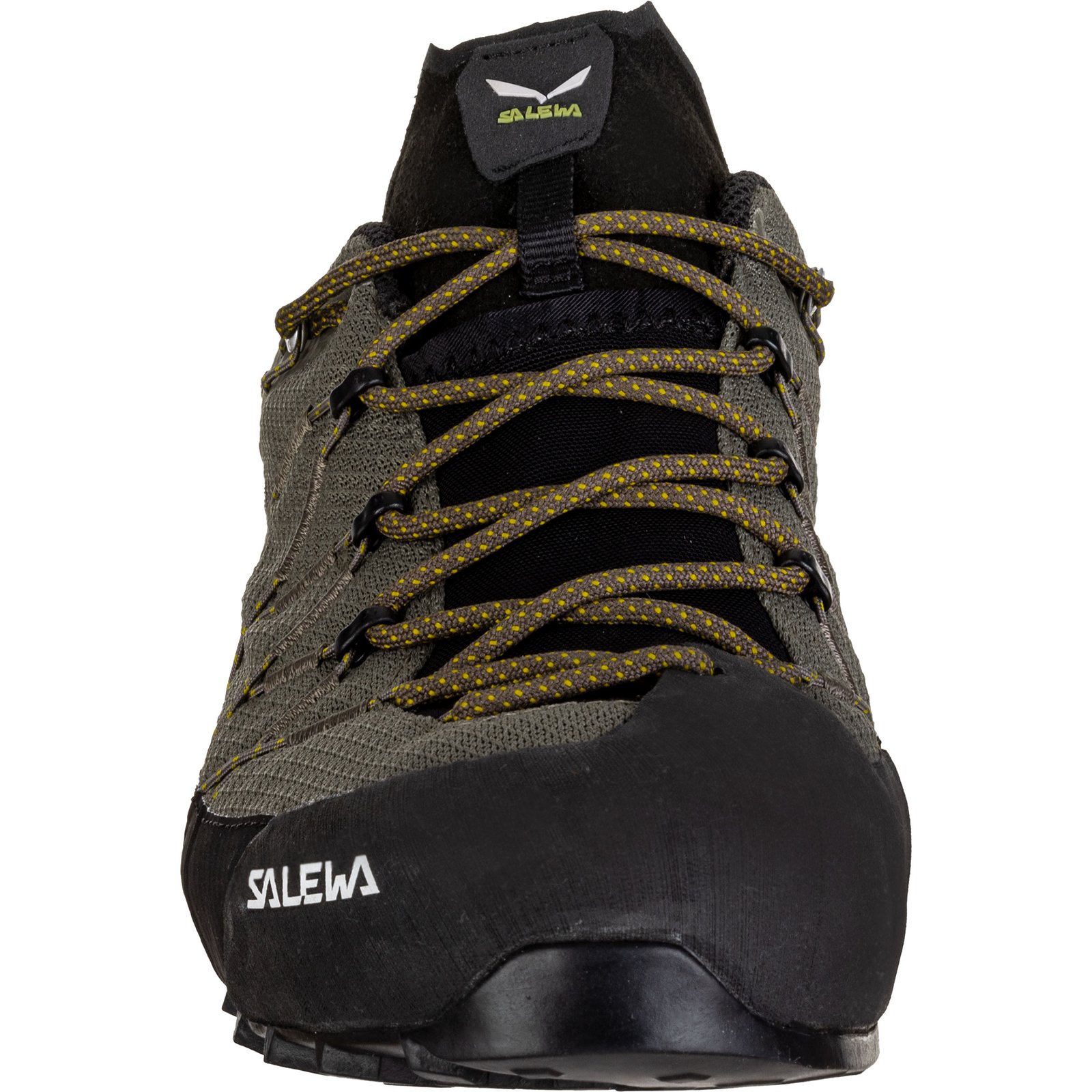
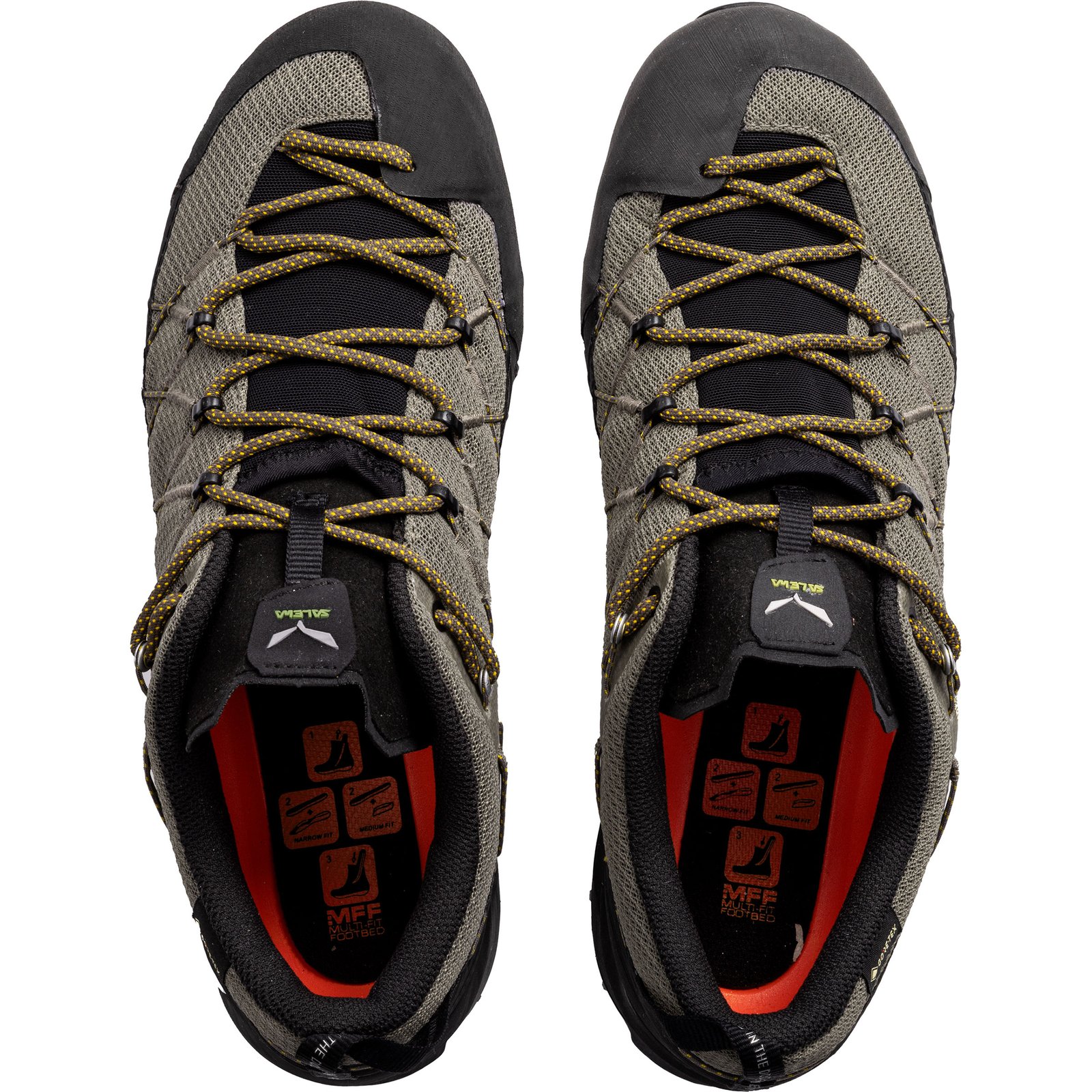
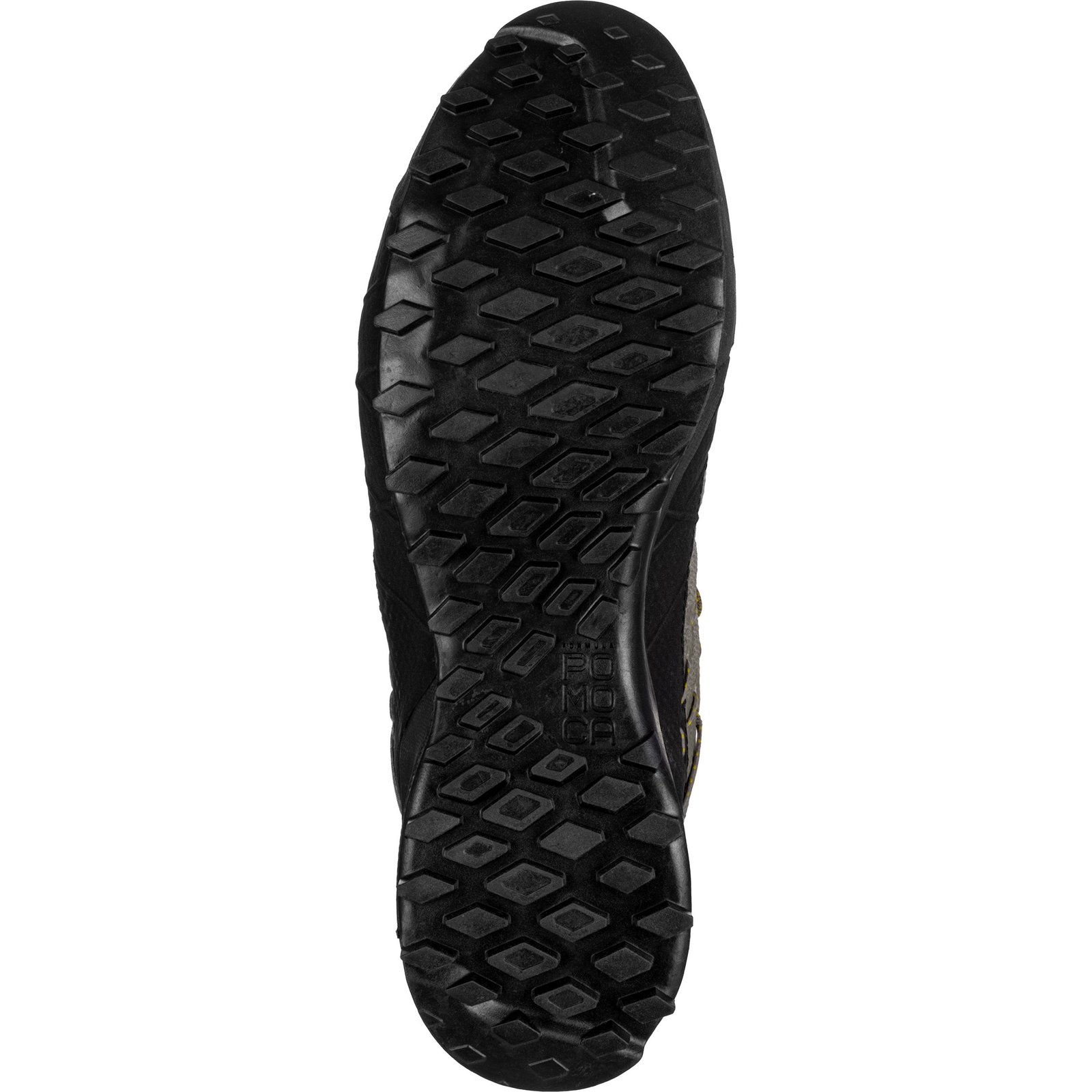
4. Salewa Wildfire 2 GTX
🌧️ Best for Wet Conditions • Climbing-Inspired Lacing, Pomoca Sole, Full GTX 🔥 21% Off at Trek-Expert
⚡ Best price: Trek-Expert UK from £128.11 (was £162.59) · Alpinetrek UK £174.95 · Bergfreunde DE €189.95. Women’s-specific fit available at all three retailers.
Our Score
Detailed Review
Salewa designed the Wildfire series with a clear brief: make an approach shoe that performs in mountain conditions, which in Europe means wet rock, unpredictable weather, and the kind of all-day technical scrambling where you genuinely cannot afford to slip. The Wildfire 2 GTX delivers on that brief more convincingly than any other shoe in this comparison for wet-weather use.
The Pomoca Speed MTN sole has a dedicated climbing zone at the toe and multi-directional lugs that perform well on both loose trail and solid rock — including in the wet. Salewa’s climbing-shoe-inspired lacing system runs all the way to the toe, giving a level of fit precision you do not find in hiking-leaning approach shoes. The 3F system wraps the heel for stability, reducing the slop that some approach shoes develop after a few months of use.
Best for: UK trad climbers, alpine approaches in variable weather, and anyone whose primary concern is keeping their feet dry without sacrificing technical performance on wet rock.
🚐 Van-life verdict: The Alps and UK van climber’s essential. If your season includes wet Chamonix summers, damp UK winters, or unexpected Scottish weather, the GORE-TEX pays for itself in comfort and shoe lifespan.
Pros
- Outstanding waterproofing — genuinely reliable in UK weather
- Pomoca sole performs well on wet rock specifically
- Climbing-shoe lacing gives precise fit control
- 3F heel stability — no slop after extended use
- Loyal repeat buyers — long-term reliability confirmed
Cons
- Mesh upper less protective than leather on sharp rock
- GTX reduces breathability in summer heat
- Not the best pure climbing performance
- Can run narrow — try before buying if wide-footed
5. Scarpa Crux GTX
💰 Best Value • Leather Upper, Full GTX, Vibram Megagrip — at a Fair Price 🔥 25% Off Both Retailers
⚡ On sale now: Alpinetrek UK £109.46 (was £145.95) · Bergfreunde DE €119.96 (was €149.95). Women’s-specific fit available at both retailers.
Our Score
Detailed Review
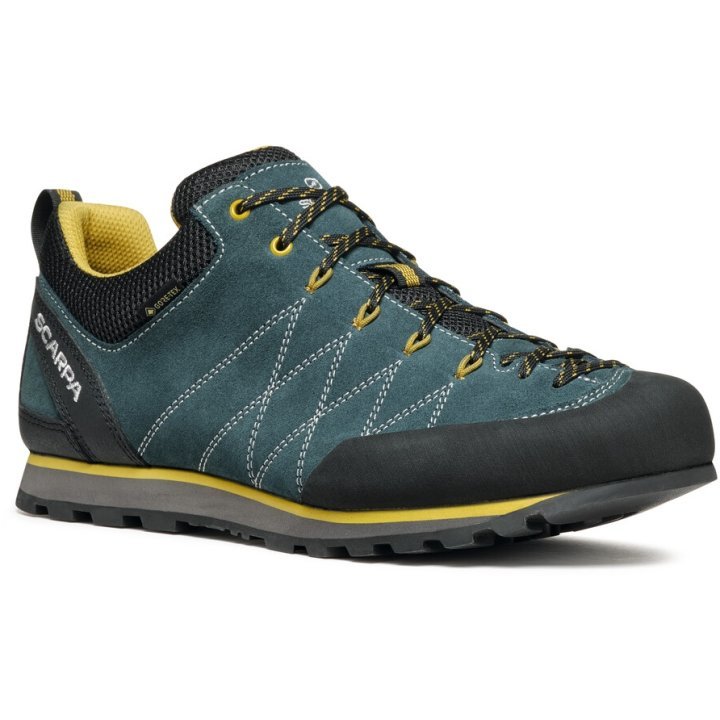
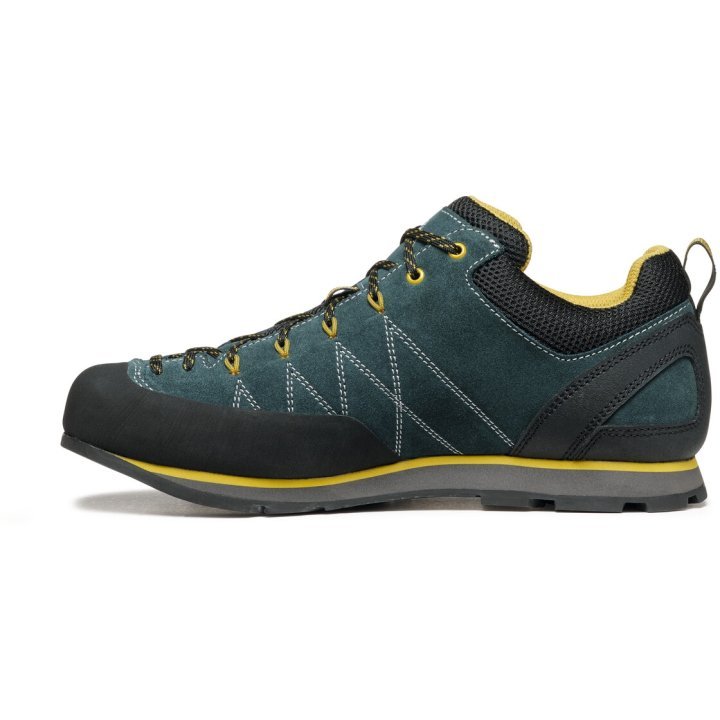
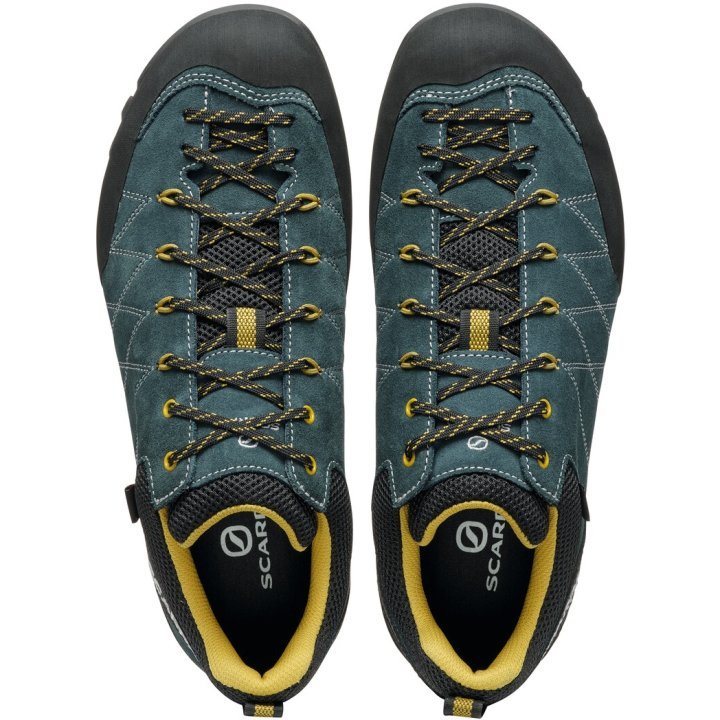
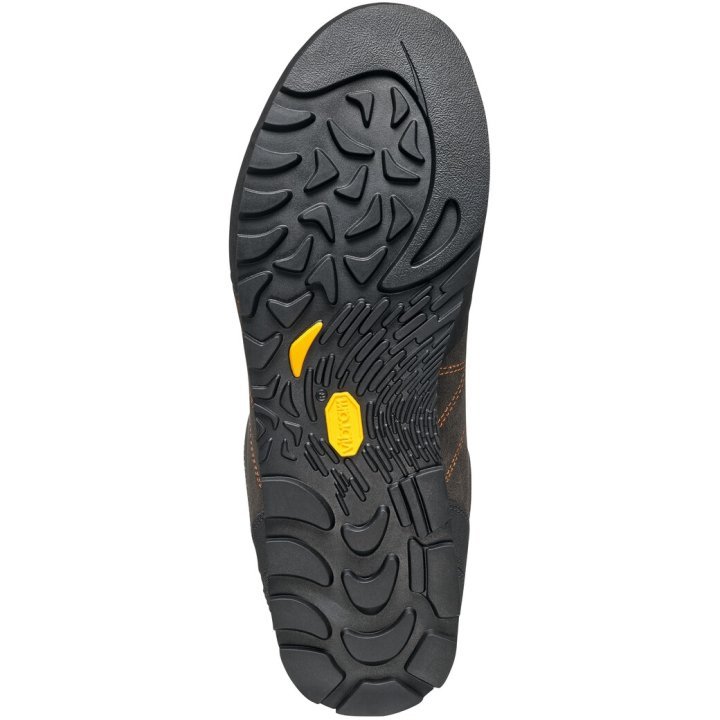
The Scarpa Crux GTX is the shoe for climbers who want a premium approach shoe without paying a premium price. At roughly £20 less than the TX4 Evo and £30 less than the AKU at current sale prices, it delivers Vibram Megagrip rubber, a leather upper with rubber rand, a GORE-TEX membrane, and a dedicated climbing zone — all the features that define a serious approach shoe — for significantly less money.
The climbing performance is genuinely good. The Megagrip sole with the flat toe zone handles easy slab sections and technical scrambling confidently. The leather upper is robust and well-constructed, and the GORE-TEX integration is effective. The shoe runs true to size, which is refreshing compared to the half-size adjustments required for some competitors.
Best for: Climbers who want a complete, capable approach shoe without overspending — and anyone building their first proper approach shoe setup.
🚐 Van-life verdict: The van climber’s cost-conscious workhorse. When you know you’ll destroy them in 12–18 months regardless, spending £120 not £200 is the rational choice — and the durability holds up.
Pros
- Best value approach shoe in this comparison
- Vibram Megagrip — same rubber as premium rivals
- Leather upper with rubber rand — durable construction
- GORE-TEX — keeps feet dry in British conditions
- True to size — no guesswork on sizing
Cons
- Slightly less stiff than TX4 Evo for technical climbing
- Heavier than La Sportiva options
- GTX reduces breathability in hot conditions
- Less refinement than more expensive alternatives
👟 What Is an Approach Shoe?
An approach shoe sits somewhere between a hiking shoe and a climbing shoe — engineered for the rocky, scrambly terrain that lies between where you park and where you climb. Unlike a hiking boot, it has a sticky rubber sole designed for friction on rock. Unlike a climbing shoe, it is comfortable enough to walk in for hours.
🥾 What makes it different from a hiking shoe?
Approach shoes use sticky rubber compounds similar to climbing shoes — Vibram Megagrip being the benchmark — rather than the harder, more durable rubber used in hiking boots. They typically have a toe rand that protects the upper and allows you to smear and edge on rock. The sole profile is flatter and less lugged than a hiking boot, which is better on rock but worse on muddy trail.
🧗 What makes it different from a climbing shoe?
Approach shoes are comfortable to walk in for hours — they have a cushioned midsole, a roomy toebox, and a natural flat last. Climbing shoes are typically very uncomfortable to walk in for more than a few minutes — they are designed to concentrate force on the toe and edge, often with significant downturn and a very aggressive fit. Approach shoes sacrifice some of that precision for wearability.
For short approaches on good paths to bolt-protected sport crags, a comfortable trail shoe or even a sturdy trainer does the job. Approach shoes earn their value on rocky, pathless approaches, on technical scrambles where you are moving up exposed terrain without a rope, on via ferratas, and on any situation where you might need to climb moderately in the same shoe you hiked in. I can also strongly recommend this type of shoes for Vanlifers — we are personally almost always in mountains, or at least close to trails and climbing spots, and these can go anywhere, along with being your friends for city visits or long walks anytime you need. A good approach shoe pairs naturally with the right pack — see our best climbing backpacks guide for the equivalent breakdown on carrying your gear to the crag.
🎯 How to Choose the Right Approach Shoe
| Your Priority | What to Look For | Avoid | Our Pick |
|---|---|---|---|
| Technical climbing performance | Vibram Megagrip, stiff sole, dedicated climbing zone | Cushioned, flexible soles | La Sportiva TX4 Evo |
| Long approaches in heat | Unlined upper, wide toebox, no GTX | Leather + GTX in summer | Scarpa Rapid XT (non-GTX) |
| UK / wet weather use | Full GORE-TEX, rubber rand, climbing-specific lacing | Fabric uppers without waterproofing | Salewa Wildfire 2 GTX |
| Best value first pair | Megagrip sole, leather upper, GTX, true sizing | Very cheap rubber compounds | Scarpa Crux GTX |
| Wide feet | Scarpa’s wide ergonomic last — roomier than La Sportiva | La Sportiva TX series without trying first | Scarpa Rapid XT |
| Resoleability / longevity | La Sportiva Resole Platform | Glued-only construction | La Sportiva TX4 Evo |
GTX or No GTX?
GORE-TEX keeps your feet dry but reduces breathability significantly — a GTX shoe in Spanish summer heat is noticeably more uncomfortable than a non-GTX alternative. For UK and mountain climbing where wet approaches are common, GTX is worth the extra cost. For Mediterranean sport climbing in dry conditions, the non-GTX version keeps your feet cooler and lighter. Many experienced climbers own both. If you can only own one, and you climb in the UK or in variable European mountain weather, go GTX.
Fit Comparison — How These Shoes Compare Side by Side
Approach shoe fit varies dramatically by brand. Here’s how the 5 shoes in this guide compare, based on our own reviewing plus consensus from OutdoorGearLab, GearJunkie and UKC forum reports.
| Shoe | Runs | Width | Toebox | Best for |
|---|---|---|---|---|
| AKU Rock DFS II GTX | True to size | Medium | Neutral | Medium-width feet, average volume |
| La Sportiva TX4 Evo | Half small — size up 0.5 EU | Narrow | Precise / tapered | Narrow feet, technical climbing |
| Scarpa Rapid XT | True to size | Wide | Wide, ergonomic | Wide feet, durability over cushioning |
| Salewa Wildfire 2 GTX | True to size | Medium forefoot / narrow heel | Precise | Narrow heels, technical scrambles |
| Scarpa Crux GTX | True to size | Medium | Neutral | All-round, out-of-the-box comfort |
Quick sizing translation: If your street shoe is EU 42 → buy EU 42.5 in La Sportiva TX4 Evo, EU 42 in everything else. Always try in person if possible — fit variation between brands is significant enough that sizing charts are a rough starting point, not a reliable guide.
Sole Rubber: Megagrip vs the Rest
Vibram Megagrip has become the de facto standard for high-performance approach shoe rubber — it is stickier than standard Vibram compounds and maintains friction better on both dry and damp rock. Scarpa’s Vibram Presa and Salewa’s Pomoca Speed MTN are both good alternatives, but if outright grip on rock is the priority, any shoe with Megagrip has an advantage.
🚐 The Van Life Angle: One Shoe to Rule Them All
Living out of a van changes the approach shoe calculation. You are not choosing between approach shoes and hiking boots and climbing shoes and trail runners in a wardrobe with unlimited space. You are choosing which two or three shoes live permanently in the van and need to cover everything from a morning crag approach to an evening walk around a Spanish village to a scramble on a day off.
- Wearability off the crag — you will wear these for errands, walking around towns, sitting at a bar. They need to look reasonable and feel comfortable on flat ground, not just on rock.
- Compact packing — van storage is finite. A bulky approach shoe that needs its own dedicated bag is a compromise.
- Durability across rock types — limestone in Spain, granite in Portugal, sandstone in Font, gritstone in the Peak District. The rubber needs to work on all of them.
- Weather versatility — if you travel year-round, you will encounter everything from Mediterranean drought to Welsh autumn rain. A GTX shoe handles both; a non-GTX shoe is more comfortable in heat.
- Easy drying — a wet approach shoe that does not dry overnight is a problem when you are climbing again at 7am. Fabric uppers dry faster than leather, GTX membranes slow drying significantly.
For most van-life climbers, the La Sportiva TX4 Evo (non-GTX version) is the best single approach shoe for the lifestyle. It is light enough not to feel like a burden, versatile enough to handle every surface type, and restrained enough in appearance to be worn off the crag. The Resole Platform technology also means you can extend its life rather than having to find a replacement mid-trip. Same principle applies to your other core gear — our best climbing ropes guide covers the resoleability equivalent for ropes (dry treatments, longevity, and when to retire), and our best climbing harnesses guide does the same for harness wear indicators and retirement.
Final Recommendations
Choosing between the best approach shoes for climbing comes down to how you actually climb. For pure performance, the La Sportiva TX4 Evo is the benchmark. For the best wet-conditions shoe, the Salewa Wildfire 2 GTX is the standout. For wide feet and maximum durability, the Scarpa Rapid XT. For the best value complete package, the Scarpa Crux GTX. And if you can find them — the AKU Rock DFS II GTX is the shoe I keep coming back to, across conditions and countries, season after season.
Approach shoe fit is genuinely personal — the same model can feel perfect on one foot shape and uncomfortable on another. Always try approach shoes in person before buying. These links are for reference. Your local climbing shop deserves your business first.
🚐 Van-Life Considerations
Approach shoes designed for weekend warriors and approach shoes designed for full-time van climbers are two different products — even when the label is identical. If you’re wearing your shoes 200+ days a year across a European climbing tour, three things matter more than the reviews usually admit:
Durability weighted heavier than weight. A 30g saving is irrelevant when you’re replacing a pair every eight months. Prioritise thick suede leather uppers and full rubber toe rands over ultra-light mesh constructions. Resoleable platforms (like the La Sportiva TX4 Evo’s Resole Platform) are worth the premium — one resole extends the shoe’s life by roughly 60% for around a third of the replacement cost.
Versatility across rock types. A single European climbing tour might hit limestone, granite, sandstone… Vibram Megagrip is the gold standard for cross-rock performance — it grips consistently across all these. Softer, stickier compounds like Vibram XS Grip 2 grip better on single rock types but wear out faster in mixed use.
🌱 Why Sustainability Matters in Approach Shoes
Approach shoes are among the most environmentally-costly items in a climber’s gear list. A single pair costs £150–200, uses a mix of leather, synthetic textiles, rubber compounds, and often a GORE-TEX membrane — and most wear out in 12–24 months of regular use. For a full-time van climber going through a pair a year, that’s roughly the same annual footprint as buying a small piece of furniture.
Three practical filters cut through the marketing:
1. Recycled material content that’s actually declared. Look for specific percentages (e.g. “70% recycled insole” — Scarpa Crux GTX) rather than vague “eco-friendly” claims. Percentages mean the brand has committed to a measurable, verifiable spec.
2. Third-party certifications. bluesign® (restricted chemicals, resource efficiency), LWG (Leather Working Group — traceable leather sourcing), and Salewa Committed or Scarpa Planet Friendly designations are independent frameworks — not brand-invented labels.
3. PFC/PFAS-free treatments and resoleability. “Forever chemicals” in dry-treatment coatings persist in ecosystems for decades. And a resoleable shoe (Resole Platform, SCARPA resole centres) roughly doubles the useful life — the single biggest sustainability lever available in this category.
Every shoe in this guide has been checked against these criteria. Where a brand’s specific claim is verifiable, we’ve badged it — where it isn’t, we haven’t. No greenwashing on either side.
♻️ The Resoleability Question — The Biggest Value Lever in Approach Shoes
Approach shoe uppers typically outlast their soles by a factor of 2 or 3. That means the moment your Vibram Megagrip goes smooth, you either replace the entire £180 shoe — or you resole it for around £55–70 and get another year or two out of the upper. This is the single biggest cost and sustainability lever available in this category, yet most reviews barely mention it.
The maths: A £180 non-resoleable shoe worn 200 days/year at ~£0.90/day. A £180 resoleable shoe resoled twice at £60 each over 4 years: total £300 spread across ~800 days = £0.38/day. Same shoe, less than half the per-day cost, and one pair of shoes into landfill instead of three.
What’s actually resoleable in this guide:
- La Sportiva TX4 Evo — designed for it (Resole Platform™). Send to La Sportiva UK’s authorised cobbler network. Turnaround typically 3–4 weeks, cost around £55–65.
- Scarpa Rapid XT & Crux GTX — SCARPA offers an official resole service through authorised centres across Europe. Cost around £50–70, turnaround 4–6 weeks.
- Salewa Wildfire 2 GTX — not officially resoleable, though some independent cobblers may attempt it. Results are inconsistent and Salewa doesn’t warranty the outcome.
- AKU Rock DFS II GTX — AKU explicitly states these are not resoleable. When the sole goes, the shoe is finished.
Practical takeaway: If you climb enough to wear through a pair of approach shoes in under two years, resoleability is worth prioritising above almost every other criterion. If you’re a weekend climber going through one pair every 4+ years, it matters less.
📚 Continue Reading — Related Guides
Frequently Asked Questions
Can I use approach shoes as everyday shoes?
Yes — and many climbers do. Approach shoes are considerably more comfortable than climbing shoes for everyday wear, and most modern approach shoes look restrained enough to pass as casual footwear. The Scarpa Rapid XT and Crux in particular have been described by reviewers as comfortable enough for everyday wear — Outdoorsmagic’s tester wore the Rapid XT day to day throughout a UK summer. The one practical consideration is that sticky rubber soles like Vibram Megagrip wear faster on abrasive urban surfaces (tarmac, concrete) than on rock.
How do approach shoe sizes compare to regular shoe sizes?
La Sportiva approach shoes typically run half a European size short — size up from your normal La Sportiva climbing shoe size, or go half a size up from your regular shoe size. Scarpa approach shoes generally run true to size, though the Rapid XT has a noticeably wider toebox than the Crux. Salewa Wildfire tends to run slightly narrow in the heel. AKU runs close to true size but is narrower than Scarpa. As a general rule, always try approach shoes in person when possible — fit variation between brands is significant enough that sizing charts are a rough starting point, not a reliable guide.
Do I need GORE-TEX for climbing in Spain or France?
For dedicated summer sport climbing in the south of Spain, the Canary Islands, or the French Riviera, no — a non-GTX shoe is more comfortable and keeps your feet cooler. For climbing in the French Alps, the Pyrenees, or anywhere in the UK regardless of season, a GTX membrane is strongly recommended. Weather changes fast in mountain environments and the cost of wet feet on a long approach day is disproportionate to the marginal extra cost of the GTX version.
What is the difference between an approach shoe and a trail runner?
Trail runners are optimised for running on trails — they prioritise cushioning, flexibility, and light weight, with a rubber compound designed for grip on soil, mud, and gravel. Approach shoes prioritise rock friction — the rubber is stickier on rock surfaces, the sole is flatter for edging, and the toe rand allows smearing on vertical surfaces. For a pure approach on a good path, a trail runner is often more comfortable. For a rocky, scrambly approach with technical sections, an approach shoe is safer and more capable.
When should I replace my approach shoes?
Replace when the sticky rubber sole starts to look smooth and shiny rather than textured — worn Megagrip or Pomoca rubber loses its friction properties significantly and becomes genuinely dangerous on wet rock. Also replace if the rand separates from the upper, if the upper develops holes, or if the midsole feels collapsed. For heavily used approach shoes on rocky terrain, expect a lifespan of one to three seasons depending on frequency of use — see the UIAA safety framework for general climbing equipment retirement guidance. The La Sportiva TX4 Evo’s Resole Platform allows professional resoling before full retirement.
Are approach shoes suitable for via ferrata?
Yes — approach shoes are actually well-suited for most via ferrata routes. The sticky rubber sole handles iron rungs and rocky ledges better than hiking boots, the toe rand protects against knocking your foot on metal features, and the shoe is light enough that it does not become a burden on longer via ferrata routes. The La Sportiva TX4 Evo and Salewa Wildfire 2 GTX are both specifically recommended for via ferrata use by their manufacturers.
How do I resole my approach shoes and what does it cost?
For La Sportiva TX4 Evo: La Sportiva UK operates a Resoling Service through authorised cobblers. Send your shoes via post. Cost is typically £55–65, turnaround 3–4 weeks. Only shoes with the Resole Platform™ (TX4 Evo, TX Guide, TX2 Evo) qualify.
For Scarpa Rapid XT and Crux GTX: SCARPA runs an official resole service through authorised centres across Europe. In the UK, Feet First (Yorkshire) is one authorised centre. Cost around £50–70, turnaround 4–6 weeks. Check with SCARPA UK before sending.
Independent cobblers: If your shoes are not from a brand with an official programme, specialist mountain-boot cobblers like Feet First (UK) or Ressemelage Chambon (France) will resole most approach shoes. Cost is similar (£50–75), but the manufacturer won’t warranty the work.
When to resole vs replace: Resole when the outsole rubber is smooth but the upper, midsole and rand are still structurally sound. Replace if the upper has holes, the rand has separated from the upper, or the midsole feels collapsed.
Are approach shoes worth it for beginner outdoor climbers?
Yes — if you’re climbing outdoors more than a few times a year, an approach shoe genuinely pays for itself. Beginner outdoor climbers often make the mistake of arriving at the crag in trainers or hiking boots that either slip on the approach or force them to change into and out of their climbing shoes constantly. An approach shoe solves both problems at once — you walk to the crag in comfort, you can scramble the last section confidently, and you can wear the same shoe between climbs at the base.
If you’re on a strict first-year budget, the Scarpa Crux GTX at £109.46 (currently 25% off) delivers 85% of the performance of the premium shoes in this guide. If you’re likely to climb 30+ days a year in Europe, the La Sportiva TX4 Evo or AKU Rock DFS II GTX is worth the upgrade — both will last multiple seasons and both handle European climbing conditions better than any trail runner.
Can I use approach shoes for hiking?
Yes, and many climbers use them as their primary hiking shoe. Approach shoes handle everything from moderate day-hikes to multi-day mountain trekking, provided you’re happy with a slightly stiffer sole than a dedicated hiking shoe. On rocky, technical, or scrambly hiking terrain — which describes most of the Alps, Pyrenees, and UK mountains — approach shoes are actually a better choice than typical hiking shoes thanks to the sticky rubber sole.
For long, flat, forest-trail hiking (long-distance thru-hiking, for example), a dedicated trail runner or hiking shoe is more comfortable. But for European mountain hiking with any rocky sections, the La Sportiva TX4 Evo and Scarpa Rapid XT are both genuinely hikeable for full-day outings — though reviewers note the Rapid XT’s light padding tells on very long days.
One honest caveat: sticky rubber wears faster on hard ground than trail-runner rubber. If you’re hiking 100+ km a month on hard surfaces, expect your approach shoe soles to wear out in 12–18 months. Resoleable models like the TX4 Evo, Crux GTX, and Rapid XT solve this problem.
Do approach shoes stretch, or should I size up?
It depends on the upper material. Leather uppers (La Sportiva TX4 Evo, Scarpa Crux GTX, AKU Rock DFS II GTX) stretch measurably over the first 20–30 hours of use — expect the shoe to loosen by roughly a quarter-size in width and feel more accommodating. Buy them snug but not painful; they’ll adapt to your foot.
Suede-and-mesh uppers (Scarpa Rapid XT) stretch less than full leather. Buy close to the fit you want to keep long-term.
Kevlar-reinforced Matryx uppers (Salewa Wildfire NXT) barely stretch at all. Size for immediate comfort, not for “breaking in.”
Practical sizing summary: Buy leather shoes half a size snugger than feels perfect, expect them to loosen. Buy synthetic shoes at the exact fit that feels perfect on the first try. La Sportiva approach shoes universally run half a EU size small — size up 0.5 regardless of upper material.
🔍 Semantic & Keyword Index
Primary: best approach shoes 2026 · best approach shoes for climbing · climbing approach shoes Europe · approach shoes for trad climbing · Secondary: AKU Rock DFS II GTX review · La Sportiva TX4 Evo review · Scarpa review · Salewa Wildfire 2 GTX review · Scarpa Crux GTX review · Vibram Megagrip approach shoes · GORE-TEX approach shoes · approach shoes for van life · Long-tail: best approach shoes for limestone climbing · what approach shoe for wide feet · La Sportiva TX4 vs · do I need GORE-TEX approach shoes · best approach shoes for UK climbing · approach shoe vs hiking shoe · Scarpa Crux GTX review 2026 · approach shoes for Mediterranean climbing · van life climbing shoe one shoe quiver · resoleable approach shoes
🧗 Explore Our Climbing Guides
Detailed crag guides from our van life climbing adventures across Europe