
Best Climbing Carabiners
for Beginners
Five carabiners tested across sport and trad — what the different types actually mean, which one you need first, and how to build a rack without wasting money.
Carabiners are the component most new climbers get wrong. Not because they choose a dangerous one — all CE-certified carabiners are strong enough — but because they buy the wrong type for how they’re actually climbing. This guide helps supporting which one should be the one for you.
The truth is, for a beginner heading outdoors, you probably need two things in your first six months: a solid HMS screwgate for belaying, and a handful of wire-gate non-lockers for quickdraws. Everything else is refinement. This guide covers the five best carabiners for those building their first rack in 2026 — one for each critical role — with honest context about where each type sits in the system and why it matters.
Carabiners are the kind of gear your local shop staff know inside out — they’ve handled hundreds and can show you the gate action and feel in your hand before you buy. These links are for reference. If there’s an independent climbing shop near you, give them your business first.
🔗 Carabiner Types Explained — Before You Buy Anything
Walk into any gear shop and you’ll see dozens of different carabiners. Understanding the three key variables — shape, gate type, and locking mechanism — makes everything else much clearer. Ask your local shop for advice when buying, do not rely only on websites 🙂
🍐 HMS / Pear-Shaped
Wide at the top, narrowing toward the bottom. The shape you need for belaying — it allows the rope to run smoothly through a tube device or ATC, and is the only shape that works reliably with a Munter hitch in an emergency. Every beginner needs at least one. Also used for anchor master points.
🔺 Asymmetric D-Shape
The most common shape for non-locking carabiners. Slightly smaller at one end, which concentrates the load on the stronger spine side. Used for quickdraws, racking gear, and everywhere you need a reliable, lightweight clip that isn’t belaying. The workhorses of any rack.
⭕ Oval
The original carabiner shape — symmetrical top and bottom. Less common now, but genuinely useful for racking nuts and cams because gear sits centred rather than sliding to one end. Heavier than a D-shape but excellent for rack organisation on trad routes and aid climbing.
🔒 Screwgate (Locking)
A threaded sleeve manually screwed over the gate nose to lock it closed. The standard for beginners — reliable, simple, and the cheapest locking option. The only disadvantage is user error: you have to remember to screw it. Always check your screwgate before climbing. Always.
🔄 Auto-locking (Twistlock)
Spring-loaded to lock automatically when you release the gate. Faster and less reliant on remembering to close, but slightly heavier and harder to operate one-handed in awkward positions. Good for experienced climbers at anchors; less important for beginners still building technique.
🪡 Wire Gate
A thin loop of wire instead of a solid gate. Lighter than a solid-gate carabiner and less prone to gate flutter — a brief opening of the gate during a fall caused by vibration. The best choice for non-locking quickdraw and trad rack carabiners. Not for belaying or anchors.
Always use a locking carabiner — screwgate or auto-lock — for your belay device, your anchor attachment, and any safety-critical connection. Non-locking wire-gate carabiners are for clipping bolts and racking gear. These two categories are never interchangeable on critical points.
📊 Quick Comparison Table — Best Carabiners for Beginners 2026
| Carabiner | Price | Weight | Type | Best For | Score |
|---|---|---|---|---|---|
| Petzl Attache HMS Our Choice |
~€17 | 51g | HMS Screwgate | Belaying, anchors, all-round first locker | 9.3/10 |
| Black Diamond RockLock HMS Best Workhorse |
~€15 | 85g | HMS Screwgate | Heavy-Duty Belay | 9.1/10 |
| DMM Phantom HMS Best Trad |
~€18 | 56g | HMS Screwgate | Trad anchors, multi-pitch, racking | 9.2/10 |
| Mammut Crag HMS Best Anchor |
~€21 | 80g | HMS Screwgate | Master Points | 9.0/10 |
| AustriAlpin Rondo HMS Best Value |
~€12 | 80g | HMS Screwgate | Budget All-rounder | 8.8/10 |
1. Petzl Attache
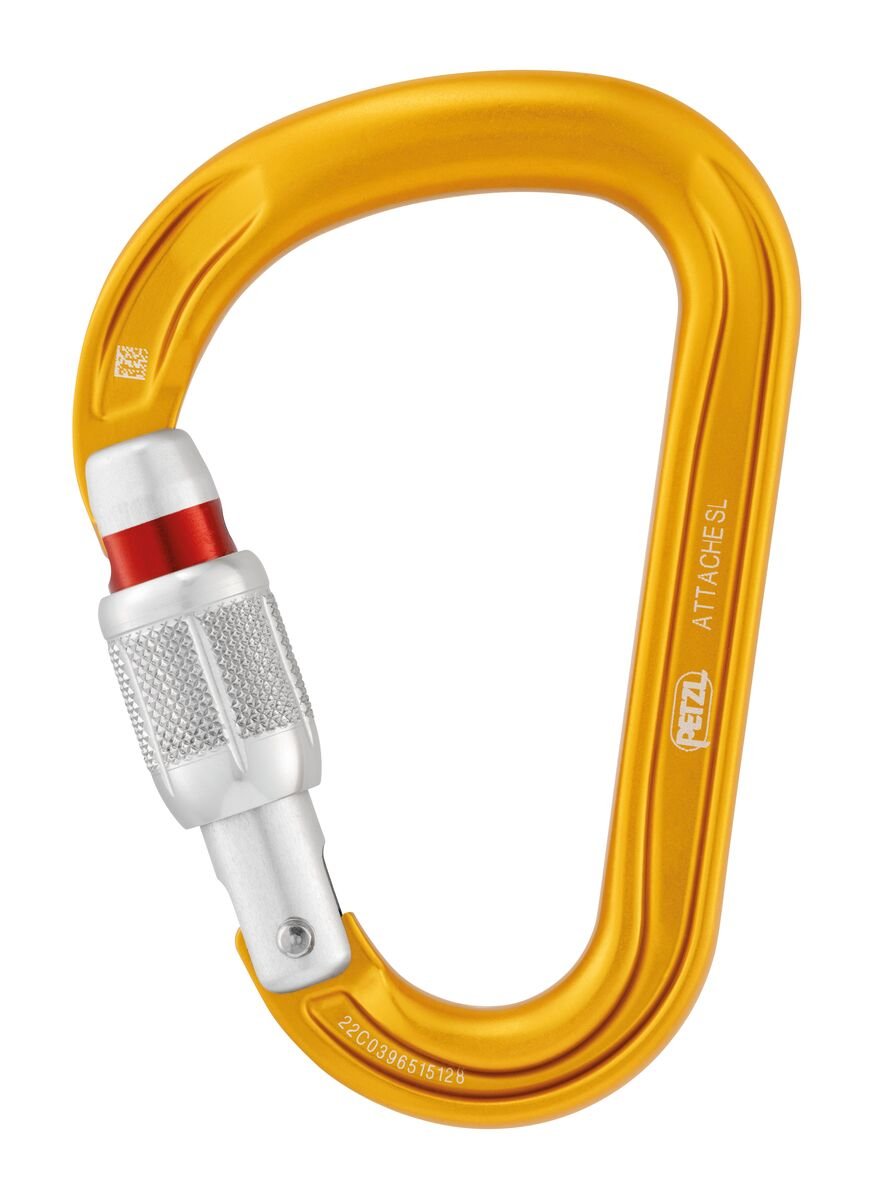
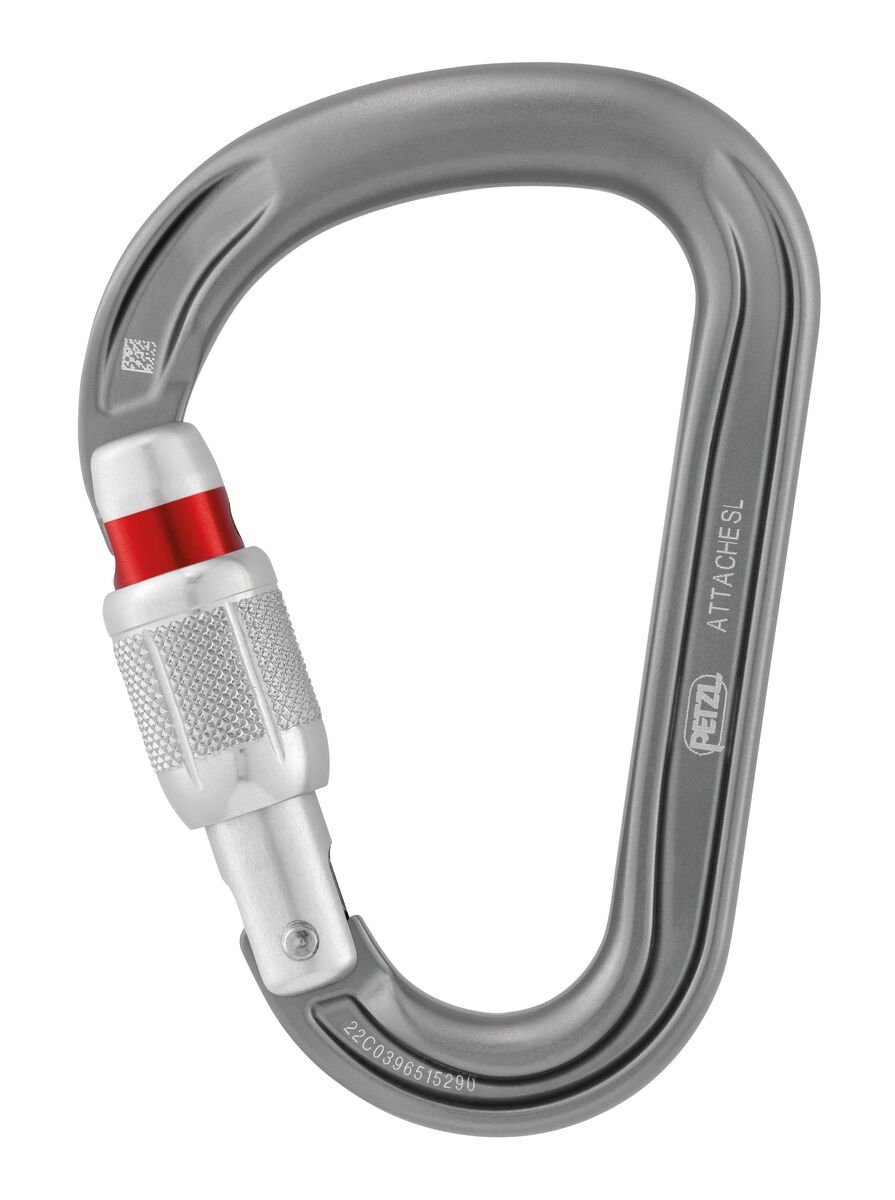
Petzl Attache
The most versatile locking carabiner you can buy — HMS shape, screwgate, security indicator, and the smoothest gate action in its class. The first locker every climber should own.
Score Breakdown
Key Specs
Detailed Review
If you buy one locking carabiner as your first piece of climbing hardware, make it the Petzl Attache. The pear-shaped (HMS) design means it handles everything you need as a beginner: it works with every tube-style belay device, it can take a Munter hitch in an emergency, it clips cleanly into bolt anchors, and it is genuinely comfortable to operate with cold or tired hands. At 51g it is among the lightest HMS lockers on the market, which matters more than it sounds when you are wearing it all day.
The defining feature — and one that sets it apart from similarly-priced HMS lockers — is the red security indicator. A bright red stripe is visible when the screwgate is open or only partially closed, and disappears completely when it is properly locked. For beginners still building the habit of checking their safety system, being able to glance down and instantly confirm the locker is closed is genuinely valuable.
One honest caveat: the screwgate can over-tighten if you twist too hard when locking it, making it briefly stiff to open again. It’s easily avoided by screwing just until it seats, not cranking it closed.
What It Does Well
- Red security indicator — instantly shows locked status
- HMS shape works with every tube belay device
- Keylock nose — no snagging on bolt hangers or chains
- Smooth, confident gate action in all conditions
- Light for an HMS at just 51g
- Excellent value for a best-in-class locker
Where It Falls Short
- Screwgate can seize if over-tightened
- Not the choice for ultra-weight-conscious multi-pitch racks
- Gate opening (20mm) is slightly narrower than some HMS alternatives
- Manual locking requires discipline — an auto-locker is safer for distracted climbers
2. Black Diamond RockLock
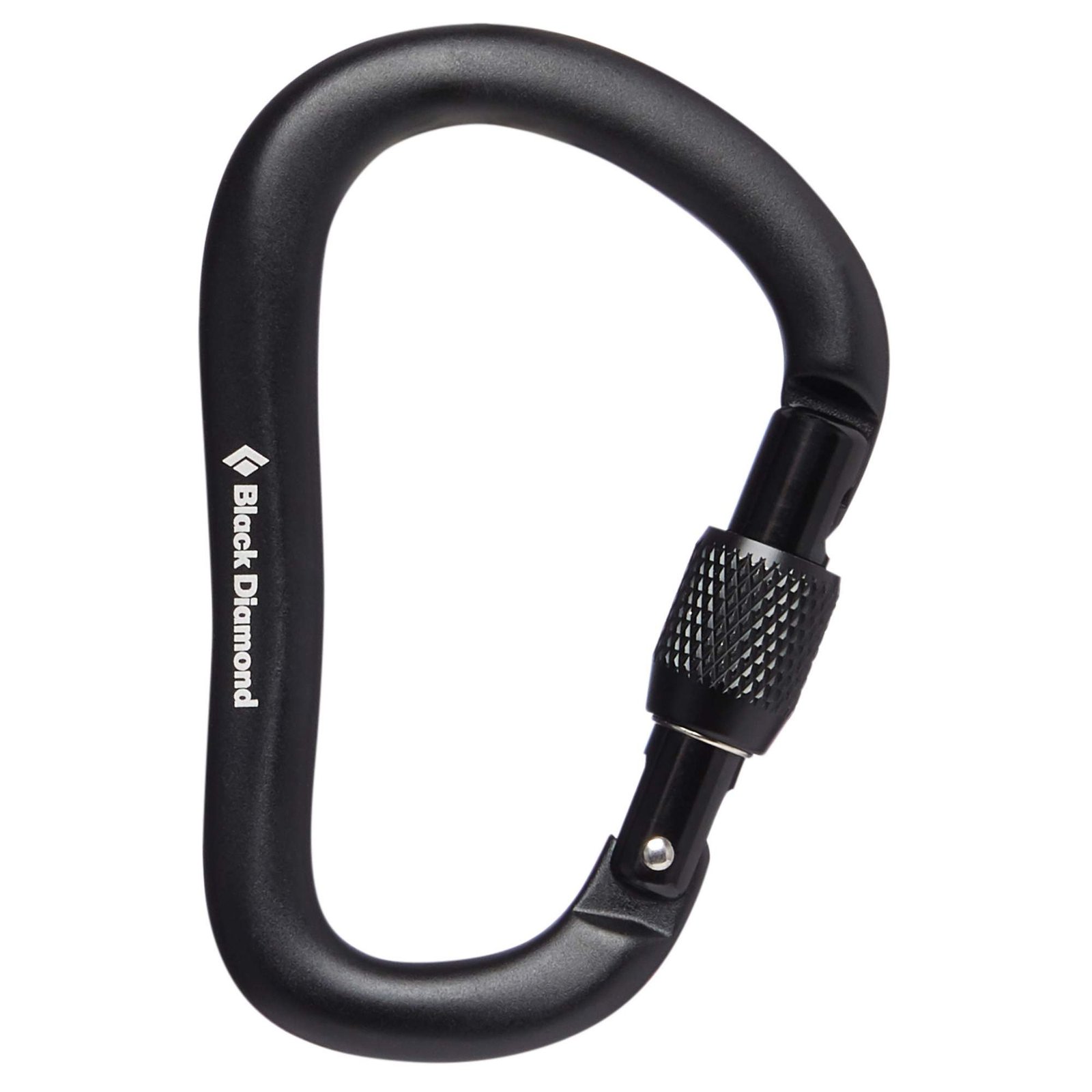
Black Diamond RockLock
The quintessential HMS workhorse. Large, smooth, and incredibly dependable — designed for effortless belaying, smooth rappelling, and managing complex anchors without the rope bunching or sticking. We personally got this one in addition to our DMM HMS when we started learning double roping.
Score Breakdown
Key Specs
Detailed Review
The Black Diamond RockLock is the definitive HMS locking carabiner. Its oversized, pear-shaped geometry is specifically designed to handle the Master Point of an anchor or to house your belay device. Because the top of the carabiner is so wide, it allows ropes to move freely, making it the best choice for anyone using a Munter hitch or Clove hitch.
One of the RockLock’s standout features is its slightly curved spine, which increases the gate opening. This makes it much easier to clip into fat slings or multiple ropes at a crowded belay station. The square-hinge end holds the belay loop of your harness securely in place, reducing the chance of the carabiner flipping sideways and cross-loading during a fall.
While it isn’t the lightest locker on the market at 85g, that weight comes with a major benefit: durability. The rope-bearing surface is wide and rounded, which dissipates heat better during long rappels and reduces the wear on your rope.
What It Does Well
- Oversized HMS Shape — massive room for knots and hitches
- Smooth Rope Glide — rounded basket prevents rope pinching
- One-Handed Operation — smooth screwgate action
- Square Hinge End — reduces dangerous cross-loading
- High Durability — built to withstand heavy rappelling heat
Where It Falls Short
- Heavy — at 85g, it adds weight to a light rack
- Bulky — takes up significant space on gear loops
- Manual Lock — requires the user to remember to screw it shut
- Too large for quickdraw or simple gear clipping
3. DMM Phantom HMS
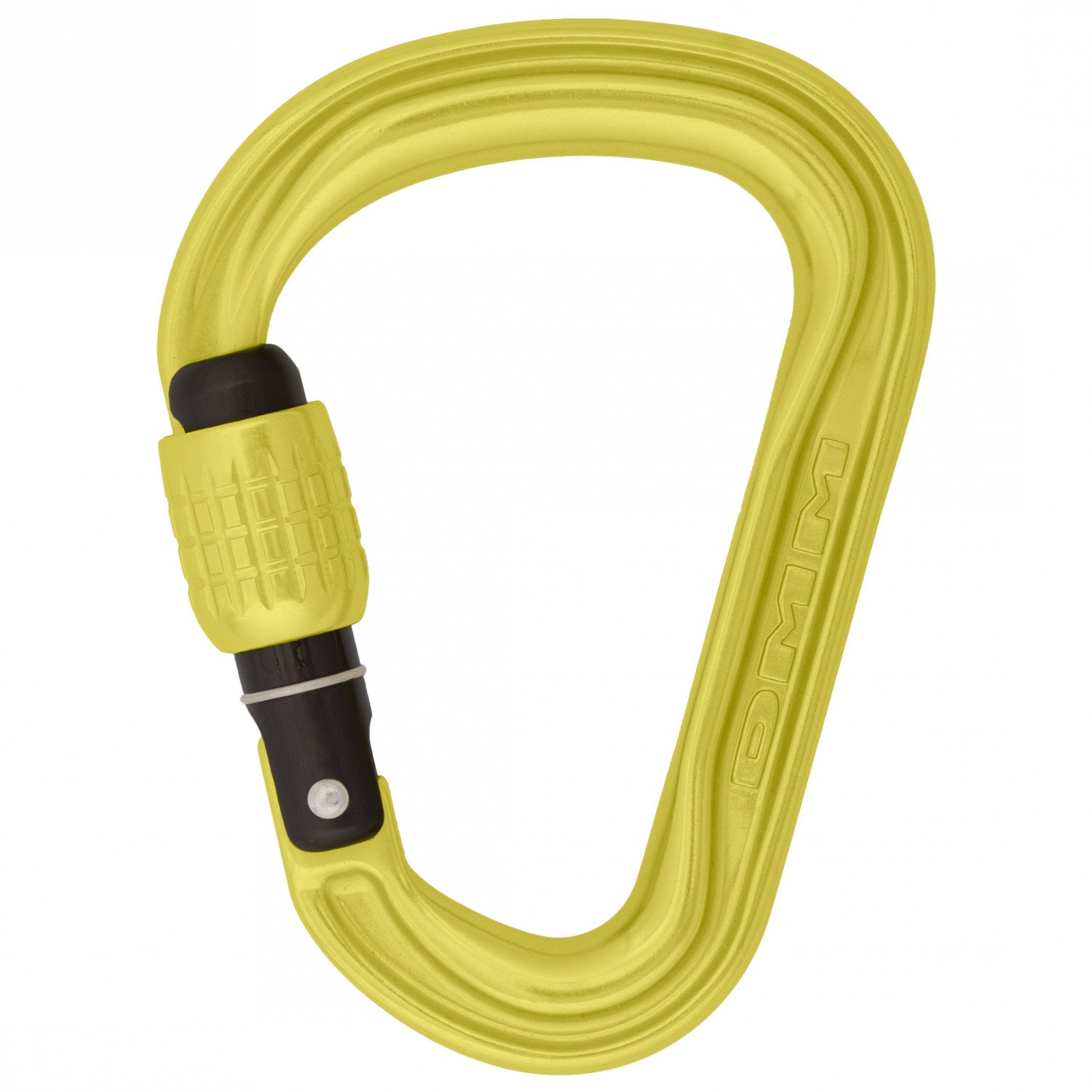
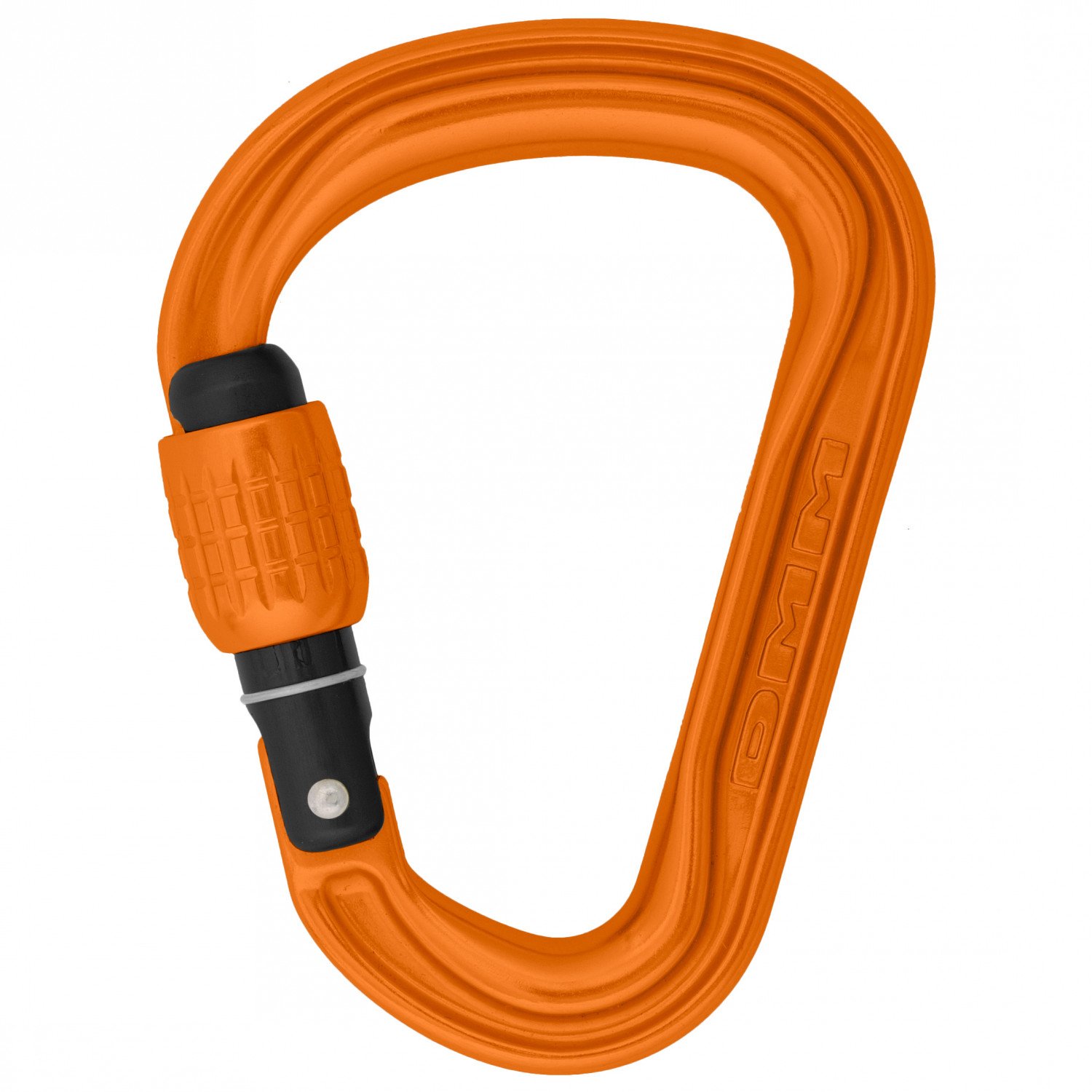
DMM Phantom HMS
The lightest locking carabiner we’ve tested — made in Wales and engineered for weight-conscious trad racks. It’s so effective it’s often sold as the standard kit companion for high-end belay devices. See our best belay devices comparison
Score Breakdown
Key Specs
Detailed Review
DMM makes hardware in Llanberis, Wales — the epicentre of British trad climbing — and the Phantom HMS reflects exactly those priorities. It’s light enough for long alpine approaches but has a wide, rounded top bar that makes belaying with a tube-style device or a Munter hitch incredibly smooth. This is why you’ll almost always see it sold as a kit with the DMM Pivot.
What sets the Phantom HMS apart is the “short gate” design. By shortening the gate, DMM has created more internal working space than you’d expect from a mid-sized carabiner. It can comfortably fit two clove hitches, making it a dream for multi-pitch anchors where gear space on the master point is at a premium. The I-Beam construction keeps the weight down to 56g without sacrificing the feel you want when catching a fall.
If you find the RockLock too heavy and a standard D-locker too small, this is your “Goldilocks” carabiner. It’s slim, snag-free thanks to the keylock nose, and arguably the most beautiful piece of hardware on this list — classic Welsh engineering that balances ultralight performance with everyday belay reliability.
What It Does Well
- Incredible Weight Savings — a true HMS locker at only 56g
- Perfect Belay Geometry — wide top for smooth rope run
- Short Gate Design — more internal room for hitches and knots
- Keylock nose — snag-free clipping on anchors and gear
- Built in Wales — exceptional engineering and quality control
- Instructor Recommended — the ideal first locker for trad beginners
Where It Falls Short
- Mid-sized — smaller hand-feel than full-size HMS biners
- Thin Sleeve — screwgate sleeve is narrower than Petzl’s chunky design
- Premium Price — you pay for high-end Welsh forging
- Less widely stocked in continental Europe than Petzl equivalents
4. Mammut Crag HMS
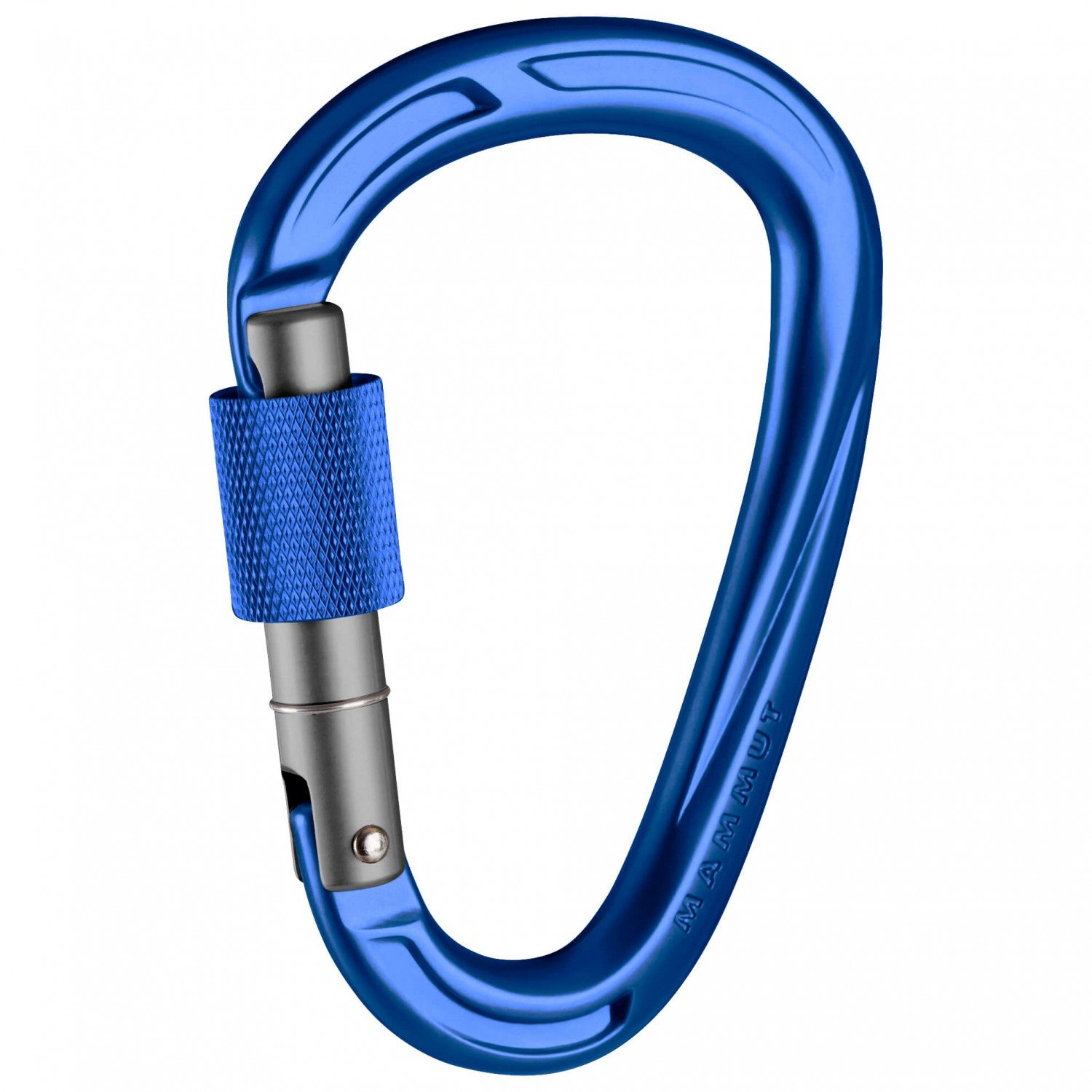
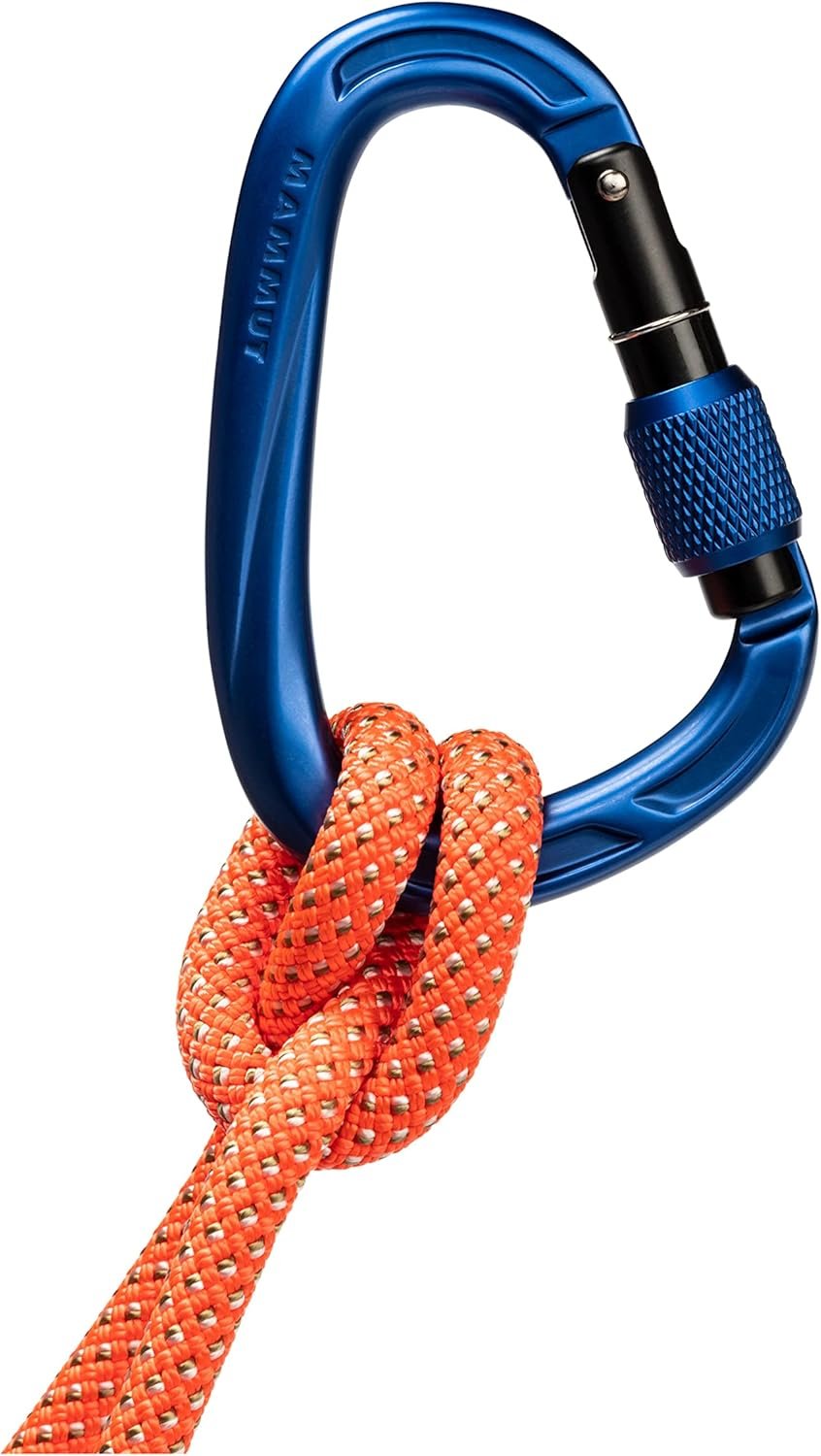
Mammut Crag HMS
A wide-basket HMS with a 27mm gate opening and 75mm of basket depth — when you’re belaying two climbers from an anchor or managing a complex masterpoint, this is the carabiner to reach for.
Score Breakdown
Key Specs
Detailed Review
There is a meaningful difference between a standard HMS locker and a purpose-designed anchor/belay HMS — and the Mammut Crag HMS sits firmly in the latter category. The 27mm gate opening is one of the widest tested across similarly-priced HMS carabiners, which makes a practical difference when threading a thick knot through quickly, tying a clove hitch in a rush, or clipping in multiple strands at a belay station.
At 80g it is the heaviest carabiner in this comparison by some margin. That weight is the deliberate result of more material in the cross-sections, which translates to greater durability at a point that sees significant wear: the anchor masterpoint, where the belay device sits and the rope runs repeatedly. The Mammut will outlast lighter lockers in this specific application.
The combination of a very wide gate opening and a deep, spacious basket makes this the best HMS in this price bracket for pure belay station use. The Petzl Attache is more versatile and the better first purchase for a beginner who needs one locker to do everything. But for climbers moving into multi-pitch trad where anchor management gets complex, the Mammut Crag HMS earns its place on the rack.
What It Does Well
- 27mm gate opening — among the widest in class
- 75mm basket depth handles multiple strands comfortably
- Robust construction — built for heavy anchor use
- Excellent for belaying a second or hauling from a station
- Works flawlessly with a Munter hitch as emergency backup
- Consistent quality from a Swiss manufacturer with decades of track record
Where It Falls Short
- 80g — the heaviest carabiner here; impractical to carry multiples
- Bulkier than the Petzl Attache for everyday single-pitch use
- No lock indicator — must visually check the gate is closed
- Overkill for beginners doing single-pitch sport only
5. AustriAlpin Rondo
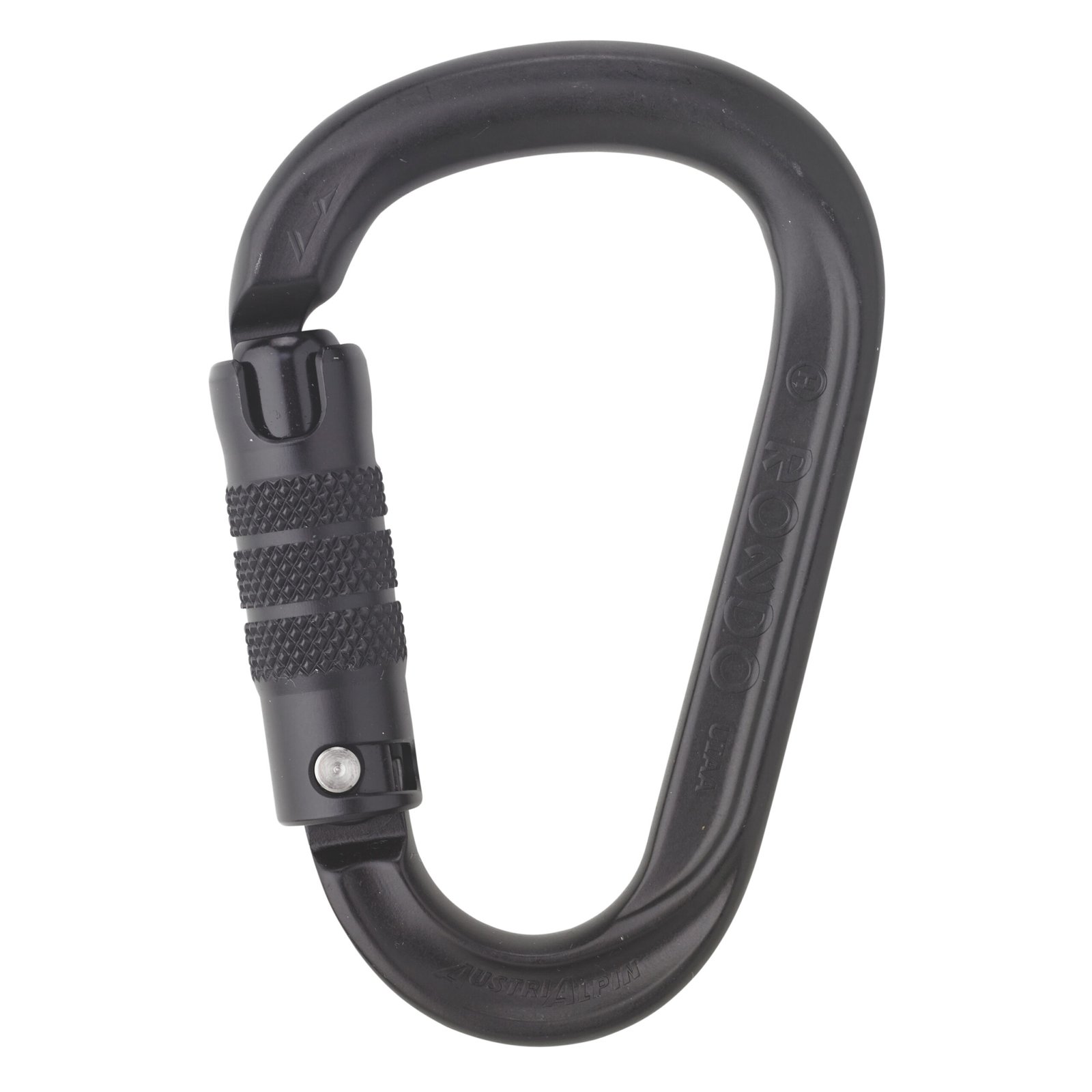
AustriAlpin HMS Rondo
Forged in the Stubai Valley, the Rondo is the ultimate budget workhorse. It offers professional-grade features like a brass screw-sleeve and self-cleaning threads at a price that makes building a full rack affordable.
Score Breakdown
Key Specs
Detailed Review
The AustriAlpin HMS Rondo keeps appearing in conversations about underrated European gear — and the reason is straightforward. At approximately €18–22 and 87g, it sits at a genuinely competitive price point for a full-size HMS, yet it passes all UIAA/CE safety standards and is made by an Austrian manufacturer with decades of hardware pedigree.
The HMS pear shape is specifically designed for the munter hitch and for use with tube-style belay devices like the Black Diamond ATC or Petzl Reverso. The Rondo’s generously sized pear accommodates all standard plate devices without pinching, and the gate opening is wide enough to clip comfortably with gloves on. The keylock nose design eliminates the snagging on bolts and gear loops that plagues older notched-nose designs.
The screwgate sleeve is smooth and positive without being stiff — it locks fully with half a turn and stays locked under load. The one honest consideration is weight: at 87g, the Rondo is on the heavier side compared to ultralight titanium HMS options, but those alternatives cost two to three times as much. For the climber who wants a solid, dependable, full-featured belay carabiner at a fair price, the AustriAlpin HMS Rondo is difficult to fault.
What It Does Well
- Keylock nose — no snagging on bolt hangers or gear loops
- 26mm gate opening — comfortable with gloves on
- Round profile prevents sharp edges from rope friction
- Strong at 23 kN major axis — full UIAA/CE certification
- Made in Austria — genuine European manufacturing pedigree
Where It Falls Short
- 87g — heavier than ultralight HMS alternatives at the same price point
- Autolock slider can feel stiff until broken in
- Limited availability outside specialist European retailers
- Screwgate version requires two hands to open under load
🏭 The Best Climbing Carabiner Brands
These are the five brands whose carabiners consistently appear on the racks of serious European climbers — from beginners buying their first locker to guides building a professional kit.
🎯 How to Build Your First Carabiner Rack
Most beginners overthink this. Start simple, buy quality, add gradually as your climbing develops. Here is what actually matters for the first year of outdoor climbing.
🔒 Start With Two Lockers
Before anything else: own one locking carabiner. This is your belay carabiner — it lives on your harness and goes on your belay device every single session. When you’re top roping and need to set up at the anchor, two quickdraws clipped through the anchor rings and back to your rope is a standard and perfectly solid approach. One good screwgate HMS, owned from day one, is the foundation of your personal safety kit — don’t borrow it from someone else.
🏃 Build Quickdraws Gradually
For your first outdoor sport sessions, ten quickdraws is a solid starting kit — enough for most single-pitch routes up to 25 bolts. Build them yourself using two carabiners and a 12cm dogbone sling; it costs less than pre-made draws and lets you choose your hardware. Use a straight-gate carabiner on the bolt end and a bent-gate on the rope end.
📅 When to Retire a Carabiner
Retire any carabiner that shows visible cracks, deep grooves worn by the rope, a damaged or sluggish gate, corrosion, or that has been dropped from significant height onto hard ground. There is no fixed lifespan in years — condition matters more than age. Inspect before each session; replace if in doubt. A new carabiner costs €9–20. There is no good reason to climb on compromised hardware.
🚫 Never Do This
Never load a carabiner across the minor axis (sideways on the gate). Never climb on a non-locking carabiner as your only belay attachment. Never use a carabiner as a pulley — it creates localised wear that weakens the spine rapidly. Never mark aluminium carabiners with paint or adhesive labels that could hide cracks. Never use gear you cannot identify the manufacturer and certification of.
🧗 Complete Your Van Life Climbing Rack
Carabiners sorted — now make sure the rest of your system is ready.
❓ Frequently Asked Questions
What is the difference between a locking and non-locking carabiner?
A locking carabiner has a mechanism — a screwgate sleeve, twistlock, or auto-lock — that prevents the gate from opening accidentally. These are mandatory for any safety-critical connection in your climbing system: your belay device, your connection to an anchor, and any point where accidental gate opening could cause serious injury. A non-locking carabiner relies only on a spring to keep the gate closed — it can open under the right combination of forces or angles. Non-locking carabiners belong on quickdraws, racking trad gear, and anywhere the consequence of an accidental opening is manageable rather than catastrophic.
How many carabiners does a beginner actually need?
For your first outdoor sport climbing sessions: one locking carabiner for belaying and ten quickdraws. That is twenty-one carabiners total, which sounds like a lot until you realise quickdraws are typically bought in sets. At the anchor when top roping, two quickdraws through the rings and back to the rope is standard practice — no second locker needed. For trad climbing, add three to five additional locking carabiners for anchor building. Build gradually — there is no need to own everything before you start climbing outdoors.
What does HMS mean on a carabiner?
HMS stands for Halbmastwurf-Sicherung — German for “half-clove hitch belay” — which refers to the Munter hitch, a friction knot used as an emergency belay method. An HMS carabiner is specifically designed to accommodate a Munter hitch correctly: the wider, more symmetrical top curve of the pear shape allows the knot to pass and invert as needed during braking. Never use a D-shaped or oval carabiner as your primary belay carabiner — always use an HMS or pear-shaped locker.
Can I use the same carabiner for sport and trad climbing?
Yes, with nuance. Your HMS locking carabiner works identically in both disciplines. Your non-locking carabiners for quickdraws work equally well clipping sport bolts or extending trad gear placements. The meaningful difference is in the quantity and configuration of lockers you carry: sport climbing typically requires two lockers, while trad needs three to five for building proper multi-point anchors. The Petzl Attache we recommend as the first locker works perfectly in both contexts.
Why does the carabiner shape matter for belaying?
The shape of the carabiner directly affects how a belay device functions. A tube-style device like an ATC needs to be able to rotate and seat properly on the carabiner spine. An HMS shape — wider and more symmetrical at the top — allows this rotation and ensures the device stays oriented correctly during both paying out slack and catching a fall. Always belay with an HMS-shaped locker; it’s not a preference, it’s a functional requirement.
Are wire gates actually as safe as solid gates?
Yes — all CE-certified carabiners, whether wire or solid gate, pass the same minimum strength requirements. Wire gates have a specific structural advantage: they are far less susceptible to gate flutter, which is a brief opening of the gate caused by the vibration of a fall. A solid gate’s higher mass gives it more inertia to overcome the closing spring; in a dynamic fall, this can momentarily reduce the carabiner’s effective strength. A wire gate’s low mass means the spring closes it almost instantaneously. This is why wire gates have largely replaced solid gates on quickdraws and trad racks among experienced climbers.
Should a beginner buy an auto-locking carabiner instead of a screwgate?
Auto-locking carabiners are harder to open one-handed and often require a specific two-action motion to operate — which can be awkward when you are learning and not yet familiar with the mechanism. A screwgate requires conscious action to lock but is more intuitive to use in a variety of positions and conditions. Our recommendation for beginners is a screwgate HMS like the Petzl Attache — ideally one with a security indicator. Once you are comfortable with the system and have strong locking habits, moving to an auto-locker is a reasonable upgrade.
How do I know when to retire a carabiner?
There are clear signs: any visible crack, chip, or sharp edge on the body; a groove worn into the spine or nose by rope friction that you can feel with a fingernail; a gate that does not spring fully closed or that sticks; corrosion or pitting on the aluminium; any carabiner that has been dropped from height onto hard ground. Most manufacturers recommend retiring after ten years of regular use as a general guideline, or sooner if any of the above conditions apply. When in doubt, retire it.
🔍 Semantic & Keyword Index
Primary: best climbing carabiners beginners • which carabiner to buy climbing • climbing carabiner guide Europe 2026 • Secondary: Petzl Attache review • DMM Phantom screwgate • Black Diamond RockLock carabiner • Mammut Crag HMS • AustriAlpin Rondo • HMS carabiner belaying • screwgate vs auto-lock carabiner • wire gate vs solid gate climbing • carabiner types explained • trad climbing carabiners • Long-tail: what carabiner do I need for sport climbing • how many carabiners for trad climbing • best locking carabiner for beginners • what is an HMS carabiner used for • when to retire a climbing carabiner
🧗 Explore Our Climbing Guides
Detailed crag guides from our van life climbing adventures across Europe
🇪🇸 Spain
🇫🇷 France
🇵🇹 Portugal
🇬🇧 UK
🇮🇹 Italy
🇩🇪 Germany
- Guides Coming Soon...