Penha Garcia Climbing Guide
Portugal’s Quartzite Gorge — Sport Routes, Multi-Pitch & Vanlife
🇵🇹 Beira Baixa, Portugal | 🧗 60+ Routes | 🪨 Quartzite
| 📍 Location | Beira Baixa, Portugal (near Spanish border) |
| 🚗 Distance from Lisbon | ~2h 30min (230 km via A23/IP6) |
| 🧗 Climbing Styles | Sport, trad, multi-pitch |
| 🪨 Rock Type | Quartzite |
| 📏 Route Heights | 8–45m |
| 🌤️ Best Season | March–May & September–November |
| 📶 Mobile Coverage | Good in village; limited at crags |
| 🚐 Van Parking | Excellent — wild camping very tolerant inland |
| 💰 Daily Budget | €10–20 (vanlife, self-catering) |
| 🗺️ Digital Topo | 27Crags — Penha Garcia |
Planning the full inland loop?
Penha Garcia pairs perfectly with Marvão & Escusa — granite bouldering under a medieval fortress, just 1 hour away. Read our dedicated guide:
Marvão & Escusa Climbing Guide →Why Penha Garcia? Portugal’s Most Atmospheric Gorge Climbing
There’s a version of Portugal that most visiting climbers never see. They land in Lisbon, drive to Sintra or Arrábida, tick the classics, and head home. They miss the interior — and in missing it, they miss something genuinely special.
Penha Garcia sits in the wild, largely unpopulated borderlands between Portugal and Spain. This is cork oak and olive country, where village life moves at a different pace, where you can park your van for three nights without seeing another soul, and where the rock — quartzite, hard and textured — tells a completely different story to the limestone sea cliffs of the coast.
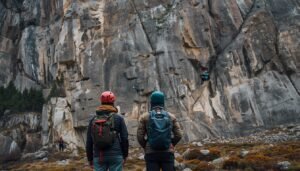
Penha Garcia is a village built into a gorge. The climbing sits directly alongside the Pônsul river, intertwined with old stone watermills, castle fortifications, and medieval walls. Routes range from friendly French grade 3 slabs suitable for beginners to technical 7c sport challenges. Heights range from 8 to 45 metres, with multi-pitch routes for those who want to go longer.
Penha Garcia — Climbing in the Gorge
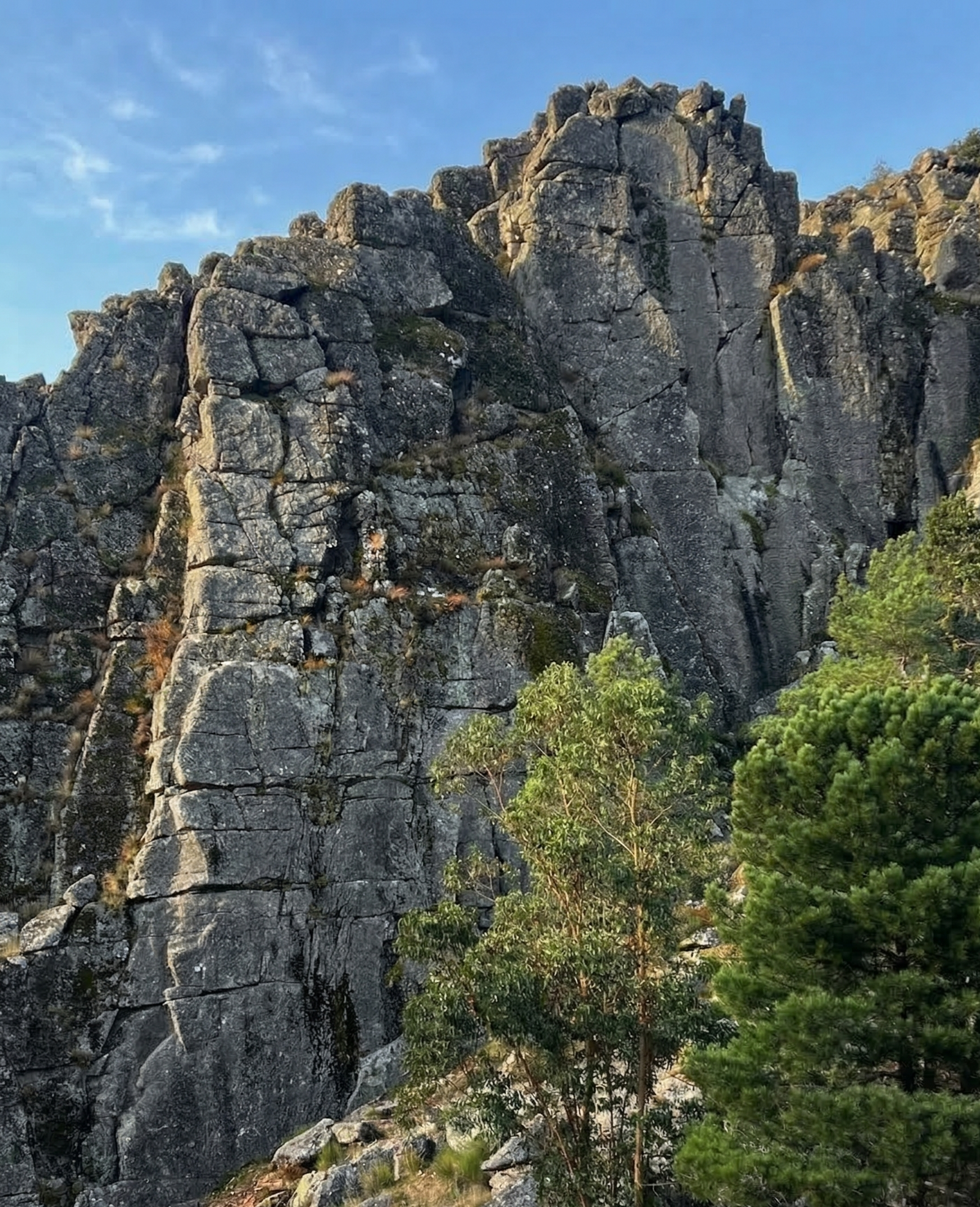
The village of Penha Garcia is one of those places that stops you in your tracks the moment you arrive. Stone houses cluster around a medieval castle on a quartzite ridge above the Pônsul river. Below, old stone watermills line the riverbank — some still partially intact — and the climbing walls rise directly from this landscape, as if the rock and the village grew up together.
The rock is quartzite: harder, sharper, and more textured than limestone. Routes feature a mixture of technical slabs, vertical walls, crack systems, and more athletic overhanging sections. The holds are varied — crimps, pockets, slopers, and the occasional jug on steeper ground. Because quartzite is less porous than limestone, it dries very quickly after rain, making Penha Garcia a reliable option even in shoulder-season weather.
The equipped routes — the bolted sport lines — have been thoroughly cleaned, but the local climbing community notes that moderate attention is required on some routes to avoid potential falls of loose blocks or slabs, particularly on older trad lines. Check the current condition of any unfamiliar route before committing to it, especially after prolonged dry spells when rock can be more friable.
The Main Sectors
🐢 Placa das Tartarugas
- The main slab sector — most routes are here
- Vertical to slightly slabby quartzite
- Best for beginners and intermediates
- Routes 10–20m, 4–6 bolts
- Named routes: Passeio das Tartarugas (5b), Vai de Plaque (4b), Carro Vassoura (3c)
- Good shade in the afternoon — faces north
🏰 Cova do Castelo
- Below the castle fortifications
- More athletic, steeper routes
- Harder grades dominate — 6a to 7c
- Routes include: Boa Broca (6b), Banho de Água Fria (6a+), De Caixão à Cova (7b)
- Some multi-pitch potential
- More sustained climbing than Tartarugas
⛏️ Pilar dos Cagados
- Mid-grade sector above the riverbank
- Named after the turtles found in the river below
- Excellent beginner–intermediate 5b range
- Multi-pitch option available (L1 + L2)
- Pilar dos Cagados L2 is 20m, 8 bolts (5b)
- Classic lines for building confidence
🌊 River Wall & Deep Sections
- Routes alongside the Pônsul river
- Taller walls up to 45m
- Multi-pitch routes for experienced leaders
- Some trad gear useful for anchors
- Swimming possible in the river after climbing
- Vanila (7b+) and By the Crack (4c) here
Best Time to Climb — Seasonal Guide
Penha Garcia sits inland at moderate altitude, which gives it a very different seasonal character to the Portuguese coast. Summers are genuinely hot — the Beira Baixa interior regularly exceeds 35°C in July and August, and quartzite holds heat particularly well. Winters are mild but can be wet and cold. The sweet spots are spring and autumn.
| Season | Conditions | Temp (°C) | Recommended? | Notes |
|---|---|---|---|---|
| March–May | Warm, stable, low crowds | 15–24°C | ● Best | Ideal. Cool mornings, warm afternoons. Wildflowers in bloom. Best all-round conditions. |
| June | Getting warm | 24–30°C | ● OK | Start early — climbing before 11am and after 5pm. North-facing Tartarugas sector useful. |
| July–August | Very hot and dry | 32–38°C | ● Avoid | Extreme heat. Rock temperature makes holds painful. Only suitable for very early morning sessions. |
| September–November | Warm, stable, quieter | 18–27°C | ● Best | Excellent. Autumn light is stunning on the gorge. October is arguably the finest month of the year. |
| December–February | Cool, occasionally wet | 5–14°C | ● Possible | Quartzite dries fast after rain. Cold fingers on slabs. Best on dry, sunny winter days which are common. |
Topos, Guidebooks & Digital Resources
Penha Garcia is reasonably well-documented for an inland crag. As of 2026, digital topos have become the gold standard for accuracy in this region:
27Crags & Vertical-Life: These remain the most reliable platforms for Penha Garcia. The 27Crags community is particularly active here; check the “Recent Ascents” feed to see if any blocks have shifted after winter storms.
theCrag: Good backup alongside 27Crags, with logbook, community photos, and a printable one-page guide available for download.
Best App 2026: For a full breakdown of which digital guide currently leads the pack for Iberian rock, see our [2026 Climbing App Comparison].
UKClimbing Logbooks: Still a fantastic resource for British climbers to check beta and gear suggestions (like which nut sizes to bring for the river-wall trad lines).
Portugal Rock Climbing — Climb Europe
The most complete English-language Portugal guidebook. Covers all 14 major areas including Penha Garcia, with colour topos and approach notes.
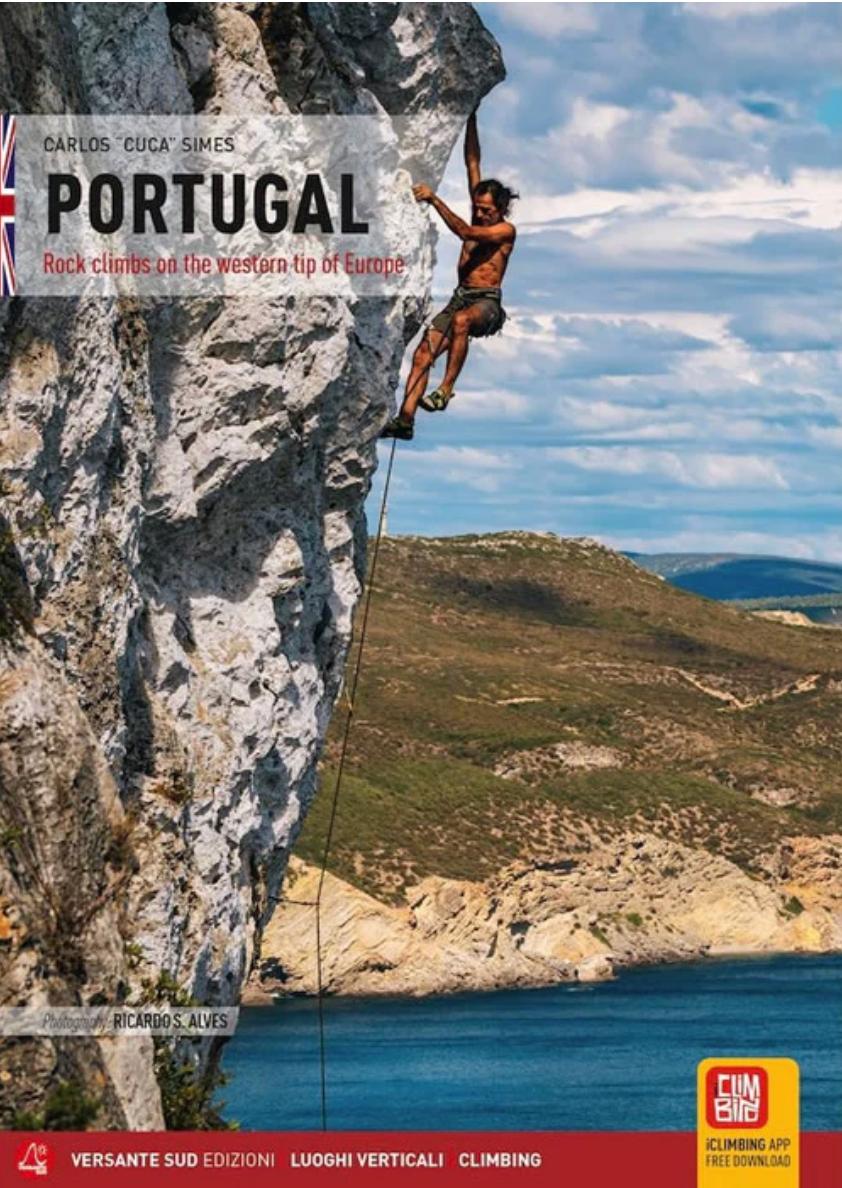 Buy — Climb Europe ↗
theCrag — Penha Garcia
Alternative platform with logbook, community photos, and a printable one-page guide available for download. Good backup alongside 27Crags.
 View on theCrag ↗
🚐 Van Access, Overnight Parking & Essentials
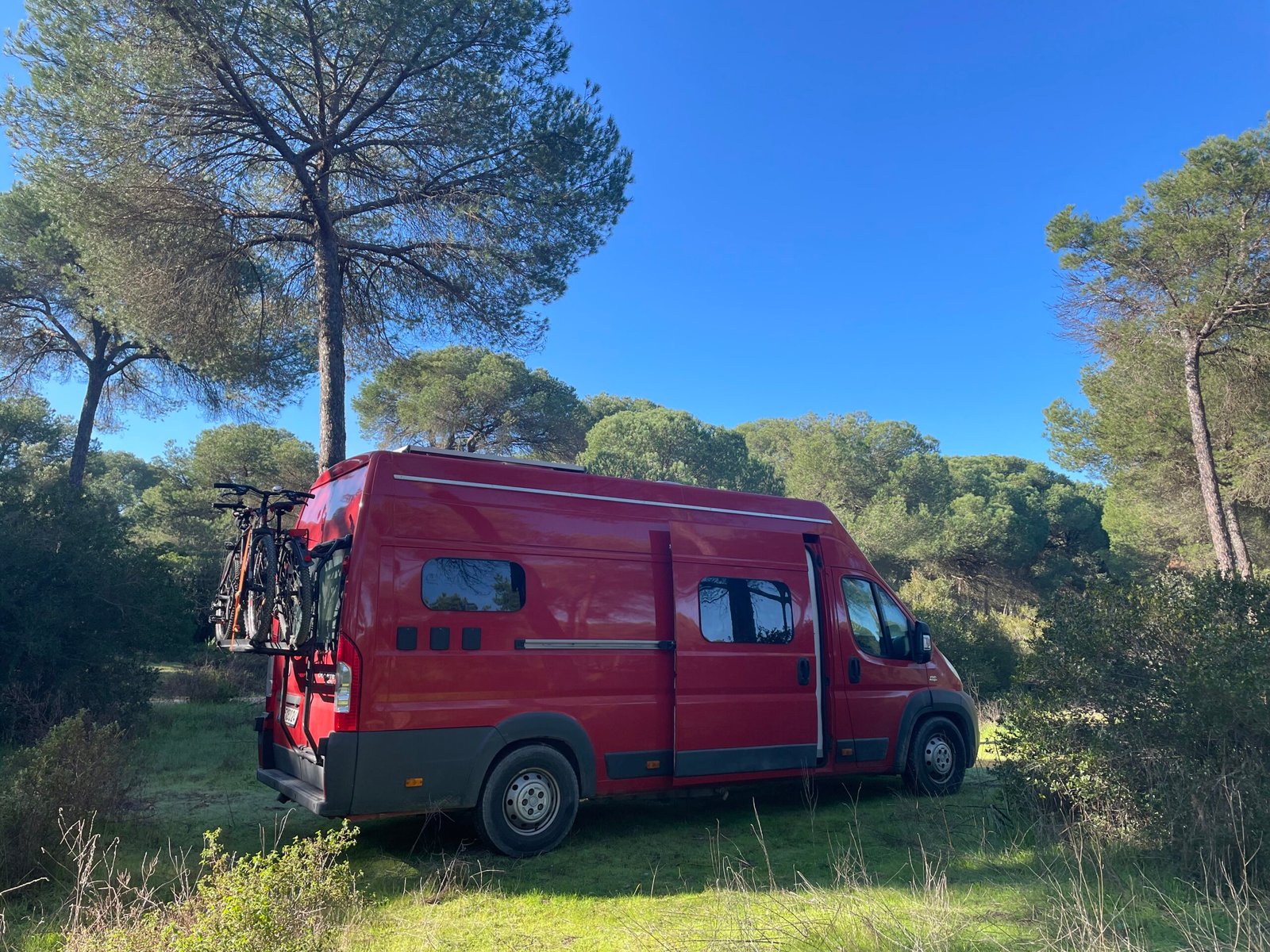
Inland Portugal remains a sanctuary for vanlifers, far removed from the heavy enforcement seen in Arrábida or the Algarve. However, it is important to stay informed of the 2026 regulations. While local GNR (police) patrols are generally welcoming in the Beira Baixa, the Portuguese Highway Code (Article 50-A) officially prohibits overnight stays in motorhomes between 9 PM and 7 AM unless you are in a designated “Area de Serviço para Autocaravanas” (ASA) or a registered campsite.
For a stress-free trip, use the dedicated ASA in the villages or the campsite options below. If you do choose to park up inland, ensure you are outside any Natural Park boundaries, stay for a maximum of 48 hours in one municipality, and — as always — leave absolutely no trace.
🅿️ Parking by Area
| Location | Type | Coordinates / Link | Notes |
|---|---|---|---|
| Penha Garcia — Dam | Day + Overnight | 40.0456, -7.0140 | Best overnight spot. Near the dam, flat ground, quiet. Recommended by theCrag community. Check Park4Night for more nearby spots too. |
| Penha Garcia — Village | Day parking | Village entrance car park | Small car park at village entrance. Convenient for crag approach. Not ideal for overnight in high summer. |
Practical Vanlife Essentials
💧 Water
Penha Garcia village has a public fountain — look for the sign “água potável” (drinkable water). The nearest supermarkets are in Idanha-a-Nova (18 km) and Castelo Branco (45 km). Fill up before heading to the crag.
🛒 Supplies
Penha Garcia village has a small café/bar and a bakery. For full resupply, Castelo Branco is the closest town with a full supermarket. Stock up before your first crag day.
🌊 Swimming
The Pônsul river has natural swimming pools — perfect after a hot climbing day. The local dam also provides a larger swimming area. One of the genuine joys of this crag.
🔌 Power & WiFi
Cafés in Penha Garcia offer charging and WiFi. Signal at the crags is limited — download topos offline in advance.
🚽 Facilities
Zero toilet facilities at the crags. Use the village café before heading out. Practice full Leave No Trace — pack a trowel for longer days out.
🏥 Medical
Nearest hospital is in Castelo Branco (45 km). Save the address offline — mobile signal at the crags is unreliable.
Getting There
From Lisbon (2h 30min)
Take the A1 north from Lisbon, then pick up the A23 eastbound (direction Castelo Branco). Exit at Alcains, then follow signs to Monsanto eastwards to Monfortinho. Penha Garcia appears on the hillside to the left of the road. The access to each sector is clearly marked from the village — look for the signed path from the main car park.
From Spain
If arriving from Spain via Cáceres, cross at Segura de Tejo or Valencia de Alcántara — both border crossings bring you into the area within 30–45 minutes. The region sits naturally on a Portugal–Spain climbing loop: add Plasencia, Jerte, or the Arribes del Duero crags on the Spanish side for a week-long border-country itinerary.
Eat, Refuel & Local Life
Part of what makes this region so appealing for vanlifers is the genuinely rural Portuguese culture. You’re not in a climbing tourist bubble here. The restaurants in Penha Garcia and the villages nearby serve traditional Beira Baixa food — slow-cooked kid goat, grilled river trout, chouriço from the local smokehouse, and wines from the nearby Tejo region. Lunch for two with wine rarely exceeds €18.
The weekly market in nearby villages is worth checking for fresh local produce. For a wider range of restaurants and services, Castelo Branco (45 km west) is the regional hub — a pleasant town with good food and a full resupply stop before heading back out to the crag.
Local Clubs, Community & Access
The climbing community in this part of Portugal is small but genuine. The main national body is the Federação de Campismo e Montanhismo de Portugal (FCMP). The closest active club to Penha Garcia is:
- Clube de Montanha de Castelo Branco — the regional club closest to Penha Garcia. Active in route development and maintenance in the Beira Baixa area. Worth contacting before a visit for current conditions and any access updates.
- CAP (Clube de Alta Montanha de Portugal) — the national specialist climbing club, based in Lisbon. Their website (cap.pt) lists affiliated clubs and contacts across Portugal.
The best way to get up-to-date beta is to post in the 27Crags comments section for the crag, or to check recent activity on theCrag — both platforms have active Portuguese users who respond quickly to questions about conditions, closures, and new route development.
🧗 More RockVanLife Portugal Guides
❓ Frequently Asked Questions
📌 Related Topics
📚 Helpful Climbing Resources
Essential guides, tips, and advice for your climbing adventures
🔧 Gear Lab
View all →
Black Diamond RockLock Review — Our Biggest, Toughest Locker
Read more →
Petzl Attache Review — The Most Versatile First Locker
Read more →🚐 Road Trip Essentials
View all →
10 Underrated European Sport Climbing Destinations (That We Actually Drove To)
Read more →
Van Life Electrical Setup 2026 — Our Exact Power System
Read more →📖 Climber's Handbook
View all →
Beginner Climbing Gear List 2026 – Everything You Need to Start Climbing Outdoors
Read more →