Complete Rocha da Pena Climbing Guide & Topos
Algarve’s Hidden Limestone Ridge – Sport & Trad Routes
| Quick Facts – Rocha da Pena Climbing Guide | |
|---|---|
| Location | Pena, Loulé, Algarve (inland Portugal) |
| Overnight Parking GPS | 37°14’58.2″N 8°06’37.1″W |
| Daytime Parking GPS | 37°15’01.4″N 8°05’53.6″W |
| Nearest Towns | Salir (10 min drive), Loulé (15 min drive) |
| Style | Sport & Trad, single pitch |
| Rock Type | Limestone – hard, featured, technical face climbing with pockets |
| Total Routes | ~150 routes across multiple sectors |
| Grade Range | 5a – 7a+ (excellent variety for all levels) |
| Approach | 20-30 min from primary parking, 5-10 min from secondary |
| Best Seasons | Spring, Autumn, Winter (avoid summer heat/crowds) |
| Van Parking | ⭐⭐⭐⭐⭐ Outstanding – safe, quiet, legal, free |
| Beginner-Friendly | Yes! Routes from 4a–5c with safe, modern bolting |
| Crowds | ⭐⭐⭐⭐⭐ Extremely quiet weekdays, moderate weekends |
| Cell Coverage | ⭐⭐⭐⭐ Excellent with major Portuguese carriers |
| Topos/Guidebook | Contact AMEA: geral@amea.pt (€3 PDF topos) |
| Supermarket | Minipreço Salir (10 min drive) |
| Daily Budget | €15-20 per day (affordable Portugal, cook in van) |
| Climbing Club | AMEA – geral@amea.pt |
🚐 Van Life Pro-Tip: Algarve & Beyond
Rocha da Pena is the Algarve’s crown jewel, but if the wind picks up or you want more coastal views, Sagres is only 45 minutes away and offers a completely different vibe.
🧗 Gear Check: The orange limestone here can be sharp. For long days in the sun, we recommend a durable, dry-treated rope to resist dust and abrasion. See our top picks in the Best Climbing Ropes 2026 guide.
Explore Nearby: Check out the Sagres Climbing Guide for sea-cliff routes and van parking.
Overview – Why Rocha da Pena Climbing?
Rocha da Pena climbing represents everything that makes Portugal special for vanlife climbers: a hidden gem in the inland Algarve, far from the crowded coastal crags, offering roughly 150 sport but very few trad routes on a limestone ridge that stretches 2 kilometres above the village of Pena. When most climbers think of Algarve climbing, they imagine sea cliffs and tourist crowds. Rocha da Pena climbing is the peaceful alternative.
What makes Rocha da Pena climbing stand out? The tranquillity. This isn’t a famous crag you’ll find on every “must-climb” list, and that’s exactly its strength. Spread across multiple sectors—Vaca, Carpe Diem, Aguia, Grossen Problem, Escapes do Inferno, and Caalimero—Rocha da Pena climbing offers approximately 150 routes ranging from accessible 5a to challenging 7a+, all on pristine limestone with spectacular mountain views.
The area is genuinely welcoming to vanlife climbers, with excellent free parking, short approaches (5–30 minutes depending on which parking you choose), and a local climbing community (AMEA) that maintains the routes and actively supports visiting climbers. Combined with affordable living costs, reliable mobile coverage for remote work, and proximity to both supplies and the coast, Rocha da Pena climbing delivers the complete package.

What Makes Rocha da Pena Climbing Special
- Outstanding van parking: Free, safe, quiet overnight parking with natural tree screening – 5km of peaceful countryside in every direction
- Peaceful atmosphere: Basically empty on weekdays, moderate activity on weekends – a refreshing change from crowded crags
- Beginner-friendly options: Accessible routes (4a–5c) alongside challenging test pieces for advanced climbers
- Local community support: AMEA climbing club maintains routes, provides affordable topos (€3), and welcomes visitors
- Technical limestone: Hard, featured, clean rock with pockets and excellent friction – technical face climbing at its best
- Remote work friendly: Excellent cell coverage, quiet setting, perfect for digital nomads who climb
- Proximity to amenities: 10 minutes to Salir for supplies, 15 minutes to Loulé for larger shopping
Honest Limitations
Rocha da Pena climbing isn’t perfect for everyone. Here’s what to know before visiting:
- Limited route quantity: ~150 routes means 3–5 days max before you’ve exhausted the options (unlike larger crags with hundreds of routes)
- Topos essential: You must contact AMEA for topos – apps like 27 Crags have limited information
- Uphill approach: 20–30 minutes walking uphill with gear from primary parking (though secondary parking reduces this to 5–10 min)
- Summer heat: Inland Algarve gets hot June–August – limited shade at some sectors
- No facilities: Come completely self-sufficient – no toilets, water, or bins at parking areas
- Remote location: 40+ minutes to Sagres/Lagos coastal crags if you want variety
Van Parking & Overnight Stay
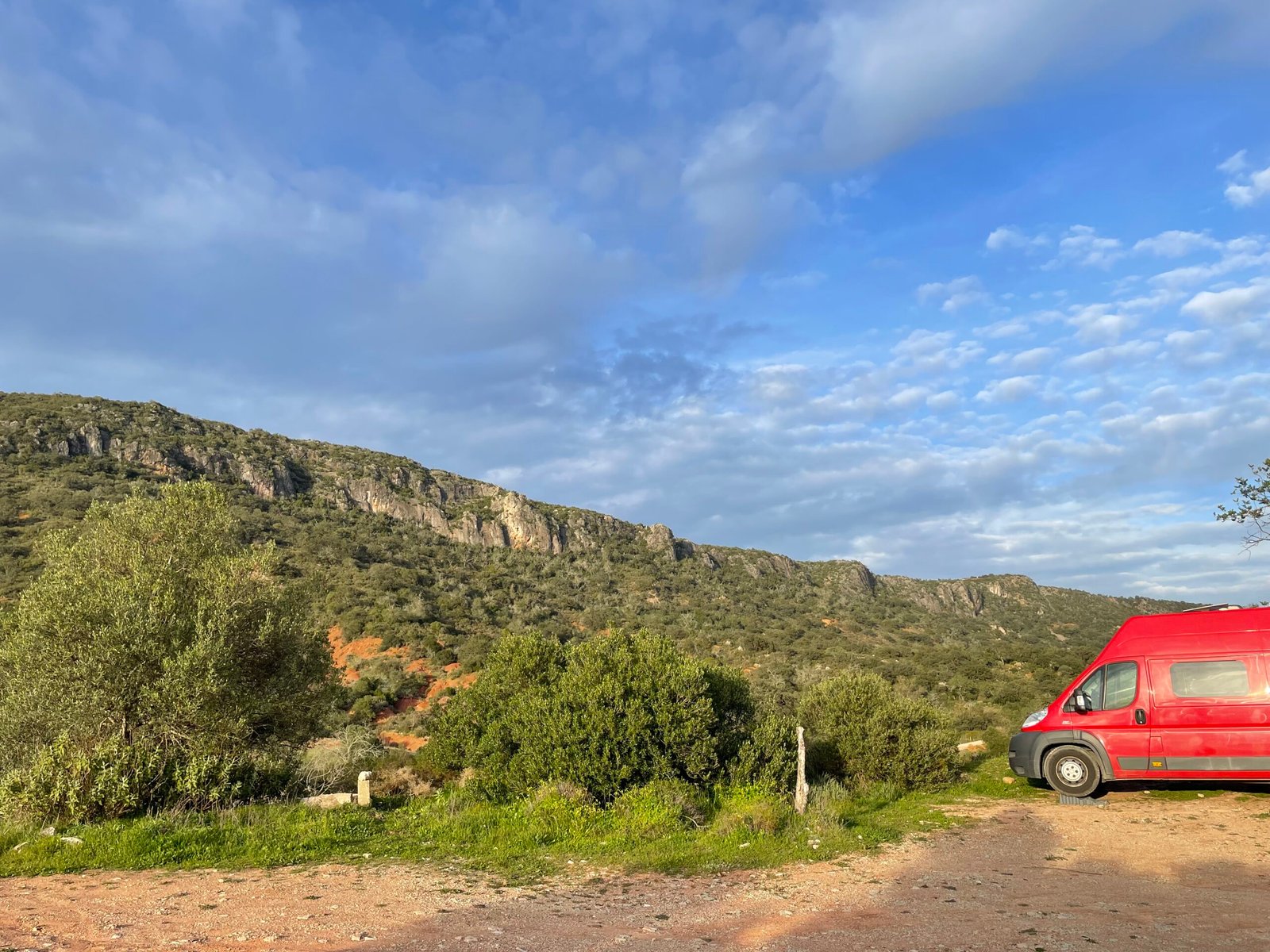
One of the strongest aspects of Rocha da Pena climbing is the exceptional van parking. Unlike many European climbing areas where parking is complicated, restricted, or expensive, here you’ll find genuinely welcoming spots that make multi-day climbing trips stress-free.
Primary Overnight Parking (Recommended)
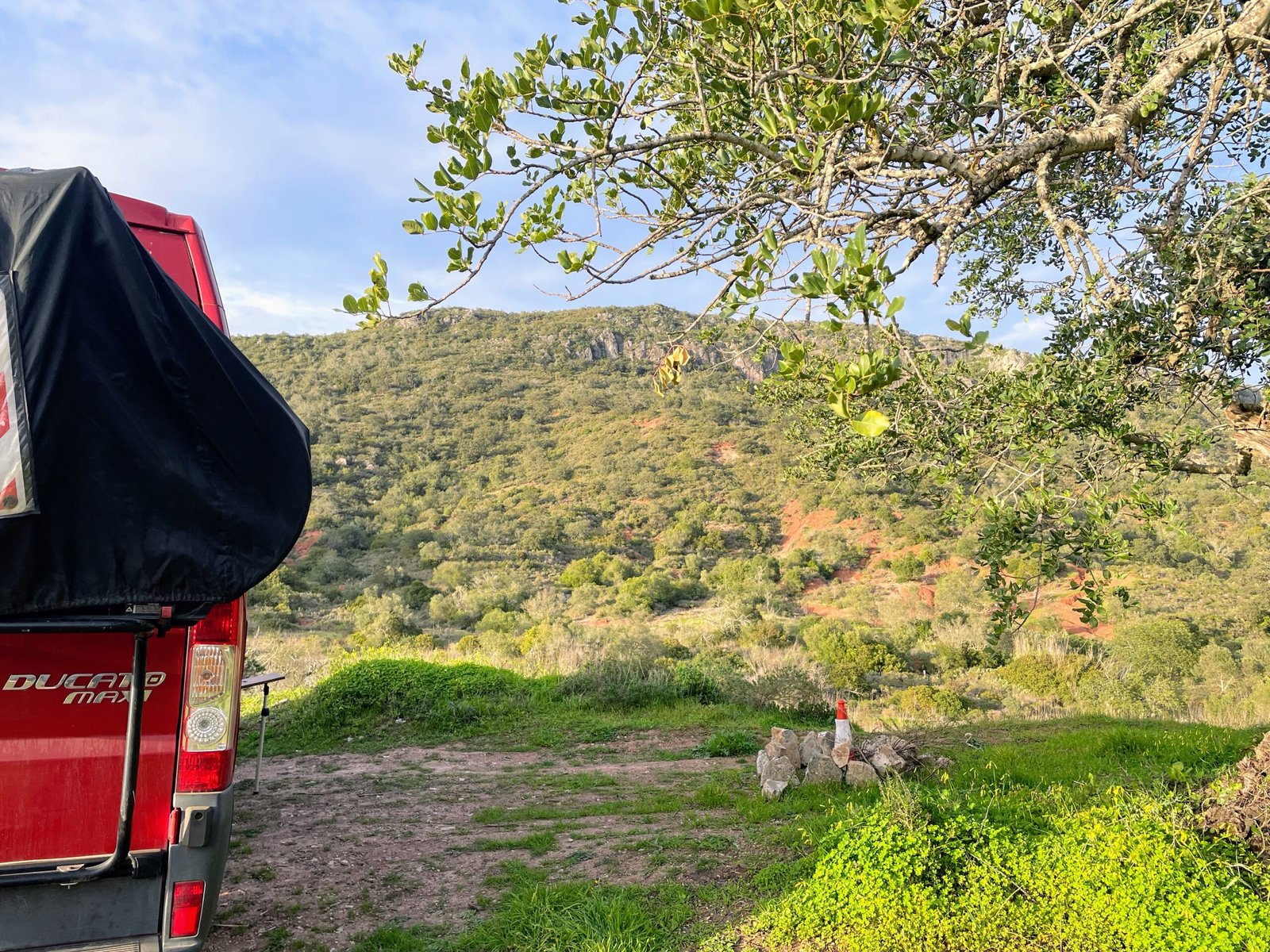
GPS Coordinates: 37°14’58.2″N 8°06’37.1″W
The Setup
- Large gravel parking area off a quiet dirt track
- Multiple flat spots with natural tree screening for privacy
- Excellent solar access (important for solar panels/Starlink)
- Space for small barbecues or outdoor cooking setup
- Clean, well-maintained, and discreet
Access & Traffic
- Dirt/gravel road (not paved, but very manageable for vans)
- Occasional dog walkers during the day
- Very few cars during the week
- Some cross-country motorbikes on weekends (but still quiet)
- 5km of peaceful countryside all around
Facilities & Legal Status
- Facilities: None – Come completely self-sufficient
- No toilets, water, or rubbish bins at the parking
- Legal status: Appears to be both legal and tolerated
- Locals seemed friendly and unbothered
- Important: Be respectful – don’t spread out tables, chairs, and gear for extended periods
- Keep a low profile and clean up completely
Our Experience
- Cost: FREE
- Safety: Excellent – felt completely safe
- Noise: Super quiet at night, some wind at the car park but nothing disruptive
- Duration: We stayed 3-4 nights comfortably
- Other vans: Saw 1-2 other campervans during our stay
- Military exercises: We read about occasional military exercises in the area but didn’t experience any. From what we gathered, they happen further away and shouldn’t affect your stay
- Pro tip: Van levellers recommended
Secondary Daytime Parking (Closer to Crag)
GPS Coordinates: 37°15’01.4″N 8°05’53.6″W
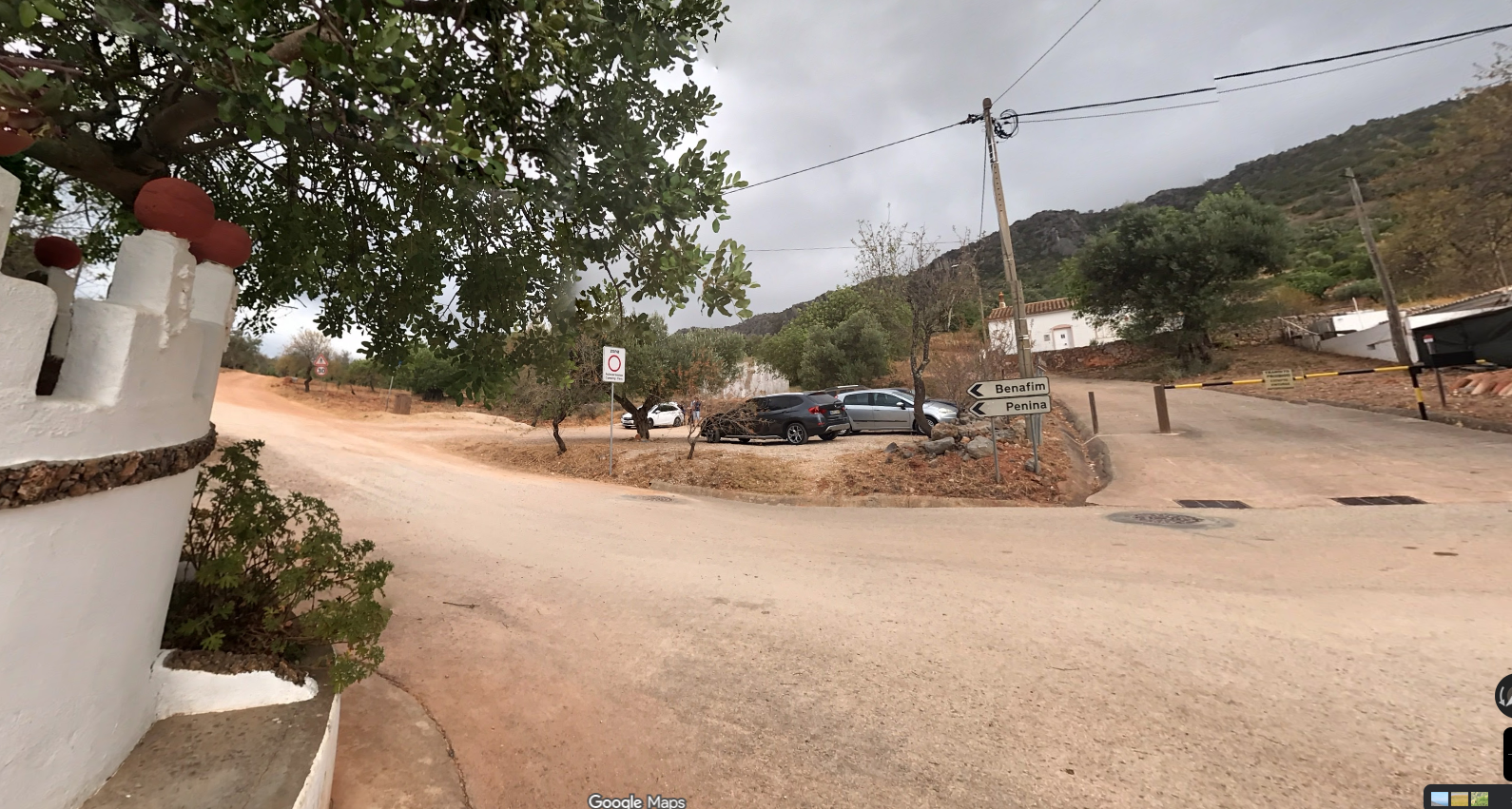
Important – Daytime Only:
- This parking is much closer to the crag (5-10 minute approach vs 20-30 minutes)
- Located near residential properties and Bar das Grutas
- DO NOT sleep here overnight
- One local resident reportedly gets upset about foreigners staying overnight
- Completely fine for daytime climbing – often full of walkers on weekends
- Respectful use during climbing hours is welcome
Our approach: We slept at the primary spot and either walked with our gear (20-30 min) or drove to this secondary parking for shorter approaches. Both options worked well. The walk is uphill but not strenuous – even carrying a full rack, rope, and gear, the approach is manageable.
Pro tip: If you’re working remotely, the primary parking is perfect – quiet, peaceful, excellent mobile coverage (we used Starlink and Maya Mobile without issues), and far enough from distractions to maintain productivity. Walk to the secondary parking in the morning for climbing, return to your peaceful base in the evening.
The Climbing – Rocha da Pena Overview
Rocha da Pena climbing offers approximately 150 routes spread across multiple sectors on a limestone ridge stretching 2 kilometres above the village of Pena. The climbing is technical, the rock is pristine, and the views are spectacular.
Approach
From primary parking: 20-30 minutes walking with gear
From secondary parking: 5-10 minutes (fast walkers can do it in 5)
Trail quality: Well-maintained uphill trail, not strenuous
Trail access: From the secondary parking near Bar das Grutas, head uphill. Different climbing sectors are spread along the path.
Rock Type & Character
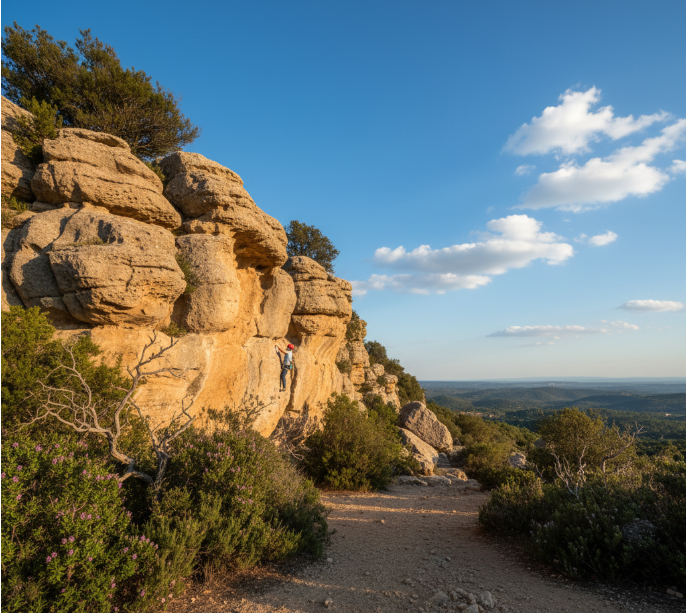
Limestone – hard, featured, technical face climbing with pockets
Excellent friction, very clean rock, stunning mountain views
Primarily vertical with some gentle overhangs
Routes & Grades
Total: ~150 routes across all sectors
Range: 5a – 7a+
Sweet spot: 5a–6b (high concentration)
Style: Sport and trad, single-pitch
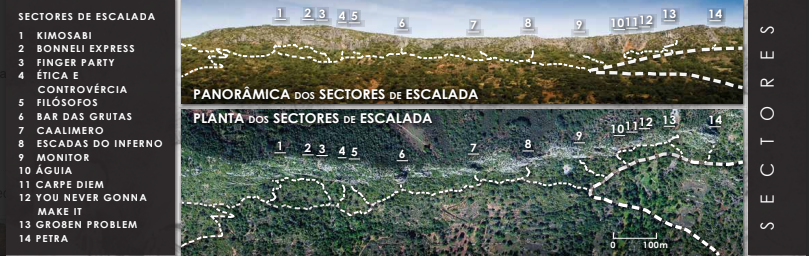
Main Climbing Sectors
1. Vaca (Trad Sector)
Primary trad area, though according to AMEA (the local climbing club), they’re working on rebolting as the top anchors were rusty. Likely completed by now.
- Worth bringing trad gear? If you climb trad regularly, yes – but check with AMEA for current route conditions
- Character: Traditional limestone climbing
- Contact AMEA for up-to-date information on rebolting progress
2. Carpe Diem
The eye-catching orange wall – the crag’s central visual feature.
- Character: Striking orange limestone, technical routes
- Popular sector with quality climbing
3. Aguia
Quality routes with beginner-friendly options.
- Character: Accessible climbing, good for building confidence
- Grade focus: Excellent for 5a–6a climbers
4. Grossen Problem
Features outrageously overhanging starts.
- Character: Steep, powerful climbing
- Grade focus: More advanced routes
5. Escapes do Inferno
Grey rock, vertical and pocketed.
- Character: Technical face climbing with pockets
- Style: Vertical, sustained routes
6. Caalimero
Mixed grades across various routes.
- Character: Variety of climbing styles and difficulties
Conditions & Crowding
When we climbed: Late February/Early March
Weather: ~20°C, sunny with some clouds, no rain, light wind
Rock conditions: Dry, perfect friction. The limestone was pristine and well-maintained across all sectors.
Crowds: Basically empty on weekdays. This was one of the most peaceful climbing experiences we’ve had in Europe. We encountered:
- One group of 6 young Norwegian climbers (club trip around Europe)
- One other couple
- Weekends: More activity (hikers and climbers) but still not crowded compared to popular coastal crags
Beginner-Friendly?
Yes! This is what we loved about Rocha da Pena climbing.
There are accessible routes for people just starting out (4a–5c range) as well as challenging climbs for advanced climbers (6c–7a+). The limestone is solid, the bolting is generally safe and modern, and the flat belays make it comfortable for everyone.
Gear for beginners: A standard 60m or 70m rope and 12–14 quickdraws will get you up most routes here. Helmets are mandatory (as always).
Local Climbing Community
We didn’t meet many locals during our visit, but AMEA (the climbing club) is active and welcoming. They maintain the crag, provide affordable topos, and are genuinely supportive of visiting climbers. Reach out to them if you want to connect with Portuguese climbers or get the latest beta: geral@amea.pt
Topos & Guidebook
Contact AMEA for Topos: geral@amea.pt
We contacted AMEA before arriving and bought their topos directly—super cheap (just €3!) and all proceeds support crag maintenance. They responded quickly and were incredibly helpful.
What They Provided
- Detailed PDF topos for all sectors (Vaca, Carpe Diem, Aguia, Grossen Problem, Escapes do Inferno, Caalimero)
- Recent updates on route conditions
- Access information for all sectors
- Notes on rebolting projects (like the Vaca trad sector)
- Sector-specific beta that apps simply don’t have
Official Portugal Climbing Guidebook
In addition to the AMEA topos, there’s an official Portugal climbing guidebook that covers Rocha da Pena along with dozens of other crags across the country:
📖 Portugal: Rock Climbs on the Western Tip of Europe
- Publisher: Climbing Guide EU
- Language: English edition
- Coverage: Rocha da Pena plus comprehensive coverage of Portuguese climbing destinations (Algarve coast, Sintra, Lisbon area, Central Portugal, North Portugal)
- Status: Older edition – not as up-to-date as AMEA’s topos for Rocha da Pena specifically, but still valuable
Why get both?
- AMEA topos (€3): Most current information for Rocha da Pena – recent rebolting updates, accurate route conditions, sector-specific beta. Essential for climbing here.
- Official guidebook: Broader context for planning a Portugal climbing road trip. Covers dozens of crags, helps you decide where to go next after Rocha da Pena, includes historical information and route development stories.
If you’re planning an extended Portugal climbing trip (Algarve coast, Sintra, Peneda-Gerês, etc.), the official guidebook is worth having. But for Rocha da Pena specifically, always contact AMEA for the most up-to-date information.
Support the Local Climbing Community
Here’s our philosophy—and we feel strongly about this:
Yes, apps like 27 Crags, Rockfax, and The Crag are convenient. We use them too. But they should NEVER be your primary source for topos at a crag like this.
Why?
- Local climbing clubs maintain these crags – They bolt routes, replace anchors, clean trails, and make everything possible. These are community efforts
- Buying local topos supports this work directly – Your €3 helps fund rebolting projects, access negotiations with landowners, and new route development
- You get better information – Local topos often include recent updates, seasonal closures, and sector-specific beta that apps miss
- Guidebooks are souvenirs – They remind you of your trip and can be shared with friends
This is the way. Please support local climbing communities—they make places like Rocha da Pena climbing possible.
Practical Information for Vanlifers
Water Refill for Vans
Option 1: Salir Camper Service Point (Recommended)
📍 Location: Salir Camper Service Point
- Distance: ~5 minutes from the crag
- Facilities: Water refill, waste disposal
- Our experience: Super clean facilities. This was our go-to spot for water refills during our stay
Option 2: Loulé Motorhome Area
📍 Location: Loulé Motorhome Area
- Distance: ~15 minutes from the crag
- Facilities: Official camper service area with water
- ⚠️ Note: Water availability can be inconsistent – locals report it doesn’t always work. Check before relying on it as your only option
Pro tip: Fill up at the Salir service point (Option 1) – it’s closer, cleaner, and more reliable based on our experience.
Groceries & Supplies
📍 Nearest supermarket: Minipreço Salir
- Distance: 10-minute drive from parking
- Shopping strategy: Stock up before heading to the crag. We did a quick shopping run in Salir and were set for several days
- Cost: Portugal is affordable – even shopping at Spar/Minipreço won’t break the budget
Other Useful Services
Pharmacy: Farmácia Salir
- Distance: 10-minute drive from the primary parking area
- Located in Salir village, conveniently close to the Minipreço supermarket
Gear Shops:
- No climbing gear shops immediately nearby
- Closest options are likely in Faro, Lagos, or on your way to Lisbon/Porto
- Recommendation: Bring everything you need. If you’re missing something critical, contact AMEA – they may have suggestions for local shops or club members who can help
Best Seasons
- Spring (March–May): ⭐⭐⭐⭐⭐ Perfect temperatures (15–25°C), green landscape, ideal conditions
- Autumn (September–November): ⭐⭐⭐⭐⭐ Excellent temperatures, beautiful colours, fewer crowds
- Winter (December–February): ⭐⭐⭐⭐ Climbable and pleasant – we climbed in late February/early March with perfect 20°C weather
- Summer (June–August): ⭐⭐ Hot inland Algarve temperatures, limited shade at some sectors, crowded coastal areas (though Rocha da Pena itself stays relatively quiet)
What Surprised Us / We’d Do Differently
Nothing negative – the crag exceeded our expectations in every way. It’s rare to find a place that ticks every box: good climbing, great parking, peaceful atmosphere, and genuine local support.
The Combination of Everything:
Rocha da Pena climbing isn’t just about the routes—it’s the complete package:
- Peaceful setting – 5km of quiet countryside in every direction
- Excellent van parking – Safe, comfortable, and free
- Less crowded climbing – A refreshing change from popular sport crags
- Friendly locals – Welcoming and unbothered by respectful van travellers
- Proximity to everything – Close to Salir for supplies, not far from the coast to continue your trip
- Quality climbing for all levels – Beginners and experienced climbers both have plenty to enjoy
Stay Longer: 100%. We could have easily spent a full week here without getting bored. Multiple sectors, varied climbing styles, and the ability to work remotely made it ideal for an extended stay. That said, with ~150 routes, you’ll have climbed most of the available grades in 3–5 days.
Would We Return? Absolutely. Rocha da Pena climbing is now on our “regular rotation” list for Portugal climbing trips.
Final Thoughts on Rocha da Pena Climbing
Rocha da Pena climbing represents everything we love about van-based climbing in Europe: authentic local climbing culture, spectacular natural settings, genuine community maintenance, and the freedom to work and climb on our own schedule.
This isn’t a famous crag you’ll find on every “must-climb” list, and that’s exactly its strength. With approximately 150 routes ranging from accessible 5a to challenging 7a+, Rocha da Pena climbing offers quality over quantity in a peaceful inland Algarve setting that feels worlds away from crowded coastal crags.
The area isn’t perfect – limited route quantity means 3–5 days max before you’ve exhausted your grade range, and summer heat makes climbing uncomfortable June–August. But for climbers seeking tranquillity, excellent van parking, technical limestone, and genuine local support, Rocha da Pena climbing delivers exactly what it promises.
Perfect for:
- Vanlifers exploring inland Algarve as an alternative to coastal crowds
- Digital nomads who climb – excellent cell coverage, peaceful setting for remote work
- Climbers seeking stress-free parking and overnight spots
- Beginners and intermediate climbers (5a–6b sweet spot)
- Those wanting peaceful, uncrowded climbing without sacrificing quality
- Spring/autumn/winter climbing trips when coastal crags are too hot or crowded
- Climbers who appreciate local hospitality and well-maintained community crags
Final recommendation: Allocate 3–5 days for Rocha da Pena climbing if you’re in the Algarve. Contact AMEA for topos before arriving (support the local community – €3 is a bargain), respect the free parking, climb responsibly, and enjoy one of Portugal’s genuine limestone secrets. Check out our European climbing topos guide for more resources on finding beta across Portugal and beyond.
If you’re climbing in southern Portugal and want an alternative to the busy coastal crags, Rocha da Pena climbing is a must-visit.
Frequently Asked Questions – Rocha da Pena Climbing
Is Rocha da Pena climbing suitable for beginners?
Yes! Rocha da Pena climbing is genuinely beginner-friendly. There are accessible routes in the 4a–5c range with safe, modern bolting that make it perfect for climbers transitioning from gym to outdoor climbing. Sectors like Aguia specifically cater to less experienced climbers.
The limestone is solid, the bolting is generally reliable, and the flat belays make it comfortable for everyone. We’d particularly recommend Rocha da Pena climbing for beginners who want a peaceful environment to build confidence without battling crowds or intimidating exposure.
That said, bring your own gear (60m or 70m rope, 12–14 quickdraws, helmet) and contact AMEA for the topos before arriving – apps like 27 Crags have limited information on this crag.
Can I sleep overnight at the parking spots? What are the rules?
Primary overnight parking (37°14’58.2″N 8°06’37.1″W): Yes, you can sleep here. It’s a large gravel area off a quiet dirt track, appears to be both legal and tolerated, and we stayed 3-4 nights without any issues. Locals were friendly, and the setting is peaceful with natural tree screening for privacy.
Secondary daytime parking (37°15’01.4″N 8°05’53.6″W): DO NOT sleep here. This parking is much closer to the crag (5-10 minute approach) but it’s located near residential properties. One local resident reportedly gets upset about foreigners staying overnight. It’s completely fine for daytime climbing but respect the neighbours and don’t camp here.
Etiquette: Be discreet, pack out all rubbish, don’t spread out tables and chairs for extended periods, and keep noise down.
How do I get topos for Rocha da Pena climbing?
Contact AMEA (the local climbing association): Email geral@amea.pt before your trip.
We contacted them in advance and bought their topos directly for just €3. They responded quickly and provided detailed PDF topos for all sectors (Vaca, Carpe Diem, Aguia, Grossen Problem, Escapes do Inferno, Caalimero), recent updates on route conditions, access information, and notes on rebolting projects.
Why contact AMEA instead of relying on apps? Apps like 27 Crags, Rockfax, and The Crag have limited information on Rocha da Pena climbing. Local topos from AMEA include sector-specific beta, recent updates, and accurate route details that apps simply don’t have. Plus, your €3 directly supports crag maintenance.
What’s the best season for Rocha da Pena climbing?
Spring (March–May): ⭐⭐⭐⭐⭐ Absolutely perfect. We climbed in late February/early March with 20°C temperatures, sunny skies, and ideal conditions. This is the prime season.
Autumn (September–November): ⭐⭐⭐⭐⭐ Equally excellent. Still warm, beautiful autumn colours, and fewer crowds than spring.
Winter (December–February): ⭐⭐⭐⭐ Surprisingly climbable! Inland Algarve stays mild even in winter. If you’re escaping cold northern European winters, this is an excellent destination.
Summer (June–August): ⭐⭐ Hot. Inland Algarve temperatures can exceed 35°C, and there’s limited shade at some sectors. Climb early mornings or late evenings if you visit now.
How long should I stay for Rocha da Pena climbing?
Minimum: 2–3 days will let you sample the main sectors and get a feel for the climbing.
Ideal: 3–7 days. This gives you time to explore all six sectors (Vaca, Carpe Diem, Aguia, Grossen Problem, Escapes do Inferno, Caalimero) and settle into the peaceful rhythm of vanlife here.
Extended stay: 2 weeks if you’re a 5a–6b climber who loves variety and wants to project harder routes. However, be aware that with ~150 routes total, you may exhaust your grade range by the end of the first week.
Algarve Climbing Semantic Cloud
Keywords: Algarve Sport Climbing • Orange Limestone Pockets • Winter Sun Crags • Sector Central Beta • Loulé Climbing Access • Iberian Limestone Quality • Southern Portugal Van Life • Rocha da Pena Topos • Vertical Face Climbing • Bird Nesting Restrictions
Ready to Explore More European Crags?
Rocha da Pena climbing is just one of hundreds of incredible destinations across Europe.
Check out our complete guides to vanlife climbing across Portugal, Spain, France, and beyond.
🧗 Explore Our Climbing Guides
Detailed crag guides from our van life climbing adventures across Europe