
Best Climbing Quickdraws 2026 – Wire Gate, Alpine Draw & Sport Sets Reviewed
In-depth reviews, scoring, and comparison of 5 top quickdraws for sport, trad, and everything in between — tested by van-life climbers across European crags.
Quickdraws are the most-handled piece of gear on any sport climbing rack. You clip them hundreds of times per session, hang your weight on them, drop them on limestone shelves, stuff them into chalk-dusted rope bags, and expect them to perform perfectly every single time. Choose wrong and you will feel it — on every hard clip, every fumbled gate, every extra gram on a forty-bolt pitch.
In this guide, we’ve tested five of the best quickdraws 2026 available to European climbers — across single-pitch sport routes in Spain, multi-pitch trad in Wales, and everything in between. We recommend a versatile rack of either 6/8 medium-length draws and 2 extendable (min 60cm) ones, or a combination of 4 small, 4 medium, and 2 extendable (min 60cm) draws to cover all bases. We have also included a full explainer on carabiner gate types and dogbone widths, because understanding the difference between a sport and trad quickdraw is genuinely useful for building the right rack.
Always try to buy from your local climbing shop first — they fund bolt replacements, maintain crag access, and keep the climbing community alive. The retailer links in this guide are for reference. Your local specialist deserves your business first.
View the 2026 Starter Pack →
📊 Quick Comparison Table — Best Climbing Quickdraws 2026
| Quickdraw | Price (per draw) | Weight | Gate Type | Best For | Overall Score |
|---|---|---|---|---|---|
| Petzl Spirit Express | ~€22 | 100g | Solid / Bent | Best Sport | 9.3/10 |
| Wild Country Astro | ~€18 | 63g | Wire / Wire | Best Trad | 9.0/10 |
| Black Diamond HotForge Hybrid | ~€24 | 97g | Keylock / Bent wire | Best All-Round | 9.4/10 |
| Petzl Djinn Axess | ~€16 | 107g | Solid / Solid | Best Value | 8.8/10 |
| Edelrid Pure Wire | ~€16 | 97g | Wire / Wire | Best Sustainability | 8.7/10 |
1. Petzl Spirit Express
🏆 Best for Sport Climbing • The European Crag Standard
Available at Alpinetrek UK and Vertical Extreme DE
Our Testing Score
Detailed Review
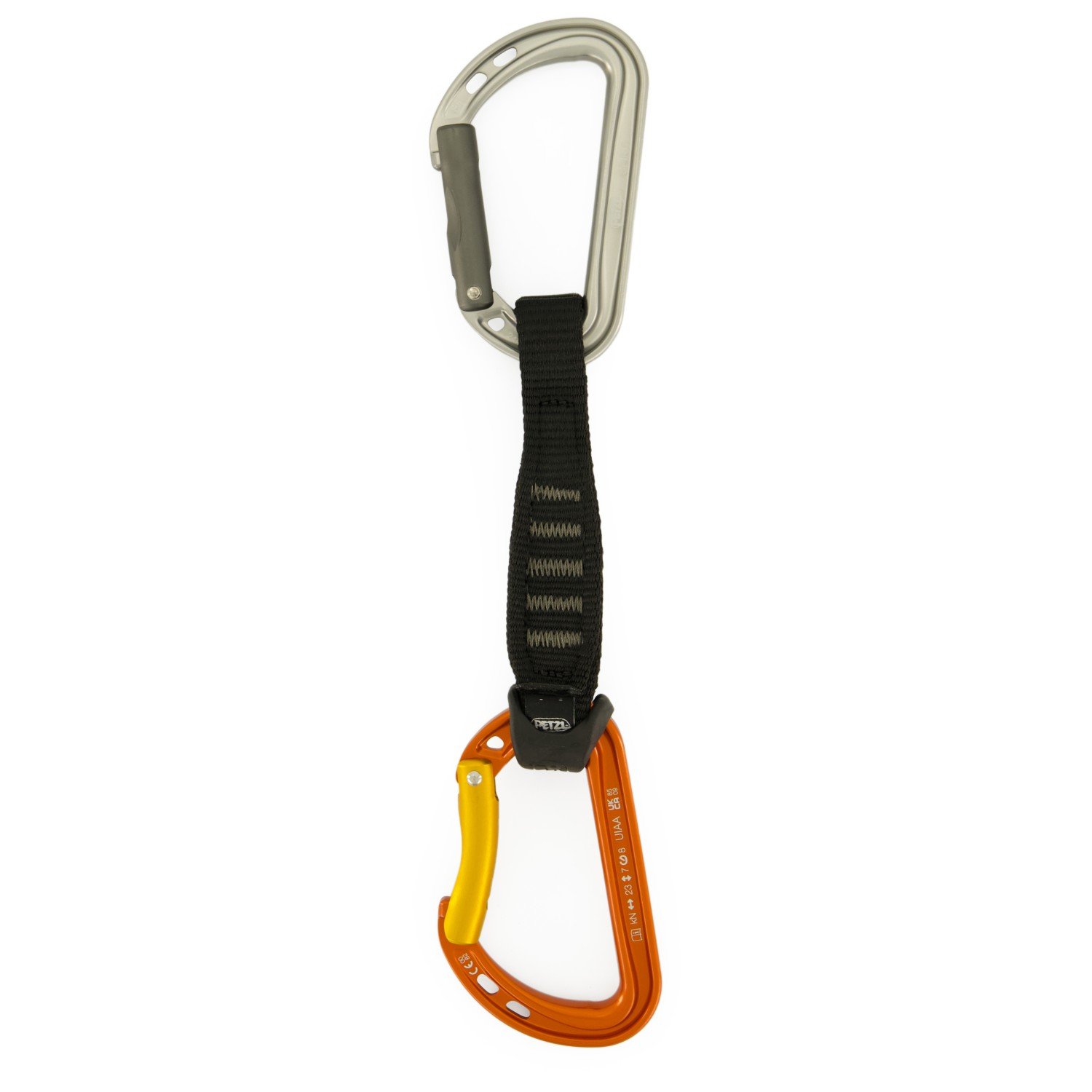
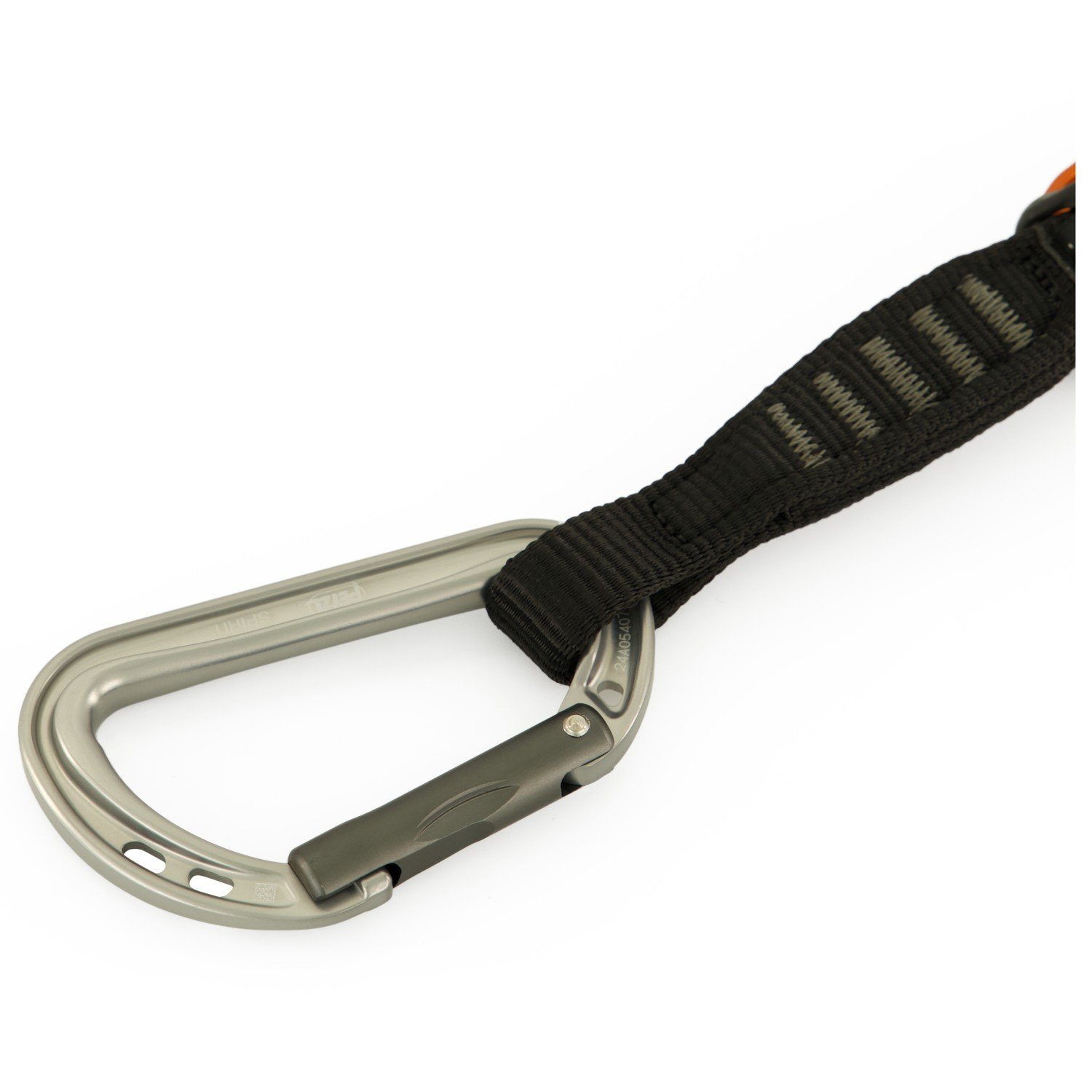
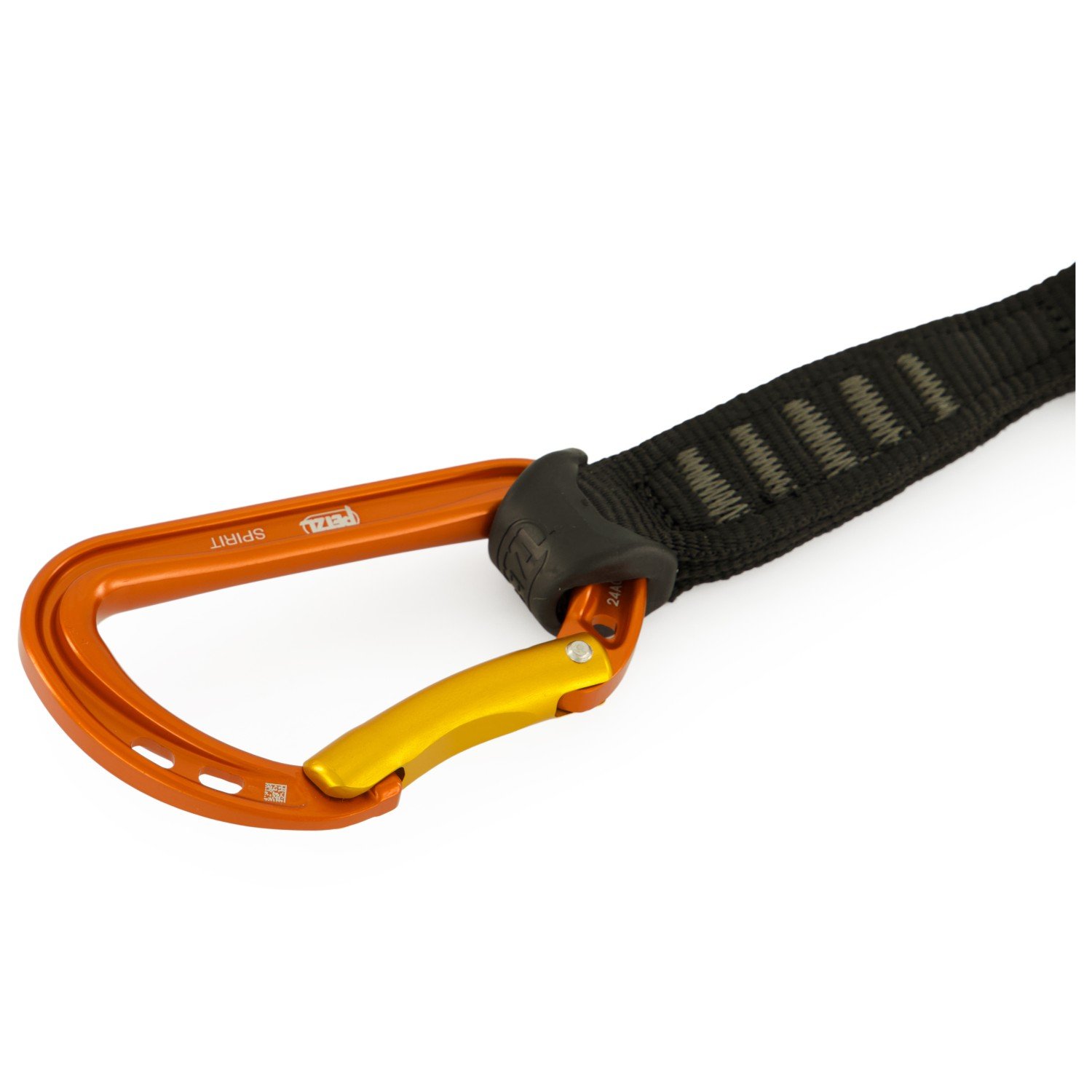
The Petzl Spirit Express has defined European sport climbing for the past decade — you will find it on harnesses at every crag from the Costa Blanca to Céüse. The solid straight-gate top and bent-gate bottom delivers the most consistent clipping experience available, with a wide gate opening that stays reliable even when your arms are pumped.
The stiff 19mm dogbone is the real differentiator. It keeps the bottom gate facing the right direction on every bolt, every time — so when you are fighting a crux and need to clip fast, you are not fumbling. At 100g it is not the lightest draw here, but for sport projecting where reliability matters more than grams, it remains the benchmark.
Best for: Sport climbers at any grade wanting a reliable, proven workhorse for single-pitch sport and hard redpoints.
Pros
- The gold standard for sport climbing clipping
- Stiff dogbone keeps gate orientation consistent
- Wide gate opening — confident clipping when pumped
- Solid bent gate is smooth and durable
- Excellent build quality — lasts years of heavy use
Cons
- Heavier than wire-gate alternatives at 100g
- Stiff dogbone not ideal for trad or alpine
- More expensive than budget alternatives
- Solid gates can freeze in alpine conditions
2. Wild Country Astro
🪨 Best for Trad • Ultralight Wire-Gate Draw for the Full Rack
Available at AlpineTrek and Vertical Extreme DE
Our Testing Score
Detailed Review
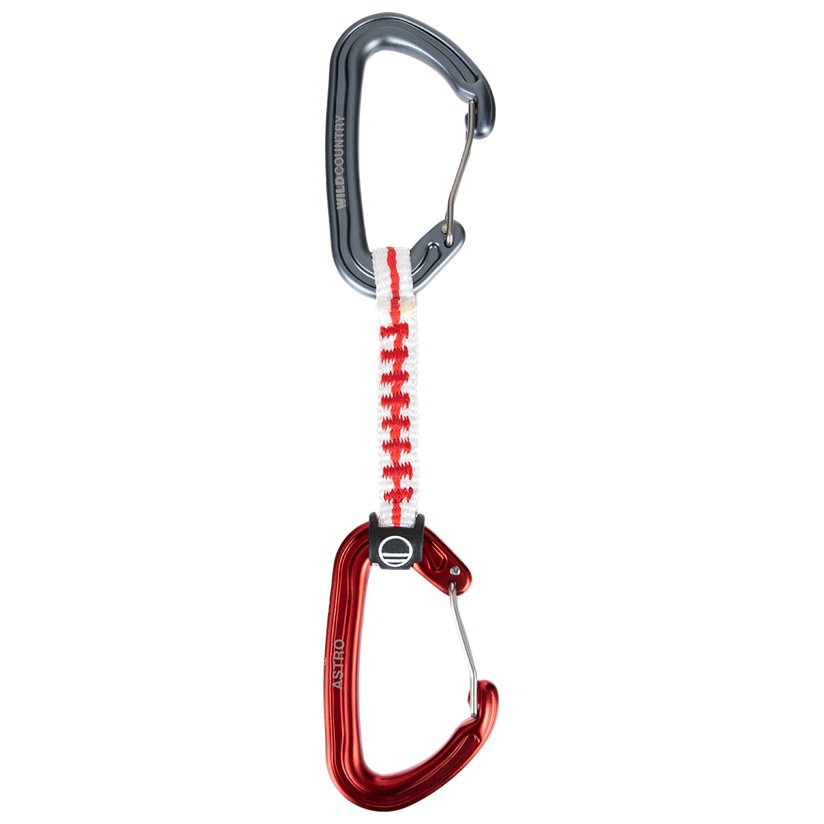
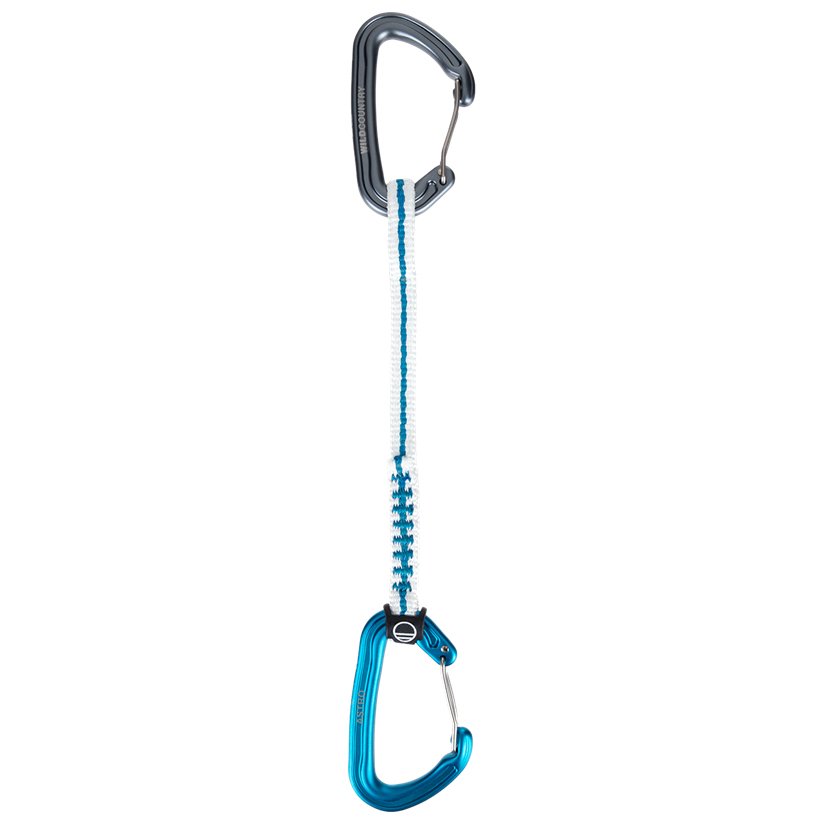
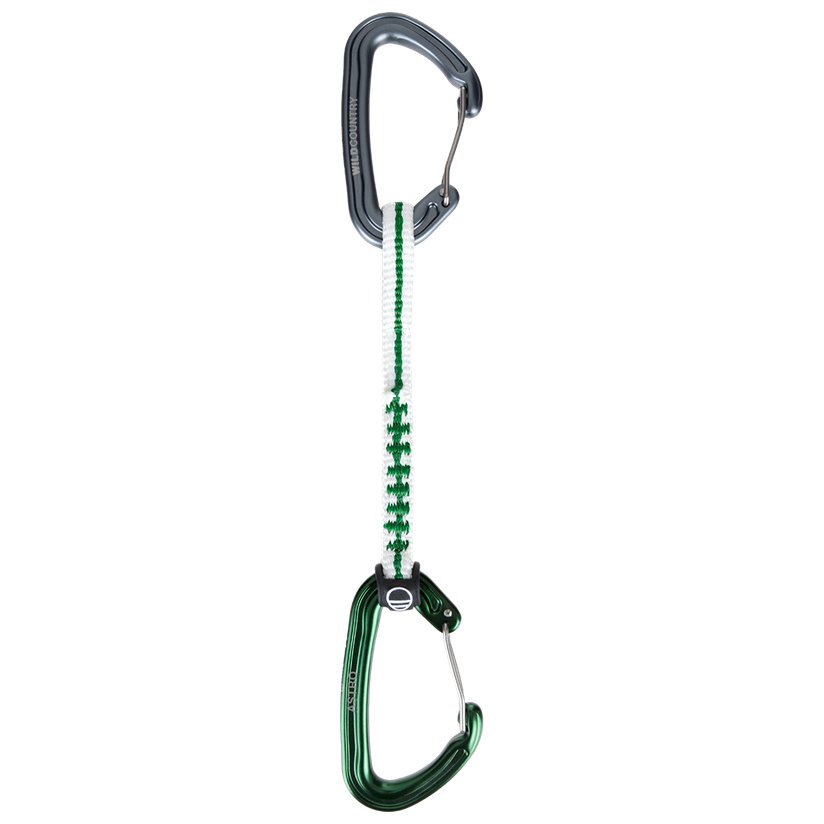
At just 63g per draw, the Astro is the lightest in this lineup. Swapping a set of ten for these saves nearly 400g compared to the Petzl Spirit — a massive advantage on long mountain pitches where every gram compounds.
The dual wiregate design is central to what makes the Astro work for trad. Wire gates are lighter than solid gates, they do not freeze in cold conditions, and they are less prone to gate flutter during a fall. The flexible 10mm dogbone keeps the overall draw compact when racked, meaning a fully loaded trad harness feels less cluttered.
The caveat is sport climbing. The flexible dogbone means the bottom gate can rotate on a bolt hanger, which makes clipping slightly less predictable than a stiff-dogbone draw on a sport route. For pure sport use, the Spirit remains the better choice.
Best for: Trad climbers, alpine climbers, and any situation where you are carrying a full rack and weight is the primary consideration.
Pros
- Lightest draw in this comparison at 63g
- Wire gates work in cold and icy conditions
- Flexible dogbone — compact on a full rack
- Excellent for clipping natural gear placements
- Good value for the quality
Cons
- Flexible dogbone less predictable on sport bolt hangers
- Smaller gate opening than solid-gate alternatives
- Hooknose can occasionally snag on bolt hangers
- Not the first choice for hard sport redpointing
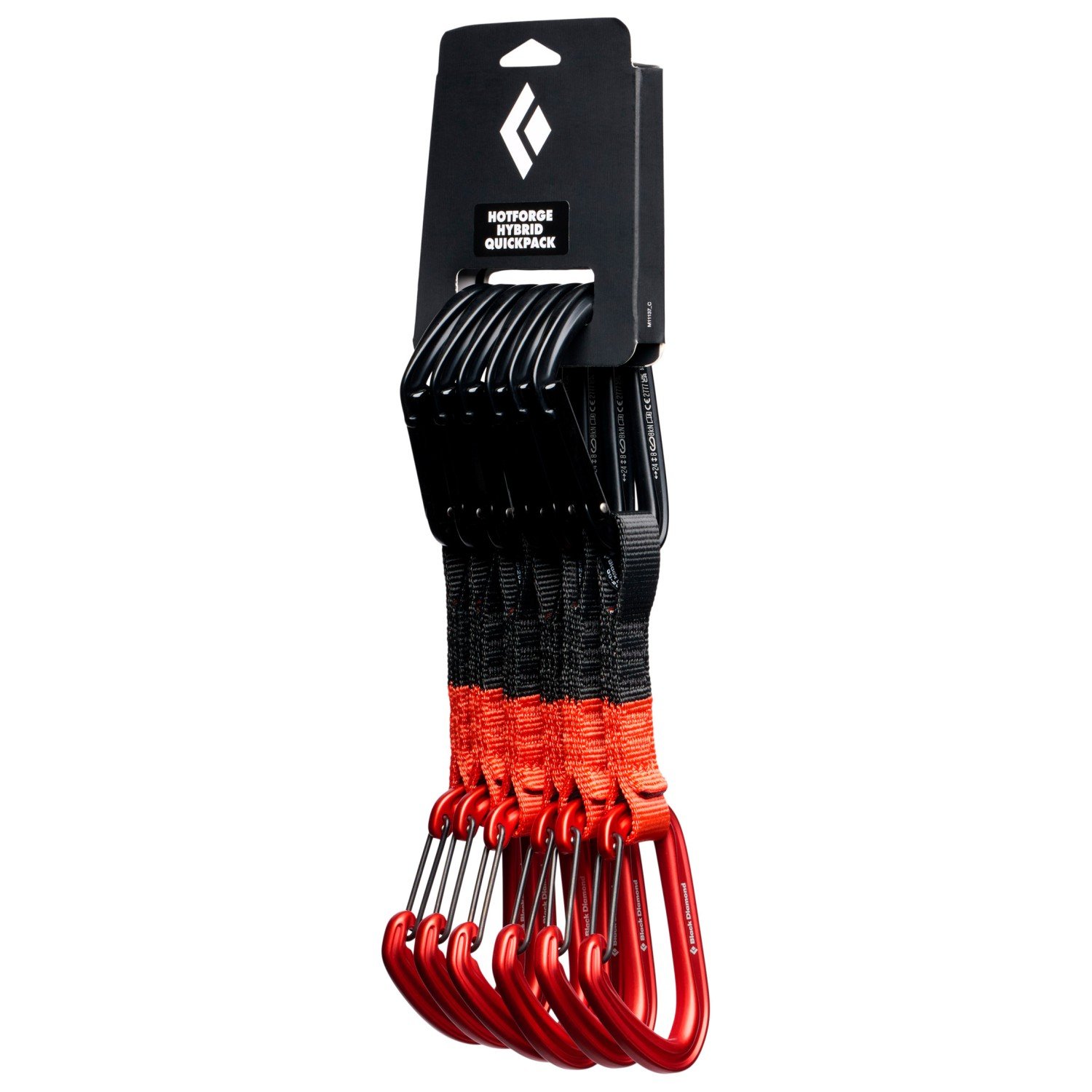
3. Black Diamond HotForge Hybrid
⭐ Best All-Round • Keylock Solid Gate + Bent Wiregate
Available at AlpineTrek and VerticalExtreme
Our Testing Score
Detailed Review
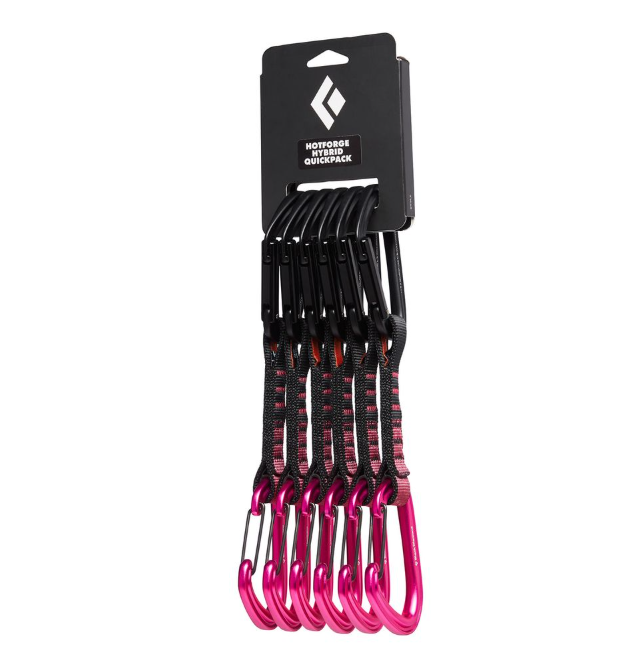
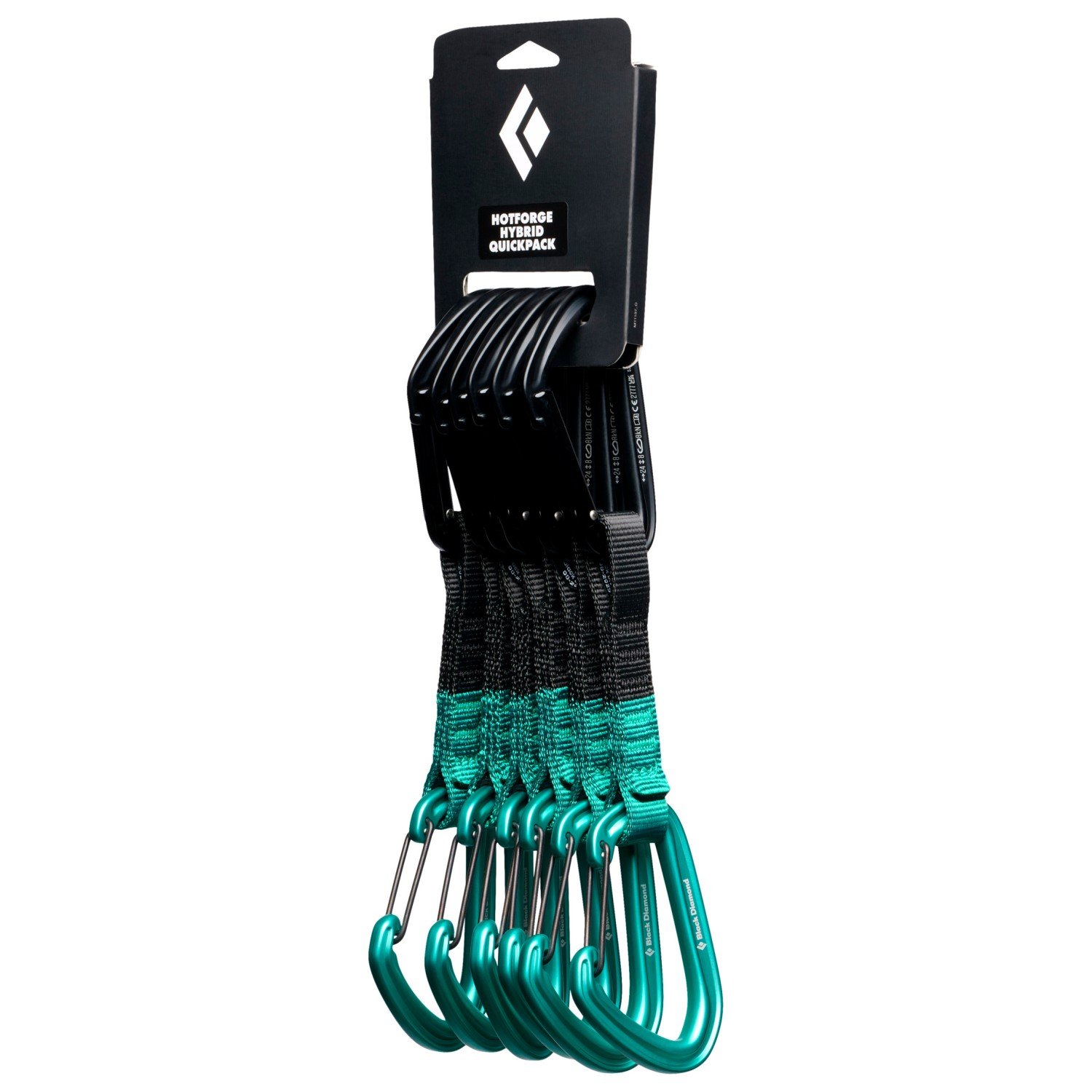
The Black Diamond HotForge Hybrid solves the classic quickdraw dilemma by putting different gates on each end — and it does it better than any other draw in this comparison. The top carabiner uses a keylock solid-gate nose, which clips cleanly into bolt hangers and through gear placements without snagging. The bottom uses a bent wiregate, which offers the lightest, smoothest rope-clipping action possible. Together, they cover nearly every scenario.
The keylock nose on the top carabiner deserves specific attention. Traditional hook-nosed carabiners can catch on bolt hangers when you are trying to unclip — particularly on routes with older or recessed bolts. A keylock nose eliminates that snagging entirely. For climbers who work routes repeatedly and need to strip draws quickly at the end of a session, this is a practical advantage that adds up over time.
At 97g for the 12cm version, the HotForge Hybrid is close in weight to the Spirit Express, but the bent wiregate bottom means better rope-clipping smoothness. For a van-lifer building one rack that genuinely works across sport and moderate trad routes, this is our top recommendation.
Best for: Travelling climbers who want one draw that handles sport, moderate trad, and everything in between — without compromising performance in either discipline.
Pros
- Hybrid design — keylock top, bent wire bottom
- Keylock nose prevents snagging on bolt hangers
- Bent wiregate gives smooth rope clipping
- Ergonomic HotForge shape — comfortable to handle
- Genuinely versatile across sport and trad
Cons
- Most expensive draw in this comparison
- Not the lightest for a full trad rack
- Semi-stiff dogbone less packable than trad draws
- Wiregate bottom rattles slightly when racked
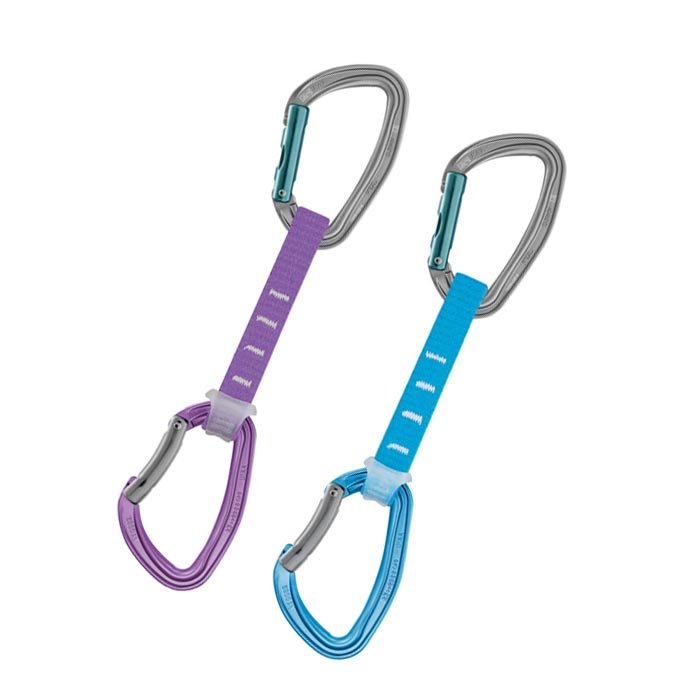
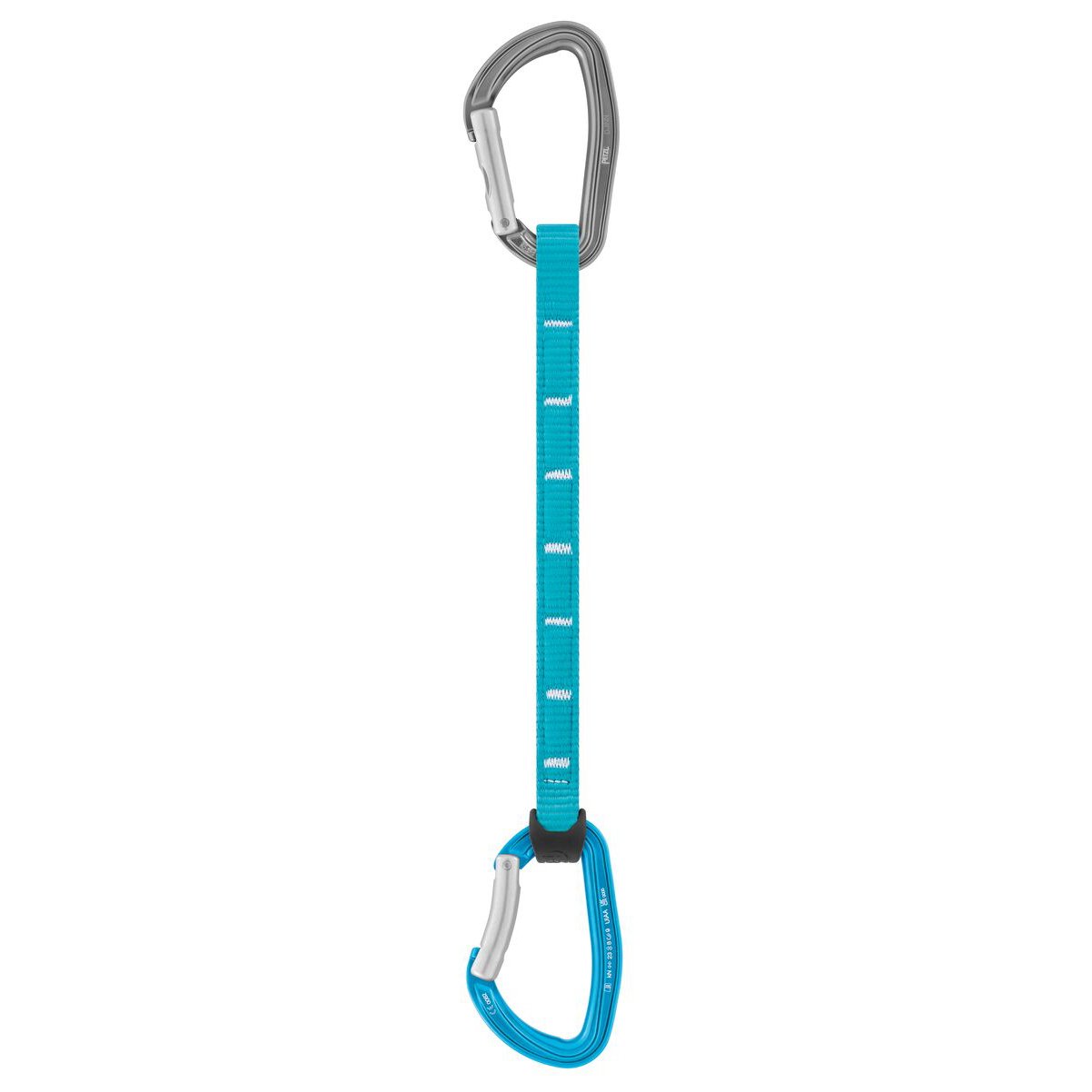
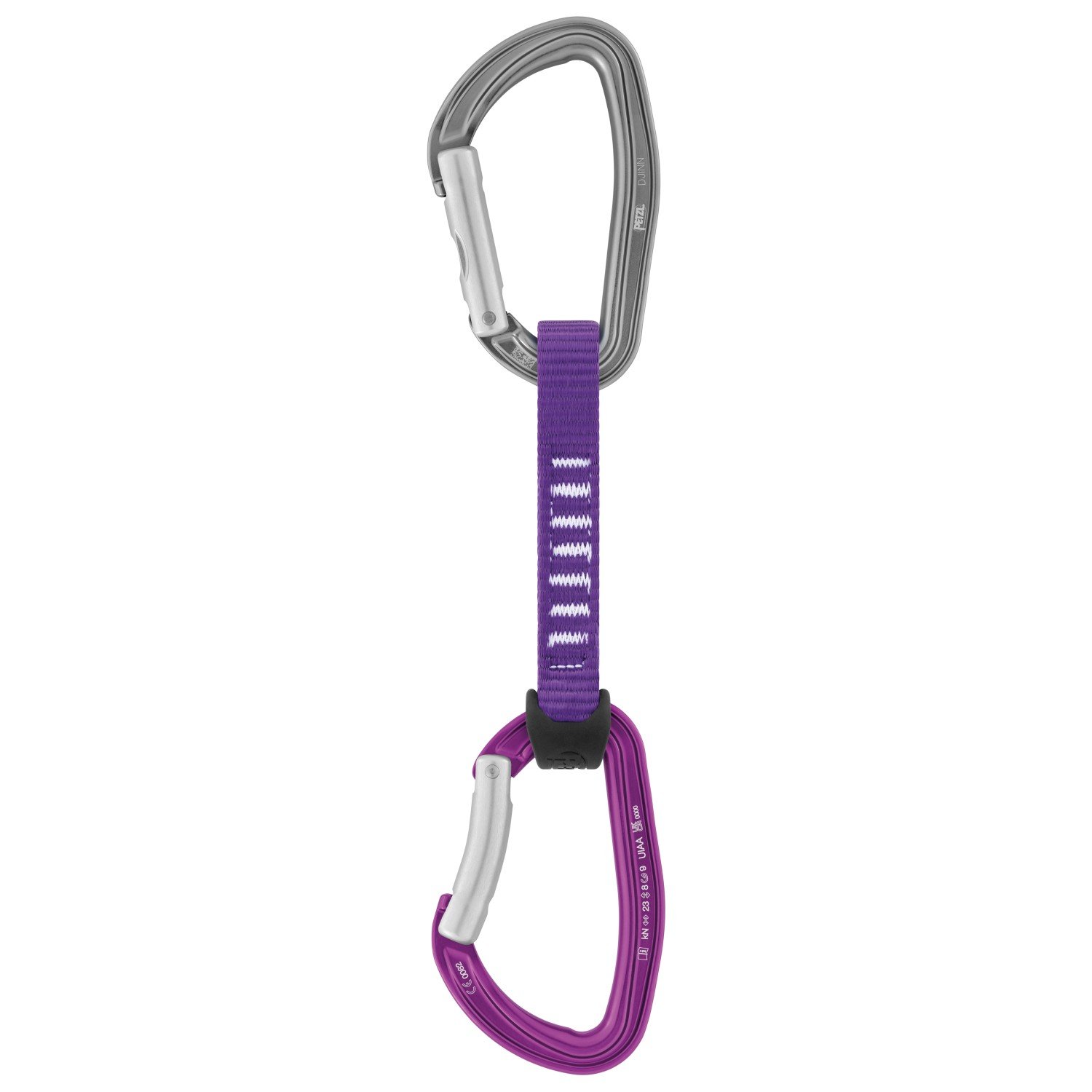
4. Petzl Djinn Axess
💰 Best Value • Robust Workhorse for Sport and Entry-Level Racking
Available at Alpinetrek UK and VerticalExtreme
Our Testing Score
Detailed Review
The Petzl Djinn Axess’s headline feature is its uncompromising focus on durability and handling at an entry-level price point. While most budget draws feel small and fiddly, the Djinn uses a full-sized carabiner body with a generous gate opening. This makes it incredibly easy to clip, even for beginners or those with larger hands.
At ~€16 per draw, the value is unbeatable — you get Petzl’s legendary engineering and quality control without the premium price tag of their flagship Spirit model. The honest trade-off is weight and bulk. At 107g, the Djinn is heavier than performance-orientated alpine draws, which can become noticeable on long approaches or when carrying more than a dozen units.
Best for: Budget-conscious sport climbers, those building their first rack, high-volume gym use, and anyone who prioritises a large, easy-to-handle carabiner over extreme weight savings.
Pros
- 24mm opening — significantly wider than competitors
- Petzl engineering at an accessible price
- Full-sized bodies — secure grip for gym-to-crag transition
- Keylock nose on bolt-end — no snagging on hangers
- Wide rope contact surface reduces friction
Cons
- Bottom gate not Keylock — can snag when cleaning
- At 107g — noticeable on long approaches
- Bulkier than minimalist draws on gear loops
- Too heavy for weight-critical mountain routes
5. Edelrid Pure Wire Set
🌱 Best for Sustainability • bluesign® Approved, Eco-Conscious All-Rounder
Available at Alpinetrek UK and Vertical Extreme DE
Our Testing Score
Detailed Review
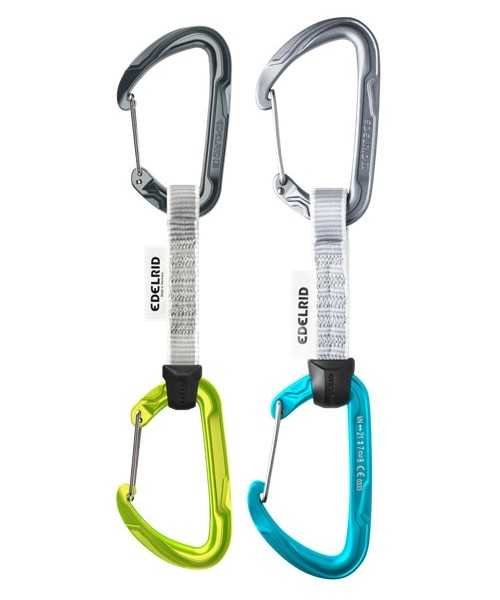
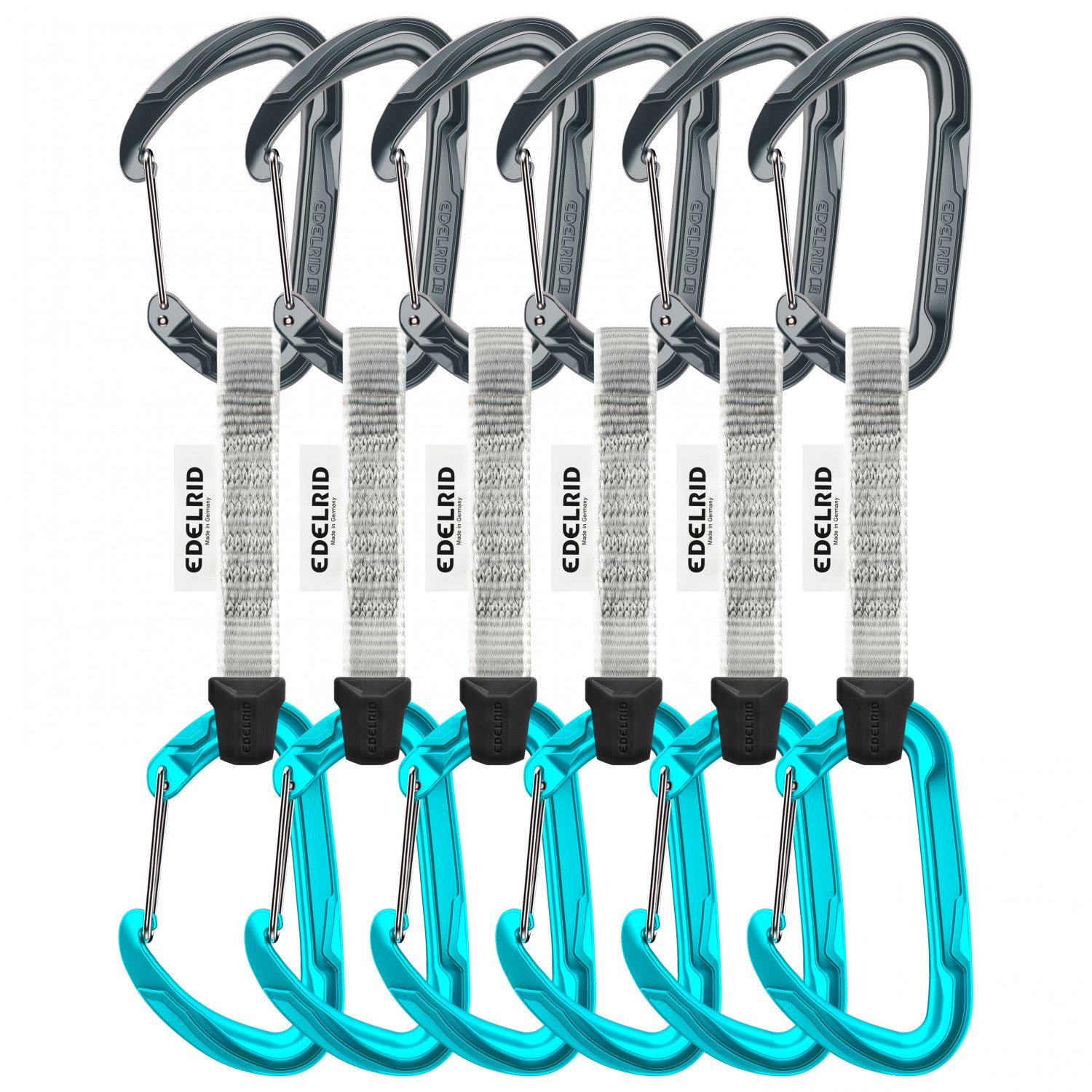
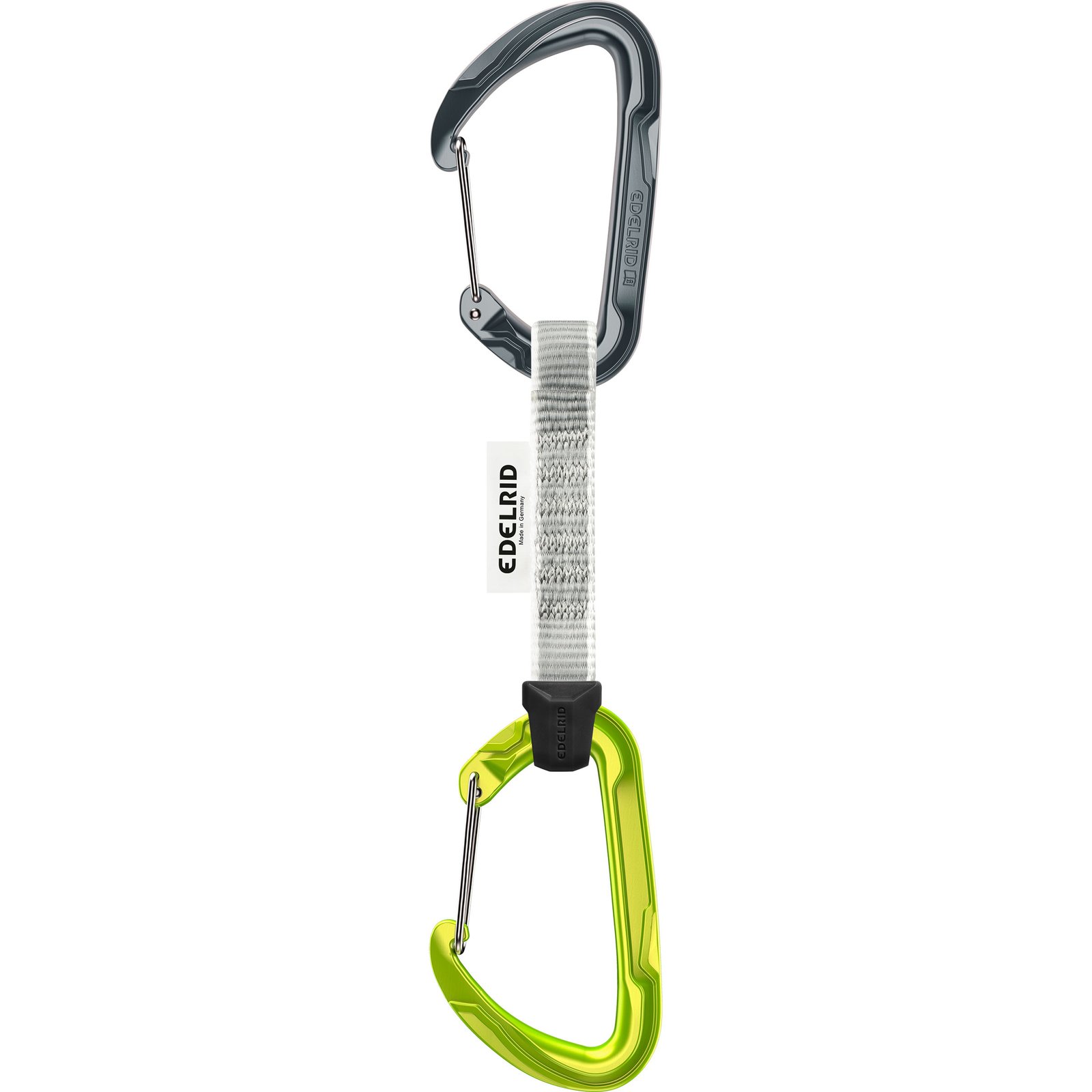
The Edelrid Pure Wire’s headline feature is its industry-leading “Climb Green” pedigree. Edelrid was the first climbing brand to ensure their entire rope and sling production met the strict bluesign® environmental standard, and the Pure Wire benefits directly from this. The 16mm polyester dogbone is produced with minimal environmental impact, while the carabiners are designed for extreme longevity.
The Pure Wire is the perfect eco-conscious all-rounder. It is incredibly versatile: light enough for multi-pitch traditional climbing, yet robust enough for sport sessions. At roughly 97g per draw, it strikes a balance that makes it a “quiver-of-one” for the climber who wants to minimise their gear’s carbon footprint without sacrificing safety or performance.
The honest trade-off is the lack of a Keylock nose. Like most wire gate draws, the Pure Wire has a small notch on the nose that can occasionally snag on bolt hangers when cleaning a route. For those prioritising the planet alongside their vertical goals, it is a minor compromise.
Best for: Eco-conscious climbers, all-rounder adventurers who switch between trad and sport, and anyone looking for bluesign® certified equipment from a brand committed to sustainability.
Pros
- bluesign® certified dogbone — industry-leading sustainability
- Climb Green hardware — eco-conscious manufacturing
- Dual wiregate — lightweight, reliable in cold weather
- Versatile all-rounder — sport and trad
- Excellent durability — robust anodised finish
Cons
- Non-keylock nose — can snag when cleaning gear
- At 97g, not an ultralight specialist for alpine
- Requires slightly more deliberate cleaning technique
- 16mm slim dogbone harder to grab than wider sport draws
🔗 Understanding Carabiners: Sport vs Trad
This is one of those topics that gets glossed over in most gear guides but genuinely matters when building a rack. The carabiner on the bolt end and the carabiner on the rope end have different jobs — and the type of gate and dogbone width you choose should reflect how and where you climb.
Top carabiner: Solid gate, straight or keylock nose. You want a wide gate opening (23mm+) for easy clipping into bolt hangers. A keylock nose prevents snagging when unclipping.
Bottom carabiner: Solid bent gate or bent wiregate. The curved gate makes it faster and more intuitive to clip the rope — particularly when pumped.
Dogbone width: Stiff and wide (17–20mm). A rigid dogbone keeps the bottom gate oriented towards you on every bolt.
- Wide gate opening (23mm+)
- Solid bent gate for fast rope clipping
- Stiff, wide dogbone (17–20mm)
- Keylock nose to avoid hanger snagging
- Heavier acceptable — performance over weight
Top carabiner: Wiregate, straight. Wire gates are lighter and they do not ice up in cold conditions. You clip into all kinds of gear placements — nuts, cams, threads — so you want a snag-free, reliable gate that works on any shape of metal.
Bottom carabiner: Straight or bent wiregate. Wiregates throughout keep the draw light and versatile.
Dogbone width: Narrow and flexible (8–12mm). Reduces overall weight and packs down smaller on a heavily laden rack.
- Wiregate both ends — lighter, no freezing
- Flexible, narrow dogbone (8–12mm)
- Lightweight — every gram counts on a full rack
- Versatile clipping at any angle
- Extended lengths available for reducing drag
🦴 The Dogbone: Why Width Matters
The dogbone — the sewn nylon or Dyneema sling connecting the two carabiners — is where the biggest practical difference between sport and trad draws lies. It is easy to overlook because it looks like just a piece of webbing. It is not.
17–20mm wide, semi-rigid construction. Keeps the bottom gate facing the same direction on every bolt — you always know where to clip. Also wide enough to grip during rest positions on overhanging sport routes. Heavier, but the predictability is worth it on hard routes with critical clips.
8–12mm wide, flexible construction. Much lighter — across ten draws on a full rack the difference is 200–300g. Packs smaller and moves more naturally when racked. The flexibility means the bottom carabiner can rotate freely, which is fine when clipping into cams and wires at any angle, but less ideal on sport bolt hangers.
How to Choose the Right Quickdraw
Sport Climbing
Prioritise a stiff dogbone and bent gate bottom. On a hard sport route, fumbling a clip costs you a send. The dogbone keeps the gate oriented, the bent gate makes clipping intuitive. Weight is less important than reliability.
Trad Climbing
Prioritise light weight and flexible dogbones. A full trad rack is already heavy — your draws should not add to the problem. Wire gates work in all conditions, flexible dogbones pack neatly on a loaded harness.
Van Life / All-Round
You need draws that work for sport one day and trad the next. A hybrid design — keylock solid top, bent wire bottom, semi-stiff dogbone — gives you 90% of the performance of a specialist draw in either discipline.
Best Value Build
If you are building your first rack and budget matters, durability over weight is the right priority. A heavier draw that lasts five years beats a lighter one you replace every two.
Eco-Conscious
If the mountains and crags you climb on matter to you — and they should — choosing gear with verified sustainable credentials is one practical way to align your kit with your values.
How Many Do You Need?
For sport climbing, 10–12 draws covers most single-pitch routes. Add 2–3 longer draws (17–25cm) for reducing rope drag on less-than-vertical sections or wandering bolt lines.
Gate Types at a Glance
| Gate Type | Weight | Cold Weather | Best Use | Snag Risk |
|---|---|---|---|---|
| Solid straight | Higher | Can freeze | Top carabiner, sport bolts | Depends on nose shape |
| Solid bent | Higher | Can freeze | Bottom / rope-end sport | Low |
| Wiregate straight | Lower | No freezing | Trad, alpine, top carabiner | Hooknose can snag |
| Wiregate bent | Lower | No freezing | Bottom / rope-end, trad | Low |
| Keylock nose | Medium | Can freeze | Any — eliminates snagging | None |
Final Recommendations
For most European sport climbers, the Petzl Spirit Express remains the benchmark. Vanlifers and all-rounders should look seriously at the Black Diamond HotForge Hybrid — one set covers nearly everything. For a full trad rack, the Wild Country Astro’s weight savings are genuinely meaningful over a long day.
When building your rack, aim for a versatile mix: a common starting point is either 6–8 medium-length (12cm) draws and 2 extendable (min 60cm) ones for straightforward lines, or a more flexible spread of 4 small (10cm), 4 medium (12cm), and 2 extendable (min 60cm) ones to better manage rope drag on wandering routes.
Whatever you choose, buy from local climbing shops when possible — they are the heartbeat of the climbing community and deserve our support.
Frequently Asked Questions
How many quickdraws do I need for sport climbing?
For most single-pitch sport routes in Europe, 10–12 quickdraws covers the majority of routes. Some longer or more sustained routes — particularly on Kalymnos, in the Verdon, or on longer Spanish pitches — can require 14–16. Check the route description or topo before going out. As a starting point, a set of 10 draws in a 12cm length plus 2–3 draws in 17–25cm for managing rope drag is a practical first rack for any European sport crag.
What is the difference between a sport and trad quickdraw?
The key differences are dogbone width and gate type. Sport draws have wide, stiff dogbones (17–20mm) that keep the bottom gate oriented consistently on bolt hangers, and typically use solid bent gates for fast, predictable rope clipping. Trad draws have narrow, flexible dogbones (8–12mm) that are lighter and pack better on a fully loaded rack, and typically use wire gates throughout for lighter weight and cold-weather reliability. A hybrid draw like the Black Diamond HotForge is designed to work adequately for both at the cost of being fully optimised for neither.
When should I replace my quickdraws?
Inspect your draws regularly — before every session is not excessive for high-use gear. Replace draws if: the dogbone sling shows any cuts, fraying, or worn-through stitching; the carabiner body shows visible grooves; the gate does not spring back cleanly and consistently; or the carabiner has taken a significant sideways load or impact. Grooved carabiners are a particular concern — the groove creates a stress concentration that weakens the carabiner even if it looks otherwise intact.
Is a keylock nose worth the extra cost?
For the bolt-end (top) carabiner on a sport draw — yes, particularly if you are working routes repeatedly and stripping draws at the end of a session. A hooked nose can catch on bolt hangers when unclipping, which is annoying at best and can be problematic on steep or overhanging routes where you cannot reach the draw easily. On the rope-end (bottom) carabiner, the keylock nose matters less because you are not clipping it into hardware.
Should I use the same quickdraws for trad and sport?
You can — and many climbers do, especially with hybrid draws like the HotForge. In fact, we personally use the same set for both to keep our rack simple. However, if you climb both seriously, there is a performance argument for separate sets. Stiff dogbones are better for sport redpointing, whilst flexible wire-gate draws are better for mountain trad. If budget is a constraint, start with hybrids that handle both, then specialise as your climbing develops.
Are wire-gate carabiners as strong as solid gates?
Yes — all carabiners sold in Europe must meet the same CE/UIAA standards regardless of gate type. Wire gates are not weaker than solid gates. In fact, wire gates have one structural advantage: they are less prone to gate flutter during a fall. When a carabiner hits the rock or bolt hanger, a solid gate can momentarily open due to inertia. A wire gate is lighter and therefore less susceptible to this effect.
What length quickdraw do I need?
For a standard sport rack, 12cm is the most versatile length — it works for the majority of bolted routes without creating unnecessary rope drag. Carry 2–3 draws in 17cm or 25cm for situations where bolts are not in a straight line, where the route traverses, or where you need to reduce rope drag around a feature. The general rule: the straighter the route, the shorter the draw you can use.
🧗 Explore Our Climbing Guides
Detailed crag guides from our van life climbing adventures across Europe