
Best Cams & Nuts for Trad Climbing 2026:
Nuts, Cams & Protection
Everything you need to understand trad protection — from your first nut set to building a complete rack. Honest reviews, real prices, and exactly what to buy first.
Trad climbing gear is the part of the sport that intimidates most climbers long before they ever leave the ground on a traditional route. It is learnable for everyone who puts their minds into it, and the core logic is straightforward once you understand what each piece is actually doing. The rack of shiny metal hanging from an experienced trad climber’s harness looks complicated, expensive, and technical — and it is all of those things but it’s all the fun and amore accessible than you might think.
This guide covers the two most important categories of trad protection — nuts and cams — plus the accessories that make them usable. It also explains what trad climbing actually is, how it differs from sport climbing, and what else you need on your rack beyond the protection itself. If you are building your first trad rack or trying to understand what you already own, this is where to start.
Trad gear is the category where specialist advice matters most. Gear shops staffed by real climbers can show you how each piece works in your hand, help you understand sizing, and advise on what to prioritise on a limited budget. These affiliate links support this site — but your local climbing shop deserves your business first.
If you’re building your kit from scratch, the starter pack covers everything before you think about protection. Not sure why trad over sport? We explain the switch. And if you’re not yet confident outdoors, a course first is the most efficient path.
🪨 What Is Trad Climbing?
Traditional climbing — trad — is the original form of rock climbing. The climber leads the route from the bottom upward, placing removable metal protection into cracks and features in the rock as they go. This protection is clipped to the rope via quickdraws or slings, so that if the leader falls, the rope catches on the last piece placed. At the top, both the leader’s protection and the anchor are built from gear they carried up — nothing is left permanently in the rock.
This is fundamentally different from sport climbing, where stainless-steel bolts are already drilled into the rock at regular intervals before any climbing takes place. In sport climbing, the leader simply clips quickdraws to pre-existing bolts as they ascend. The mental and technical demands are entirely different: sport climbing is about athletic performance on pre-protected rock; trad climbing adds the responsibility of reading the rock, placing gear that actually holds, and making decisions about your own safety in real time.
Trad climbing is the dominant outdoor climbing culture in the UK, across much of Scandinavia, and in many parts of the Alps. In southern Europe — France, Spain, Portugal — sport climbing is the norm and trad is relatively rare. For vanlifers who travel across Europe, understanding both disciplines opens up the full range of what is climbable.
🪨 Trad Climbing
- Climber places own removable protection
- No permanent bolts — rock left natural
- Requires gear knowledge and mental composure
- Dominant in the UK, alpine regions
- Much deeper learning curve
- Gear-intensive — nuts, cams, slings, lockers
- Double ropes common for multi-pitch
- Rock condition and crack features matter
⚡ Sport Climbing
- Routes have permanent bolts pre-drilled
- Clip quickdraws to bolts — focus on movement
- Light gear rack: quickdraws and a rope
- Much more accessible for beginners
- Dominant in France, Spain, Portugal
- Athletic performance focus
- Single rope standard on single-pitch
- No crack reading or placement decisions
Trad climbing is not the right starting point. A structured beginner course — particularly through Mountain Training in the UK — teaches the foundation skills before you start placing your own gear. See our Beginner Courses Europe guide for the full breakdown of where and how to learn properly.
🎒 What You Need on a Trad Rack
A complete trad rack is more than just nuts and cams. Before you spend a penny on protection, make sure the rest of your system is in place. The protection is only as good as the rope, harness, and belay setup connecting it all together.
🪢 Slings
Carry a minimum of two to four 60cm slings and one or two 120cm slings for extending placements, reducing rope drag, and building anchors on natural features. Dyneema for weight; nylon for knottability. See our full sling guide →
🔗 Quickdraws
Trad climbers typically use a mix of standard quickdraws and extendable alpine draws (a 60cm sling with two carabiners racked in thirds). Alpine draws reduce rope drag on wandering lines. See our carabiner and quickdraw guide →
🔒 Locking Carabiners
Carry three to five locking carabiners for anchor building. Lightweight screwgates like the DMM Phantom work well here. Your belay HMS locker is separate — always use an HMS for belaying.
🧵 Double Ropes
Multi-pitch trad routes typically use a double rope system — two 8.5–9mm ropes clipped alternately to gear to reduce drag and enable longer abseils. If you’re moving into multi-pitch trad, read our full rope guide before buying.
⛑️ Helmet
Non-negotiable on trad routes. Rockfall from your own placements, from the second following, and from loose rock above is a genuine hazard on most trad crags. See our helmet guide →
🪢 Harness
A trad harness needs more gear loops than a sport harness — five loops (including a rear loop) makes a meaningful difference when carrying a full rack. See our harness guide →
A full trad rack is a significant investment — easily £500–800/€550–900 for cams alone. Start with a nut set and two or three cams in the most commonly-used sizes, and build from there as you identify the gaps on real routes. Every experienced trad climber has a slightly different rack composition based on the routes they climb most.
📊 Quick Comparison — Trad Protection Types
| Type | Cost | Best For | Crack Type | Skill to Place | Remove With |
|---|---|---|---|---|---|
| Nuts / Wires Start Here |
£35–60 / set | Tapered constrictions, most trad routes | Tapered cracks & pockets | Medium — takes practice | Nut key |
| Cams (Friends) Most Versatile |
£50–80 / each | Parallel cracks, fist cracks, flares | Parallel-sided cracks | Moderate — spring mechanism | Pull trigger, pull out |
| Torque Nuts Specialist |
£10–18 / each | Parallel cracks where standard nuts won’t hold | Parallel or near-parallel | Higher — requires twisting action | Nut key + rotate |
| Hexes Optional |
£8–20 / each | Large crack sizes, budget alternative to large cams | Wider cracks, uneven features | Higher — cam action when loaded | Nut key + wriggle |
Before you dive in, Alpinetrek’s own trad gear recommendation guide is worth a read alongside this one — their team knows the European market well and it’s useful context before you spend anything on their website.
🔧 Section 1 — Cams (Spring-Loaded Camming Devices)
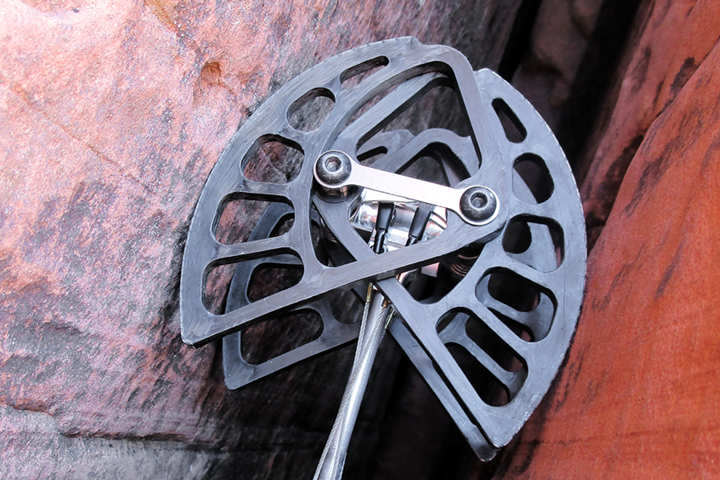
Cams — often called Friends, after the Wild Country brand that pioneered the design in the late 1970s — are spring-loaded devices that expand to fill a crack when you pull the trigger, then hold under load as the lobes cam against the rock walls. They work in parallel-sided cracks where nuts cannot get a purchase, and a single cam covers a range of crack widths within its size rating. Place it with the trigger depressed, release the trigger, and the lobes expand to grip the rock. In a fall, the outward camming force actually increases the grip.
A cam is significantly more expensive than a nut — one cam costs roughly what a full nut set costs — and a comprehensive cam selection represents a serious investment. Start with sizes covering the most commonly-used range on UK and European trad routes: roughly thumb-width to fist-width placements (Black Diamond C4 sizes 1–4, or Wild Country Friend 1–4 equivalent). This covers the majority of beginner and intermediate trad routes without buying a full rack on day one.
Unlike ropes — which should always be bought new — cams in good visual condition (no cracked lobes, undamaged slings, functioning trigger mechanism) are reasonable to buy secondhand. The UK climbing community has a well-established secondhand gear market through UKClimbing forums and Facebook groups where quality cams can be found at significant discounts. When buying secondhand, the most critical safety checks are trigger wire fraying and the age of the slings; soft goods have a strict 10-year maximum lifespan from the date of manufacture, regardless of how often they were used.
Our Cam Picks — 3 Options for Every Budget
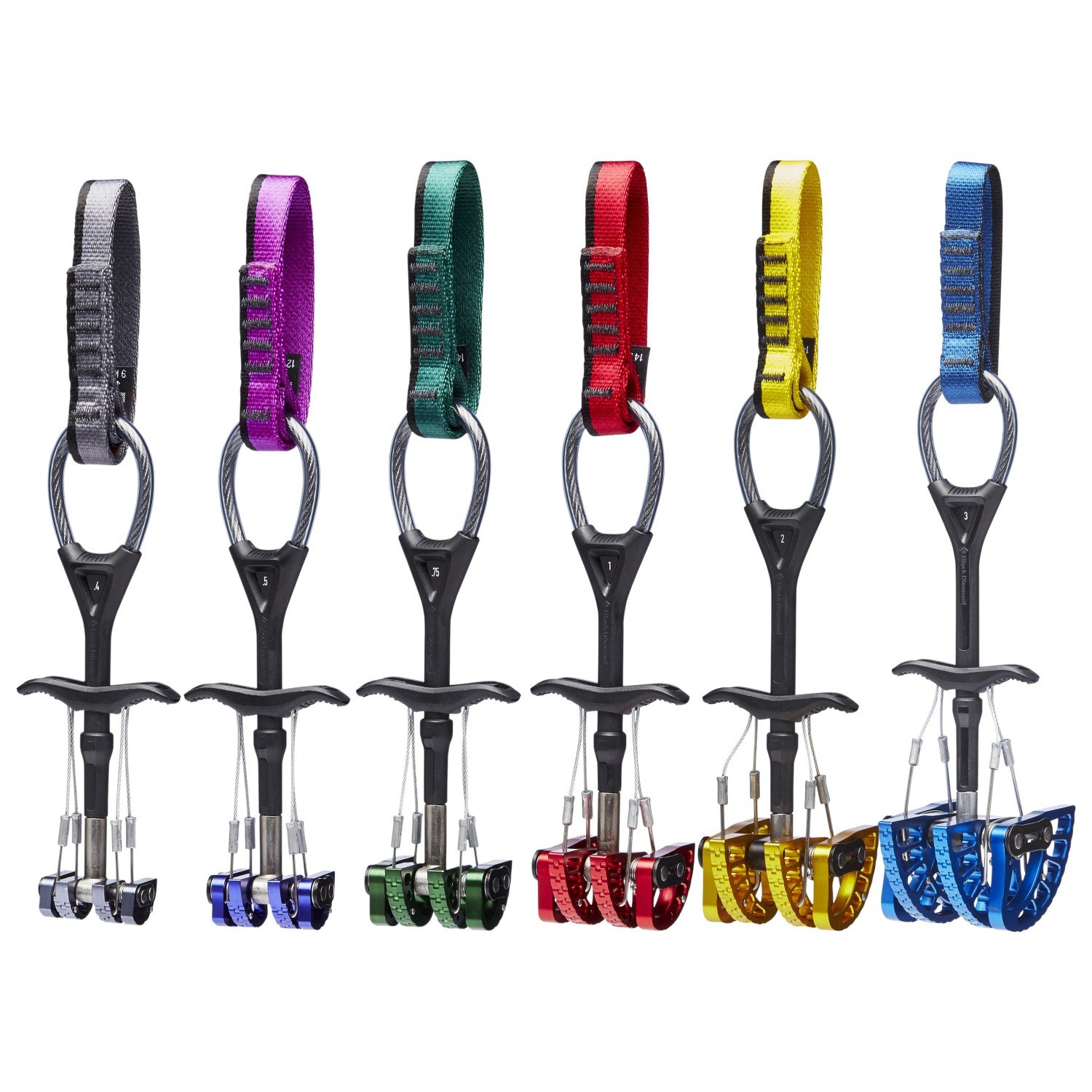
Black Diamond C4
The global standard cam — used by professionals and beginners alike for decades. Four-lobe design, wide expansion range, outstanding durability.
Score Breakdown
Key Specs
Detailed Review
The Black Diamond C4 is the cam against which everything else is measured. Its four-lobe asymmetric design gives a wide expansion range in each size, meaning fewer individual pieces are needed to cover a given crack range. The flexible Dyneema stem reduces leverage on the placement during falls, allowing the cam to move slightly and maintain good lobe contact with the rock. The trigger action is smooth and consistent across the size range, and the build quality is such that a well-maintained C4 will outlast most climbers’ active years.
For a starter set covering the most common trad rack sizes, sizes 0.5 through 3 (or 1 through 4 depending on the regional grading of the routes you climb) will protect the majority of routes you encounter in your first few seasons. Start here, climb on them until you understand the gaps, then add based on real placements you couldn’t make rather than theoretical completeness.
What It Does Well
- The industry benchmark — proven over decades
- Excellent expansion range per size
- Flexible stem reduces placement stress in falls
- Outstanding durability — holds value secondhand
- Replaceable slings for long-term maintenance
- Smooth trigger action in all conditions
Where It Falls Short
- Expensive — a full set is a major investment
- Heavier than some newer cam designs
- Larger sizes are bulky on the harness
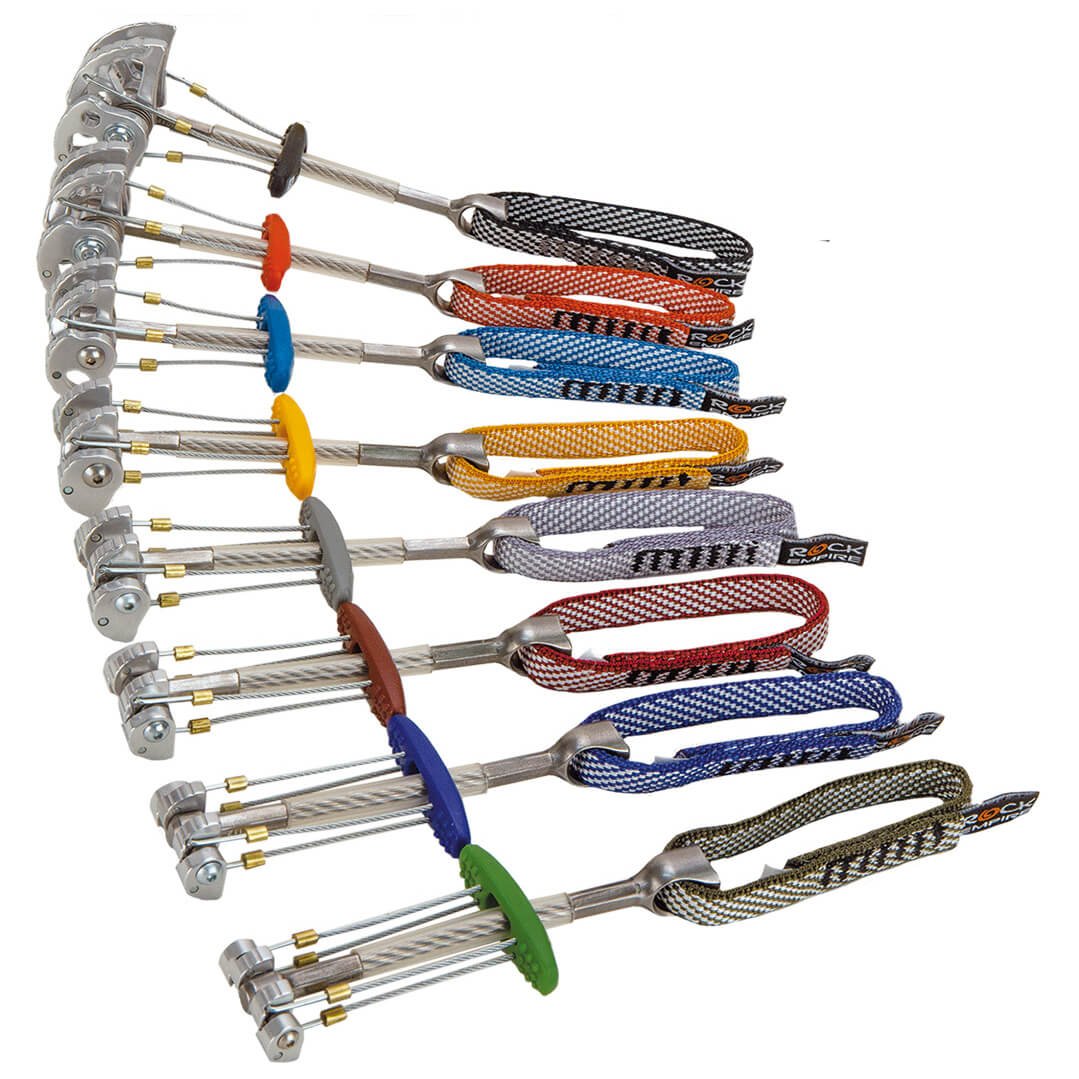
Rock Empire Comet Set
Czech-made, EU-manufactured, and genuinely competitive with the big names — the Comet Set gives you a full range of colour-coded cams at a price that makes building a starter rack considerably less painful.
Score Breakdown
Key Specs
Detailed Review
Rock Empire is a Czech manufacturer that has been making climbing gear in-house in the EU for decades — and the Comet Set is their answer to the question every new trad climber eventually asks: do I really have to spend £400 on four cams? The short answer with the Comet is no. The set delivers a full range of sizes at a price point that makes buying the full range in one go genuinely feasible.
The Comet is not trying to beat the C4 technically — it is offering 80–90% of the performance at 60–70% of the cost, which is exactly the right trade-off for a climber building a first rack. Buy the Comet Set to get climbing on trad. Upgrade individual sizes to BD or DMM as you identify the specific placements you use most heavily.
Best for: Climbers building their first trad rack on a realistic budget, European climbers who want quality gear made closer to home.
What It Does Well
- Best price-to-range ratio of any cam set here
- Full size coverage in a single purchase
- EU-made — consistent quality control
- Colour-coded slings for fast size selection
- Lightweight aluminium construction
- Widely available across European retailers
Where It Falls Short
- Trigger feel less refined than BD or DMM at harder grades
- Expansion range per size slightly narrower than the C4
- Less established secondhand market than BD or Wild Country
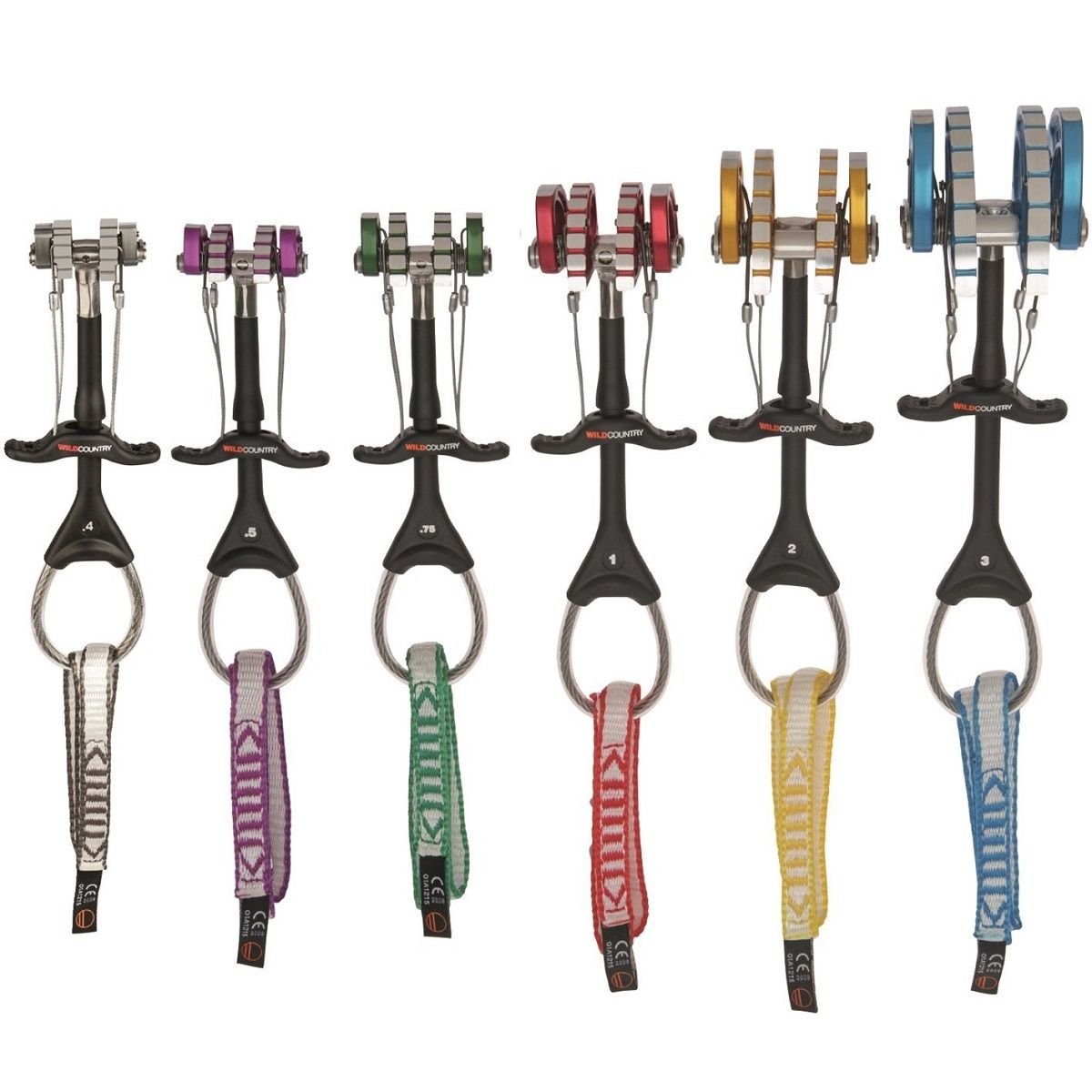
Wild Country Friend
The original cam — Wild Country invented the spring-loaded camming device and the Friend remains a benchmark piece. Slightly less expensive than the C4 with equivalent performance across the board.
Score Breakdown
Key Specs
Detailed Review
Wild Country invented the spring-loaded camming device — the original Friend, designed by Ray Jardine in the late 1970s, is the direct ancestor of every cam made today. The Friend’s symmetric four-lobe design provides a slightly different feel to the BD C4 — marginally less expansion range per size, but with a cleaner trigger pull that some climbers prefer. It is slightly cheaper than the C4 in most European retailers, which makes a meaningful difference when you are buying five or more pieces at once.
The choice between the C4 and the Wild Country Friend is largely personal — both are outstanding tools at equivalent price points. Many trad climbers mix and match. If you are based in continental Europe where Wild Country distribution is strong, the Friend is a sensible default.
What It Does Well
- Inventors of the cam — proven design over 40+ years
- Slightly lower price than the C4 in most European shops
- Clean trigger pull — easy to retract under load
- Excellent durability and secondhand value
- Widely available across Europe
Where It Falls Short
- Slightly narrower expansion range per size than C4
- Symmetric lobes less efficient in some placements
- Not quite the brand recognition of BD in some markets
🔩 Section 2 — Nuts & Wires
Nuts — also called wires or chocks — are the simplest and oldest form of modern trad protection. A tapered metal wedge on a wire cable is pushed into a crack or natural constriction in the rock, then pulled down so it sits firmly against the crack walls. When loaded in a fall, the nut wedges tighter into the constriction rather than pulling out — the same principle that makes a door wedge hold a door open, applied to falling climbers.
Nuts are lightweight, inexpensive relative to cams, and form the backbone of trad protection on the majority of UK and European routes where tapered crack features are present. A complete set of 10–11 nuts in graduated sizes covers the core range of placements you will encounter on beginner and intermediate trad routes. Buy a set rather than individual pieces — the value per unit is better, the colour coding helps you select the right size quickly, and having the full range gives you options that individual pieces cannot.
Many new trad climbers focus on cams because they are more intuitive and satisfying to place. Nuts require more reading of the rock and a better understanding of constriction geometry — but that skill, once developed, makes you a significantly more capable and safer trad climber. Practise nut placement in accessible cracks at the base of crags before committing to leading on them.
Our Nut Picks — 3 Sets for Every Climber
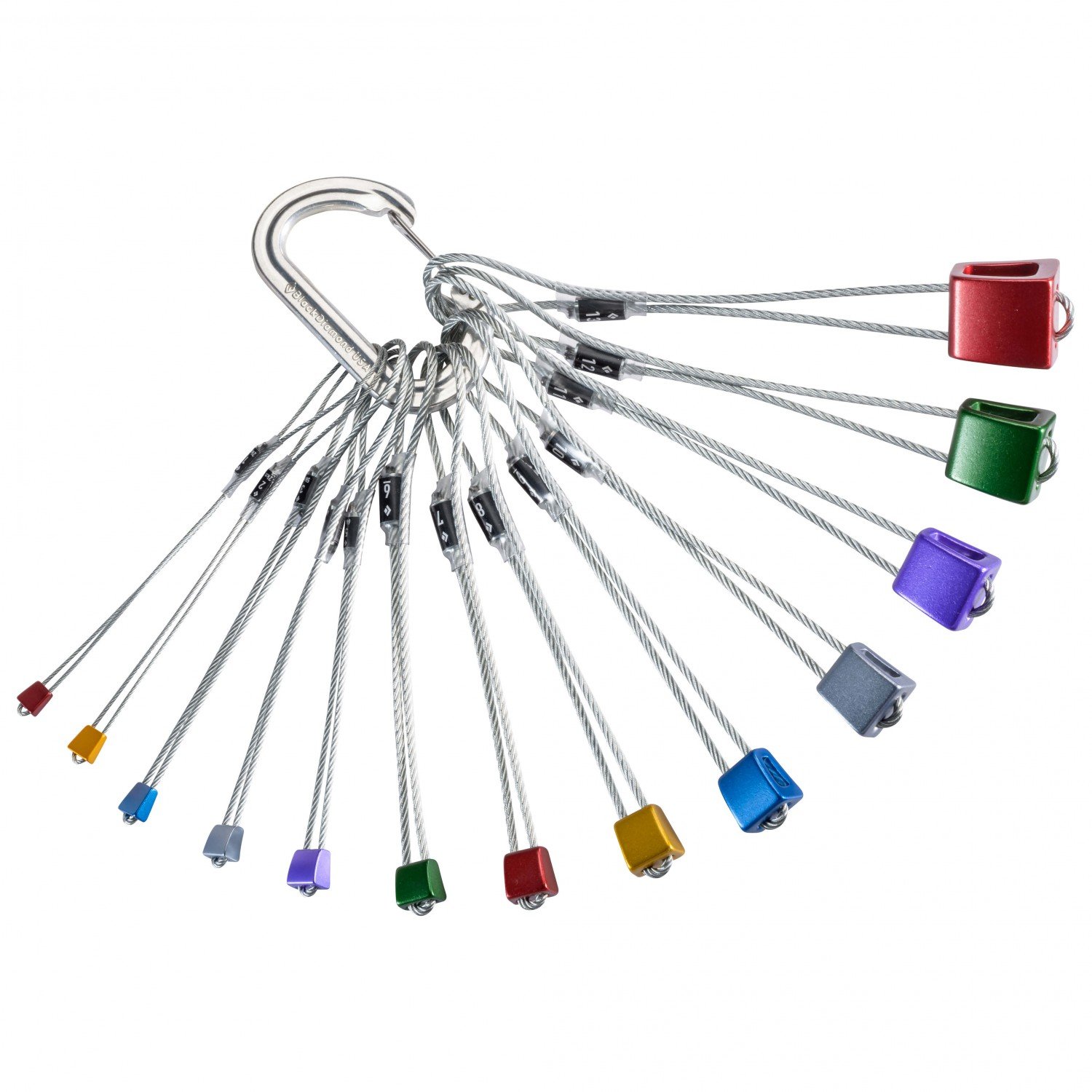
Black Diamond Stopper Classic Set
The reliable all-rounder that most climbers start with — covers the core sizes in a single purchase, forged aluminium construction, and the industry-standard wire that lasts.
Score Breakdown
Key Specs
Detailed Review
The Black Diamond Stopper Classic Set is where the majority of trad climbers begin, and for good reason. The full 13-piece set covers sizes 1 through 13 — from fingernail-width microwire placements up to large, fist-sized constrictions — giving you every nut size you are likely to encounter on beginner and intermediate routes in a single purchase. The forged aluminium construction provides a smooth, consistent taper that sits cleanly in crack features.
The colour-coded system is worth mentioning specifically. When you are mid-pitch and trying to identify the right nut size quickly, grabbing a colour rather than reading a number under pressure makes a genuine practical difference.
What It Does Well
- Complete set covers all common nut sizes
- Forged aluminium — clean, consistent taper
- Colour coding for fast size identification
- Industry-standard wire quality
- Best value entry to a complete nut rack
- Comes with a racking carabiner
Where It Falls Short
- Larger sizes less useful than cams in parallel cracks
- Micro sizes require significant skill to place well
- Wire crimps can weaken with repeated hard use over years
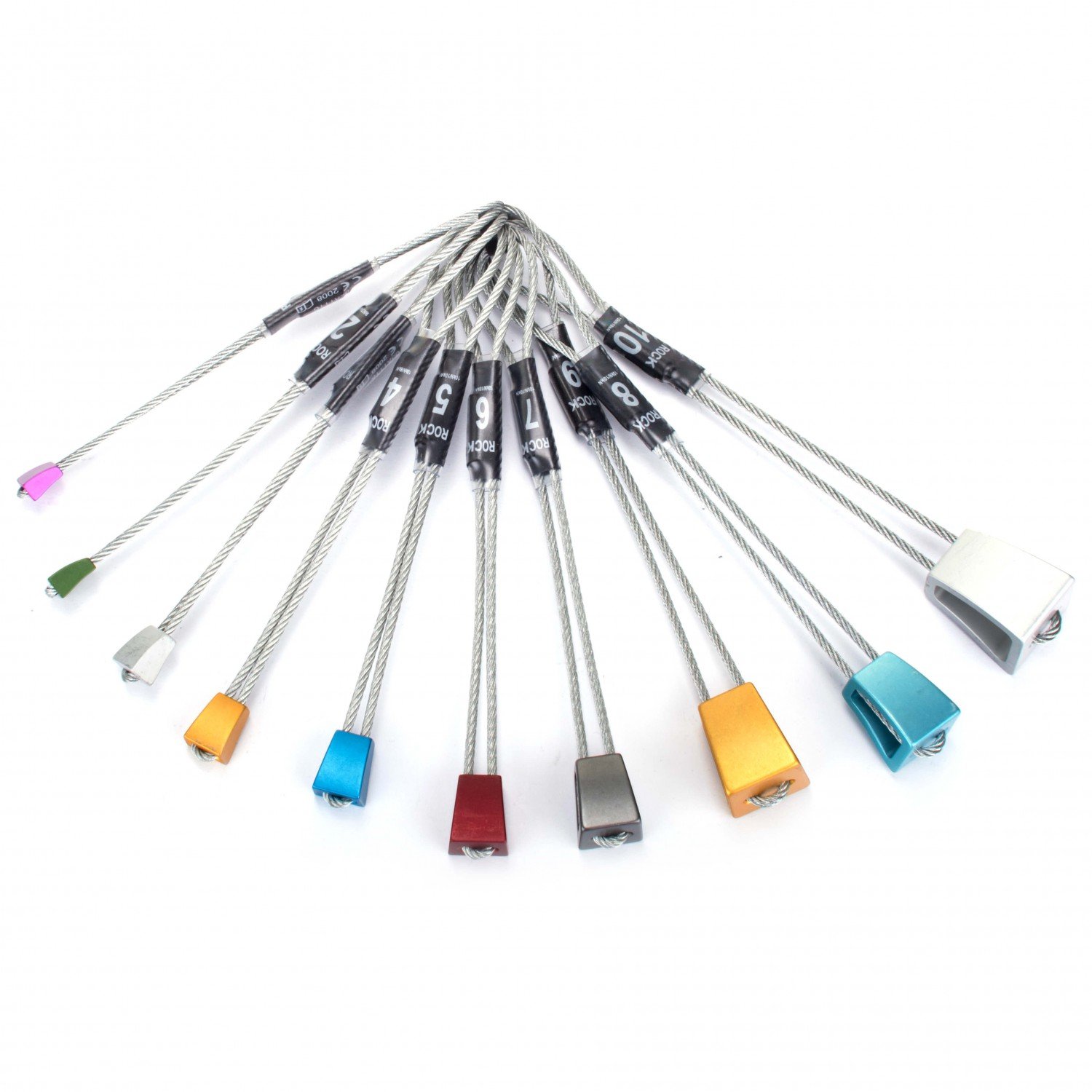
Wild Country Rocks on Wire Set 1–10
The original curved nut — Wild Country invented the three-point contact geometry that every modern nut copies. Lighter than ever, colour-matched to their Friends range.
Score Breakdown
Key Specs
Detailed Review
Wild Country invented the curved nut in 1979 — the three-point contact geometry that Mark Vallance designed is still the basis for almost every nut made today, and the Rock on Wire is its direct descendant. The slightly more aggressive taper and taller nut head give the Rocks a placement character that many climbers prefer over flatter competitors like the BD Stopper, particularly in softer rock types like gritstone and sandstone where a taller nut bites more cleanly.
The 5-degree side cut opens up end-on placement possibilities that straight-sided nuts simply cannot access. If you are building a Wild Country cam rack, the colour-matching between Rocks, Friends, and Zeros is a genuine organisational advantage — every size shares the same colour across the whole system.
Best for: Climbers who want a proven, durable alternative to the BD Stopper, anyone building a Wild Country-based rack.
What It Does Well
- The original curved nut — design proven over 40+ years
- Aggressive taper excels in softer rock types
- 5° side cut adds end-on placement options
- Among the lightest and most durable nuts tested
- Colour-matched to Wild Country Friends and Zeros
- Largest size range of any major nut set
Where It Falls Short
- No micro sizes in this set — Mini Rocks sold separately
- Larger sizes less useful than small cams in parallel cracks
- Taller profile can feel less precise in very thin placements
🔔 Section 3 — Hexes & Torque Nuts
Hexes — affectionately known as cowbells by generations of trad climbers who have heard them jangling on a harness — are one of the oldest and most underrated pieces of protection on the market. Their eccentric, off-centre geometry is the key: because the mass of the hex is not centred on its axis, loading causes the piece to rotate slightly and cam against the crack walls. This makes them active-passive hybrids — passive in the sense that they have no moving parts, but active in the way they behave under load.
The practical case for carrying hexes is simple: they are the most weight-efficient and cost-effective way to protect wide cracks on a trad rack. A large cam covering a fist-width crack costs £70–80 and weighs 150–200g. A hex covering the same crack costs £12–18 and weighs 60–90g. For alpine routes, long mountain days, or any situation where you need large-crack protection without the weight and cost of a full cam set, hexes fill the gap convincingly.
Brands like Black Diamond still produce Wired Hexentrics — hexes on stainless steel cable — which are excellent and long-lasting since the wire never needs replacing. The modern alternative, used by DMM and others, is a hex slung with an extendable Dyneema sling. The sling version reduces rope drag significantly on wandering pitches and stops the hex “walking” out of the placement when the rope moves. For single-pitch and straightforward trad, wired hexes are perfectly functional. For multi-pitch, the slung version is the better tool.
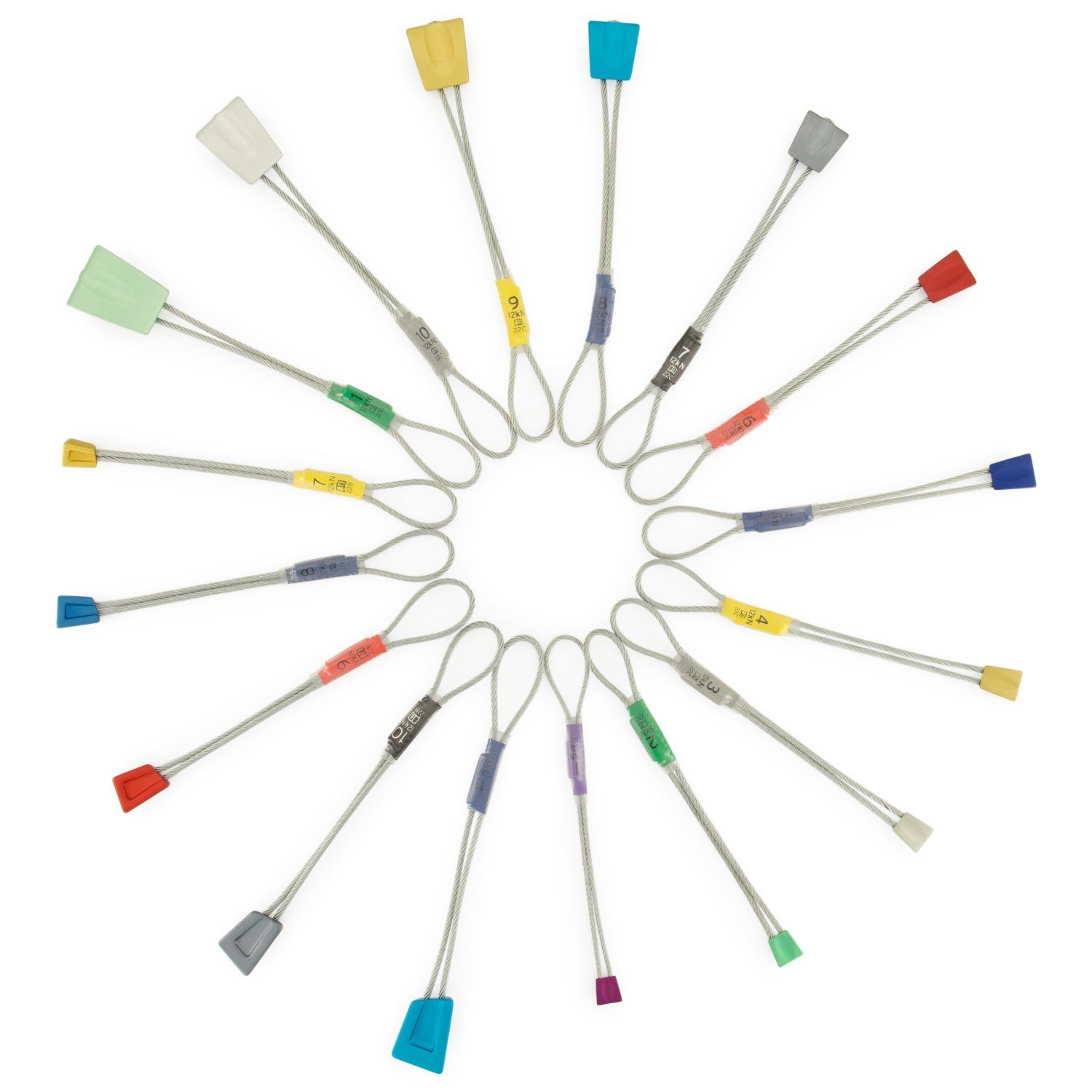
DMM Torque Nut Set
The modern evolution of the hex — a twisted body profile with an extendable Dyneema sling that bites into parallel-sided cracks and stays put when the rope moves.
Score Breakdown
Key Specs
Detailed Review
The DMM Torque Nut set is the modern slung evolution of the classic hex — a twisted body profile that creates a camming action when loaded into parallel-sided cracks, combined with an extendable Dyneema sling that addresses the two main practical limitations of wired hex versions: rope drag and walking. The extendable sling also means you can adjust the extension to suit the pitch direction without adding separate alpine draws.
Best for: Multi-pitch trad where rope drag management matters, wide parallel crack protection at significantly lower weight and cost than cams.
What It Does Well
- Extendable Dyneema sling — eliminates walking and reduces drag
- Bites into parallel cracks where standard nuts fail
- Dramatically lighter and cheaper than equivalent cams
- Made in Wales — DMM’s consistent quality
- Compact modern profile easier to rack than old-school hexes
Where It Falls Short
- Removal technique requires practice to do efficiently
- Not as intuitive to place as a cam under pressure
- Sling has a 10-year lifespan and must be replaced
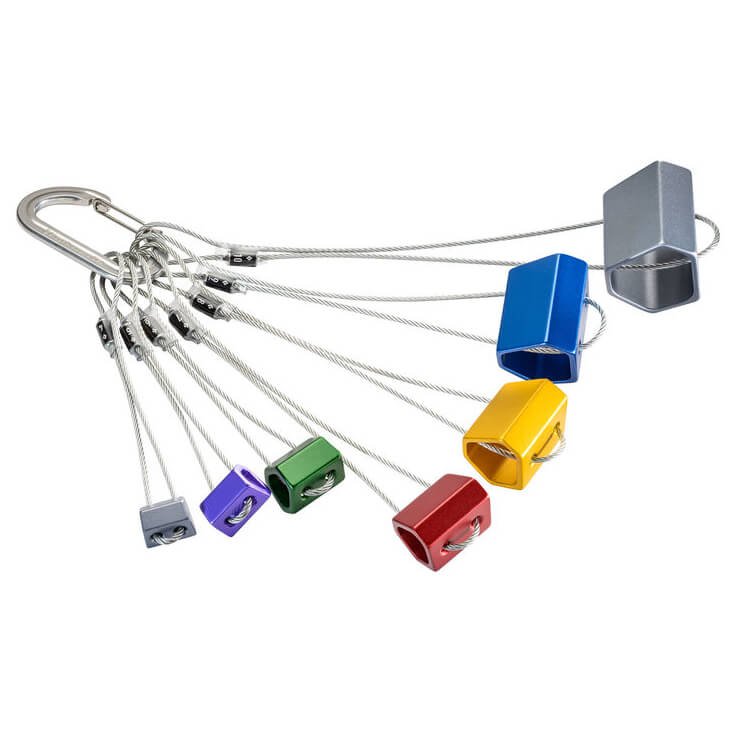
Black Diamond Wired Hexentrics
The classic wired hex — asymmetric cross-section, four possible placement orientations, galvanized steel cable that never needs replacing.
Score Breakdown
Key Specs
Detailed Review
The Black Diamond Wired Hexentric is the hex that most climbers mean when they say “hex” — the galvanized steel cable version that has been on trad racks for decades and earned a reputation for bomber reliability in wide and flaring cracks where cams walk out. The asymmetric cross-section creates four distinct placement orientations: three widths when turned on the long axis, plus an end-on placement for bottleneck features.
Buy sizes 4–7 to start — the smaller sizes overlap with territory your nut set already covers, and the larger sizes (8–11) are for specialist wide crack and off-width scenarios most beginners won’t encounter for some time.
Best for: Wide and flaring cracks on single-pitch trad, alpine routes where low maintenance and low weight matter.
What It Does Well
- Four placement orientations from a single piece
- Galvanized steel cable — never needs replacing
- Exceptional in wide and flaring cracks where cams walk
- Fraction of the cost and weight of equivalent large cams
- Outstanding long-term durability
Where It Falls Short
- Wire can allow walking on wandering multi-pitch pitches
- Requires more practice to place well than cams
- Bulky to rack — larger sizes take up significant harness space
🔧 Section 4 — Essential Accessories
Beyond the protection itself, one accessory is genuinely non-negotiable on a trad rack: the nut key. Without it, you cannot remove well-placed nuts from the rock — and a stuck nut at an awkward gear placement can bring a pitch to a complete halt.
Essential Accessories — Nut Keys
A nut key is non-negotiable on a trad rack. Without one you cannot remove well-placed nuts, and a stuck wire on a pitch brings everything to a halt. Carry one per person — not one per pair.
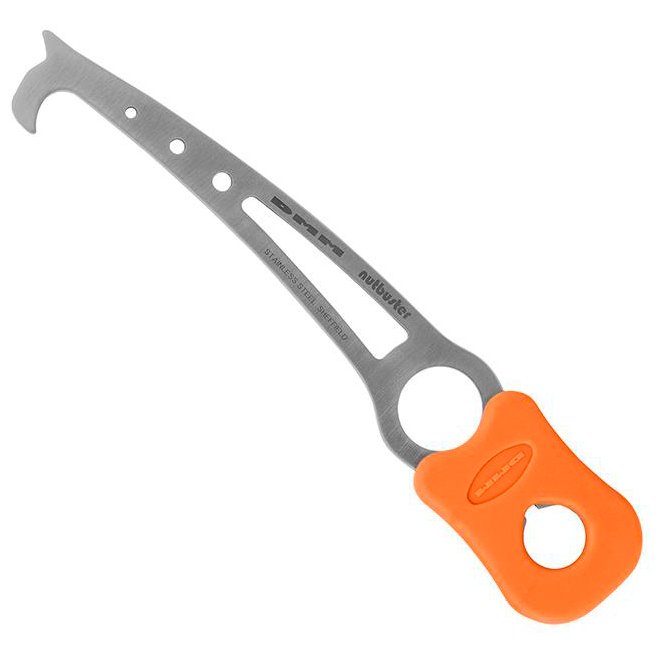
DMM Nutbuster
The benchmark nut key for serious trad climbers. Deliberately heavier than basic tools — the extra mass gives more leverage when tapping a stuck nut from below. The angled head reaches placements a straight tool cannot. At ~£10/€12, the most cost-effective piece of kit on the rack.
View on Alpinetrek UK →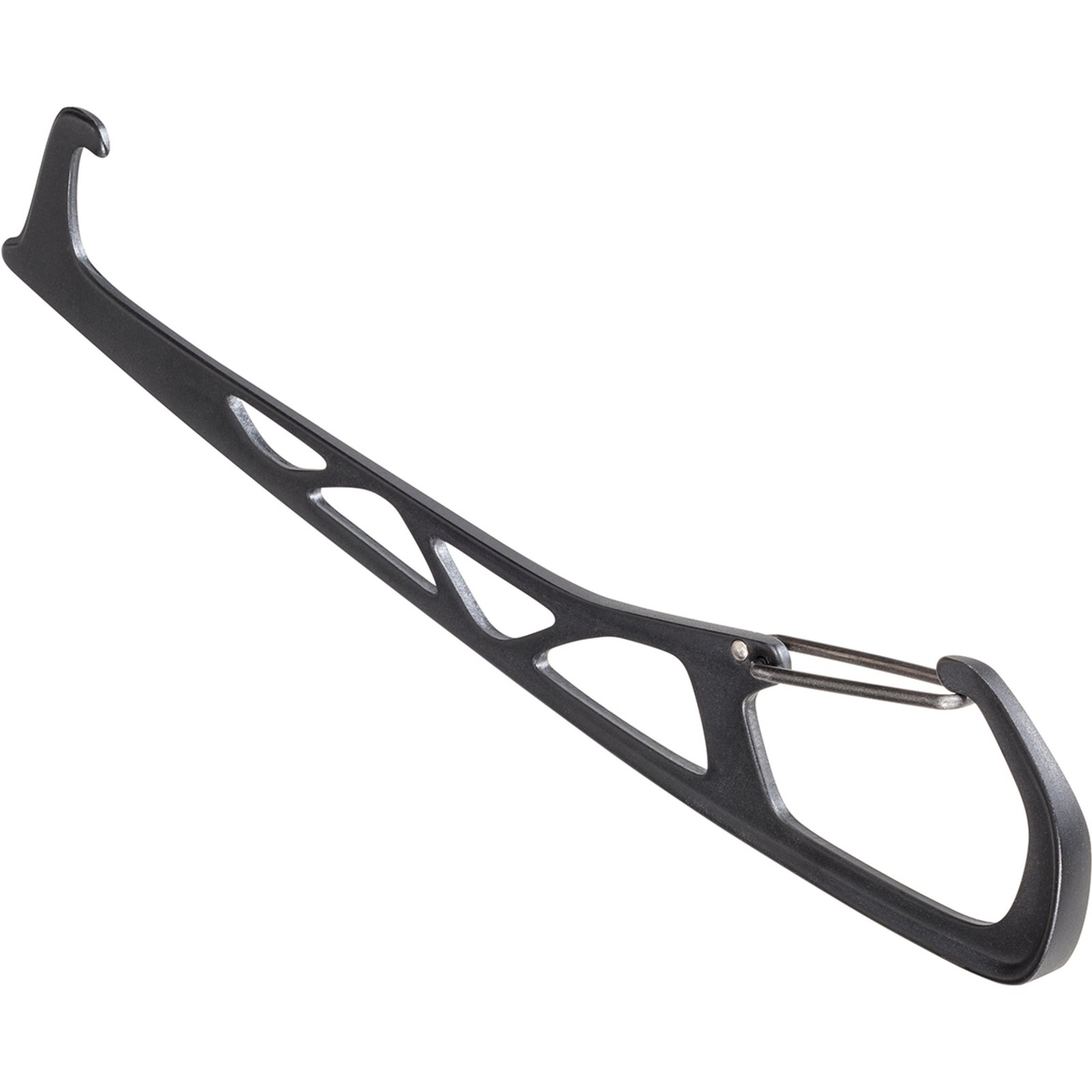
Black Diamond Wiregate Nut Tool
The BD take on the nut tool adds a built-in wiregate for clean racking on your harness, a rounded heel for pounding, and machined windows that reduce weight without sacrificing rigidity. At 46g with the longest hook of any tool in this category — useful for cam extraction as well as stuck nuts.
🎯 Where to Start — Our Recommendation
First purchase: Black Diamond Stopper Classic Set (your nut foundation) + DMM Nutbuster (remove them). First cams: BD C4 or Wild Country Friend, sizes 1–3 or 2–4. Once climbing harder: Add DMM Torque Nut for the cracks that standard nuts won’t fit. Don’t forget: slings, extra lockers, and if moving to multi-pitch — double ropes.
📚 Complete Your Trad Rack — Related Rock Van Life Guides
Nuts and cams are only part of the system. Everything else you need, reviewed.
🧗 More Rock Van Life Gear Guides
The full gear system — every piece reviewed and compared.
❓ Frequently Asked Questions
How many nuts do I need to start trad climbing?
A full set of 10–13 graduated nuts covers the core range for most beginner and intermediate trad routes. Buy a set rather than individual pieces — it works out better value and gives you options on the rock. The Black Diamond Stopper Classic set (13 pieces) or a similar competitor set from DMM or Wild Country is the standard starting point. You do not need micro nuts or torque nuts to begin — add those later as you identify the specific placements your standard set cannot handle.
How many cams do I need for a starter trad rack?
A starter set of four to five cams in the most commonly-used sizes — roughly thumb-width to fist-width placements — will protect the majority of beginner and intermediate trad routes. For Black Diamond C4s, sizes 1 through 4 cover this range. For Wild Country Friends, sizes 2 through 5. Start with this and build gradually based on real placements you could not make on actual routes, rather than buying a theoretically complete rack before you understand where the gaps are.
What is the difference between a nut and a cam?
A nut (also called a wire or stopper) is a passive piece of protection — a tapered metal wedge that relies on a constriction in the crack to hold it in place when loaded. It has no moving parts. A cam is an active piece of protection — a spring-loaded device with rotating lobes that expand to fill the crack and hold by friction and the mechanical advantage of the camming action. Nuts work in tapered crack features and constrictions; cams work in parallel-sided cracks of consistent width. A complete trad rack needs both. Nuts are cheaper and lighter; cams are more versatile in parallel cracks but significantly more expensive.
Is it safe to buy secondhand cams?
Cams in good visual condition are generally considered safe to buy secondhand. The key inspection points are: check the lobes for cracks, chips, or significant wear; test the trigger mechanism for smooth, consistent spring action; examine the sling for fraying, discolouration, or damage; inspect the stem for bends or kinks; check the axle for corrosion or damage. If everything passes visual inspection and the trigger works cleanly, the cam is likely fine. Avoid anything with cracked lobes, a sticky or broken trigger, or a damaged stem.
Do I need double ropes for trad climbing?
Not initially — but yes, eventually. Single-pitch trad routes can be climbed on a single rope in most cases. Multi-pitch trad routes typically require a double rope system: two 8–8.5mm half ropes clipped alternately to gear. The double rope system reduces rope drag significantly on complex routes, allows longer abseils, and provides redundancy if one rope is damaged. If you are moving into multi-pitch trad, read our full rope guide before buying.
What quickdraws should I use for trad climbing?
Trad climbers typically use a combination of standard quickdraws and extendable alpine draws. An alpine draw is a 60cm sling with two carabiners racked in thirds — when extended, it provides significantly more length than a standard draw, reducing rope drag on gear placements that are not in a straight line above each other. Carry at least four to six alpine draws alongside your standard draws. See our carabiner and quickdraw guide for the full breakdown.
How do I remove a stuck nut?
A nut key (like the DMM Nutbuster) is the essential tool. The standard technique is to tap the nut upward from below using the hooked end of the key — this reverses the direction of loading and usually breaks the placement free. For a very stuck nut, try moving the nut laterally before tapping upward, which can release the initial grip. Always carry a nut key clipped to your harness on trad routes. Practise placement and removal at ground level before climbing on it.
🔍 Semantic & Keyword Index
Primary: Best Cams & Nuts for Trad Climbing 2026 • trad climbing nuts and cams guide • how to build a trad rack • Secondary: Black Diamond C4 review • Wild Country Friend cam • Black Diamond Stopper set review • DMM Torque nut • best cams for trad climbing • best nuts for trad climbing • trad vs sport climbing explained • Long-tail: how many cams do I need for trad climbing • what nuts do I need for trad climbing • difference between nuts and cams climbing • secondhand cams safe to buy • do I need double ropes for trad climbing • trad climbing starter rack Europe • spring loaded camming device explained
🧗 Explore Our Climbing Guides
Detailed crag guides from our van life climbing adventures across Europe